
The Essential Ashgabat and Turkmenistan Travel Guide: From White Marble to the Burning Crater
The Essential Ashgabat and Turkmenistan Travel Guide: From White Marble to the Burning Crater
Turkmenistan is Central Asia's enigma — a gas-rich, tightly controlled state that most travelers skip entirely. Those who make the effort discover one of the most genuinely unique travel experiences on earth: a surreal white marble capital, ancient Silk Road ruins, the world's most famous burning crater, and a carpet culture so deep it's on the national flag.
I'm a professional travel writer who updates this guide annually. Here's everything you need.
Overview
Turkmenistan is a desert country (Karakum Desert covers 80% of the territory) between Iran, Afghanistan, Uzbekistan, and the Caspian Sea. Population: 6 million. Government: authoritarian presidency. Economy: natural gas (the world's 4th-largest reserves). Tourism: minimal but growing.
Best Time to Visit
March to May and September to November. Temperatures of 20-30°C are manageable for sightseeing. Summers hit 45°C+ in the desert — genuinely dangerous for outdoor activities. Winter (5-15°C) is fine for Ashgabat but cold for desert camping.
The Darvaza Crater is best at night any season — the fire is the fire regardless of temperature.
Getting There
Flights to Ashgabat International (ASB) from Istanbul (Turkish Airlines), Dubai (FlyDubai), and Moscow (Turkmenistan Airlines). Some travelers enter overland from Iran (Bajgiran border) or Uzbekistan (Farap border) on transit visas.
Where to Stay
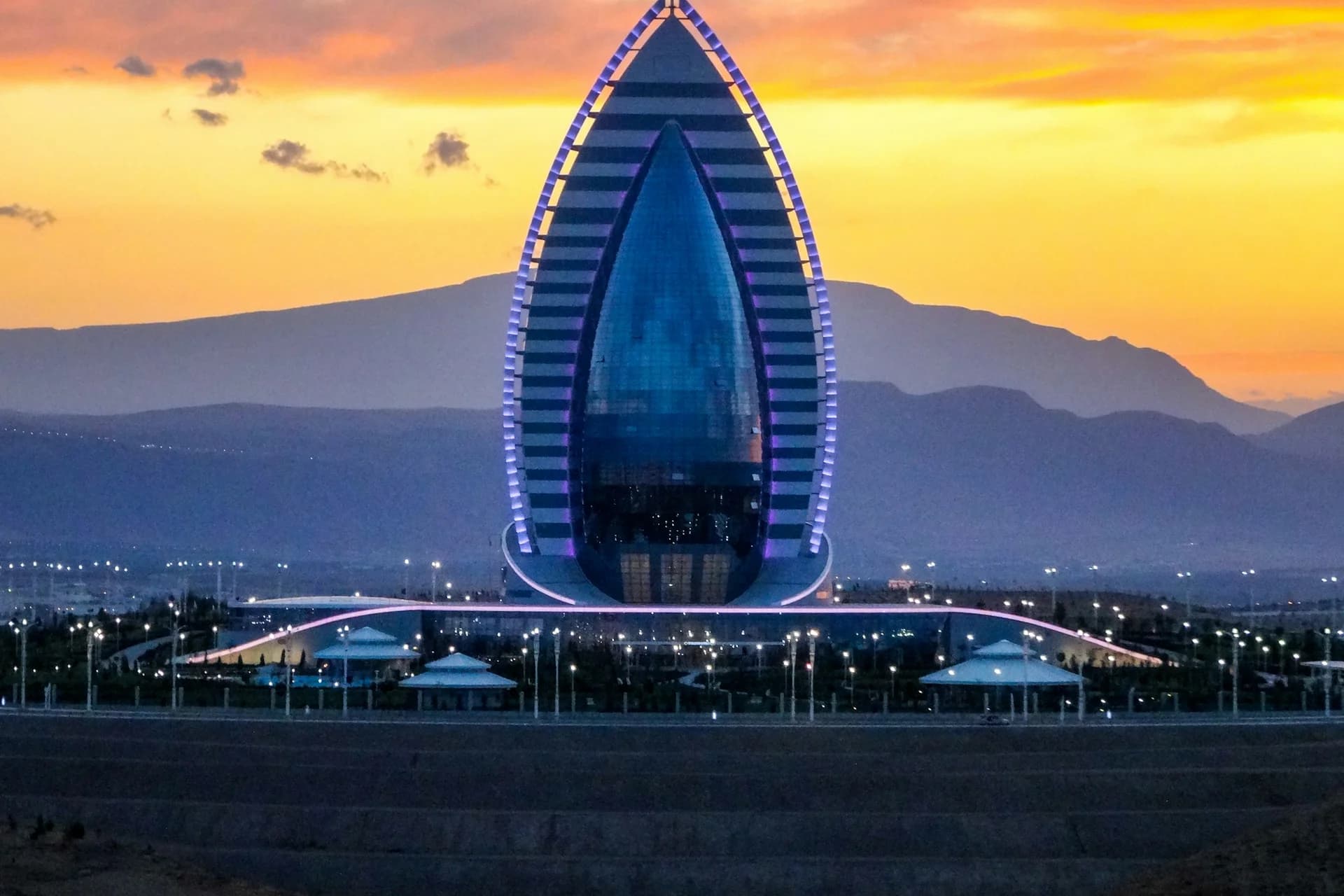
Ashgabat has limited accommodation options for tourists. Your tour operator typically books hotels. Mid-range options: $50-100/night. The Yyldyz Hotel and Nissa Hotel are the most used by tour groups. Budget options are scarce.
What to See
Ashgabat City (1-2 Days)
White Marble Architecture: Walk the main boulevards to absorb the sheer scale. The Wedding Palace, Turkmenistan Tower, Earthquake Monument (golden bull), and the various government buildings are all worth seeing from the outside. Free to walk. Best in late afternoon light.
Turkmen Carpet Museum: 50 TMT. Over 2,000 carpets including the world's largest hand-knotted carpet (301 sq m). The five gul patterns represent the five Turkmen tribes. Allow 1-1.5 hours.
Nisa: 30 TMT. UNESCO World Heritage ruins of the Parthian Empire, 18km from the city. Hilltop ruins with mountain views. Allow 1-2 hours including the drive.
Tolkuchka Bazaar: Saturday-Sunday only, 6AM-1PM. Carpets, sheepskin hats, livestock, electronics. The carpet section offers authentic rugs at a fraction of Western prices. Bring cash.
Alem Entertainment Center: 10 TMT. World's largest enclosed Ferris wheel. Aerial city views.
Darvaza Gas Crater (2 Days)
270km north through the Karakum Desert. 4-5 hour drive each way. The 70m-wide crater has burned since 1971. Day viewing is interesting; night viewing is extraordinary. Camp at the rim overnight.
Bring: tent (or arranged by tour), sleeping bag, food, water, warm layers, headlamp. There are no facilities.
Tours: $150-300/person from Ashgabat including transport and camping.
Beyond Ashgabat (If Time Allows)
Merv: 350km east. UNESCO site. The ruins of one of the world's great Silk Road cities, destroyed by the Mongols in 1221. The Sultan Sanjar Mausoleum and the Great Kyz Kala are highlights. Allow 1-2 days.
Konye-Urgench: Northern Turkmenistan. Medieval ruins, UNESCO site. The Kutlug-Timur Minaret (60m) is Central Asia's tallest historic structure.
What to Eat
Turkmen cuisine is meat-heavy and filling:
- Plov: Rice pilaf with lamb. 15-25 TMT.
- Shashlik: Grilled lamb skewers. 10-20 TMT per portion.
- Manty: Large steamed dumplings. 10-15 TMT.
- Ishlekli: Flatbread stuffed with lamb and onion. 8-12 TMT.
- Chal: Fermented camel milk. Sour, fizzy, an acquired taste.
Restaurant meals are cheap at the black market rate — a full dinner for under $5.
Budget
| Category | Cost (Black Market Rate) |
|---|---|
| Mid-range hotel | $30-60/night |
| Restaurant meal | $3-8 |
| Carpet Museum | ~$2.50 |
| Darvaza tour | $150-300/person |
| Tolkuchka Bazaar carpet | $50-500+ |
| Internal taxi | $2-5 |
Turkmenistan is affordable at the black market rate but the tour arrangement costs and visa fees add up. Budget $100-200/day all-inclusive for a tour-based visit.
Cultural Notes
- Photography restrictions on government/military buildings are real. Comply politely.
- Bread (chorek) is treated with respect — don't place it on the ground.
- Hospitality is genuine — accept offered tea.
- Carpet export requires a museum certificate.
- Dress modestly outside the hotel, especially at mosques.
The Honest Assessment
Turkmenistan is not a relaxing beach holiday or a comfortable cultural tour. It's logistically demanding, politically restrictive, and occasionally bewildering. The visa process alone filters out casual travelers.
But for those who make the effort, it delivers three experiences that exist nowhere else: the most surreal capital city on earth, one of the world's greatest natural spectacles (the Darvaza Crater), and access to a Silk Road heritage that's been preserved by isolation rather than restoration.
If you've traveled extensively and you're looking for something genuinely different — not "different" in the Instagram sense, but different in the "I cannot explain what I just saw" sense — Turkmenistan delivers. Apply early, bring cash, and prepare to have your sense of normal permanently recalibrated.
Sample Itineraries
3-Day Transit
- Day 1: Arrive at border/airport. Ashgabat city tour — marble buildings, Carpet Museum, Nisa ruins.
- Day 2: Drive to Darvaza Gas Crater (4-5 hours). Camp overnight at the rim.
- Day 3: Return to Ashgabat. Tolkuchka Bazaar (if weekend). Depart to next border.
5-Day Full Tour
- Days 1-2: Ashgabat — marble city, Carpet Museum, Nisa, Tolkuchka Bazaar, Alem Ferris Wheel.
- Days 3-4: Darvaza Gas Crater — drive out, camp overnight, return.
- Day 5: Day trip to Merv (if logistics allow) or deeper Ashgabat exploration. Depart.
7-Day Comprehensive
- Days 1-2: Ashgabat
- Days 3-4: Darvaza Crater
- Days 5-6: Merv (fly or drive to Turkmenabat, then Merv)
- Day 7: Return to Ashgabat, depart
Final Thoughts
Turkmenistan requires more effort than any other Central Asian country — the visa process, the mandatory guides, the cash-only economy, the photography restrictions. But it delivers experiences that are genuinely impossible to replicate elsewhere. The white marble city. The burning crater. The carpet traditions that predate empires. The silence of the Karakum Desert at night.
This is not a comfortable destination. It is an unforgettable one.


