The Fort That Breathes: A Night Inside Jaisalmer's 850-Year-Old Living Fortress
The Fort That Breathes: A Night Inside Jaisalmer's 850-Year-Old Living Fortress
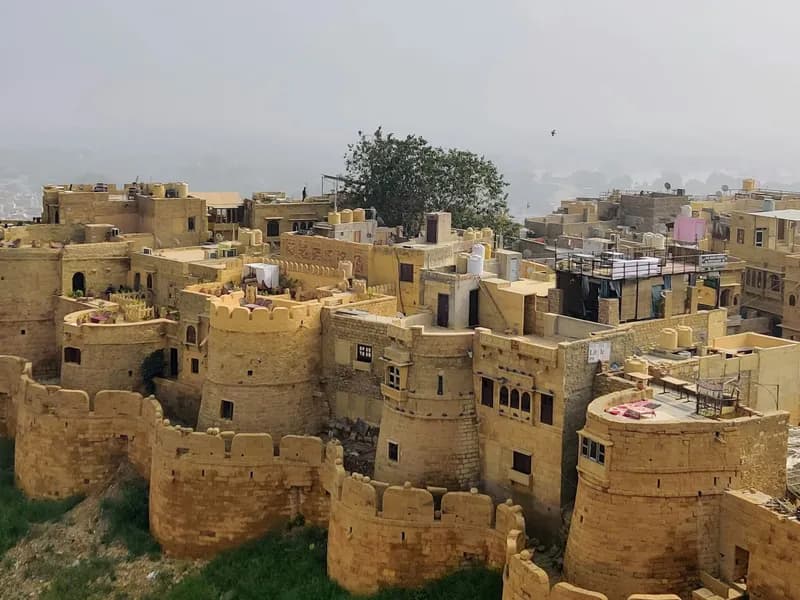
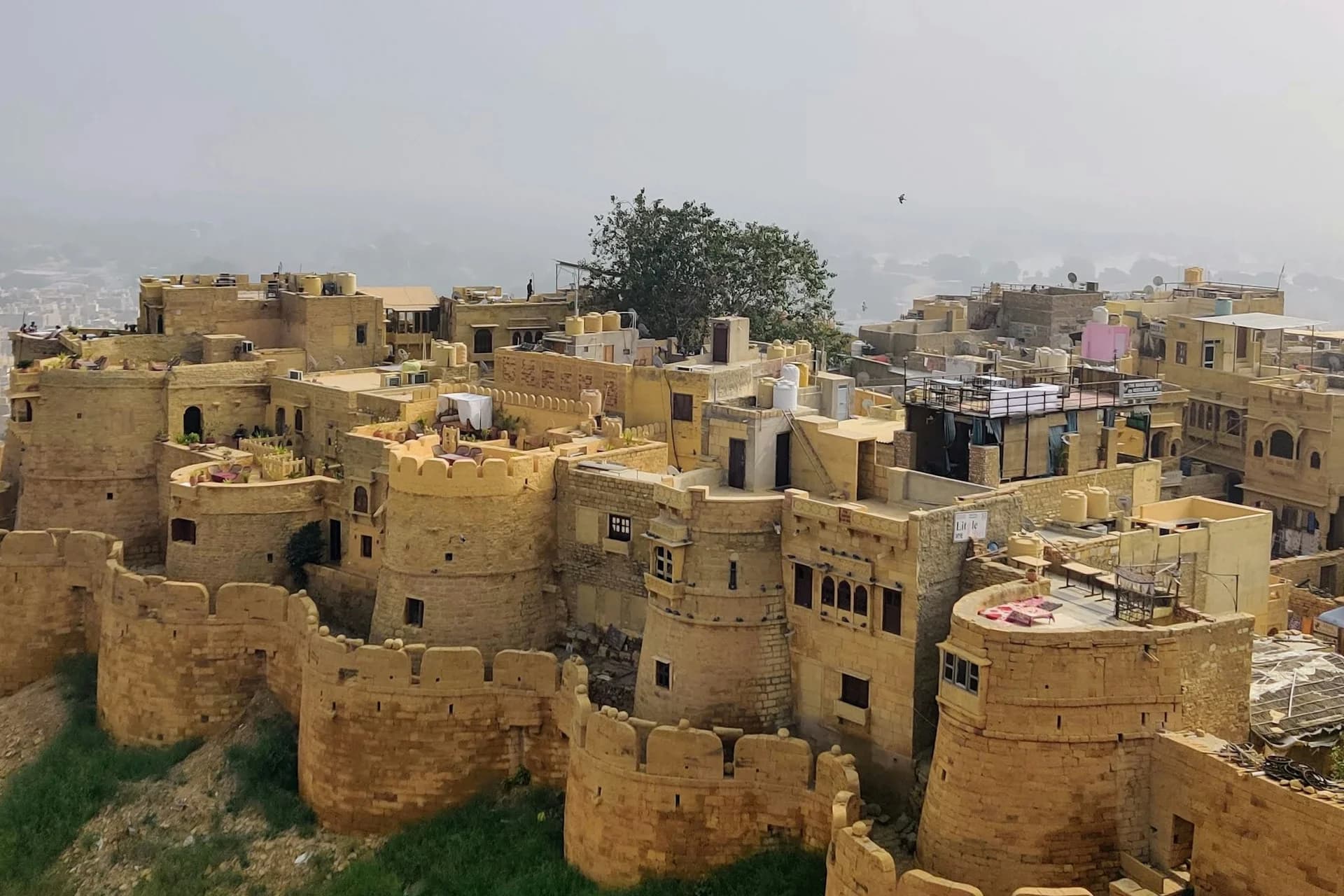
Arrive at the base of the fort ramp around 4PM and the timing does the work for you. The November sun sits low enough to turn the sandstone walls from yellow to amber, and above you a structure the color of honey rises straight out of a hill in the Thar Desert — massive triangular bastions, crenellated walls, and a tangle of buildings crowding the ramparts.
Walk up the ramp through the first gate. Then the second. Then the third. Jaisalmer Fort has four gates, each one engineered to slow invaders. The passages between them run narrow and turn at hard right angles, built so elephants and cavalry could never charge straight through.
At the fourth gate, the fort opens up.
The Living Fort
Most forts in India are museums. Mehrangarh in Jodhpur — spectacular, but empty. Amber Fort in Jaipur — preserved, curated, and full of audio guide–wearing tourists. They are monuments to a past that ended.
Jaisalmer Fort hasn't ended. Three thousand people live inside these walls — not in recreated dwellings or heritage hotels, but in their actual homes. Families have occupied the same buildings for generations. The fort holds shops, restaurants, a post office, temples, schools, and a community that functions like any Indian neighborhood, except this neighborhood is 850 years old — the same everyday continuity that keeps the palace town of Orchha alive rather than embalmed, only far denser here.
You'll pass a woman hanging laundry from a carved sandstone balcony. A motorbike squeezing through a passage designed for camels. Three kids playing cricket in a courtyard bordered by 15th-century Jain temple walls, using a tennis ball and a plank of wood for a bat — until one of them lofts the ball over the temple roof and the whole game groans.
This is what "living heritage" actually means. Not a concept. Not a museum placard. Kids hitting cricket balls over medieval temples.
Checking Into a Medieval Room
Hotel Killa Bhawan is a converted haveli inside the fort walls, and it's the kind of room you remember. A night runs 2,500 INR ($30). The walls are original sandstone — carved, roughly 400 years old. The window looks out over the ramparts to the Thar Desert below, and the ceiling carries hand-painted floral motifs faded to pastel.
The bathroom is modern (thankfully). The WiFi is slow (expectedly). The bed comes with three blankets, and you'll want all three — Jaisalmer in November drops to 8–10°C at night, and sandstone walls don't insulate.
Drop your bag and head straight to the rooftop. The view earns the climb. Below: the lower city of Jaisalmer, a grid of yellow-brown buildings spreading outward from the fort base. Beyond: the Thar Desert, flat and brown, running unbroken to the horizon — the same arid sweep that eventually hardens into the white salt flats of the Rann of Kutch further south. The sky stays clear, the air stays dry, and the only sound is a temple bell somewhere deeper inside the fort.
The Jain Temples at Closing Time
The Jain temples inside the fort date to the 12th–15th centuries — seven interconnected shrines with carving so intricate it reads more like lace than stone. Every surface, from pillars to ceilings to door frames to wall panels, is covered in figures, animals, geometric patterns, and narrative scenes — the same lace-in-stone obsession that drives the temples of Khajuraho a few states east.
Come at 4:30PM, 30 minutes before closing, and the tour groups have already cleared out. The caretaker, a Jain man in white, nods and keeps sweeping the courtyard.
The dilwara-style carving — named for the famous Dilwara Temples in Mount Abu — is a high point of Indian decorative art, in the same league as the stone virtuosity of the Hampi ruins down south. The ceiling rosettes in the Chandraprabhu Temple, circular patterns cut from single blocks of sandstone, use undercut techniques that lift three-dimensional flowers, vines, and dancers out of the stone.
No photography is allowed inside, and that's the gift. Without a camera, you look at the carvings instead of framing them. The detail rewards patience. Give a single pillar twenty minutes and figures surface that you missed on first glance — a dancer with bangles on each wrist, every bangle individually carved. An elephant with individual toenails. A flowering vine with petals no larger than a fingernail.
Free entry. Contributions welcome. Shoes off. Leather items stay outside (a Jain principle — leather implies animal harm).
Sunset from the Ramparts
Climb to the western rampart wall around 5PM. A narrow stone staircase, worn smooth by centuries of feet, leads to a walkway above the main gate. A few other travelers gather here. Nobody speaks.
The sun drops below the desert horizon and the fort walls turn gold. Then orange. Then a deep amber that seems to glow from inside the stone itself — a trick of light Rajasthan saves for its fortress towns, the way Jodhpur's Mehrangarh blazes on its cliff a few hours east. The lower city catches the same light — an entire town going the color of fire.
A cannon points west from the rampart, still aimed at an enemy that stopped coming centuries ago, a pigeon perched on the barrel. The call to prayer from the mosque below the fort folds into the temple bell from inside it and the distant honk of a rickshaw somewhere in the city.
Five minutes. Maybe ten. Then the color fades, the stone cools to gray, and the fort lights — a mix of electric bulbs and oil lamps — begin to glow.
Dinner on a Rooftop
The rooftop restaurants inside the fort are Jaisalmer's great communal spaces. Every budget hotel and guesthouse runs one, and at night they fill with travelers — backpackers, Indian families, the occasional group of Europeans on a Rajasthan circuit, most of them arriving overland from Pushkar and Jodhpur.
Desert Boy's rooftop, attached to the guesthouse of the same name, is a fine place to land. Order the dal bati churma — Rajasthan's signature dish. The bati (baked wheat balls) arrive hot, split open and swimming in ghee. The dal comes thick, spicy, and deeply comforting. The churma — crushed bati folded with ghee and sugar — is dessert disguised as a side dish.
Total: 200 INR ($2.40).
The rooftop has plastic chairs and a clear view of the Patwon Ki Haveli lit up across the lane. A German couple debates, gently, whether to do the camel safari tomorrow or the day after. An Indian grandmother tells a story about an earlier visit to Jaisalmer "when the roads were dirt and the train took two days from Delhi." A cat sits on the wall, fixed on the German couple's paneer.
This is what travel felt like before boutique hotels and curated experiences. Plastic chairs, good food, conversations with strangers, and an 850-year-old fort as your dining room.
Night in the Fort
Jaisalmer Fort at night becomes a different place. The day-trippers leave (most stay in hotels outside the fort). The shopkeepers pull their wooden shutters closed. The narrow lanes, lit by the occasional streetlight and the glow from residential windows, turn into quiet corridors between stone walls.
Walk the lanes at 10PM. A dog sleeps in a doorway. A family watches television through an open door, the blue flicker bouncing off 500-year-old walls. A motorcycle sits parked where a horse would once have been tied 200 years ago.
The fort creaks. That sounds like literary embellishment, and it isn't. Sandstone buildings of this age, heated by day sun and cooling through the night, contract and expand. The stone clicks, groans, and settles. The fort breathes.
Back in the room, layer the three blankets and fall asleep to the sound of a building that has been settling for eight and a half centuries.
Morning
5:30AM, and the temple bell wakes you. Not an alarm — an actual bell, the first morning prayer at the Laxminath Temple, visible from the window.
Climb to the rooftop. The desert is pink. The first light catches the fort's highest towers while the streets below stay in shadow. A woman walks past with a brass water pot balanced on her head — a scene that could have been photographed in any century from the 12th to the 21st.
Breakfast is chai and paratha from a stall near the main gate. 40 INR ($0.48). The chai is boiled with cardamom and too much sugar. Perfect.
Walk out through the four gates, back down the ramp, and into the 21st century. Behind you, the fort glows gold in the morning sun, the same way it has glowed for 850 years. Three thousand people are waking up inside it — making chai, opening shops, sending kids to school.
Some things don't need to be preserved behind ropes. Some things just keep living.