
Jaisalmer
Key Facts
Best Time to Visit
October to March (cool, 10-25°C). December-January nights drop to 5°C in the desert. Avoid April-June (45°C+). Desert Festival in February is a highlight
Language
Hindi, Rajasthani (Marwari), some English in tourist areas
Currency
Indian Rupee (INR)
Time Zone
IST (UTC+5:30)
Airport
Jaisalmer Airport (JSA), 17km from city center — limited flights, most visitors arrive by train from Jodhpur or Jaipur
Population
78,000 (city proper)
Climate
Hot desert, extreme heat April-June (48°C), cold desert nights in winter (5°C), minimal rainfall (<20cm/year)
Safety Rating
Safe for tourists (Level 1). Rajasthan is one of India's safest states for visitors
Top Highlights
Jaisalmer Fort (Sonar Quila)
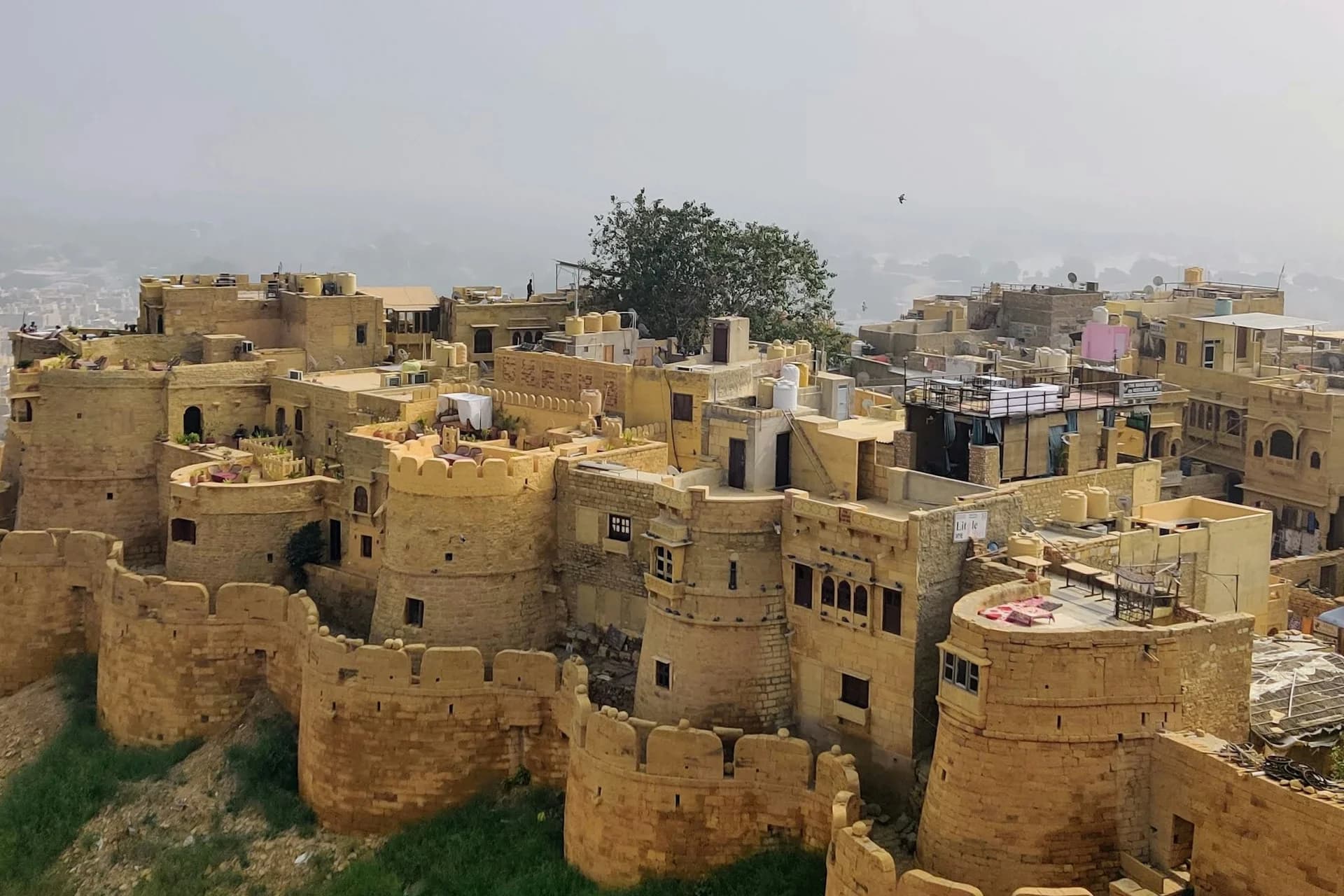
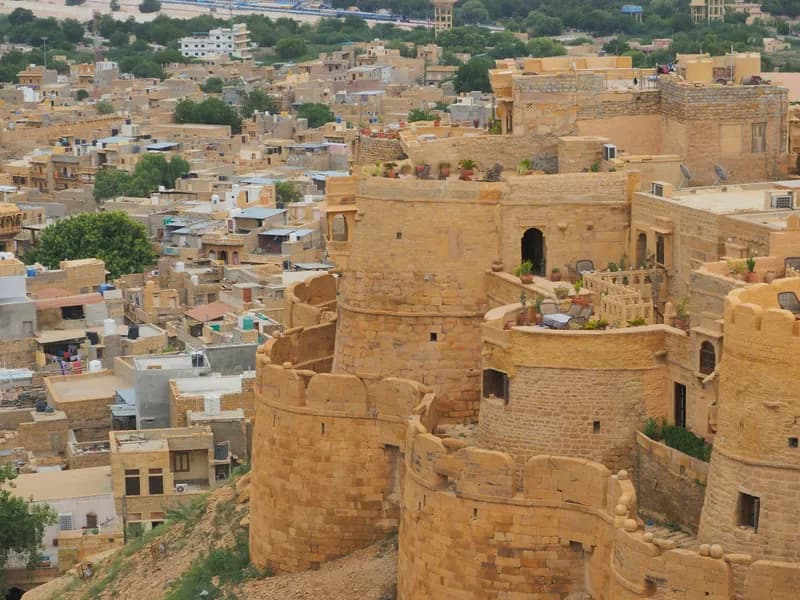
One of the world's few living forts — a massive 12th-century sandstone citadel where 3,000 people still live, work, and worship within its walls. Free to enter the fort (some temples and museums charge 50-100 INR). The fort glows golden at sunrise and sunset. Inside: Jain temples (stunning carved ceilings), the Raj Mahal (royal palace, 50 INR), merchant havelis, and narrow winding lanes. Allow 3-4 hours. Enter through the main Ganesh Pol gate.
Sam Sand Dunes & Camel Safari
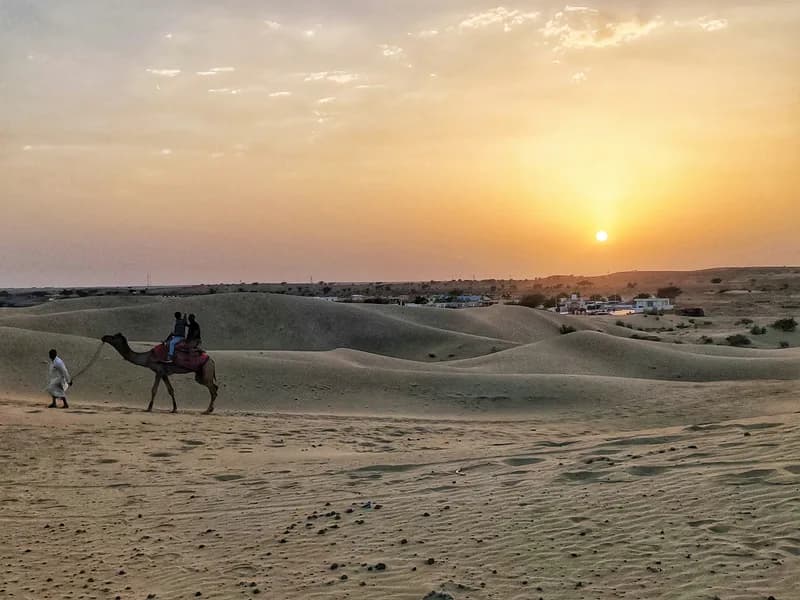
Rolling Thar Desert sand dunes 42km west of Jaisalmer — the most accessible true desert dunes in India. Sunset camel rides cost 500-1,000 INR per person (1-2 hours). Overnight desert camps range from basic (1,500-2,500 INR with dinner, bonfire, and folk music) to luxury Swiss tents (5,000-15,000 INR). The star-gazing on a moonless night is extraordinary — zero light pollution. Multi-day camel safaris (3,000-5,000 INR/day) go deeper into less-visited areas.
Patwon Ki Haveli
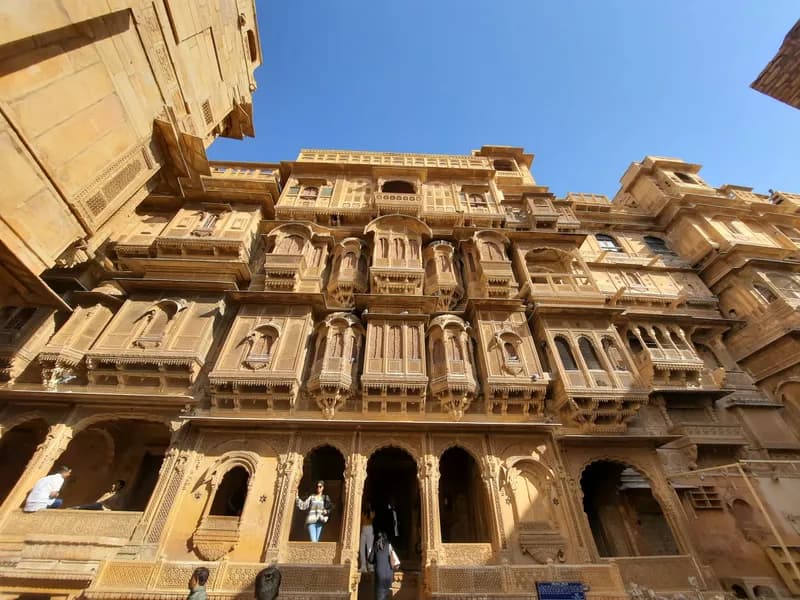
The largest and most elaborate of Jaisalmer's merchant mansions — a cluster of five connected havelis built in the 1800s with impossibly intricate sandstone lattice work (jharokhas) that looks like lace carved from stone. Entry: 100 INR for Indians, 250 INR for foreigners. Open 8AM-6PM. The first haveli is government-owned (museum), the others are private. The balcony carvings on the facade catch golden hour light magnificently. Allow 1-1.5 hours.

Gadisar Lake
A man-made medieval reservoir surrounded by temples, ghats, and an ornate gateway. Free entry. Boat rides: 50-100 INR for a pedal boat, 150 INR for a shikara. Best visited at sunrise when migratory birds (October-March) and the reflections of temples create a serene scene. The lake was the city's sole water source for centuries. The carved sandstone gateway at the entrance was built by a royal courtesan — a controversial story the locals love to tell.
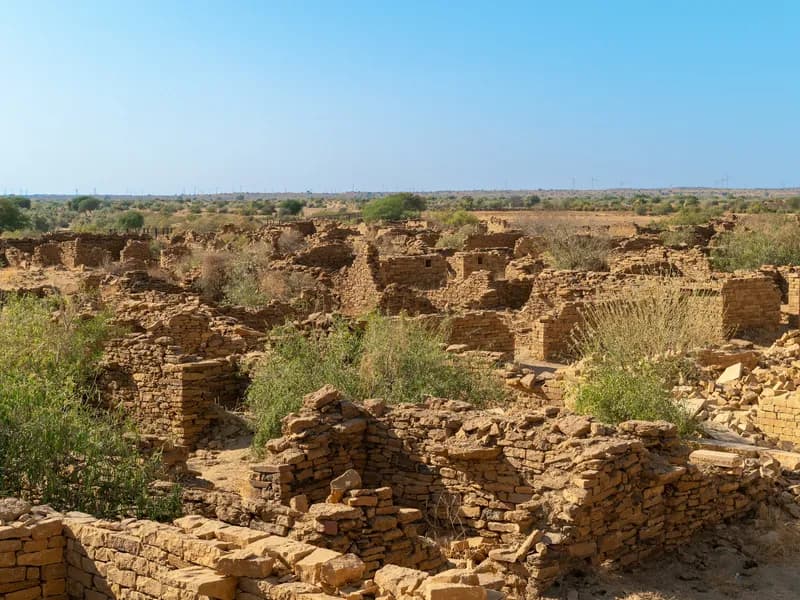
Kuldhara Abandoned Village
A ghost village 25km west of Jaisalmer, mysteriously abandoned overnight by 1,500 Paliwal Brahmins in 1825. Local legend says they cursed the land so no one could ever settle here again. Entry: 25 INR. Open 8AM-6PM. Rows of ruined sandstone houses remain intact — eerie and photogenic. Visit on the way to Sam Sand Dunes. The story involves a tyrannical prime minister who wanted to marry the village chief's daughter. Allow 45-60 minutes.
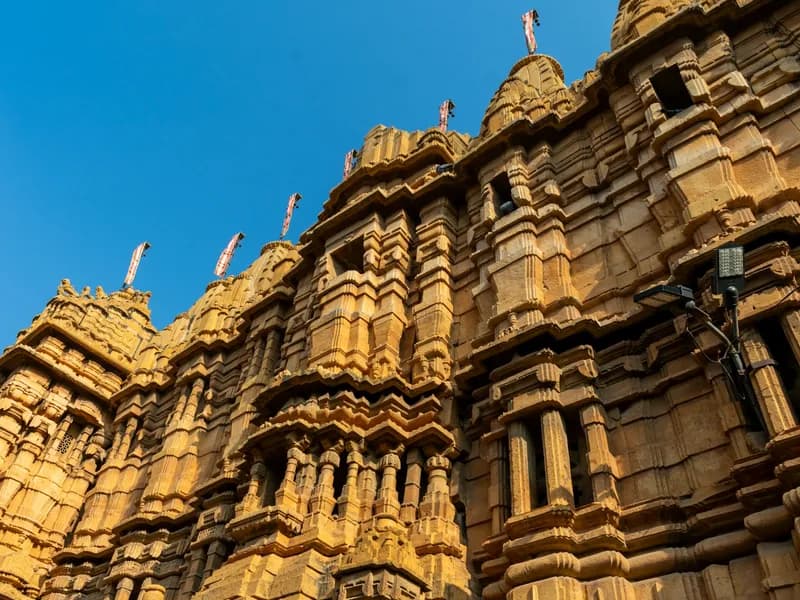
Jain Temples Inside the Fort
A cluster of 12th-15th century Jain temples inside Jaisalmer Fort with some of the most exquisite stone carving in India — ceiling work that rivals the Dilwara temples of Mount Abu. Entry: 100 INR (includes camera). Open 7AM-12PM. No leather items allowed inside (bags, belts, shoes — leave them at the entrance). The ceiling of the Chandraprabhu Temple is a masterwork of concentric carved circles that seems impossible in sandstone.
Planned Itinerary
7-Day Jaisalmer Itinerary
Arrival & Fort at Sunset
Arrive in Jaisalmer by train or flight. Check into a haveli inside or near the fort and watch the Golden City glow at sunset.
Arrival in Jaisalmer(1 hour)
Most arrive by overnight train from Jodhpur (5-6h) or Jaipur (12h). Limited flights to JSA airport (17km from city). Auto from station 50-150 INR
Check into fort or haveli hotel(1 hour)
Inside the fort: incredible atmosphere, 500-3,000 INR. Near the fort: more space, better plumbing. Heritage havelis 1,500-3,000 INR
Sunset walk on fort ramparts(1.5 hours)
Walk the outer walls of Jaisalmer Fort as the sandstone turns golden, then amber, then deep orange. Free access to the ramparts. The view over the Thar Desert from the western bastions is otherworldly
Dinner at Saffron rooftop(1 hour)
Rooftop restaurant inside the fort. Rajasthani thali (unlimited servings) 200-300 INR. The fort walls as your dining room backdrop
Jaisalmer Fort — Full Exploration
Deep dive into one of the world's few living forts — 3,000 people still live within its 12th-century walls.
Fort exploration(4 hours)
Enter through Ganesh Pol gate. Wander the narrow lanes, past ancient havelis, shops, and temples. Free entry to the fort (some internal attractions charge). The fort glows golden at sunrise and sunset
Jain Temples inside the fort(1.5 hours)
12th-15th century with India's most exquisite stone carving. 100 INR. Open 7AM-12PM. No leather inside. The Chandraprabhu Temple ceiling is carved concentric circles that seem impossible in sandstone
Raj Mahal (Royal Palace Museum)(1 hour)
50 INR. Royal apartments, throne rooms, and views from the highest point of the fort
Lunch at Free Tibet(45 minutes)
Tiny restaurant inside the fort run by Tibetan refugees. Momos and thukpa 80-120 INR. Authentic and heartfelt
Gadisar Lake sunset(1.5 hours)
Man-made medieval reservoir. Free. Pedal boat 50-100 INR, shikara 150 INR. Migratory birds (Oct-Mar). The carved gateway and temple reflections at sunset are beautiful
Havelis & Desert Museum
Explore the intricately carved merchant mansions and learn about desert culture.
Patwon Ki Haveli(1.5 hours)
Largest and most elaborate haveli cluster. 250 INR foreigners. The sandstone lattice jharokhas look like lace carved from stone. Golden hour light on the facade is magnificent
Salim Singh Ki Haveli(30 minutes)
Distinctive peacock-shaped roof brackets. 100 INR. Private but viewable
Nathmal Ki Haveli(30 minutes)
Two brothers carved each half independently — spot the differences. Free exterior view, 150 INR interior
Desert Cultural Centre(1 hour)
Museum of desert life, textiles, and music. 50 INR. Evening puppet show with Rajasthani folk music (100 INR) is charming and authentic
Dinner on a rooftop with fort view(1 hour)
1st Gate restaurant has the best fort-facing rooftop. Laal maas (fiery Rajasthani mutton curry) 250 INR. The illuminated fort against the desert sky is magical
Sam Sand Dunes & Desert Camp
Camel safari to the Thar Desert dunes and overnight camping under the stars.
Drive to Sam Sand Dunes(1 hour)
42km west. Jeep 1,500-2,500 INR return. Or arrange through your desert camp
Stop at Kuldhara Abandoned Village(1 hour)
Ghost village abandoned overnight in 1825 by 1,500 Paliwal Brahmins. 25 INR. Rows of ruined houses. The curse story is worth hearing from a guide
Sunset camel safari on the dunes(2 hours)
Ride a camel into the rolling dunes as the sun drops. 500-1,000 INR per person. The silence and scale of the desert are humbling
Overnight desert camp(overnight)
Basic camp: 1,500-2,500 INR with dinner, bonfire, and folk music. Luxury Swiss tents: 5,000-15,000 INR. The star-gazing on a moonless night is extraordinary — zero light pollution. Rajasthani musicians play by the fire
Desert Sunrise & Return
Watch the sun rise over the Thar Desert dunes before returning to Jaisalmer.
Sunrise on the dunes(1 hour)
Wake at 5AM to watch the desert turn from grey to gold. The rippled sand patterns are sculpted fresh by overnight wind
Rest afternoon(3 hours)
Recover from the desert. Sleep or wander the quieter fort lanes
Sunset from Vyas Chhatri cenotaphs(1.5 hours)
Royal cenotaphs on a hill north of the fort. Free and rarely visited. The fort silhouetted against the sunset from here is the best photo angle in the city
Craft Markets & Free Day
Explore Jaisalmer's artisan tradition and enjoy a relaxed day.
Sadar Bazaar shopping(2 hours)
The market below the fort sells embroidered textiles, mirror work bags, leather shoes (jootis from 200 INR), and miniature paintings. Prices are lower than Jaipur or Udaipur. Bargain to 50% of asking
Block printing workshop(1.5 hours)
Learn traditional Rajasthani block printing on fabric. 500-1,000 INR at workshops near the fort. Take home a printed scarf
Free afternoon(2.5 hours)
Revisit the fort lanes, find a rooftop cafe, or explore the back streets where ordinary Jaisalmer life unfolds
Dinner at Desert Boy's Dhani(1 hour)
Traditional Rajasthani village-style restaurant. Ker sangri (desert bean dish) 150 INR, bajra roti (millet bread), and kadhi. Authentic desert cuisine
Departure
Final fort glimpse and departure.
Sunrise at Gadisar Lake(1 hour)
The lake at dawn with migratory birds and temple reflections. Peaceful and uncrowded
Breakfast at a fort rooftop(1 hour)
Paranthas and chai with fort wall views. 100-150 INR
Transfer to station or airport(30 minutes)
Auto to station 50-100 INR. Most departures are evening trains to Jodhpur or Jaipur
14-Day Jaisalmer Itinerary
Arrival & Fort Sunset
Arrive and watch the Golden City glow.
Fort Exploration
Living fort — Jain temples, royal palace, narrow lanes.
Jain Temples(1.5 hours)
100 INR
Raj Mahal(1 hour)
50 INR
Havelis & Desert Culture
Carved mansions and puppet shows.
Patwon Ki Haveli(1.5 hours)
250 INR
Sam Dunes & Desert Camp
Kuldhara village, camel safari, overnight camp.
Kuldhara Village(1 hour)
25 INR
Sunset camel safari(2 hours)
500-1,000 INR
Desert camp overnight(overnight)
1,500-15,000 INR
Desert Sunrise & Return
Dawn on the dunes and recovery.
Craft Markets & Shopping
Artisan workshops and bazaar.
Rest Day
Slow fort day.
Fort cafe reading(3 hours)
The fort's rooftop cafes — particularly Desert Haveli — have book exchanges and sweeping desert views. Chai 30 INR, peaceful for hours
Multi-Day Camel Safari — Day 1
Begin a 2-day camel trek deeper into the Thar Desert — beyond the tourist dunes to real desert villages.
Camel safari departure(6 hours)
3,000-5,000 INR/day through a reputable operator (Real Desert Man/Mr. Desert or Trotters). Ride through scrubland, past thornbush fences and desert villages where life hasn't changed for centuries. Lunch under a tree
Evening camp in remote dunes(overnight)
Sleep under the stars on a sand dune with just a blanket and mattress. No tents, no lights — just desert, stars, and silence. Camp cook makes dal and chapati over an open fire
Camel Safari — Day 2 & Return
Morning ride back through desert villages.
Dawn ride(4 hours)
Watch the desert come alive — herders with goats, women carrying water, the endless horizon. The deeper desert is profoundly different from the tourist Sam Dunes
Day Trip to Khuri Village
Less touristy sand dunes with traditional Rajasthani village stays.
Khuri Sand Dunes(2 hours)
Smaller than Sam but far fewer tourists. Free to explore. The village nearby has mud-and-thatch houses decorated with folk art
Village lunch(1 hour)
Home-cooked meal at a village family's house. Bajra roti, ker sangri, dal. 200-300 INR. Arranged through guest houses in Khuri
Bada Bagh & Local History
Royal cenotaphs and deeper Jaisalmer history.
Bada Bagh(1.5 hours)
Garden of royal cenotaphs 6km north. 100 INR. Carved sandstone monuments against the desert. Best at sunset but less crowded in morning. The equestrian statues of the Bhati rulers are unique
Jaisalmer Fort guided tour(2 hours)
Return to the fort with an official guide (200-400 INR) who explains the history, architecture, and hidden details you missed on your first visit
Rest Day
Desert air and fort views.
Free Day
Last full day — revisit whatever captured you.
Departure
Final dawn and goodbye to the Golden City.
21-Day Jaisalmer Itinerary
Arrival & Fort Sunset
Arrive in the Golden City.
Fort Exploration
Jain temples, palace, living lanes.
Havelis & Culture
Carved mansions and puppet shows.
Sam Dunes & Camp
Kuldhara, camel safari, desert camp.
Desert Sunrise & Return
Dune dawn and recovery.
Crafts & Shopping
Block printing and bazaar.
Rest Day
Fort rooftop reading.
Camel Safari — Day 1
2-day trek into the deep desert.
Camel ride into desert(6 hours)
3,000-5,000 INR/day
Camel Safari — Day 2
Morning ride back.
Khuri Village
Less-touristy dunes and folk art houses.
Bada Bagh & Guided Fort Tour
Royal cenotaphs and fort history deep dive.
Bada Bagh(1.5 hours)
100 INR
Rest Day
No plans.
Side Trip to Jodhpur — Day 1
The Blue City — 5 hours east. Mehrangarh Fort, blue houses, and a different Rajasthani flavor.
Drive or train to Jodhpur(5 hours)
Train 250-1,200 INR or shared taxi 600-800 INR
Check in near clock tower(30 minutes)
Budget guesthouses 500-1,000 INR, haveli hotels 1,500-3,000 INR
Mehrangarh Fort(3 hours)
One of India's most impressive forts. 600 INR foreigners (includes excellent audio guide). The cannons, palaces, and views over the blue city are extraordinary. Allow minimum 2.5 hours
Sunset from fort ramparts(1 hour)
The blue-painted houses below the fort at sunset are an unforgettable sight
Jodhpur — Day 2
Blue City streets and zip-lining over the fort.
Blue City walk(2 hours)
Walk through the narrow blue-painted streets of the old city below the fort. Start at the clock tower and wind through the Brahmin quarter where the blue paint originated
Sardar Market and clock tower(1.5 hours)
Spice market, textile stalls, and the best lassi in Rajasthan at Shri Mishrilal Hotel (70 INR for the famous saffron-topped makhaniya lassi)
Flying Fox zip line at Mehrangarh(1.5 hours)
Zip across the fort and lake. 1,600-2,000 INR. Six lines covering 1.5km. Thrilling views from a perspective nobody else gets
Rest Day
Recovery from Jodhpur.
Tanot Mata Temple & Border
Day trip to the Tanot temple near the Pakistan border — a pilgrimage site with war history.
Drive to Tanot Mata Temple(2.5 hours)
120km northwest on the Jaisalmer-Tanot road. Hire jeep 3,000-4,000 INR for the day
Tanot Mata Temple(1.5 hours)
Legend says Pakistani bombs fell on the temple during the 1965 and 1971 wars but none exploded. The unexploded shells are displayed. BSF soldiers maintain the temple. Free. The India-Pakistan border fence is visible nearby
Longewala War Memorial(1 hour)
Site of the 1971 war battle (depicted in the Bollywood film Border). 60km from Tanot. Tanks, vehicles, and battle documentation. Free. BSF canteen serves tea
Desert Festival Prep or Artisan Day
If visiting during the Jaisalmer Desert Festival (February), attend the events. Otherwise, spend the day with artisans.
Visit stone carving artisans(2 hours)
The sandstone carvers who maintain the fort and create new pieces work in small workshops. Watch the astonishing precision of hand-carved jali (lattice) work. Buy a small carved piece 200-500 INR
Puppet making workshop(1.5 hours)
Learn to make a traditional Rajasthani string puppet (kathputli). 500-800 INR at cultural centers near the fort. Take one home
Evening folk music at a heritage hotel(1.5 hours)
Suryagarh or Nachana Haveli host evening folk music performances with Rajasthani musicians. 500-1,000 INR often including dinner
Rest Day
Fourth rest day in the desert.
Photography Walk & Sunset
Capture the Golden City in its best light.
Sunrise photography at Gadisar Lake(1.5 hours)
Migratory birds, temple reflections, golden light
Fort interior photography(2 hours)
The narrow lanes at midday create dramatic light-and-shadow patterns. The carved balconies and doorways are endlessly photogenic
Farewell Day
Last full day in the desert.
Departure
Sunrise and goodbye.
Travel Tips
Visa & Entry
Indian Visa Required for Foreign Nationals
Most foreign nationals need an Indian e-visa ($10-100 depending on nationality and duration). Apply at indianvisaonline.gov.in. The e-tourist visa allows entry through major airports including Jaipur — most visitors reach Jaisalmer overland from Jaipur or Jodhpur. Carry your e-visa printout and passport at all times.
transport
Train Is the Best Way In
The overnight train from Jodhpur (5-6 hours, sleeper 250-400 INR, AC 600-1,200 INR) or Jaipur (12 hours, overnight) is the most popular route. The Delhi-Jaisalmer train (18 hours) is also available. Book on irctc.co.in at least 2 weeks ahead — trains sell out in season. Within Jaisalmer, auto-rickshaws run 50-150 INR per trip. For Sam Dunes, hire a jeep (1,500-2,500 INR round trip) or join a tour.
Budget
Extremely Affordable Even by Indian Standards
Budget guesthouses inside the fort start at 500-800 INR/night. Heritage haveli hotels with carved sandstone rooms: 1,500-3,000 INR. Thali meals (unlimited servings) at local restaurants: 100-200 INR. Desert camping with dinner: 1,500-2,500 INR. Budget 1,500-3,000 INR/day ($18-36) for comfortable travel. The fort guesthouses have the best views and atmosphere.
Safety
Gotcha: Desert Safari Scams
Touts at the train station and bus stand aggressively sell camel safari packages — many are bait-and-switch (promise luxury tents, deliver bare mattresses in the sand). Book through your hotel or a reputable operator after arriving and reading reviews. Never pay the full amount upfront. Legitimate operators: Real Desert Man (Mr. Desert), Trotters. Ask to see photos from previous guests. Avoid anyone offering a 'free' ride from the station.
Desert Temperatures Are Extreme
Even in 'winter' (November-February), desert days hit 25-30°C while nights drop to 5°C. Bring layers for overnight camping. In summer (April-June), temperatures exceed 45°C — sightseeing is dangerous without shade, water, and sun protection. Carry 2-3 liters of water at all times. Sandstorms can occur — they're disorienting but usually brief. Keep eyes, nose, and mouth covered if caught in one.
Local Customs
Fort Conservation Is Critical
Jaisalmer Fort is one of the most endangered heritage sites in the world — modern plumbing and tourism are eroding its 850-year-old sandstone foundations. Some organizations discourage staying inside the fort to reduce water usage. If you do stay inside (the experience is incredible), use water sparingly. Don't litter. The golden sandstone is fragile — don't carve or scratch the walls. Support the Jaisalmer in Jeopardy initiative.
Related Articles
Travel Guides12 Unforgettable Things to Do in Jaisalmer, the Golden City
From camel rides into the Sam dunes to the ghost village of Kuldhara, here are the 12 experiences that make Jaisalmer worth the long haul across the Thar Desert.
Travel GuidesThe Complete Jaisalmer Travel Guide: Desert Forts, Sand Dunes, and the Golden City
A living sandstone fortress, carved havelis glowing amber at sunset, camel caravans at Sam Dunes, and starlit desert camps. Everything you need for the Golden City.
Travel GuidesYour 12 Biggest Jaisalmer Questions, Answered by Someone Who's Crossed the Thar Desert
Should you sleep inside the fort? Are the camel safaris worth it? How hot is too hot? And what exactly is dal bati churma? Everything, answered straight.
StoriesThe Fort That Breathes: A Night Inside Jaisalmer's 850-Year-Old Living Fortress
Three thousand people live inside this sandstone fortress. Shops sell silk in 850-year-old rooms. Kids play cricket in medieval courtyards. I slept in a haveli and woke up in the Middle Ages.