
The Complete Glacier National Park Guide: Montana's Crown of the Continent
The Complete Glacier National Park Guide: Montana's Crown of the Continent
Glacier National Park is a million acres of the Northern Rockies that makes you understand why the phrase "America's Best Idea" gets attached to the national park system. The going-to-the-Sun Road alone — an 80km engineering marvel crossing the Continental Divide at 2,026 meters — justifies the trip. The glaciers, the wildlife, and the turquoise alpine lakes are bonuses that most destinations would kill to have as their main attraction.
Overview
Located in northwestern Montana, Glacier shares a border (and ecosystem) with Canada's Waterton Lakes National Park. Together they form the Waterton-Glacier International Peace Park. The landscape: towering peaks carved by ancient glaciers, U-shaped valleys, and over 700 miles of hiking trails.
The park has 25 named glaciers remaining, down from 150 in 1850. Climate scientists estimate most will be gone by 2030. This is not alarmism — it's measurement.
Best Time to Visit
Mid-July to mid-September: Going-to-the-Sun Road is fully open. Wildflowers peak in late July. Trails are clear of snow. This is also the busiest period.
June: Lower elevations accessible. The road may be partially open. Fewer crowds but more snow on high trails.
September to mid-October: Larches turn gold in late September. Cooler temperatures. Many facilities close but the park is gorgeous.
Getting There
Fly into Glacier Park International Airport (FCA) in Kalispell, 30 minutes from the West Entrance. Or Missoula (MIS), 2.5 hours south. Amtrak's Empire Builder stops at West Glacier and East Glacier.
You need a car. There's no practical way to explore the park without one.
Where to Stay
In the park: Many Glacier Hotel (from $250/night, book 6-12 months ahead), Lake McDonald Lodge (similar), Glacier Park Lodge at East Glacier. Campgrounds: $10-23/night.
Outside the park: Whitefish (40 min, charming ski town, from $120/night), Columbia Falls (cheapest options), St. Mary (east side, from $100/night).
What to Do
Going-to-the-Sun Road
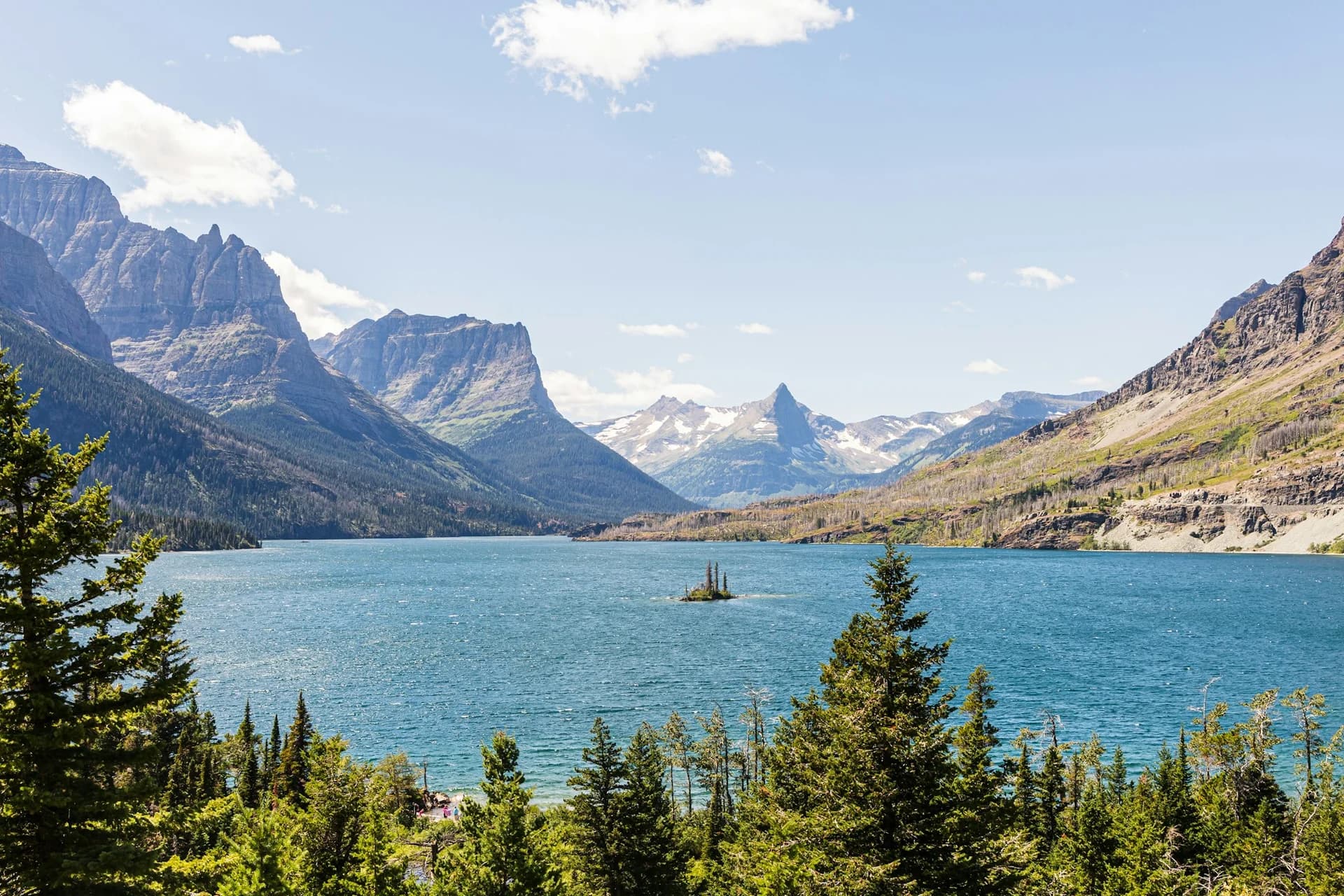
One of America's greatest drives. 80km crossing the Continental Divide at Logan Pass. Allow 3-4 hours with stops. Vehicle reservations required in peak season ($2 at recreation.gov). Key stops: Wild Goose Island, Bird Woman Falls, The Loop, Logan Pass Visitor Center.
Grinnell Glacier Trail
11.2km round trip, strenuous. The park's signature hike, passing four turquoise lakes to reach one of the last glaciers. 6-8 hours. Start from Many Glacier Hotel.
Hidden Lake Overlook
4.5km boardwalk from Logan Pass. Easy to moderate. Panoramic views, mountain goats, manageable for most fitness levels. 2 hours.
Highline Trail
18.8km point-to-point with cable handholds along cliff face. Moderate after the initial terrifying kilometer. Wildflower meadows, bighorn sheep. Free shuttle back from The Loop. 6-8 hours.
Lake McDonald
The park's largest lake with colorful rock shores and mirror reflections. Kayak rental $20-25/hour. Sunrise at Apgar Village is magical.
Many Glacier
The "Switzerland of North America" — east side valley with the highest wildlife density. Best area for grizzly sightings. Iceberg Lake (15km) and Ptarmigan Tunnel (16km) trails.
Two Medicine Valley
Quiet southeast area. Boat tours ($15), Twin Falls trail, Running Eagle Falls. Sacred to the Blackfeet Nation.
Wildlife
Grizzly bears, black bears, mountain goats, bighorn sheep, moose, elk, mule deer, wolverines (rare). Dawn and dusk are prime viewing times. Many Glacier valley is the best area.
Budget
| Category | Cost |
|---|---|
| Park entry | $35/vehicle (7 days) |
| Camping | $10-23/night |
| Lodge room | $200-350/night |
| Bear spray rental | $10-12 |
| Boat tour | $15-25 |
| Vehicle reservation | $2 |
Safety
- Bear spray on every hike, no exceptions
- Vehicle reservation in peak season
- Start high-elevation hikes early (afternoon storms)
- Check trail conditions at nps.gov/glac
- The mountains don't care about your schedule
Glacier is not a casual park. It demands planning, respect, and early mornings. In return, it delivers landscapes that remind you the continent was here long before anyone built roads through it.
For the east side border connection, Banff is an 8-hour drive through stunning Canadian Rockies.


