
Guanajuato FAQ: 12 Questions About Mexico's Most Surreal City
Guanajuato FAQ: 12 Questions About Mexico's Most Surreal City
Guanajuato confuses people. A city with underground traffic tunnels, naturally mummified bodies on display, and midnight troubadour walks through alleys too narrow for two people to pass. It sounds made up. It's very real. Here are the answers to the questions everyone asks.
Getting There
Q: How do you get to Guanajuato?
A: Fly into Leon/Bajio (BJX) — 30 minutes from the city. Taxi or shuttle: $350-500 MXN ($20-28 USD). From Mexico City, ETN or Primera Plus buses run comfortable coaches with reclining seats and AC for $550-700 MXN (5 hours). The bus terminal is a short taxi ride from Centro.
Guanajuato shares its airport with San Miguel de Allende (1.5 hours east by bus). Combining both cities is the classic itinerary.
Q: Do you need a car?
A: Absolutely not. The Centro Historico is compact and entirely walkable — though extremely hilly. Streets are too narrow for most vehicles. City buses ($8 MXN) run through the tunnels. Taxis within Centro: $40-60 MXN. Uber is available but inconsistent.
A car would be more hassle than help. Park at your hotel and forget it.
The City
Q: What are the underground tunnels?
A: Guanajuato was a major silver-mining city. When the mines operated, drainage tunnels channeled water away. Later, the Guanajuato River was diverted underground to prevent flooding. These stone tunnels now serve as the city's road system — cars drive through them.
You can walk through the tunnels too. They're atmospheric — curved stone ceilings, dim lighting, shafts of natural light from overhead openings. The Calle Hidalgo tunnel is 2.5 km long. Free. Slightly disorienting. Completely unique.
Q: What's a callejoneada?
A: A uniquely Guanajuatan tradition. University student musicians dress in period costumes and lead groups through narrow alleys at night, singing folk songs, telling romantic legends, and sharing wine from a bota bag.
Groups depart from Jardin de la Union most evenings around 8PM. Cost: $100-150 MXN ($5-8 USD). Duration: 2 hours. The highlight is the Callejon del Beso (Alley of the Kiss) — an alley so narrow (68 cm) that balconies nearly touch.
It's touristy and genuinely charming. Don't skip it.
Q: Is the Mummy Museum worth it?
A: If you're not squeamish, yes. Over 100 naturally mummified bodies preserved by the region's dry, mineral-rich soil. The museum is macabre, fascinating, and unlike anything else. $95 MXN ($5 USD). Not recommended for young children.
If you're only doing one museum, the Alhondiga de Granaditas (site of the first major independence battle, now a museum with murals, $90 MXN) offers more cultural depth.
Q: Where's the best viewpoint?
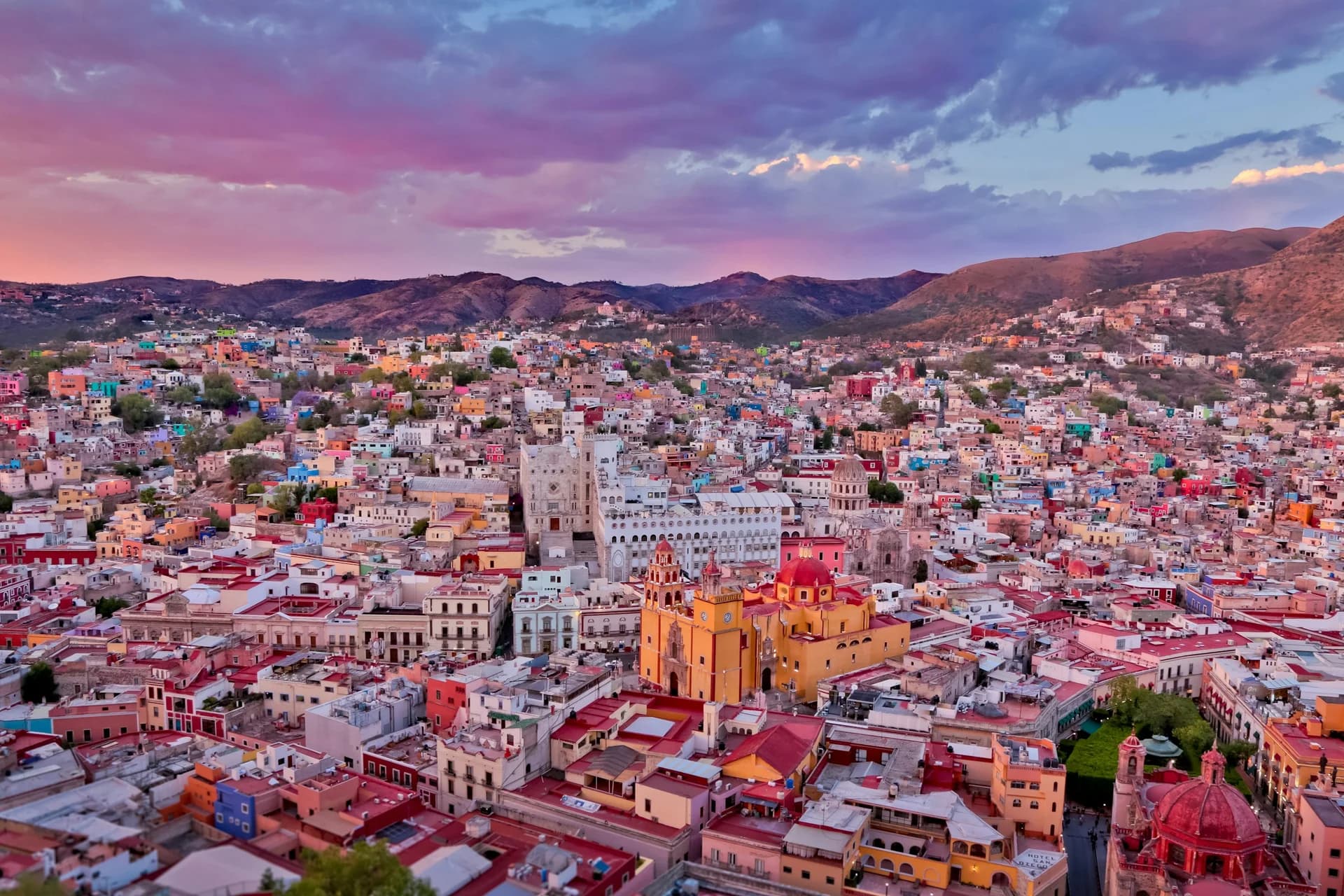
A: El Pipila monument. Hands down. A hilltop panorama of the entire city — multicolored houses filling a valley, church domes, surrounding hills. Funicular: $50 MXN round trip. Walking: 15 steep minutes. Free to visit. Go at sunset.
Food
Q: What should you eat?
A: Three essentials:
- Enchiladas mineras — The Guanajuato specialty. Corn tortillas in guajillo chile sauce, with potatoes, carrots, and cheese. Best at Mercado Hidalgo food stalls ($60 MXN).
- Street tacos — Find the carts near the university. Tacos al pastor, suadero, longaniza, $20-30 MXN each.
- Cajeta — Goat milk caramel. Buy a jar at the market as a souvenir ($50-80 MXN).
For a sit-down meal, Los Campos Eliseos does traditional Mexican cuisine in a colonial house. Mole negro ($150 MXN).
Q: Is it cheap?
A: Very. One of the most affordable destinations in Mexico.
- Street food meals: $50-80 MXN ($3-4 USD)
- Restaurant dinners: $150-250 MXN ($8-14 USD)
- Hostels: $200-400 MXN ($11-22 USD)
- Boutique hotels: $800-1,500 MXN ($45-85 USD)
You can eat three meals, visit two attractions, and drink in the evening for under $500 MXN ($28 USD) per day.
Practical
Q: Is Guanajuato safe?
A: The Centro Historico is safe and well-patrolled. Tourist police presence is strong around the Jardin and main attractions. The broader state of Guanajuato has security issues, but the city center is a different reality.
Stick to Centro Historico and well-traveled tourist routes. Avoid driving outside the city at night. Use authorized taxis or Uber.
Q: When should you visit?
A: October through April for the best weather (dry, 20-28°C).
Festival Internacional Cervantino (2-3 weeks in October) is Latin America's premier arts festival — theater, dance, music, opera in plazas, theaters, and streets. Many events are free. Hotels book months ahead and prices double. If you can time your visit around it, do.
Avoid June-September (rainy season — afternoon downpours can flood cobblestone streets).
Q: How many days do you need?
A: 2-3 days covers the main attractions thoroughly. Add a day for a Dolores Hidalgo day trip. Combining with San Miguel de Allende (1.5 hours by bus): 2-3 days in each makes a perfect week.
Q: What about shoes?
A: This sounds trivial but it's critical. Guanajuato's streets are steeply cobblestoned with no sidewalks in many areas. Stairways connect neighborhoods. Your shoes need grip and ankle support. Sandals, heels, and fashion sneakers will punish you. Bring proper walking shoes.
Quick Reference
| Item | Cost (MXN) |
|---|---|
| BJX airport taxi | 350-500 |
| Mummy Museum | 95 |
| Alhondiga | 90 |
| Callejoneada | 100-150 |
| Funicular to El Pipila | 50 (round trip) |
| Enchiladas mineras | 60 |
| Street tacos (each) | 20-30 |
| City bus | 8 |


