Milan Beyond Fashion: A Food and Design Lover's Deep Dive
Milan Beyond Fashion: A Food and Design Lover's Deep Dive
Milan gets a bad rap from travelers. "It's just a business city," people say. "See the Duomo, see The Last Supper, leave." Spend more than a weekend here, though, and the city peels back its corporate exterior to show you something extraordinary.
This is a city about making things. While Rome dazzles with ancient ruins and Venice enchants with canals, Milan reveals itself through craft. Fashion, yes. But also furniture, food, typography, architecture, and a very specific way of living that's equal parts elegant and unpretentious. Here's how to find that Milan.
The Design Quarter Nobody Mentions
Everyone knows the Quadrilatero della Moda — Via Montenapoleone, Via della Spiga, the luxury shopping district where a handbag costs more than a used car. Skip it unless you're actually buying.
Head to the Brera district instead. Not for the Pinacoteca (15 EUR, closed Mondays, though the Raphael and Mantegna are magnificent) — but for the streets around it. Via Madonnina, Via Fiori Chiari, Via Solferino. These narrow streets are where Milan's independent design studios, vintage furniture dealers, and concept stores operate.
At Rossana Orlandi on Via Matteo Bandello, a former necktie factory has been transformed into a gallery-shop-showroom that defines what "curated" should mean. It's free to walk through. The pieces range from 50 EUR design objects to 50,000 EUR installations. Two hours here and you'll leave having bought nothing and gained plenty.
The Triennale Design Museum in Parco Sempione (16 EUR) is the formal version of this — Italy's only museum dedicated to design, architecture, and decorative arts. But the real education happens during Salone del Mobile (Milan Design Week, April), when the entire city becomes a showroom and every courtyard, church, and abandoned factory hosts installations.
Aperitivo: Milan's Greatest Invention
Milan didn't invent the aperitivo. But Milan perfected it, and understanding aperitivo culture is understanding Milan.
Here's how it works: between 6PM and 9PM, you buy a cocktail (8-12 EUR) at any bar, and you get access to a buffet. Not peanuts and olives — actual food. Pasta, risotto, bruschetta, cured meats, salads, sometimes sushi. The quality varies, but at the good places, aperitivo replaces dinner entirely.
The standout is Mag Cafe in Navigli — a Negroni (10 EUR) comes with access to a buffet that includes truffle risotto. At Botanical Club on Via Tortona, the cocktails are more creative (smoked rosemary spritz, 12 EUR) and the food is organic. At the low end, most bars along Naviglio Grande offer cocktails for 8 EUR with decent buffets.
The unwritten rule: take what you'll eat, don't pile your plate like it's a hotel breakfast. Milanesi judge.
The Last Supper — How to Actually See It
Here's how to avoid a wasted trip across town. If you arrive in Milan without a reservation for Leonardo da Vinci's Last Supper (Il Cenacolo), you will not see it. Period.
Only 25 people enter every 15 minutes. You get exactly 15 minutes to look at the painting. Tickets (15 EUR + 2 EUR booking fee) sell out 2-3 months in advance. Book at cenacolovinciano.org the day tickets are released.
If you missed the window: authorized tour operators sell spots for 35-50 EUR with a guide. Companies like Walks of Italy and Musement are legitimate. Your hotel concierge might have connections too. Random people selling "tickets" outside Santa Maria delle Grazie are scams.
The painting itself — 15 minutes is simultaneously not enough and exactly right. The deterioration over 500 years (Leonardo used experimental tempera on dry plaster instead of traditional fresco technique, which started flaking almost immediately) gives it a ghostly quality. The expressions on the apostles' faces after Jesus says "one of you will betray me" — you can read betrayal, confusion, anger, denial. In 15 minutes. It's enough.
The Duomo: Go Up, Not Just In
Everyone enters the Duomo (5 EUR for the cathedral). Not everyone goes to the rooftop terraces, and those people are missing the best part.
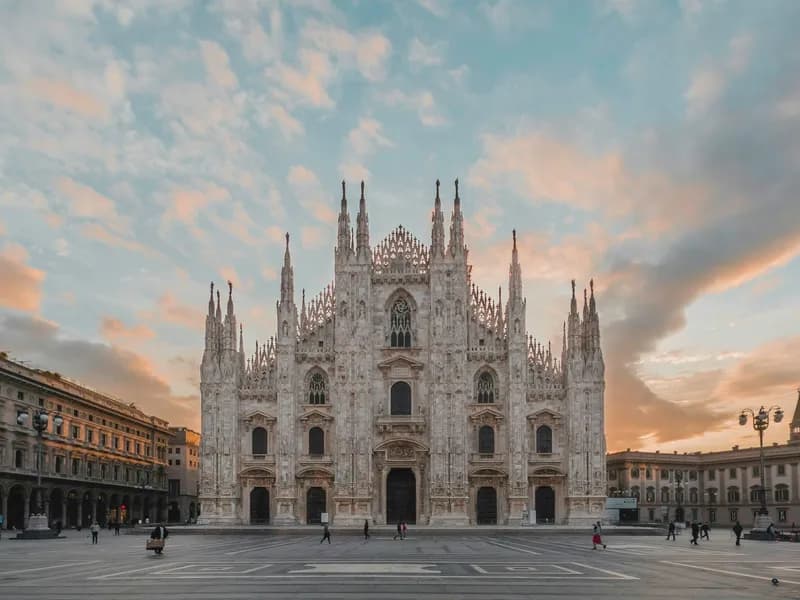
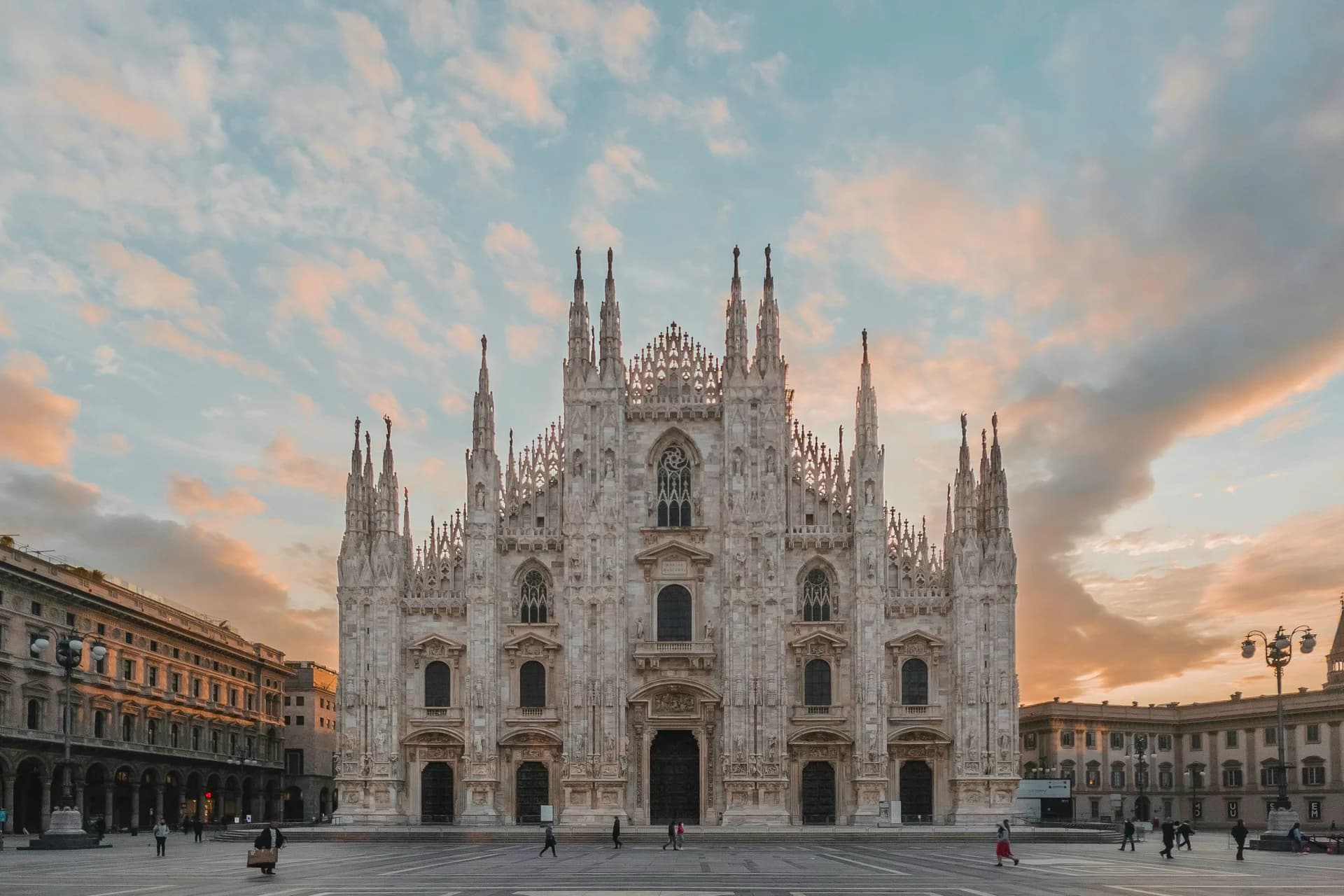
The elevator to the terraces costs 16 EUR (stairs: 10 EUR, but it's a lot of stairs). What you get up there: 3,400 statues and 135 spires at eye level, views across Milan to the Alps on clear days, and the bizarre experience of standing on the roof of a building that took 600 years to complete.
The forest of Gothic spires up close is surreal — each one topped with a saint or martyr, carved in Candoglia marble that turns pink at sunset. Budget 45 minutes to walk the terraces properly. On a clear autumn day, Monte Rosa is visible on the Swiss border, 150 km away.
The Duomo interior is also worth proper time. The stained glass windows in the apse are the largest in the world, and the crypt beneath the altar holds the remains of San Carlo Borromeo in a glass coffin. Free to enter but a 3 EUR donation is encouraged.
Navigli: Canal Life After Dark
Milan's Navigli district — two canals, Naviglio Grande and Naviglio Pavese — is where the city drops its corporate guard. Once the waterway system that brought marble to build the Duomo, now it's the bar-and-restaurant quarter.
Come on a Wednesday evening. The weekend crowds can be overwhelming, but midweek, the canal-side tables fill with locals doing aperitivo and the fairy lights reflecting on the water create something genuinely atmospheric.
The antiques market on the last Sunday of each month lines the Naviglio Grande with 400+ vendors selling everything from Art Deco lamps to vintage Italian movie posters. A 1960s Campari poster runs about 40 EUR. Worth every cent.
For dinner in Navigli: El Brellin (risotto alla milanese, 16 EUR) is set in an old public laundry house on the canal. Taglio (aperitivo and pizza, cocktails 10 EUR) has the best people-watching corner.
Lake Como: The Day Trip That Ruins You
Milano Centrale to Varenna takes one hour by train and costs 12 EUR. Varenna is the correct starting point for Lake Como — not Como town itself, which is fine but not special.
From Varenna's tiny station, you walk downhill through wisteria-covered lanes to the ferry dock. The ferry to Bellagio (the actual pretty one that George Clooney made famous, though his villa is in Laglio) takes 15 minutes and costs about 5 EUR. A day pass for the ferry system costs ~15 EUR and lets you hop between Bellagio, Menaggio, and Varenna all day.
Villa del Balbianello (10 EUR, closed Mon and Wed) is the one you need to see — Star Wars Episode II and Casino Royale were filmed here. The gardens cascade down to the lake, framed by mountains and cypress trees, and they hold their own against anything else in Italy.
The last train back to Milan leaves Varenna around 9-10PM. Don't miss it — there's nothing in Varenna after dark except the lake and your thoughts, which is either perfect or terrible depending on your situation.
Eating Like a Milanese
Milan's food identity is specific and proud. Forget "Italian food" — this is Lombard cuisine.
Risotto alla milanese: Saffron risotto, golden yellow, creamy, traditionally served alongside ossobuco. The benchmark is Trattoria Masuelli San Marco (18 EUR) on Viale Umbria, a family-run place since 1921 where the risotto arrives in a copper pan.
Cotoletta alla milanese: Bone-in veal cutlet, breaded and fried in butter. Not a schnitzel — the Milanese will tell you the Viennese stole their recipe, and they're probably right. Trattoria del Nuovo Macello (22 EUR) does the definitive version: ear-sized, golden, obscenely crispy.
Panettone: The Christmas bread that Milan invented. During the holidays (and for several months on either side), every bakery has their version. Pasticceria Marchesi (owned by Prada, which tells you everything about Milan) charges 38 EUR for a kilo and it's worth it. Outside the holiday season, you can still find it at specialty shops.
The Practical Parts
Getting around: Milan's ATM metro system has 5 lines. A single ride is 2.20 EUR, a day pass is 7.60 EUR. The metro covers everything you need except Navigli (walk or tram 3). Avoid the metro during rush hour (8-9:30AM, 5:30-7PM) — it's London-level packed.
Airport transfers: Malpensa is far (50 km). Malpensa Express train to Cadorna station: 13 EUR, 35 minutes. Autostradale bus: 8-10 EUR, 50-70 minutes. Taxi: flat rate 105 EUR. If you're flying into Linate, it's much closer — bus 73 to San Babila metro: 2.20 EUR, 25 minutes.
The scam warning: Around the Duomo, people will thrust things into your hands — bracelets, birdseed, flowers — then aggressively demand payment. Don't take anything. Say "no grazie" and keep walking. Pickpocket teams also work the Duomo metro entrance and Milano Centrale station.
What Most People Get Wrong About Milan
Milan isn't Rome. It doesn't seduce you with ancient ruins and chaotic charm. Milan is a city that reveals itself slowly, through its food rituals, its design obsession, its peculiar mix of ambition and tradition.
Don't spend one day here between Venice and Florence. Give it three, minimum. Let the aperitivo rhythm set your schedule. Get lost in the Brera side streets. Take the train to Como and come back changed.
Milan isn't trying to impress you. That's what makes it impressive.