The Real Ibiza: A Conversation with Carlos, DJ-Turned-Farmer Who's Seen It All
The Real Ibiza: A Conversation with Carlos, DJ-Turned-Farmer Who's Seen It All
Carlos Martinez moved to Ibiza from Madrid in 1998 to DJ at clubs that no longer exist. By 2010, he'd traded the booth for a 15-hectare organic farm near San Juan in the north of the island, where he grows almonds, figs, and herbs, runs a small agritourism operation, and still plays records — but only at dinner parties for friends. Pull up a chair at his farmhouse kitchen table, the dog asleep underfoot, and the real Ibiza comes into focus.
What's actually changed in the clubs?
Everything and nothing. The music is still world-class — the DJs who come to Ibiza are the best on the planet, and the sound systems are extraordinary. That part hasn't moved.
What shifted is the price and the audience. Back in 2001, entry to the clubs ran 15 EUR and a beer was 5 EUR. Now entry is 50-80 EUR and a beer is 12 EUR. The crowd used to be music lovers — people who came for the sound. Now plenty arrive to take photos for social media and leave after an hour.
There's no bitterness in Carlos's telling. The clubs need to make money. The island needs tourism. But the soul shifted. The underground scene still exists — DC-10 on Mondays is still real, Circoloco is still underground — but you have to look for it.
What's the north actually like?
The north is the island the tourists don't see. Pine forests, stone walls, almond orchards, empty roads. Carlos's nearest neighbor sits 500 meters away. At night it's dead silent except for owls.
San Juan village holds a Sunday market that's been running since before the hippies arrived — local cheese, organic vegetables, handmade soap. The hippie influence from the 1960s lingers; several old communes evolved into organic farms, and the people who came for the free love stayed for the land.
Portinatx has three connected bays with calm water — the best family swimming on the island. No beach clubs. No DJs. Just water and sand.
What do most visitors get wrong about Ibiza?
They think the whole island is San Antonio and Playa d'en Bossa. Those areas are maybe 10% of Ibiza's surface. The rest is countryside, villages, and coastline that looks like the Greek islands.
They also skip Dalt Vila. The UNESCO-listed fortress old town above Ibiza Town harbor is one of the best-preserved Renaissance fortifications in the Mediterranean. Some people spend a week on the island and never climb the hill. The cathedral at the top is 4 EUR, the view from the ramparts is free, and it's more impressive than most things that cost 50 EUR.
Where should you eat?
Not on the beach. Beach restaurants charge 30-40 EUR for a main that costs 15 EUR in an inland village.
Santa Gertrudis is the best village for eating. It's gone trendy, but the quality is genuinely high and the prices stay reasonable for Ibiza — farm-to-table places built on local produce.
For the real thing, find El Bigotes at Cala Mastella. No sign, no menu, no reservations. A fisherman named Bigotes (Mustache) grills the fish he caught that morning. You sit at plastic tables on a concrete pier over the water. Cash only, about 15-18 EUR. You might wait 45 minutes. It will be the best meal you eat in Ibiza.
Es Vedra — is the mythology real?
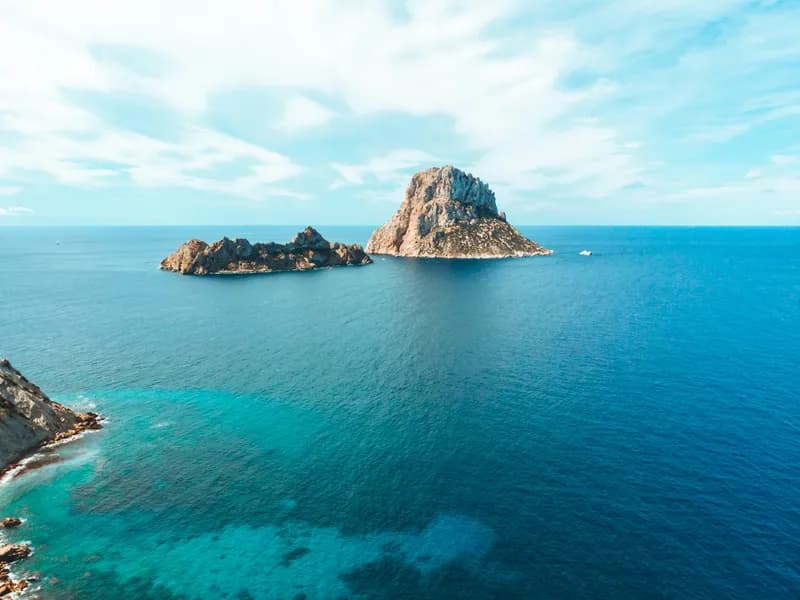
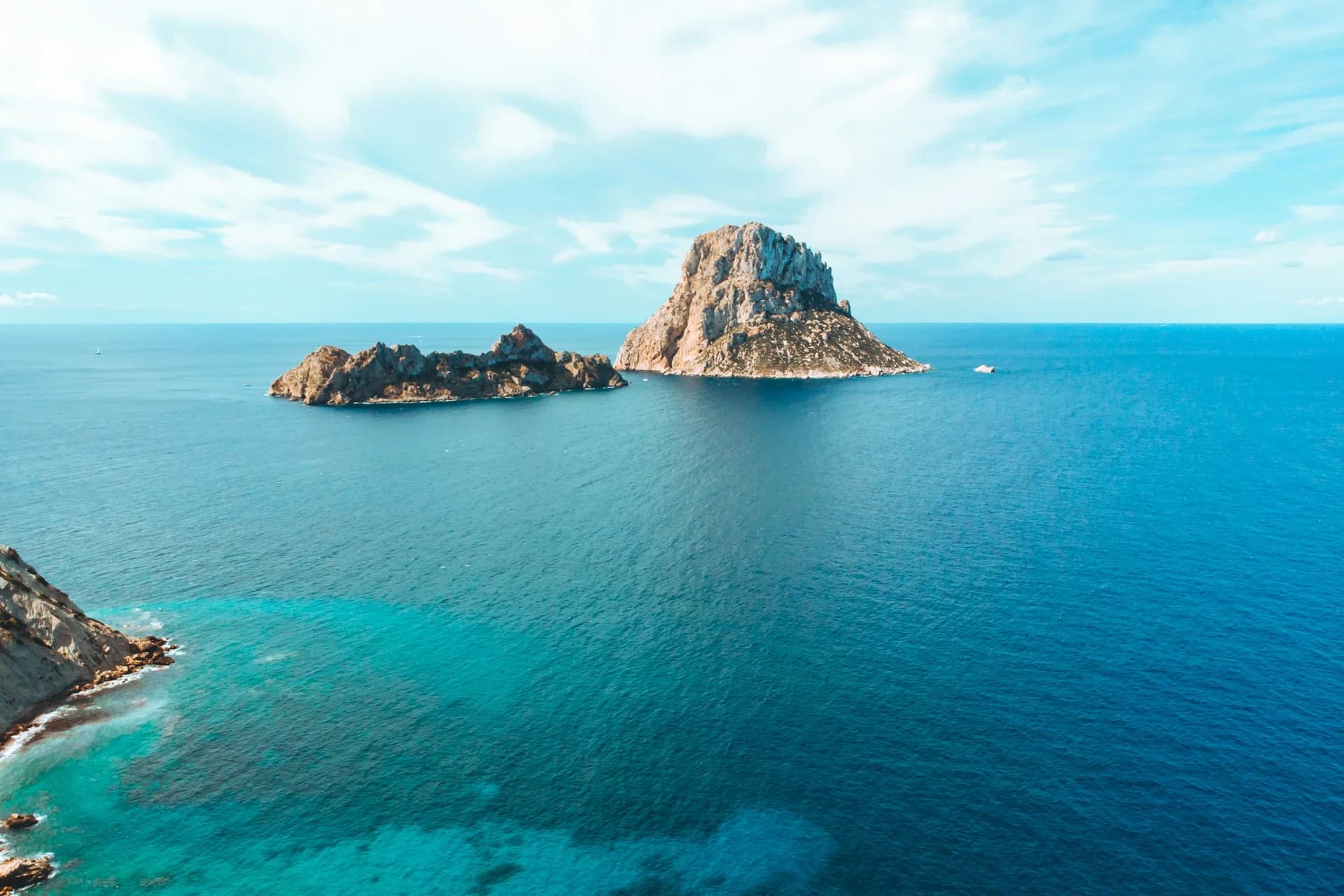
Magnetic anomalies, Odysseus's sirens — the science is unsettled, and that's part of the draw. What's certain is the rock itself: 382 meters of limestone rising straight out of the sea, turning from white to gold to black as the sunset light moves across it. Carlos first watched that sunset in 1999, newly arrived at 23, and it left a mark that's hard to put into words.
The viewpoint near the Torre des Savinar watchtower is a 20-minute walk from the road. Free. No infrastructure. Just you, the cliff, and the rock. It's the most Ibiza thing on the island — and it has nothing to do with clubs.
The one thing worth changing about modern Ibiza?
The cars. The island is 40 km long — you can bicycle from one end to the other in 3 hours. But in August the roads gridlock with rental cars, the dirt roads to the calas take a beating from SUVs, and parking at popular beaches turns into a nightmare.
Carlos would love a system like Formentera's, where the ferry discourages cars and everyone rides bikes. That ship has sailed. When you visit, rent a car — you need one for the calas — but drive slowly. The roads are narrow. The goats have right of way.
When should you come?
May. Or late September. The clubs are open — May has opening parties, September has closing parties. The calas are accessible. And the crowds run 40% smaller, the prices 30% lower, and you can actually find a parking spot.
June is Carlos's personal favorite. The island is green from spring rains, the figs are starting, the jasmine is blooming, and the water is warm enough to swim. The superclub lineups are building but haven't peaked yet.
Skip August unless you specifically want the full party experience and have the budget for it. August Ibiza is intense.
Would he ever go back to DJing?
He played a set at a friend's beach bar in Cala Xuclar last September. Small system, maybe 40 people, sunset. Three hours — old house, acid house, stuff from the 90s. No press, no social media, no 50 EUR tickets.
Someone came up afterward and said it was the best set they'd heard on the island. He thanked them and went home to feed the goats.
That's the Ibiza worth chasing. It still exists. You just have to know where to look.
Carlos pours another glass — a local red from a producer in San Mateu. The dog hasn't moved. Through the kitchen window, almond trees stand against a darkening sky, and far off, the lights of Ibiza Town begin to glow. The clubs are opening. The bass will start soon.
For the complete Ibiza experience, the comprehensive Ibiza guide covers clubs, beaches, and everything in between. And if the bohemian, off-the-beaten-path spirit of northern Ibiza appeals, Hvar in Croatia offers a similar duality of party coast and quiet agricultural interior.
But up here in the north, the only sound is cicadas.