
Why I Moved to San Miguel de Allende: A 12-Year Expat Tells All
Why San Miguel de Allende Wins You Over: A 12-Year Expat's Case for Staying
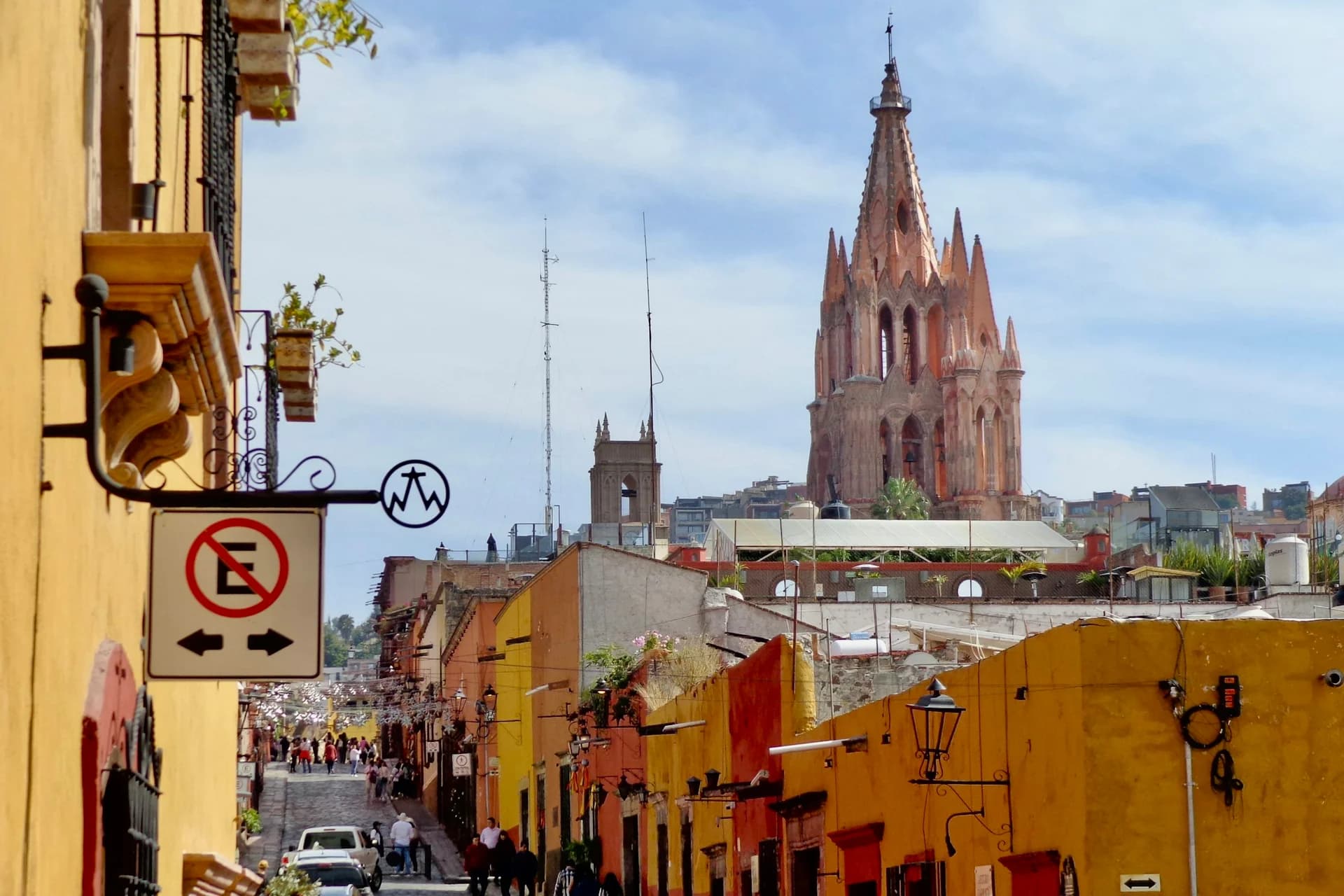
In 2014, a Chicago ceramicist came to San Miguel de Allende for a single weekend — and never moved back north. More than a decade later, she runs a small ceramics studio in the Centro and volunteers at a local arts foundation, one of countless people who arrive for a few days and quietly rearrange their whole lives around this town. Stand on a rooftop terrace above the Parroquia at golden hour, pink spires catching the last of the sun, and the reasons start to make themselves obvious.
What Makes You Stay
It begins with the light. Call it an artist's cliche if you want, but San Miguel at golden hour — when the Parroquia's pink spires catch the last sun and the whole town glows — is genuinely unlike anywhere else. Chicago has its beautiful summers. This is something different: a warmth and clarity that changes how everything looks.
Then there's the cost of living. A two-bedroom apartment in Centro with a rooftop terrace and a Parroquia view runs what a studio in Chicago's Wicker Park would. You can eat at excellent restaurants for $150–300 MXN ($8–16 USD). Your morning coffee is 40 pesos ($2.20). On what counts as a modest budget in the States, you live exceptionally well here.
What Tourists Get Wrong About San Miguel
They wear sandals. Every single time. They see "Mexico," pack beach clothes, and arrive to find cobblestone streets that will destroy any shoe without a solid sole. The streets are steep, uneven, and murderous on the ankles. Bring comfortable walking shoes with real grip.
They also stay on the tourist track — a stroll through the Jardin, a photo of the Parroquia, a meal at a rooftop restaurant, a souvenir, gone. But San Miguel holds 80+ art galleries, a UNESCO-listed church 14 km away with ceilings that rival the Sistine Chapel, natural hot springs hidden in caves, and one of the finest Day of the Dead celebrations in all of Mexico. Give yourself at least four days.
The Parroquia, Up Close
The Parroquia de San Miguel Arcangel is the church everyone photographs — those pink neo-Gothic spires against a blue sky. It was designed by an indigenous mason named Zeferino Gutierrez, who reportedly drew his inspiration from European cathedrals he'd seen only on postcards. That origin story only makes it more remarkable.
Entry is free. At night the spires are lit and the effect turns dramatic, glowing against a dark sky. Sunday mass is worth attending for the cultural experience alone, religious or not.
The real architectural treasure, though, sits 14 km north: the Sanctuary of Atotonilco, known as the "Sistine Chapel of Mexico." Its ceilings are covered in elaborate 18th-century frescoes and folk-art murals. Free entry, almost no tourists. Take a taxi ($150 MXN each way) — it will reshape how you understand Mexican art.
Where to Eat
Skip the Jardin restaurants, where tourist prices buy average food. Walk two blocks in any direction and the quality climbs while the price drops.
Cafe de la Parroquia — The local breakfast spot. Chilaquiles with green salsa ($90 MXN, about $5), fresh juice, strong coffee. Take a window seat and watch the Jardin wake up.
Mercado de Artesanias (the market) — Head to the upstairs food stalls for enchiladas mineras (a local specialty with potatoes and carrots), tamales, and pozole. Full meals run $60–100 MXN ($3–5). This is where locals eat lunch.
The Restaurant — Yes, that's its actual name, on Sollano Street, and it delivers one of the best fine-dining experiences in Mexico. The tasting menu ($1,200 MXN, about $65) is a revelation. Book ahead.
For a splurge, Quince Rooftop pairs the best Parroquia view in town with craft cocktails ($150–200 MXN) and small plates.
The Hot Springs
The hot springs are San Miguel's secret weapon — several of them, all about 10 km outside town.
La Gruta ($200 MXN, about $11) has pools set inside a cave grotto: you swim through a tunnel into a vaulted stone chamber thick with hot water and steam. It's surreal. Go on a weekday morning when it's nearly empty.
Escondido Place ($350 MXN) offers infinity pools that look out over the valley toward the mountains. More upscale, ideal for a half-day of pure relaxation.
Taxis from Centro run $120–150 MXN each way. Bring your own towel.
Is San Miguel Safe?
Longtime residents who've been here twelve years will tell you they've never once felt unsafe. San Miguel ranks consistently among the safest cities in Mexico, with a large foreign expat community — perhaps 10,000 Americans and Canadians — and a strong police presence in the Centro.
Basic precautions still apply. Don't walk alone in unlighted areas at night, use authorized taxis, and don't flash expensive jewelry. The tourist police (blue uniforms) are helpful, and many speak English.
The state of Guanajuato has security concerns in other areas, but San Miguel itself is a bubble. Walking home from dinner at 10PM along the cobblestones, you feel completely at ease.
The Best Time to Visit
October through April. The weather is close to perfect — 20–27°C during the day, cool evenings, almost no rain.
Day of the Dead (October 31 – November 2) is the single best time to come. San Miguel's celebration is among the most elaborate in Mexico: massive community altars fill the Jardin, face-painting artists craft stunning Catrina skulls, and candlelit processions wind through the streets to the cemetery. It's profound and beautiful.
La Alborada (September 29) marks San Miguel's patron saint celebration, with fireworks at 4AM — yes, 4AM. It's chaotic, loud, and thrilling.
Avoid July–September if you can; the rainy season brings afternoon downpours that flood the cobblestone streets.
If You're Thinking of Moving Here
Learn Spanish. Even the basics transform your experience. San Miguel has excellent language schools — Warren Hardy ($400 USD/week) and Academia Hispano Americana ($250 USD/week) — and even a few days of classes makes a real difference.
Come with an open mind about time, too. Things move slower here. Deliveries run late, appointments are approximate, construction takes twice as long. If you need everything to run like a Swiss train, San Miguel will drive you up the wall.
But if you can relax into the pace — if you can sit on a bench in the Jardin and watch the light shift across the Parroquia for an hour without once reaching for your phone — this place will change your life. It has changed plenty already.


