
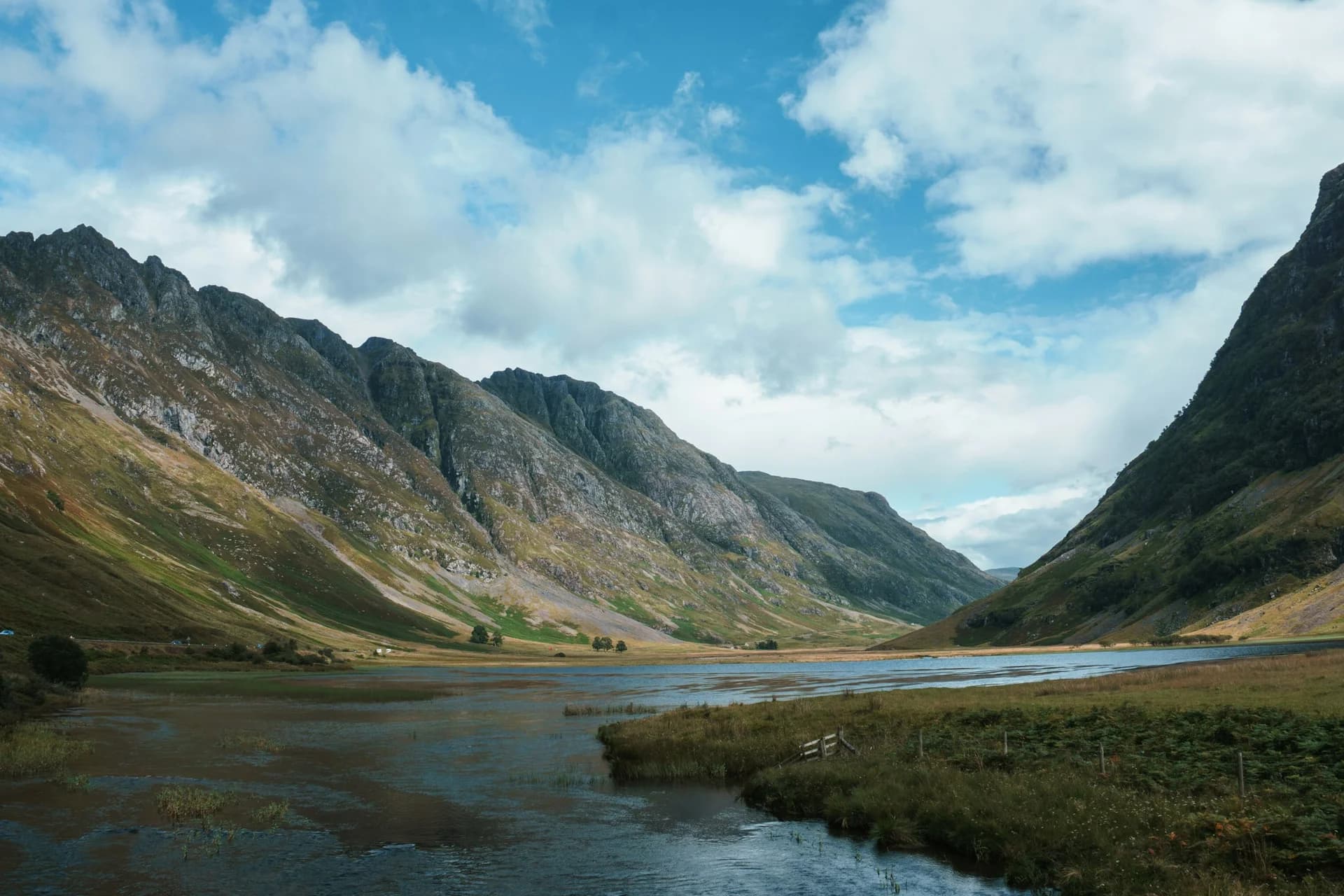
Scottish Highlands vs Lake District: Which UK Wilderness Is Right for You?
Scottish Highlands vs Lake District: Which UK Wilderness Is Right for You?
The Scottish Highlands and England's Lake District are the UK's two great wilderness destinations. Both offer mountains, lakes, and more rain than you'd like. Both attract hikers, photographers, and people trying to escape cities. But spend time in each and you'll realize they're not interchangeable — they offer fundamentally different experiences. If you're exploring the region, Edinburgh is Scotland's capital and the gateway to the Highlands.
I've spent weeks in both. Here's the honest comparison.
Scale
Scottish Highlands: ~26,000 km². Population: ~235,000 across the entire region. Some of the lowest population density in Western Europe. You can drive for an hour without seeing another car.
Lake District: ~2,362 km². A national park — much smaller and more contained. Population: ~42,000 permanent residents, but receives 19+ million visitor days per year.
Verdict: The Highlands are 11 times larger. If you want genuine solitude, there's no contest.
Landscape
Highlands: Vast, dramatic, and often bleak. U-shaped glacial glens, deep lochs (Loch Ness is 230 meters deep), mountain peaks (Munros over 914m), sea lochs, islands. The landscape is empty in a way that can feel almost uncomfortable — just rock, water, heather, and sky.
Lake District: Intimate and varied. Sixteen lakes (they call them "meres" and "waters"), green valleys, stone walls, white farmhouses, ancient woodlands. The fells (mountains) are smaller than Highland peaks but steep and rewarding. The highest — Scafell Pike at 978m — is England's highest point.
Verdict: Highlands for dramatic emptiness, Lake District for pastoral beauty. Both spectacular, different moods.
Hiking
Highlands: Ranges from valley walks to serious mountain scrambles. The "Munro-bagging" tradition (climbing all 282 peaks over 914m) drives serious hikers. Trails can be poorly marked. Weather is unpredictable. Mobile signal is sparse. Mountain rescue exists because it's needed.
Top hikes: Lost Valley (Glen Coe), Old Man of Storr (Skye), Vidden Trail equivalent challenges.
Lake District: World-class hiking with better-marked trails and more infrastructure. Alfred Wainwright's 214 fells provide a structured challenge. Paths are generally well-maintained. Mountain rescue is active but the terrain is less extreme.
Top hikes: Helvellyn (Striding Edge), Scafell Pike, Catbells (beginner-friendly with incredible views).
Verdict: Highlands for wilderness challenge, Lake District for accessible mountain walking.
Getting There & Around
Highlands: You need a car. Fly to Inverness, Edinburgh, or Glasgow and rent. Single-track roads with passing places are common. Fuel stations are scarce. Driving distances are long (Inverness to Skye: 2+ hours).
Lake District: Accessible by train (London to Windermere: 3.5 hours, from 30 GBP). Bus services connect the main villages. A car helps but isn't essential for a short stay. Much more compact — everything is within 30-45 minutes drive.
Verdict: Lake District is dramatically easier to reach and navigate without a car.
Accommodation & Cost
| Category | Highlands | Lake District |
|---|---|---|
| B&B/night | 60-120 GBP | 80-150 GBP |
| Hotel/night | 90-200 GBP | 100-250 GBP |
| Hostel/night | 20-35 GBP | 25-40 GBP |
| Pub meal | 12-18 GBP | 14-20 GBP |
| Pint of beer | 4-5 GBP | 4-6 GBP |
Verdict: Highlands are slightly cheaper and have wild camping (free, legal in Scotland). Lake District has more accommodation options but higher demand pushes prices up.
Unique Experiences
Only in the Highlands:
- Whisky distillery tours (Speyside, Islay)
- Eilean Donan and other dramatic castles
- Loch Ness and the monster myth
- Highland Games
- The Jacobite Steam Train (Glenfinnan Viaduct)
- Legal wild camping
- Midges (June-August, not a selling point)
Only in the Lake District:
- Beatrix Potter's Hill Top farm
- Wordsworth's Dove Cottage
- Lake cruises on Windermere and Derwentwater
- Kendal Mint Cake (the original energy bar)
- Stone circles (Castlerigg)
- Afternoon tea culture
Verdict: Highlands for castles and whisky, Lake District for literary heritage and lake cruises.
Weather
Both are wet. Let's be honest. The Highlands average more rain and lower temperatures. The Lake District gets heavy rainfall (Seathwaite is one of the wettest inhabited places in England) but milder temperatures. If you're exploring the region, London is the most common starting point for UK trips.
Both require waterproof jackets and layers regardless of season. Umbrellas are equally useless in both (wind).
Verdict: Lake District is milder. Neither is dry.
Trip Duration
Highlands: 5-7 days minimum. The distances are huge and trying to cover Glen Coe, Skye, Loch Ness, and Speyside in less than five days means spending most of your trip driving.
Lake District: 3-4 days is sufficient for a satisfying visit. You can hike two or three fells, take a lake cruise, visit a couple of villages, and eat pub food without feeling rushed.
Verdict: Lake District for a long weekend, Highlands for a week.
Who Should Go Where
Choose the Highlands if you:
- Want dramatic, empty landscapes
- Are comfortable with remote driving
- Have a full week
- Love whisky and castles
- Want the option of wild camping
- Don't mind midges
Choose the Lake District if you:
- Want accessible mountain walking
- Have a long weekend
- Prefer not to rent a car
- Travel with family or less experienced hikers
- Want cozy village pubs and afternoon tea
- Love literary history
Choose both if you: Have 10+ days. Start in the Lake District (3-4 days), drive north through the borders to Edinburgh, then rent a car for a Highland road trip (5-7 days). This is the ultimate UK nature trip.
Practical Planning
Highlands logistics:
- Fly to Edinburgh or Glasgow, rent a car (essential)
- Book Skye accommodation 3-6 months ahead for summer
- Fuel up at every station — remote areas can be 50+ miles between pumps
- Pack midge spray June-August
- Allow 5-7 days minimum
Lake District logistics:
- Train from London to Windermere (3.5 hours, from 30 GBP)
- Car helpful but not essential — bus service connects main villages
- Accommodation is plentiful but book ahead for bank holiday weekends
- Pack waterproofs regardless of forecast
- 3-4 days is sufficient
Food and Drink
Highlands: Whisky is the obvious draw — Speyside alone has 50+ distilleries. Haggis, cullen skink (smoked haddock soup), and west coast seafood (langoustines, scallops) are the culinary highlights. Pub food is reliable and hearty.
Lake District: Traditional pub food is the backbone — Cumberland sausage, Herdwick lamb, sticky toffee pudding (invented here at the Cartmel Village Shop). Afternoon tea culture is strong. Kendal Mint Cake is the original energy bar — hikers have carried it up mountains for over a century.
Both are extraordinary. Both will get you wet. But the Highlands will make you feel small, and the Lake District will make you feel at home. Different gifts, equally valuable. If you're exploring the region, Reykjavik is similarly dramatic landscapes across the North Atlantic.


