11 Unforgettable Things to Do in Athens (Beyond Just the Acropolis)
11 Unforgettable Things to Do in Athens (Beyond Just the Acropolis)
Athens rewards travelers who keep moving. One hour you're standing under 2,500-year-old marble columns; the next you're eating a three-euro souvlaki on a square full of orange trees, then watching the sun drop behind the Saronic Gulf from a rooftop. The whole center is small and walkable, and the smart play is to mix the big-ticket ruins with the scruffier corners that locals actually use. Here are eleven things worth your time — with the practical details to make each one painless.
1. Beat the Crowds at the Acropolis and Parthenon
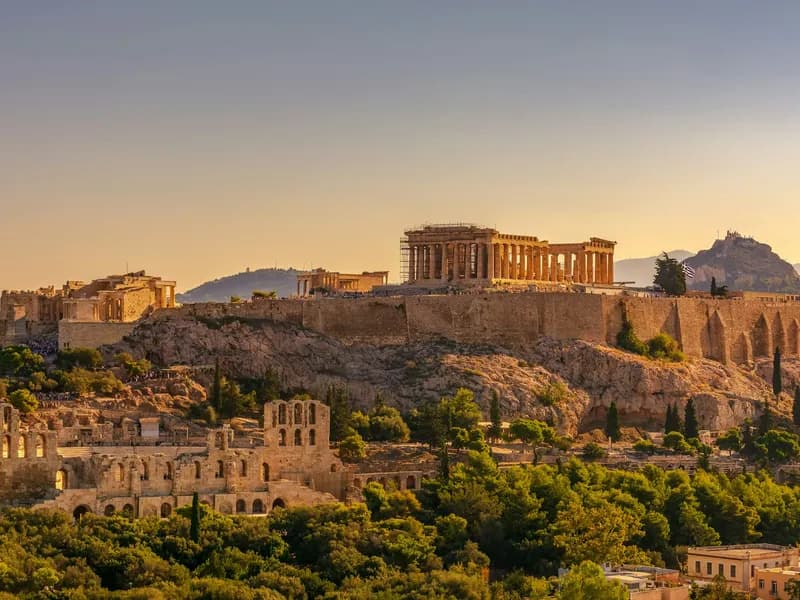
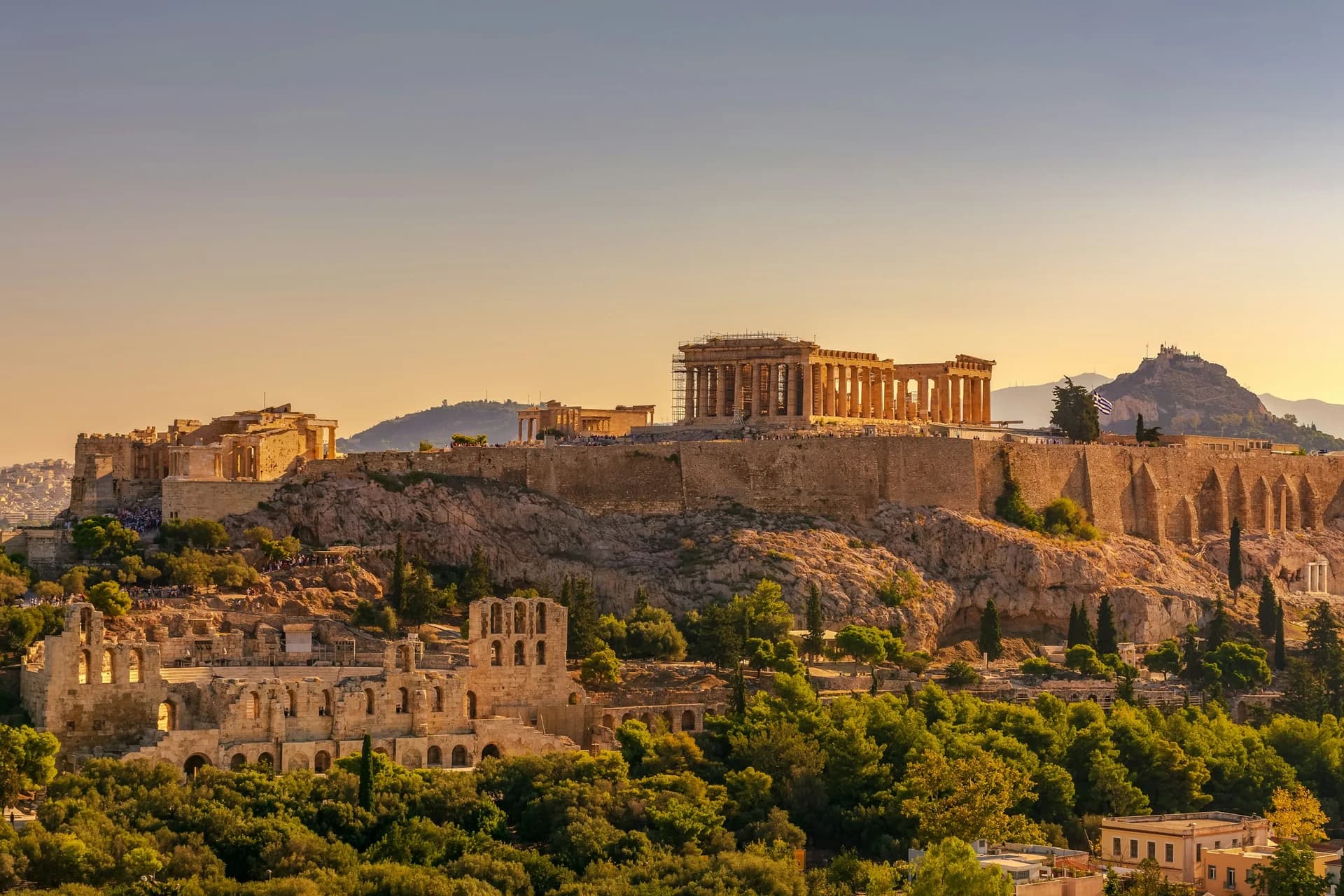
Go at 8AM, the moment the gates open. By 10:30 the place is shoulder-to-shoulder and the marble is throwing back heat. Take the red line (Line 2) to Acropoli station and climb from the quieter southeast path rather than the main west entrance where the tour groups bottleneck. The ticket runs €20 (about $22) in summer and drops to €10 in winter. The Parthenon itself is roped off — you circle it — but the light at that hour, raking across the columns, is the reason photographers set alarms. If a ruined ancient city crowning a natural wonder is your idea of a perfect morning, our field guide to Pamukkale covers the Greco-Roman ruins of Hierapolis perched above Turkey's white travertine terraces.
2. Stand on Glass at the Acropolis Museum
Three hundred meters downhill from the rock sits Bernard Tschumi's glass-and-concrete museum, and it's one of the best-designed museums in Europe. The ground floor is a transparent walkway suspended over a live excavation — you're literally walking above an ancient neighborhood. Up top, the Parthenon Gallery is laid out at the exact dimensions of the temple, oriented so you see the real Parthenon through the windows. Entry is €15 (around $16). The café on the second floor has a Parthenon view and prices that won't insult you — a rarity this close to a landmark.
3. Get Lost in Anafiotika, the Island Village Inside the City
Tucked onto the north slope of the Acropolis is a pocket of whitewashed, blue-shuttered houses that looks airlifted from a Cycladic island. That's basically what happened — builders from the island of Anafi put it up in the 1800s and brought their architecture with them. No cars fit, the lanes are barely shoulder-width, and cats own the place. It's free, it's residential, so keep your voice down. Come at golden hour when the white walls go pink.
4. Walk the Ancient Agora and the Temple of Hephaestus
This was the beating heart of classical Athens — the marketplace where Socrates buttonholed strangers and democracy got argued into shape. The standout is the Temple of Hephaestus, the best-preserved Doric temple anywhere in Greece, still standing nearly whole — the same uncanny, time-capsule feeling waits at the clifftop monasteries of Meteora if your trip runs north. Enter from Adrianou street near Monastiraki metro; the ticket is €10 (about $11), or free with the combo pass below. Duck into the reconstructed Stoa of Attalos, now a small museum, to escape the midday sun.
5. Meet the World's Oldest Computer at the National Archaeological Museum
Most visitors never make it here, and that's a mistake — this is the single greatest collection of ancient Greek art on the planet. It sits up on 28 Oktovriou (Patission) street, a short walk from Victoria station on the green line. The gold Mask of Agamemnon, the bronze Jockey of Artemision mid-gallop, and the Antikythera Mechanism — a 2,000-year-old geared device that tracked the heavens, often called the first analog computer — are all here. Entry is €12 in high season. Give it two hours minimum — and if these antiquities leave you hungry for more of the ancient world, Cairo's pharaonic galleries are the natural next pilgrimage across the Mediterranean.
6. Haggle at the Monastiraki Flea Market
The shops along Ifestou street run daily, but the real market wakes up on Sunday morning around Avissinias Square. That's when the dealers spread out vinyl records, brass scales, old film cameras, and furniture of uncertain provenance across the pavement. Bargaining is expected — offer two-thirds and meet in the middle, with a smile. Even if you buy nothing, the people-watching is worth the walk over from Monastiraki station.
7. Climb (or Ride) Lycabettus Hill for Sunset
Lycabettus is the highest point in central Athens, and from the little white chapel of St. George at the summit you get the whole city laid out below — the Acropolis glowing, the sea beyond, the sprawl running to the mountains. You can hike up in about 25 minutes from the Dexameni square in Kolonaki, or take the funicular from the top of Aristippou street for roughly €10 round trip ($11). Time it for sunset, but bring a light layer — the wind picks up once the sun's gone.
8. Eat Your Way Through Souvlaki Row and the Central Market
Skip the tourist tavernas with the photo menus. Head instead to Kostas on Agia Irini square, a tiny counter grilling pork souvlaki since the 1950s — about €3 ($3.30) and it closes when the day's meat runs out, so go for lunch. For raw spectacle, walk into Varvakios Agora, the covered central market on Athinas street, where the butchers and fishmongers put on a show, and the spice shops on nearby Evripidou street smell incredible. Finish with loukoumades — honey-soaked dough balls — at Krinos on Aiolou street, around €4 a plate.
9. Drink Above the Ruins at a Rooftop Bar
Athens does rooftop bars better than almost anywhere, mostly because the view comes with a floodlit Parthenon. A for Athens, perched over Monastiraki square, frames the Acropolis right behind your glass; get there before sunset to claim a spot at the rail. For something more under-the-radar, Couleur Locale hides up a passage off Normanou street. Cocktails run €10–12 (roughly $11–13), which buys you one of the best skyline seats in the city.
10. Hunt Street Art in Psyrri and Exarchia
The ancient stuff gets the headlines, but Athens is also one of Europe's great street-art cities, easily rivaling Barcelona's mural-covered backstreets for sheer color. The walls of Psyrri carry large-scale murals from artists like INO and WD, while Exarchia — the city's anarchist-leaning student quarter — wears its politics in spray paint. Wander both by day, coffee in hand. Order a freddo espresso (iced, whipped, about €3) like the locals and you'll blend right in.
11. Chase the Sunset at Cape Sounion's Temple of Poseidon
When you want one half-day outside the city, point yourself at Cape Sounion, 70km south on the tip of Attica, where the marble Temple of Poseidon stands on a cliff over the Aegean — the same clifftop-meets-sea drama that makes Italy's Amalfi Coast so addictive, just with 2,500 years of history bolted on. The KTEL coastal bus from the Pedion tou Areos area takes about two hours and hugs the sea the whole way; a rental car is faster. Entry is €10. Look for the column where Lord Byron carved his name in 1810, then position yourself for the sunset — it's the reason everyone makes the trip.
Pro Tip: Tickets, Timing, and the One-Day Trap
Don't cram the Acropolis, the big museums, and a day trip into one day — you'll race past the best parts. The €30 combo ticket ($32) covers seven archaeological sites over five days, including the Acropolis and the Agora, and buying it online lets you walk straight past the ticket window. Wear shoes with grip; centuries of footsteps have polished the marble paths to a sheen, and they get genuinely slippery. The metro is cheap and clean (€1.20 a single ride, €4.10 for a 24-hour pass) and the airport line drops you at Syntagma in 40 minutes. If you're bookending the city with an island leg, a fast ferry from Piraeus can put you on the island of Mykonos in a few hours. One last thing — keep small cash on you, because the best souvlaki counters in town still don't take cards.