
Transylvania FAQ: 15 Questions About Castles, Bears, and the Best Road in the World
Transylvania FAQ: 15 Questions About Castles, Bears, and the Best Road in the World
Transylvania occupies a unique space in the traveler's imagination — part Gothic fantasy, part Carpathian wilderness, part medieval time capsule. The reality is even better than the Dracula marketing suggests. Here's everything first-timers need to know.
Q: Is Transylvania actually about Dracula?
A: Barely. Bram Stoker never visited Romania. Bran Castle is marketed as "Dracula's Castle" but Vlad the Impaler — the historical figure Stoker loosely based Dracula on — has only a tenuous connection to it. He may have been imprisoned there briefly. That's it.
What IS real: Vlad the Impaler was born in Sighisoara (his birth house is now a restaurant), ruled Wallachia (south of Transylvania), and was genuinely terrifying. The region's Gothic atmosphere — misty forests, clifftop castles, wolf-prowled mountains — is authentic. But Transylvania's real draw is medieval Saxon towns, Carpathian nature, and some of the best-preserved rural life in Europe.
Q: Is the Transfagarasan Highway worth the hype?
A: Absolutely. A 90km mountain road crossing the Fagaras Mountains at 2,042m — famously called "the best road in the world" by Top Gear — rivaling the Dolomites' mountain passes. Hairpin turns, sheer drops, and Balea Lake at the summit. Free to drive.
The catch: it's only open late June to late October (exact dates vary by weather). Check drumuri.fb.com or call the road authority. Even when "open," the summit can close temporarily for fog or storms.
Allow 4-5 hours for the full crossing with photo stops. Start early to avoid afternoon fog. If the Transfagarasan is closed, the parallel Transalpina road (DN67C) is equally scenic and opens earlier.
Q: Can you actually see bears?
A: Yes. Romania has Europe's largest brown bear population — approximately 8,000 animals, mostly in the Carpathian Mountains around Brasov.
Guided bear-watching hides near Brasov offer 90%+ sighting rates at dusk. Sessions last 2-3 hours. Cost: 150-200 RON (~30-40 EUR). Operators include Absolute Carpathian and TransylvaniaBear.
The Libearty Bear Sanctuary in Zarnesti (40 RON entry) rescues captive bears and provides a guaranteed (if less wild) viewing experience.
Important: never approach wild bears while hiking. Make noise on trails. Never leave food unattended at campsites.
Q: How do you get around?
A: Rent a car. Transylvania's highlights are spread across the region, and public transport between towns is slow and infrequent. Book from Brasov or Sibiu (from 100-150 RON/day, 20-30 EUR). Roads are generally good but expect 60-80 km/h averages on national roads.
Trains connect major cities (Brasov-Sibiu 3h, ~50 RON) but are slow. Buses supplement train routes.
Q: How cheap is it?
A: Extremely. Restaurant mains: 30-60 RON (6-12 EUR). Craft beer: 12-20 RON. Boutique hotel in Brasov old town: 200-400 RON (40-80 EUR). Museum entries: 10-50 RON. Budget travelers can do 150-200 RON (30-40 EUR) per day including accommodation.
Q: What are the must-see towns?
A: Brasov — medieval Saxon city with the Gothic Black Church (15 RON), Council Square, Tampa Mountain cable car (20 RON), and the Hollywood-style BRASOV sign. Allow a full day.
Sibiu — former European Capital of Culture with pastel baroque buildings, "eyes of the city" roof windows, and Brukenthal Museum (30 RON). Outstanding restaurants. Allow a full day.
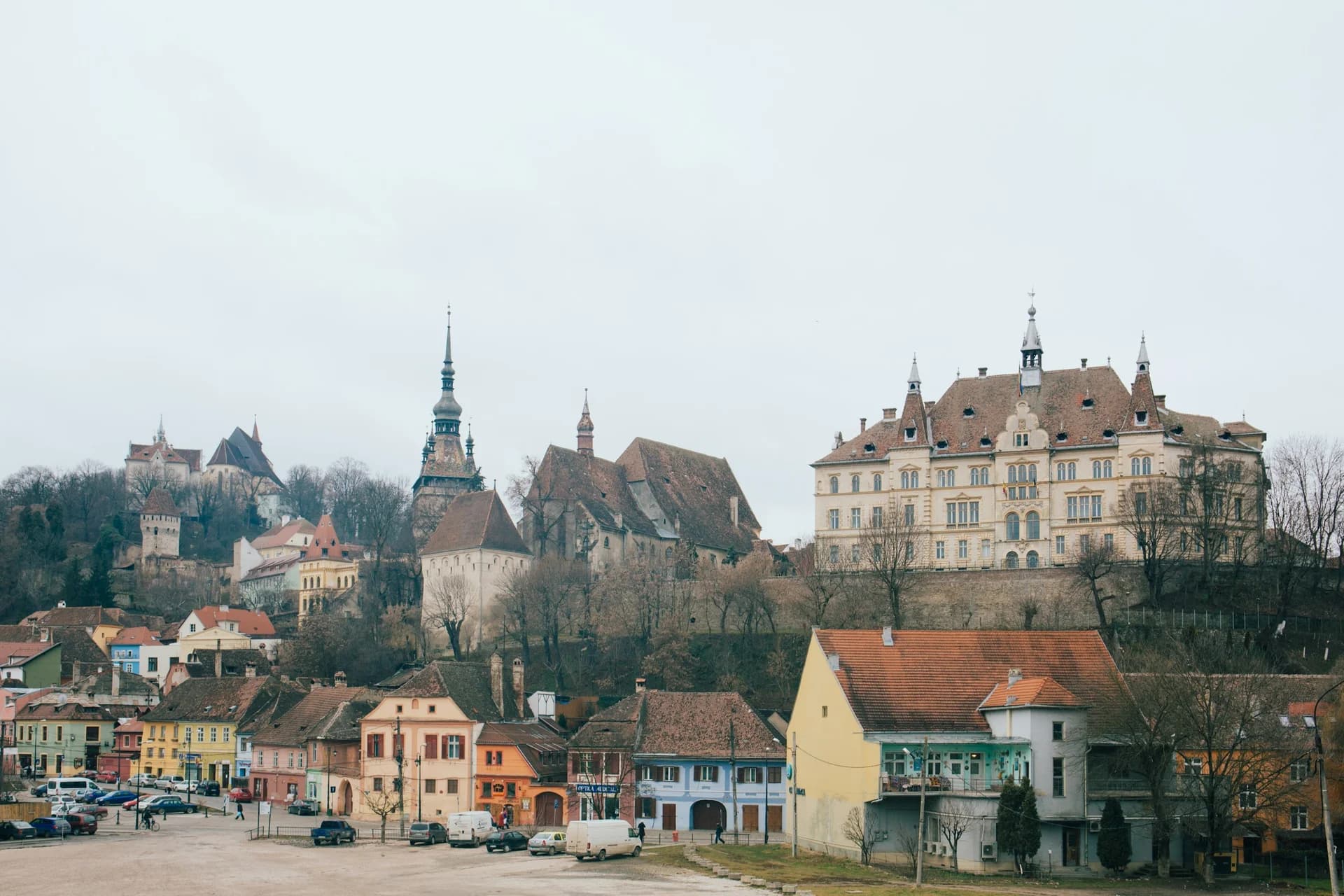
Sighisoara — UNESCO citadel, birthplace of Vlad the Impaler. Clock Tower museum (15 RON), Scholars' Staircase (175 covered wooden steps from 1642). Allow 3 hours.
Q: What about the painted monasteries?
A: The five UNESCO-listed monasteries of Bucovina (northeast Transylvania/Moldavia) have vivid exterior frescoes from the 15th-16th century. Voronet — the "Sistine Chapel of the East" — is famous for its unique blue pigment. Entry: 10 RON each.
They're 5-6 hours from Brasov. Best as a 2-day trip with an overnight in Gura Humorului.
Q: Is Bran Castle worth visiting?
A: For the exterior and setting, yes. The 14th-century fortress on a 60m rock bluff is dramatic. Entry: 50 RON (~10 EUR). The interior is more about Queen Marie's residence than Dracula. The torture room exhibit is entertainingly kitsch.
Skip the souvenir gauntlet outside. The drive from Brasov takes 40 minutes (bus 7 RON).
Q: What should you eat?
A: Sarmale (cabbage rolls stuffed with meat and rice) — hearty, comforting, served everywhere. Mici (grilled minced meat rolls with mustard) — the Romanian street food essential. Papanasi (fried doughnuts with sour cream and jam) — dessert perfection.
Crama Sibiul Vechi in Sibiu does the best traditional food in the city. Mains 30-50 RON.
Q: What's the visa situation?
A: Romania joined the EU in 2007 and the Schengen air zone in 2024. US, UK, Canadian, and Australian citizens enter visa-free for 90 days. Indian citizens need a Romanian visa or a valid multi-entry Schengen visa. Check the latest Schengen status as land border rules are evolving.
Q: Is the village of Viscri worth the detour?
A: Yes. King Charles III (then Prince of Wales) bought a house here, which brought global attention to this tiny Saxon village where life continues as it has for centuries. Horse carts on roads, hand-scythed meadows, communal cheese-making. The fortified church (15 RON) is stunning. Buy local jams, honey, or wool socks to support the community.
Q: When should you go?
A: May to September for warm weather (20-30°C) and the Transfagarasan. December for Christmas markets in Sibiu and Brasov. July-August is peak but manageable — Transylvania doesn't have mass tourism crowds like Western Europe.
Q: How many days do you need?
A: Minimum 5 days. Sample itinerary: Day 1-2 Brasov (old town, Bran Castle, bear watching). Day 3 Sighisoara. Day 4 Transfagarasan drive. Day 5-6 Sibiu + Viscri.
Q: Is it safe?
A: Very safe. Romania has low violent crime. Watch for stray dogs in rural areas — they're generally non-aggressive but best avoided. The main safety concern is bear awareness when hiking in the Carpathians.
Q: What's the one thing most people don't expect?
A: How beautiful and affordable it is. Travelers arrive expecting Dracula kitsch and find medieval towns as charming as anywhere in Austria, mountain scenery as dramatic as the Alps, food as hearty as the best of Central Europe, and prices that make Western European cities look like a joke.
Transylvania is Europe's best-kept secret — like Plovdiv, it won't stay secret much longer.
Quick Reference
| Detail | Info |
|---|---|
| Currency | Romanian Leu (RON) |
| Language | Romanian (Hungarian in some areas) |
| Airports | Sibiu (SBZ), Brasov-Ghimbav (GHV), Cluj (CLJ) |
| Driving | Right side, valid EU/international license |
| Tipping | 10% at restaurants |
| Best months | May-September, December |
| Transfagarasan | Open late June to late October only |


