
Accra

Key Facts
Best Time to Visit
November to March (dry season, Harmattan haze); or July-August (minor dry season)
Language
English (official), Twi, Ga, Ewe
Currency
Ghanaian Cedi (GHS)
Time Zone
GMT (UTC+0)
Airport
Kotoka International Airport (ACC)
Population
~4.2 million (Greater Accra metro)
Climate
Tropical savanna; hot and humid year-round, avg 25-32°C; rainy seasons Apr-Jun and Sep-Oct
Safety Rating
Exercise Increased Caution (Level 2) — one of West Africa's safest capitals
Top Highlights
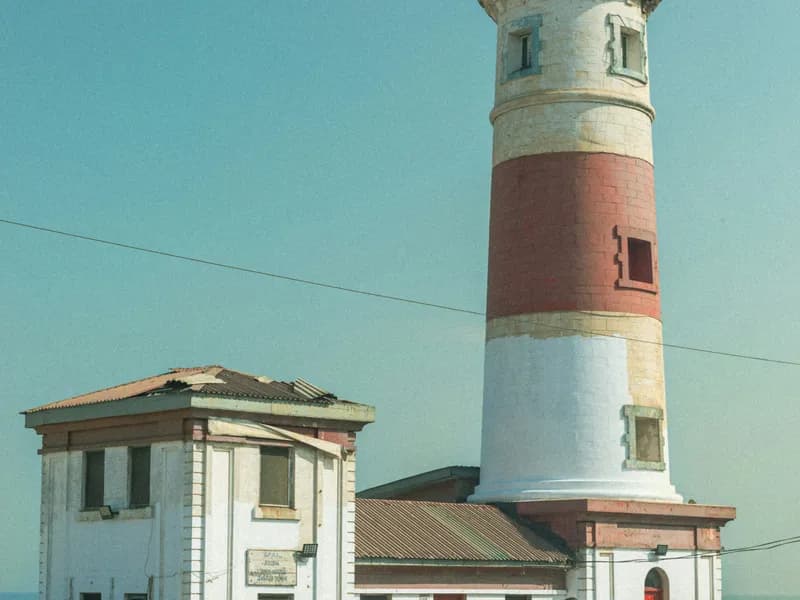
Jamestown & Ussher Fort
Accra's oldest neighborhood, a gritty, photogenic fishing quarter with colonial-era lighthouses and forts built by the Dutch and British. Ussher Fort (entry ~20 GHS) is now a museum. Best explored with a local walking tour guide (~100-150 GHS for 2 hours). Go in the morning when the fishing boats land.
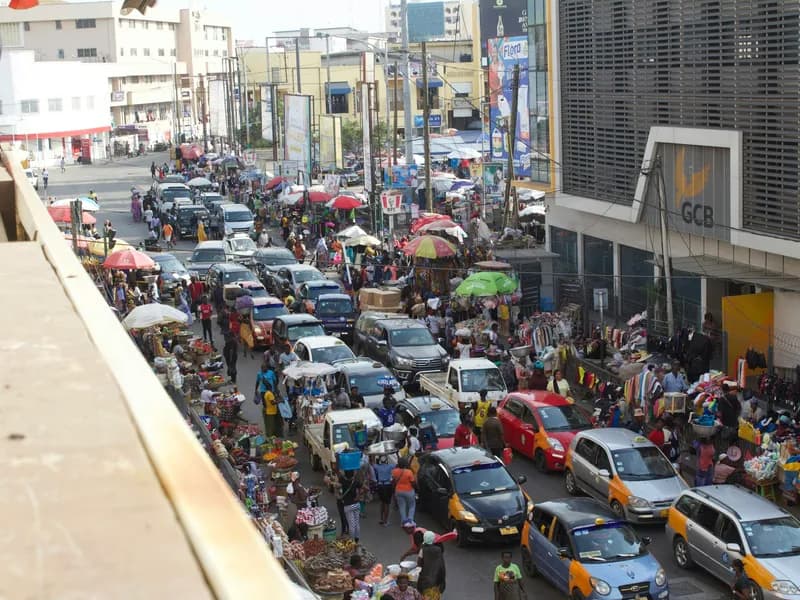
Makola Market
Accra's sprawling, chaotic central market where you can buy everything from kente cloth to electronics. A sensory overload of color and sound. Keep valuables secure, go with minimal belongings, and bargain — starting at 50-60% of the asking price is standard. Open daily, busiest on Saturdays.
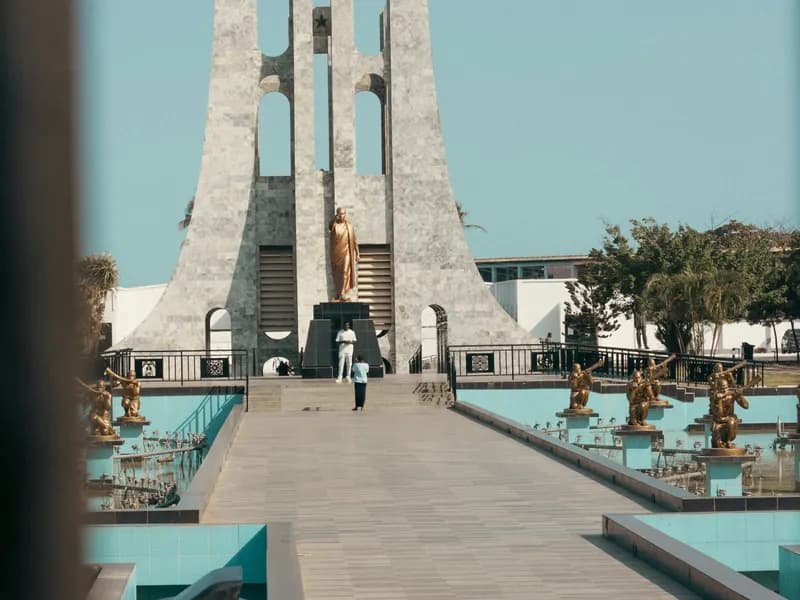
Kwame Nkrumah Memorial Park
A tranquil park and mausoleum honoring Ghana's first president and pan-African icon, surrounded by fountains and gardens. Entry: 10 GHS for Ghanaians, 20 GHS for foreigners. The museum inside chronicles Ghana's independence struggle. Allow 1 hour. Located downtown near the old polo grounds.
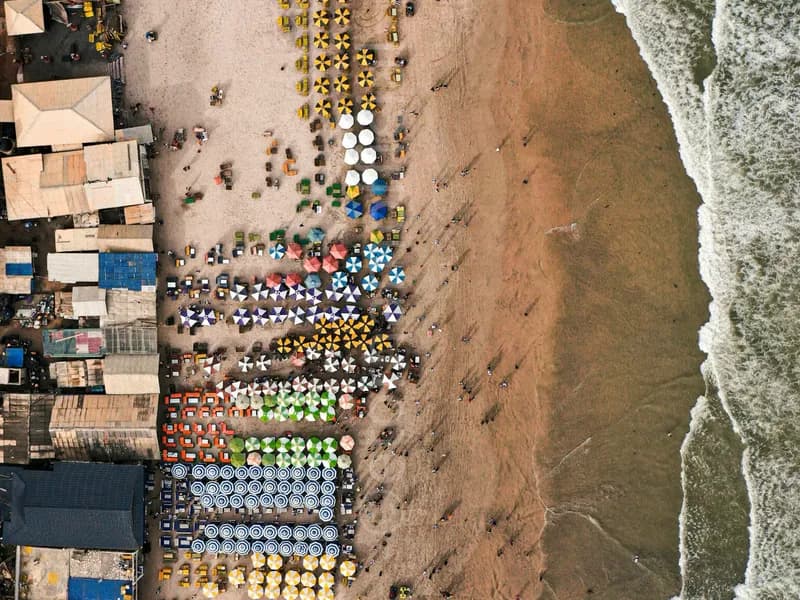
Labadi Beach (La Pleasure Beach)
Accra's most popular beach, especially lively on weekends with live music, drumming, and horse rides. Entry: 10-15 GHS. Vendors sell grilled tilapia, kenkey, and coconut water. The water is warm year-round but has strong currents — swim only in designated areas. Best vibe on Saturday afternoons.
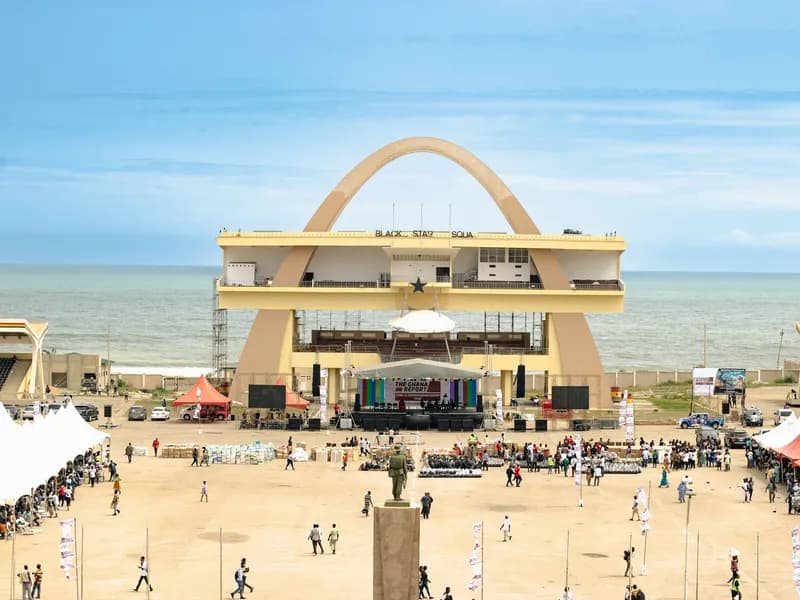
Fantasy Coffin Workshops (Paa Joe & Others)
Teshie and Nungua neighborhoods are home to artisans who craft elaborate fantasy coffins shaped like fish, cars, Coca-Cola bottles, and more. Visit workshops like Paa Joe's (free, tips appreciated) and you can commission a miniature coffin as a souvenir (~100-300 GHS). A uniquely Ghanaian art form.
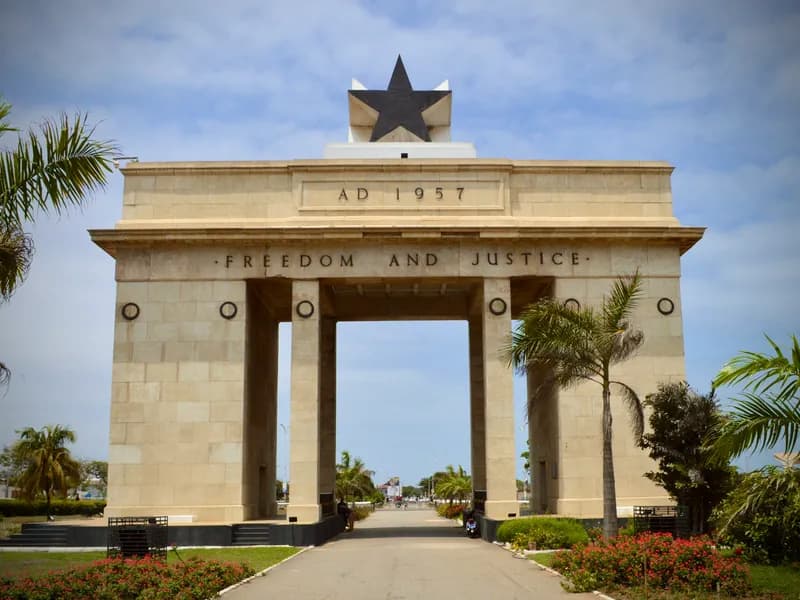
National Museum of Ghana
Small but excellent museum covering Ghanaian history from the slave trade to independence. Entry: 15 GHS. Highlights include Ashanti gold weights, kente weaving displays, and archaeological finds. Allow 1-2 hours. On Barnes Road near the University of Ghana campus.
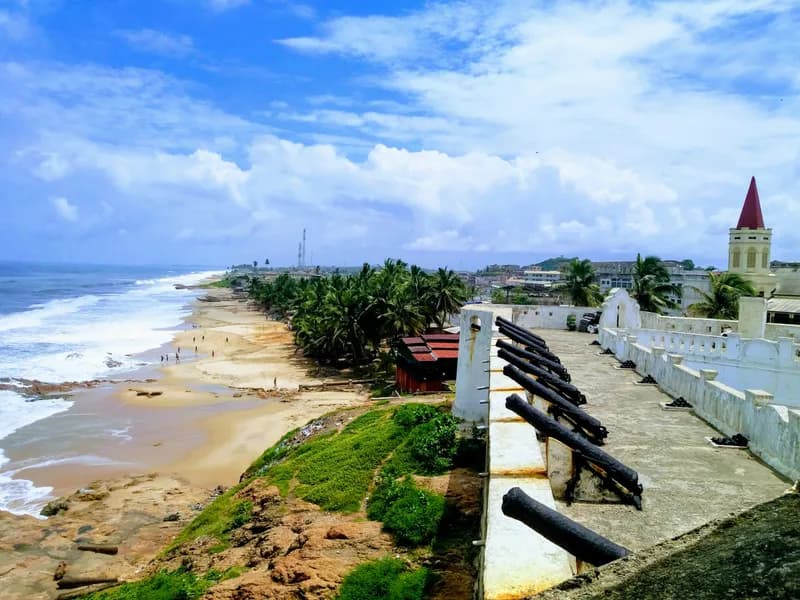
Cape Coast Castle (Day Trip)
UNESCO World Heritage slave fort 150 km west of Accra, with the harrowing 'Door of No Return.' One of the most powerful historical sites in Africa. Entry: 40 GHS for Africans, 90 GHS for non-Africans. Guided tours run every 30 minutes. Combine with nearby Kakum National Park canopy walk.
Planned Itinerary
7-Day Accra Itinerary
Arrival in Accra
Arrive at Kotoka International Airport (ACC). Buy a local SIM card (MTN or Vodafone, ~30 GHS with data) in the arrivals hall. Uber or Bolt to your hotel in Osu or Labone — Accra's most visitor-friendly neighborhoods.
Airport arrival and SIM card(1 hour)
Get an MTN SIM and register for MoMo (mobile money). Pre-book a Bolt ride to avoid taxi negotiation — 20-40 GHS to Osu
Check into hotel in Osu/Labone(1 hour)
Kempinski Gold Coast ($200+), La Villa Boutique (~$80-120), or AH Hotel (budget, ~$40-60). Osu is walkable with restaurants and nightlife
Evening walk along Oxford Street, Osu(1.5 hours)
Accra's liveliest strip — street food vendors, shops, galleries, and bars. The energy is infectious. Try kelewele (spicy fried plantain) from a street vendor for 5-10 GHS
Dinner at Buka Restaurant(1.5 hours)
Popular spot in Osu for authentic Ghanaian food. Banku with tilapia and pepper sauce 30-50 GHS. Generous portions in a lively atmosphere
Jamestown & Downtown History
Explore Accra's oldest neighborhood — the gritty, photogenic fishing quarter of Jamestown — and the downtown historical sites.
Jamestown walking tour(2.5 hours)
Book with a local guide (100-150 GHS for 2 hours). See Ussher Fort (entry ~20 GHS), the lighthouse, and the fishing harbor where boats land in the morning. Raw, real, and unforgettable
Kwame Nkrumah Memorial Park(1 hour)
Tranquil park honoring Ghana's first president. Entry 20 GHS for foreigners. The mausoleum and museum chronicle Ghana's independence struggle. Allow 1 hour
Lunch at Osu night market area(1 hour)
Waakye (rice and beans) with spaghetti, shito, and fried plantain for 15-25 GHS. Look for the longest queue — that's the best vendor
National Museum of Ghana(1.5 hours)
Entry 15 GHS. Ashanti gold weights, kente weaving displays, and archaeological finds. Small but excellent. On Barnes Road
Dinner at Santoku(1.5 hours)
Japanese-Ghanaian fusion in Labone. Inventive cocktails, sushi, and grilled meats. Mains 80-150 GHS. The rooftop has skyline views
Cape Coast Castle & Kakum Canopy Walk
Full-day trip to Cape Coast (150 km west, 3 hours). Visit the haunting slave castle and walk above the rainforest canopy at Kakum National Park.
Drive to Cape Coast(3 hours)
Hire a driver for the day (300-500 GHS) or take an STC bus from Kaneshie station (40-50 GHS). The coastal road passes fishing villages
Cape Coast Castle tour(1.5 hours)
UNESCO World Heritage slave fort. Entry 90 GHS for non-Africans, 40 GHS for Africans. Guided tours every 30 minutes through the dungeons and the Door of No Return. One of the most powerful historical sites in Africa
Lunch at Castle Beach restaurant(1 hour)
Grilled fish with banku on the beach below the castle. 25-40 GHS. The juxtaposition of beauty and history is jarring and appropriate
Kakum National Park canopy walkway(2 hours)
30 km from Cape Coast. 40 GHS entry plus 5 GHS camera fee. Walk 30 meters above the rainforest floor on swinging rope bridges — 350 meters of walkway through the tree canopy. Not for the vertigo-prone
Return to Accra(3 hours)
Evening drive back. Long day but absolutely essential
Makola Market & Fantasy Coffins
Morning in Accra's legendary Makola Market, then visit the world-famous fantasy coffin workshops in Teshie.
Makola Market(2 hours)
Accra's sprawling central market — kente cloth, beads, electronics, everything. Keep valuables secure, go with minimal belongings. Bargain from 50-60% of asking price. Busiest on Saturdays
Fantasy coffin workshops in Teshie(1.5 hours)
Visit Paa Joe's workshop or Hello Design House. Elaborate coffins shaped like fish, cars, phones, and Coca-Cola bottles. Free entry (tips appreciated). Commission a miniature coffin souvenir for 100-300 GHS
Lunch at Asanka Local(1 hour)
Near Osu. One of Accra's best chop bars elevated — fufu with light soup, red red (bean stew with plantain). Mains 25-50 GHS. Air-conditioned for a comfortable local food experience
Labadi Beach afternoon(2 hours)
Accra's most popular beach. Entry 10-15 GHS. Grilled tilapia, kenkey, coconut water from vendors. Live music on Saturday afternoons. Warm water, strong currents — swim in designated areas only
Rest Day — Art & Cuisine Deep Dive
A slower day exploring Accra's booming art scene and its world-class street food.
Artist Alliance Gallery(1.5 hours)
Near Labadi Beach. Three floors of Ghanaian contemporary art — painting, sculpture, textiles. You can buy original work from 50-5,000 GHS. Gallery staff explain the artists' backgrounds
Lunch at Azmera(1.5 hours)
Ethiopian-Ghanaian fusion in East Legon. Injera platters and local specialties. A unique Accra dining experience. Mains 50-80 GHS
Afternoon at Aburi Botanical Gardens(3 hours)
45 minutes north of Accra in the hills. Peaceful botanical gardens established in 1890. Entry 10 GHS. Cool temperature, palm avenues, and mountain views. A welcome escape from the heat
Street food tour in the evening(2 hours)
Explore Osu's night food scene. Red red from a street vendor (10-15 GHS), suya sticks (5-15 GHS), and hausa koko (millet porridge) with koose (bean cake). Follow the locals
Accra Contemporary Culture
Explore Accra's modern creative scene — from the W.E.B. Du Bois Center to trendy rooftop bars and live music.
W.E.B. Du Bois Center(1 hour)
The home and burial site of the African-American intellectual who became a Ghanaian citizen. Entry 15 GHS. A powerful heritage site, especially meaningful for diaspora visitors
Kente weaving village visit in Bonwire (optional)(3 hours)
If time allows, drive 1.5 hours to Bonwire near Kumasi to see kente being woven on traditional looms. Or visit the kente sellers at Makola for finished cloth
Lunch at Coco Lounge(1.5 hours)
Trendy spot in Osu. Continental and Ghanaian menu. Good cocktails. Mains 60-120 GHS
Live music at +233 Jazz Bar & Grill(2.5 hours)
Accra's premier live music venue in North Ridge. Jazz, highlife, and afrobeats. Check their events calendar. Cover 30-50 GHS on performance nights. Music starts around 8-9 PM
Departure from Accra
Final morning. Last jollof rice, last souvenirs, then airport transfer.
Morning at Art Centre (Centre for National Culture)(1.5 hours)
Large craft market near the National Theatre. Drums, baskets, paintings, fabrics. Bargain hard — tourist prices start high. Better quality and variety than airport shops
Last Ghanaian meal(1 hour)
One final plate of jollof rice — Ghana's version is the best and the rivalry with Nigeria is real. Auntie Muni's or any chop bar in Osu. 20-30 GHS
Airport transfer and departure(1 hour)
Bolt to Kotoka Airport. Avoid rush hours (7-9 AM, 4-7 PM). Allow 3 hours before international flights. A 10 km ride in traffic can take 2 hours
14-Day Accra Itinerary
Arrival in Accra
Arrive at Kotoka International Airport (ACC). SIM card, Bolt ride, and settle into Osu or Labone.
Airport arrival and MTN SIM card(1 hour)
Get MTN SIM (~30 GHS with data), register for MoMo. Bolt to hotel 20-40 GHS
Check into hotel in Osu(1 hour)
La Villa Boutique (~$80-120) or AH Hotel (~$40-60)
Oxford Street evening walk(1.5 hours)
Street food, shops, galleries. Kelewele from a vendor 5-10 GHS
Dinner at Buka Restaurant(1.5 hours)
Banku with tilapia and pepper sauce 30-50 GHS
Jamestown & Downtown History
Accra's oldest neighborhood and key historical sites.
Jamestown walking tour(2.5 hours)
Local guide 100-150 GHS. Ussher Fort (20 GHS), lighthouse, fishing harbor
Kwame Nkrumah Memorial Park(1 hour)
Entry 20 GHS. Mausoleum and museum of Ghana's independence
Lunch — waakye from a street vendor(45 minutes)
Rice and beans with spaghetti, shito, fried plantain 15-25 GHS
National Museum of Ghana(1.5 hours)
Entry 15 GHS. Ashanti gold weights, kente displays
Dinner at Santoku(1.5 hours)
Japanese-Ghanaian fusion in Labone. Mains 80-150 GHS
Cape Coast Castle & Kakum Canopy Walk
Full-day trip to the haunting slave castle and the rainforest canopy walkway.
Drive to Cape Coast(3 hours)
Hire driver 300-500 GHS for the day
Cape Coast Castle tour(1.5 hours)
UNESCO site. Entry 90 GHS non-Africans. Guided tours through dungeons and the Door of No Return
Lunch at Castle Beach(1 hour)
Grilled fish with banku 25-40 GHS
Kakum National Park canopy walkway(2 hours)
30 km from Cape Coast. Entry 40 GHS. Walk 30 meters above the forest floor on rope bridges
Makola Market & Fantasy Coffins
Accra's legendary market and the uniquely Ghanaian art of fantasy coffins.
Makola Market(2 hours)
Sprawling central market. Kente cloth, beads, spices. Bargain from 50-60% of asking
Fantasy coffin workshops in Teshie(1.5 hours)
Paa Joe's workshop. Fish-shaped, car-shaped coffins. Miniature souvenir 100-300 GHS
Lunch at Asanka Local(1 hour)
Fufu with light soup, red red. Mains 25-50 GHS
Labadi Beach afternoon(2 hours)
Entry 10-15 GHS. Grilled tilapia, coconut water. Live music on Saturdays
Rest Day — Art & Gardens
Slower day exploring art galleries and the cool Aburi Botanical Gardens.
Artist Alliance Gallery(1.5 hours)
Three floors of Ghanaian contemporary art near Labadi Beach. Original works 50-5,000 GHS
Lunch at Azmera(1.5 hours)
Ethiopian-Ghanaian fusion in East Legon. Mains 50-80 GHS
Aburi Botanical Gardens(3 hours)
45 minutes north. Established 1890. Entry 10 GHS. Cool temperature, palm avenues, mountain views
Evening street food tour(2 hours)
Red red, suya sticks, hausa koko with koose in Osu
Elmina Castle & Fishing Village
Day trip to Elmina — the oldest European building in sub-Saharan Africa and a UNESCO World Heritage site alongside Cape Coast Castle.
Drive to Elmina(3 hours)
170 km west. Same driver as the Cape Coast trip or take an STC bus
Elmina Castle tour(1.5 hours)
Built by the Portuguese in 1482. Entry 90 GHS for non-Africans. The slave dungeons, the Governor's quarters with their direct view over the captives, and the church above the female dungeon make this even more harrowing than Cape Coast
Elmina fishing harbor(1 hour)
One of Ghana's most photogenic sights — hundreds of colorful painted wooden boats in the harbor below the castle. Best in the morning when the catch comes in
Lunch at Coconut Grove Beach Resort(1 hour)
Beachfront restaurant near Elmina. Grilled lobster and jollof rice 60-100 GHS
Accra Culture Day
W.E.B. Du Bois Center, kente exploration, and evening live music.
W.E.B. Du Bois Center(1 hour)
Home and burial site of the African-American intellectual. Entry 15 GHS
Kente cloth shopping in Osu/Makola(1.5 hours)
Authentic hand-woven kente from 100-500 GHS per piece depending on size and complexity
Lunch at Coco Lounge(1.5 hours)
Trendy Osu spot. Continental and Ghanaian menu. Mains 60-120 GHS
Live music at +233 Jazz Bar & Grill(2.5 hours)
North Ridge. Jazz, highlife, afrobeats. Cover 30-50 GHS. Music from 8-9 PM
Day Trip to Kumasi — Ashanti Kingdom
Fly or drive to Kumasi, the Ashanti capital (5 hours by road or 1-hour flight). Home of Ghana's most powerful traditional kingdom.
Early flight or drive to Kumasi(1.5 hours)
Africa World Airlines or PassionAir fly ACC to KMS (~$80-150 round trip, 1 hour). Or drive 5 hours via N6
Manhyia Palace Museum(1.5 hours)
The Ashanti king's (Asantehene's) former palace, now a museum. Entry 20 GHS. Learn about the Golden Stool, Ashanti history, and the wars with the British
Kejetia Market(1.5 hours)
West Africa's largest open-air market (recently moved into a new covered structure). Overwhelming scale — over 10,000 stalls. Kente cloth, beads, shea butter, food
Lunch at Kumasi Centre for Collaborative Research(1 hour)
KNUST campus area. Local food in a university setting. Fufu and palm nut soup 20-30 GHS
Bonwire kente weaving village(1.5 hours)
20 km from Kumasi. Watch master weavers create kente on traditional looms. Buy directly from weavers — more authentic and better value than Accra shops
Return to Accra(1.5 hours)
Evening flight back or overnight in Kumasi
Rest Day in Accra
Recovery after yesterday's Kumasi adventure. Beach, spa, and local flavors.
Late morning at Kokrobite Beach(3 hours)
30 km west of Accra. A more local, less touristy beach. Big Milly's Backyard has beach loungers, drumming, and a reggae vibe. Entrance varies
Drumming workshop at Big Milly's(1.5 hours)
Drop-in djembe drumming sessions ~50-100 GHS. The rhythm gets under your skin
Lunch at Big Milly's(1 hour)
Beach restaurant with seafood, local dishes, and cold beers. Mains 30-60 GHS
Evening at Republic Bar & Grill(2 hours)
One of Accra's hottest spots in Osu. Cocktails, DJs, and an energetic crowd. Dress up — Accra is fashion-conscious
Ada Foah — Volta River Estuary
Day trip to Ada Foah, where the Volta River meets the Atlantic. Boat rides, bird watching, and peaceful river beaches.
Drive to Ada Foah(2 hours)
110 km east of Accra on good roads. Hire a driver or join a tour
Volta River boat trip(2 hours)
Boat ride through the estuary to Songor Lagoon — a major bird habitat. Look for egrets, herons, and kingfishers. ~50-100 GHS per person
River beach relaxation(2 hours)
The sandbar where the Volta meets the Atlantic creates calm swimming spots. Peaceful and uncrowded
Lunch at Maranatha Beach Camp(1 hour)
Riverside restaurant. Grilled tilapia with banku 25-45 GHS
Tetteh Quarshie Cocoa Farm & Chocolate
Visit the cocoa heritage of Ghana — the world's second-largest cocoa producer. Learn bean-to-bar at a chocolate workshop.
Tetteh Quarshie Cocoa Farm (Mampong)(3 hours)
90 minutes north of Accra. The farm where Ghana's first cocoa was planted in 1876. Guided tours show the cocoa process. Entry ~10 GHS
Lunch in the Akuapem Ridge area(1 hour)
Mountain towns above the Accra plains. Cool air and simple local food. Fufu and goat light soup 20-30 GHS
57 Chocolate Factory visit (Accra)(1.5 hours)
Bean-to-bar Ghanaian chocolate maker in the Kanda area. Tour and tasting ~30-50 GHS. Buy craft chocolate bars directly — 15-30 GHS each
Dinner at Afia Beach Hotel restaurant(1.5 hours)
Beachfront dining with ocean views. Jollof rice with grilled chicken 50-80 GHS
Wli Waterfalls & Volta Region (Optional Overnight)
For the adventurous — drive to the Volta Region (4-5 hours) to see West Africa's highest waterfall. Consider an overnight stay.
Drive to Hohoe (Volta Region)(4 hours)
Via Ho and Hohoe. The Volta Region is Ghana's most scenic — mountains, waterfalls, and lush forest
Wli Waterfalls hike(3 hours)
The lower falls are a 45-minute walk. The upper falls require a strenuous 3-hour guided hike but reward with West Africa's highest waterfall (80 m). Entry ~20 GHS plus guide tip
Lunch in Hohoe(1 hour)
Local chop bar. Fried yam with pepper sauce 10-20 GHS
Return to Accra or overnight(4 hours)
Drive back or stay at Wli Water Heights Lodge (~$30-50/night) for a mountain morning
Free Day — Your Accra
Completely free day. Revisit favorites, explore new neighborhoods, or simply soak up the energy.
Morning at your own pace(2 hours)
Sleep in, revisit your favorite chop bar, or explore a new neighborhood — East Legon, Cantonments, or Dzorwulu
Accra Mall or Marina Mall(1.5 hours)
Air-conditioned shopping malls with international and Ghanaian brands. Good for practical shopping and cooling off
Afternoon at a rooftop pool(2 hours)
Kempinski or Movenpick Ambassador hotels have day-use pool access for ~50-100 GHS. A luxurious break
Farewell dinner at Azmera or Buka(1.5 hours)
Return to your trip favorite for one last Ghanaian meal
Departure from Accra
Final morning. Last jollof, last souvenirs, then Kotoka Airport.
Art Centre shopping(1.5 hours)
Large craft market near National Theatre. Drums, baskets, paintings. Bargain hard
Last jollof rice(1 hour)
Ghana's jollof is the best — this is your final chance. Any chop bar in Osu. 20-30 GHS
Airport transfer(1 hour)
Bolt to Kotoka. Avoid rush hours. Allow 3 hours before international flights
21-Day Accra Itinerary
Arrival in Accra
Arrive at Kotoka International Airport (ACC). MTN SIM card, Bolt to Osu.
Airport arrival and SIM card(1 hour)
MTN SIM ~30 GHS with data. Register for MoMo. Bolt to hotel 20-40 GHS
Check into hotel in Osu(1 hour)
La Villa Boutique (~$80-120) or AH Hotel (~$40-60)
Oxford Street evening walk(1.5 hours)
Street food, shops, galleries. Kelewele 5-10 GHS
Dinner at Buka Restaurant(1.5 hours)
Banku with tilapia 30-50 GHS
Jamestown & Downtown History
The oldest neighborhood, forts, and national history.
Jamestown walking tour(2.5 hours)
Guide 100-150 GHS. Ussher Fort (20 GHS), lighthouse, fishing harbor
Kwame Nkrumah Memorial Park(1 hour)
Entry 20 GHS. Mausoleum and independence museum
Lunch — waakye(45 minutes)
Street vendor. Rice, beans, spaghetti, shito 15-25 GHS
National Museum of Ghana(1.5 hours)
Entry 15 GHS. Ashanti gold weights, kente
Dinner at Santoku(1.5 hours)
Japanese-Ghanaian fusion. Mains 80-150 GHS
Cape Coast Castle & Kakum
Full-day trip to the UNESCO slave castle and rainforest canopy walk.
Drive to Cape Coast(3 hours)
Driver 300-500 GHS for the day
Cape Coast Castle tour(1.5 hours)
Entry 90 GHS non-Africans. Dungeons and Door of No Return
Lunch at Castle Beach(1 hour)
Grilled fish with banku 25-40 GHS
Kakum canopy walkway(2 hours)
Entry 40 GHS. 30 meters above forest floor on rope bridges
Makola Market & Fantasy Coffins
Accra's legendary market and unique funerary art.
Makola Market(2 hours)
Kente, beads, spices. Bargain from 50-60%
Fantasy coffin workshops in Teshie(1.5 hours)
Paa Joe's. Fish and car-shaped coffins. Miniature souvenir 100-300 GHS
Lunch at Asanka Local(1 hour)
Fufu with light soup 25-50 GHS
Labadi Beach(2 hours)
Entry 10-15 GHS. Grilled tilapia, coconut water
Rest Day — Art & Gardens
Galleries and the cool Aburi Botanical Gardens.
Artist Alliance Gallery(1.5 hours)
Ghanaian contemporary art. Originals 50-5,000 GHS
Lunch at Azmera(1.5 hours)
Ethiopian-Ghanaian fusion. Mains 50-80 GHS
Aburi Botanical Gardens(3 hours)
45 min north. Entry 10 GHS. Cool, peaceful, mountain views
Evening street food tour(2 hours)
Red red, suya, hausa koko in Osu
Elmina Castle & Fishing Village
The oldest European building in sub-Saharan Africa.
Drive to Elmina(3 hours)
170 km west
Elmina Castle tour(1.5 hours)
Built 1482. Entry 90 GHS non-Africans. More harrowing than Cape Coast
Elmina fishing harbor(1 hour)
Hundreds of colorful boats. Best in morning
Lunch at Coconut Grove(1 hour)
Grilled lobster and jollof 60-100 GHS
Accra Culture Day
Du Bois Center, kente shopping, live music.
W.E.B. Du Bois Center(1 hour)
Entry 15 GHS. Home and burial site
Kente cloth shopping(1.5 hours)
Hand-woven kente 100-500 GHS per piece
Lunch at Coco Lounge(1.5 hours)
Mains 60-120 GHS
Live music at +233 Jazz Bar(2.5 hours)
Jazz, highlife, afrobeats. Cover 30-50 GHS
Kumasi — Ashanti Kingdom
Day trip to the Ashanti capital — palace, market, and kente weaving.
Flight to Kumasi(1.5 hours)
Africa World Airlines ~$80-150 round trip
Manhyia Palace Museum(1.5 hours)
Entry 20 GHS. Golden Stool history
Kejetia Market(1.5 hours)
West Africa's largest market. 10,000+ stalls
Bonwire kente weaving village(1.5 hours)
Watch master weavers. Buy directly from them
Rest Day — Kokrobite Beach
Laid-back beach day with drumming and reggae.
Kokrobite Beach morning(3 hours)
30 km west. Big Milly's Backyard — loungers, drumming, reggae
Drumming workshop(1.5 hours)
Djembe sessions ~50-100 GHS
Lunch at Big Milly's(1 hour)
Seafood, local dishes 30-60 GHS
Republic Bar & Grill evening(2 hours)
Osu's hottest spot. Cocktails, DJs. Dress up
Ada Foah — Volta River Estuary
Where the Volta River meets the Atlantic. Boats and birds.
Drive to Ada Foah(2 hours)
110 km east
Volta River boat trip(2 hours)
Estuary and Songor Lagoon. Egrets, herons, kingfishers. ~50-100 GHS
River beach(2 hours)
Calm swimming on the sandbar
Lunch at Maranatha Beach Camp(1 hour)
Grilled tilapia with banku 25-45 GHS
Cocoa Heritage & Chocolate
Ghana's cocoa history and bean-to-bar chocolate.
Tetteh Quarshie Cocoa Farm(3 hours)
90 min north. Ghana's first cocoa 1876. Entry ~10 GHS
Lunch in Akuapem Ridge(1 hour)
Mountain towns. Fufu and goat soup 20-30 GHS
57 Chocolate Factory(1.5 hours)
Bean-to-bar tour and tasting ~30-50 GHS. Bars 15-30 GHS
Dinner at Afia Beach Hotel(1.5 hours)
Jollof rice with grilled chicken 50-80 GHS
Wli Waterfalls — Volta Region
West Africa's highest waterfall in Ghana's most scenic region.
Drive to Hohoe(4 hours)
Via Ho. Mountains, waterfalls, lush forest
Wli Waterfalls hike(3 hours)
Lower falls 45-min walk. Upper falls 3-hour hike — 80 m drop. Entry ~20 GHS
Lunch in Hohoe(1 hour)
Fried yam with pepper sauce 10-20 GHS
Overnight at Wli Water Heights Lodge(Evening)
~$30-50/night. Mountain morning tomorrow
Volta Region Exploration & Return
Morning in the Volta Region highlands, then return to Accra.
Tafi Atome Monkey Sanctuary(2 hours)
Community-run sanctuary protecting sacred mona monkeys. 40 km from Hohoe. Entry 10-20 GHS. Monkeys approach visitors
Kpetoe kente weaving village(1.5 hours)
The Ewe kente weaving tradition is different from Ashanti. Watch the larger looms and buy directly
Lunch on the road(1 hour)
Roadside chop bar. Banku with okra soup 15-25 GHS
Return to Accra(4 hours)
Scenic drive back through the Accra Plains
Rest & Recovery Day
Free day after two days of travel.
Pool or spa day(3 hours)
Kempinski or Movenpick day-use pool ~50-100 GHS
Evening stroll and dinner in Osu(2 hours)
By now you know the best spots
Shai Hills & Bead Market
Morning game reserve near Accra, afternoon at the ancient bead market in Koforidua.
Shai Hills Resource Reserve(3 hours)
45 km from Accra. Entry 20-30 GHS. Baboons, antelope, and hiking trails among rocky outcrops. Caves with historical significance
Lunch in Dodowa(1 hour)
Small town near Shai Hills. Local food court
Koforidua Bead Market(2 hours)
The Krobo people are famous for glass bead-making. Watch recycled glass transformed into beads. Strings from 5-50 GHS. A unique Ghanaian craft
Cape Three Points — Ghana's Southernmost Tip
Drive to Cape Three Points — the closest point in Ghana to the equator and zero meridian intersection.
Drive to Cape Three Points(5 hours)
250 km west. Through palm oil country and fishing villages
Cape Three Points lighthouse(1 hour)
The southernmost point in Ghana. A lighthouse marks where three Atlantic currents meet. Small entry fee
Beach at Escape3Points Lodge(2 hours)
Eco-lodge with bamboo huts on a pristine beach. Day visitors welcome. Remote paradise
Overnight at Cape Three Points(Evening)
Eco-lodge from ~$40-80/night. Fall asleep to ocean waves in a beachfront cabin
Ankasa & Nzulezo Stilt Village
Explore Ankasa Conservation Area (Ghana's last primary rainforest) or visit the incredible Nzulezo stilt village on a lake.
Drive to Nzulezo(2 hours)
Near Beyin. The village is built entirely on stilts over Lake Tadane
Canoe trip to Nzulezo(3 hours)
40-minute canoe ride through waterways. The stilt village has a church, school, and homes all over water. Entry and canoe ~20-30 GHS. A UNESCO Tentative List site
Lunch at Beyin Beach(1 hour)
Simple but fresh. Fried fish and banku near the canoe launching point
Return to Accra(5 hours)
Long drive but this is genuinely off-the-beaten-path Ghana
Rest Day — Accra Vibes
Recovery day in Accra. No plans, just vibes.
Brunch at a trendy Accra spot(1.5 hours)
The Urban Grill or Firefly in East Legon. Western-style brunch with Ghanaian touches. 60-120 GHS
Spa treatment(2 hours)
Vidya Spa or a hotel spa. Full body massage ~100-200 GHS
Nightlife in Osu/East Legon(2 hours)
Republic Bar, Carbon, or Plot 7 — Accra's nightlife is among the best in West Africa
Volunteering & Community Day
Spend a day giving back — visit a local school or community project.
Community visit or school engagement(3 hours)
Arrange through your hotel or a responsible tour operator. Visit a local school, orphanage, or women's cooperative. Bring useful supplies — books, pens, hygiene items. Avoid organizations that exploit children for tourist donations
Lunch with a local family(1.5 hours)
Several tour operators arrange home-cooked meals. A genuine cultural exchange over banku and groundnut soup. ~50-100 GHS including donation
Afternoon at the University of Ghana campus(2 hours)
Beautiful, peaceful campus in Legon. The botanical garden and the Balme Library are worth seeing. Student life in Accra
Dinner at Mama's Kitchen(1.5 hours)
Accra institution for Ghanaian food. Tilapia, jollof, fufu — all done perfectly. 30-60 GHS
Final Full Day — Farewell Accra
Your last full day. Revisit highlights and soak up the energy.
Morning revisit to favorite spot(2 hours)
Jamestown at sunrise, Makola one more time, or Oxford Street for last purchases
Lunch at your #1 chop bar(1 hour)
You know the one. The rice and stew that changed your mind about West African food
Farewell sunset at Labadi or Kokrobite(2 hours)
One last Ghanaian sunset with live drumming and cold drinks
Farewell dinner(2 hours)
Your best Accra meal, one final time. Raise a glass to Ghana — the warmest welcome in Africa
Departure from Accra
Final morning. Last jollof, last souvenirs, then Kotoka.
Art Centre shopping(1.5 hours)
Last chance for drums, baskets, paintings, kente. Bargain hard
Last jollof rice(1 hour)
Ghana's version wins. Any chop bar in Osu. 20-30 GHS
Airport transfer(1 hour)
Bolt to Kotoka. Avoid rush hours. Allow 3 hours before international flights
Travel Tips
Visa & Entry
Visa Required for Most Nationalities
US, UK, and EU citizens need a visa. Apply online via Ghana's e-Visa portal (www.ghana.gov.gh) — processing takes 5-10 business days, single entry costs $60-150 depending on nationality. Alternatively, visas on arrival are available for some countries but unreliable — apply in advance.
transport
Traffic Is Brutal — Plan Accordingly
Accra traffic jams (locally called 'go-slow') can turn a 10 km ride into 2 hours. Use Bolt or Uber (widely available, rides 15-40 GHS within the city) rather than negotiating with taxi drivers. Avoid traveling during rush hours (7-9 AM, 4-7 PM). Tro-tros (shared minibuses) are cheap (~3-5 GHS) but crowded.
Budget
Eat Local for Incredible Value
Street food is Accra's glory: jollof rice (15-25 GHS), waakye (10-20 GHS), kelewele (fried plantain, 5-10 GHS), and banku with tilapia (25-40 GHS). Chop bars (local restaurants) serve full meals for 20-40 GHS (~$2-4). Restaurant meals in Osu run 80-200 GHS. Don't leave without trying Ghanaian jollof — the rivalry with Nigeria is real.
Mobile Money Is Everywhere
MTN MoMo (mobile money) is used for everything in Ghana. Get a local SIM card at the airport (MTN or Vodafone, ~30 GHS with data) and register for MoMo. Many vendors, taxis, and restaurants accept it. International cards work at upscale hotels and restaurants but not at markets or chop bars.
Safety
Friendly Country, Common-Sense Precautions
Ghana is known as one of Africa's friendliest countries. Violent crime against tourists is rare, but petty theft and scams exist. Avoid walking alone at night in Jamestown, around Kwame Nkrumah Circle, or on unlit beaches. Use ATMs inside banks or malls, not standalone street machines.
Local Customs
Greetings Matter Enormously
Ghanaians greet everyone — skipping greetings is considered very rude. A simple 'How are you?' or 'Good morning' goes a long way. Use the right hand for handshakes and passing items. When visiting a chief's palace or shrine, dress modestly and ask permission before entering.
Year of Return and Diaspora Heritage
Since Ghana's 'Year of Return' initiative in 2019, the country has become a major heritage tourism destination for the African diaspora. Cape Coast Castle, Elmina Castle, and the W.E.B. Du Bois Center are pilgrimage sites. The annual Panafest and Emancipation Day (August 1) draw thousands.
Related Articles
Travel Guides12 Things to Do in Accra That Are Worth Rearranging Your Day For
Skip the generic checklist. These are the Accra experiences — from a rickety lighthouse climb in Jamestown to a coffin shaped like a fish — that actually justify the heat, the traffic, and the early alarm.
SeasonalAccra in December: Why Detty December Is West Africa's Biggest Party
December in Accra isn't just a holiday season. It's a cultural tsunami of Afrobeats concerts, beach parties, art fairs, and more jollof rice than any human should consume.
Travel GuidesYour 15 Most Common Accra Questions, Answered by Someone Who's Been Four Times
Is Accra safe? How bad is the traffic really? Can I eat the street food? What's the jollof situation? Everything you've been Googling, with honest answers.
StoriesAccra's Street Food Scene: What to Eat and What It Costs
Three weeks in Accra. Approximately 47 plates of jollof. Zero regrets. Here's the street food story that changed how I think about eating.