
10 Best Things to Do in Busan: Beyond the Beach and the Fish Market
10 Best Things to Do in Busan: Beyond the Beach and the Fish Market
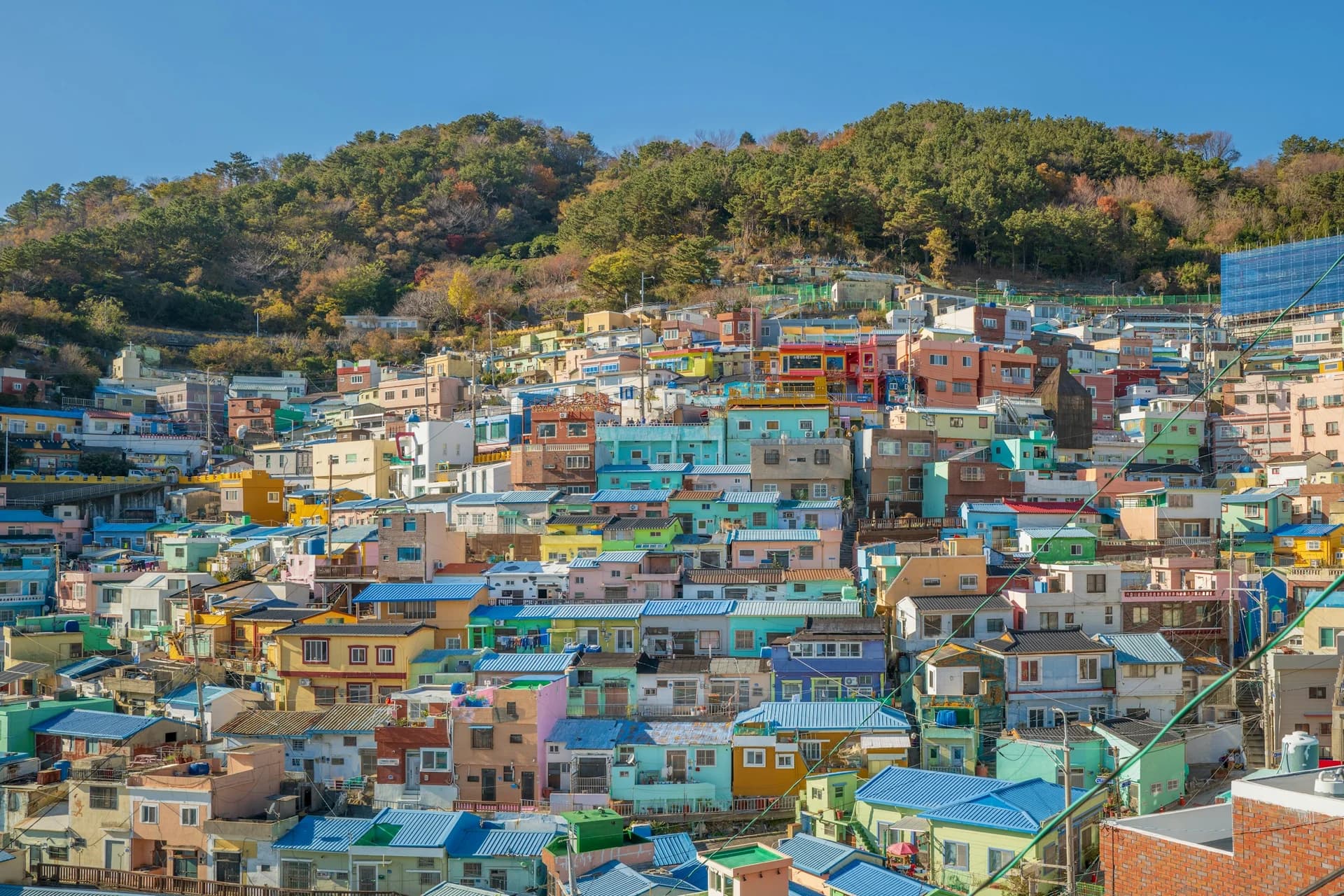
Busan is South Korea's second city but nobody's second choice. While Seoul dominates the headlines, Busan quietly delivers what Seoul can't — coastline. Seven beaches, clifftop temples, harbor fish markets, and a hillside culture village that looks like someone Photoshopped a rainbow onto a favela.
1. Haedong Yonggungsa Temple at Sunrise
Most temples in Asia sit on mountains. Haedong Yonggungsa sits on a cliff directly above the ocean. Built in 1376, the temple complex descends a seaside cliff face — stone stairs lead past a golden Buddha, dragon sculptures, and pagodas to a main hall perched above the crashing waves.
The sunrise here is one of Busan's iconic sights. Arrive by 6AM (the temple opens at 5AM). The light comes over the ocean and hits the golden fixtures of the main hall while the rocks below are still in shadow.
Free entry. Bus 181 from Haeundae. The walk from the parking lot takes 15 minutes down steep stairs — wear proper shoes.
2. Eat Your Way Through Jagalchi Fish Market
Jagalchi is the largest fish market in South Korea. The ground floor is a wholesale market — tanks of live octopus, sea squirts, king crab, abalone, and fish you've never seen. The upper floors are restaurants where you point at a live fish, they pull it from the tank, and 10 minutes later it's sashimi on your plate.
The experience is as much about spectacle as food. Ajummas (market women) in rubber boots shout prices, octopus tentacles suction-cup your chopsticks, and the smell is pure ocean.
Sashimi platter for two: 30,000-50,000 KRW ($21.60-36). Grilled eel: 15,000-25,000 KRW ($10.80-18). Spicy seafood stew (haemul-tang): 40,000-60,000 KRW ($28.80-43.20) for a pot serving 2-3 people.
Go in the morning (7-9AM) for the freshest selection and the market at full energy.
3. Get Lost in Gamcheon Culture Village
Gamcheon started as a settlement for Korean War refugees in the 1950s. Tiny houses, stacked on a hillside in a maze of narrow alleys and stairways. In 2009, an urban art project transformed it — murals, sculptures, and installations appeared on walls and rooftops. Now it's a living gallery.
The most photographed piece: the Little Prince and Fox statue on a ledge overlooking the painted houses and the harbor. The line for a photo can be 15 minutes during peak hours. Go before 10AM.
The village is residential — real people live here. Keep noise down, don't peer into open doors, and buy something from the community shops (handmade crafts from 3,000 KRW / $2.16).
Free entry. Map available at the entrance kiosk (2,000 KRW / $1.44 with stamp booklet). Metro Line 1 to Toseong station, then bus 1-1, 2, or 2-2.
4. Walk the Igidae Coastal Trail
A 4.7km clifftop walking trail along the coast between Oryukdo Islands and Gwangalli Beach. The trail follows the cliff edge with panoramic views of the Pacific Ocean on one side and Busan's skyline on the other.
The Oryukdo Skywalk — a glass-bottomed platform extending from the cliff over the ocean — is along this route. Free entry. The walk takes about 2 hours at a moderate pace.
Start from the Oryukdo end (bus 24 from Nampo-dong) and finish at Gwangalli for sunset beer on the beach. The trail is paved and manageable for most fitness levels, though some sections have stairs.
5. Soak at Spa Land (Shinsegae Centum City)
Inside the world's largest department store (Shinsegae Centum City — it's in Guinness), Spa Land is a massive jjimjilbang (Korean bathhouse) with 22 themed spa rooms sourced from two natural hot springs.
The experience: strip down (gender-segregated bathing areas), wash thoroughly at the sitting shower stations, then rotate through hot pools, cold plunges, salt rooms, clay rooms, and a hinoki cypress sauna. The co-ed relaxation area has heated stone floors where Koreans nap in matching pajamas.
Entry: 17,000 KRW ($12.24) weekdays, 20,000 KRW ($14.40) weekends. Plan 2-3 hours. It's the best relaxation per dollar in Busan.
6. Sunset at Gwangalli Beach with the Bridge
Gwangalli Beach faces the Gwangan Bridge (Diamond Bridge) — a 7.4km suspension bridge that lights up in programmable LED displays after dark. The combination of beach, bridge, and city skyline makes Gwangalli one of the most photogenic urban beaches in Asia.
The beach strip is lined with restaurants, bars, and cafes. Galmegi Brewing does local craft beer (6,000 KRW / $4.32 per pint). Street performers set up on weekend evenings.
Arrive at 5PM for sunset. Stay for the bridge lighting at dusk.
7. Climb Beomeosa Temple
Beomeosa is a 1,300-year-old Buddhist temple on the slopes of Geumjeongsan Mountain in northern Busan. Unlike Haedong Yonggungsa's dramatic cliff location, Beomeosa is a traditional mountain temple surrounded by forest.
The approach through the temple's wooded grounds is meditative. The main hall has a stone pagoda from the Silla dynasty. The temple offers overnight temple stays (50,000-80,000 KRW / $36-57.60) including meditation, predawn chanting, and monastic meals.
From Beomeosa, you can continue hiking Geumjeongsan to the mountaintop fortress (Geumjeongsanseong) — a 4-hour round trip with city views from the fortress walls.
Free entry. Metro Line 1 to Beomeosa station, then bus 90.
8. Street Food at BIFF Square
BIFF Square (Busan International Film Festival Square) in Nampo-dong is the city's street food epicenter. The standout:
- Ssiat hotteok — sweet pancake stuffed with seeds, brown sugar, and cinnamon. 2,000 KRW ($1.44). The Busan version adds seeds (sunflower, pumpkin) that make it crunchier than the Seoul version.
- Eomuk (fish cake) — skewered fish cake in hot broth. 1,000-2,000 KRW ($0.72-1.44). You eat the fish cake and drink the broth.
- Tteokbokki — spicy rice cakes. 3,000-5,000 KRW ($2.16-3.60).
Go between 3-7PM for peak activity. The vendors start packing up by 9PM.
9. Take the Blue Line Park Sky Capsule
The Sky Capsule is a single-rail colorful pod that runs along the coast from Mipo station to Cheongsapo. The 2km ride takes 30 minutes at a gentle pace and passes directly above the rocky coastline.
Tickets: 10,000 KRW ($7.20) one way, 15,000 KRW ($10.80) round trip. The return walk along the coastal trail is excellent — Cheongsapo is a small fishing village with seafood restaurants.
Book online at least 1 day ahead — slots sell out, especially on weekends.
10. Day Trip to Taejongdae
A forested cliff park on the southern tip of Yeongdo Island with walking trails, a lighthouse, and views stretching to the Japanese island of Tsushima on clear days.
The Danubi Train (a road train, 3,000 KRW / $2.16) loops through the park if you want to skip the walking. The walking trails take 2-3 hours to cover properly.
The Taejongdae cliffs drop vertically 100m to the ocean. The observation platform at the end of the main trail offers possibly the most dramatic coastal view in mainland South Korea.
Free park entry. Bus 8, 13, or 30 from Nampo-dong.
The Bottom Line
Busan rewards explorers. The beach-and-fish-market combo is the obvious itinerary, but the hillside villages, clifftop temples, coastal trails, and jjimjilbang culture give the city a depth that most coastal cities lack.
Budget 4-5 days. Use the metro (it reaches almost everything). Eat at Jagalchi, soak at Spa Land, and watch the Gwangan Bridge lights from the beach with a craft beer.
Seoul is the capital. Busan is the city Koreans actually vacation in. There's a reason for that.


