
Busan
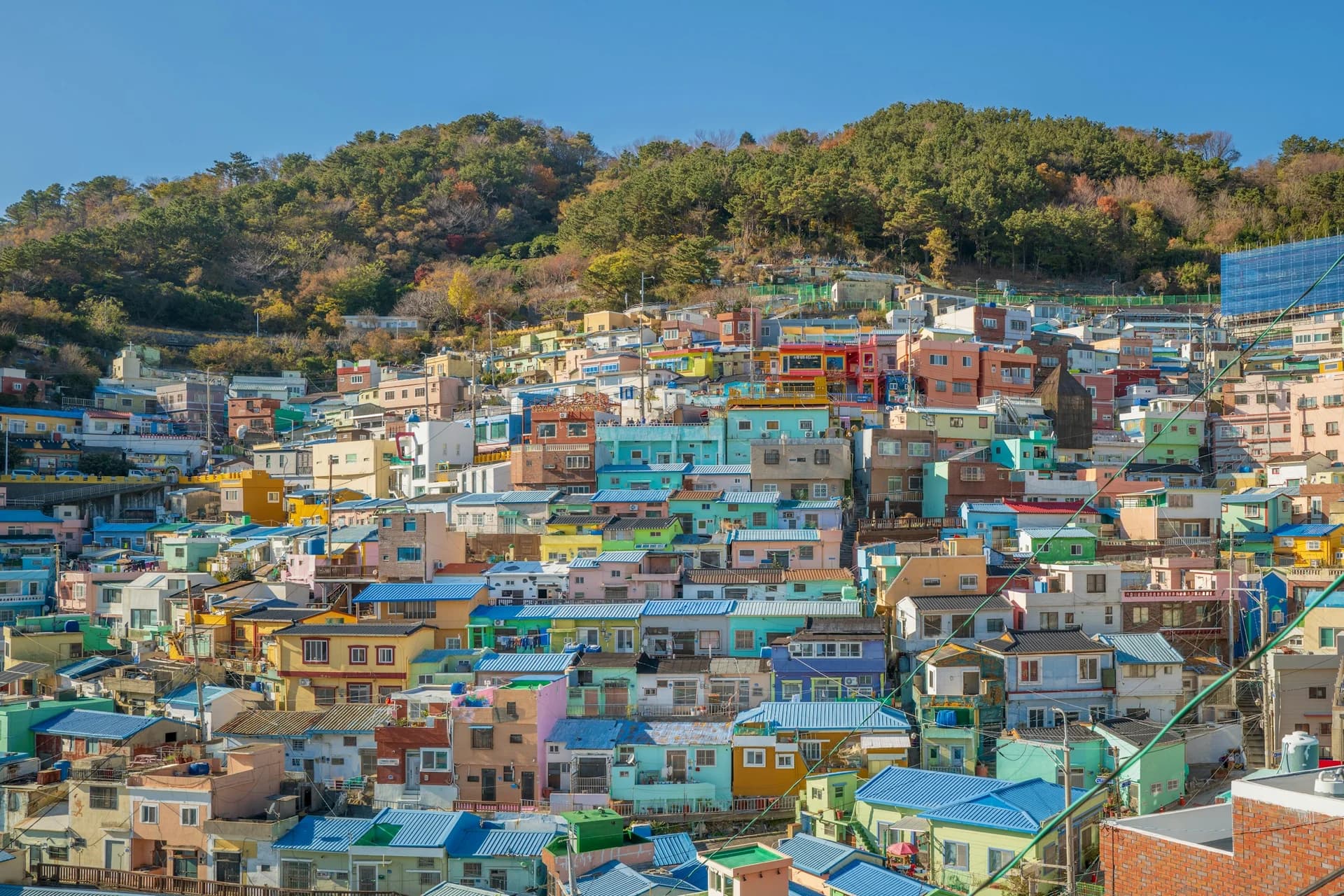
Photo: Sung Jin Cho / Unsplash
Key Facts
Best Time to Visit
April-May (cherry blossoms, mild) and September-November (clear skies, autumn foliage). Summer is hot and humid with monsoon rain in July
Language
Korean, limited English (Google Translate essential)
Currency
South Korean Won (KRW)
Time Zone
KST (UTC+9)
Airport
Gimhae International Airport (PUS), 20km from city center
Population
3.4 million (city proper, South Korea's second largest city)
Climate
Humid subtropical, avg 2-5°C in winter, 25-33°C in summer, monsoon rain June-July
Safety Rating
Very Safe (South Korea is one of the safest countries globally)
Top Highlights

Gamcheon Culture Village
A hillside village of pastel-colored houses, street art, murals, and quirky galleries — often called the Machu Picchu of Busan. Free to enter, though the stamp map trail costs 2,000 KRW (~$1.50) and guides you to 12 art installations. The Little Prince statue viewpoint is the most photographed spot. Open daily, best in morning light. Take bus 1-1, 2, or 2-2 to the entrance. Allow 2-3 hours for the full walking route. Local cafes serve art-themed lattes.
Jagalchi Fish Market
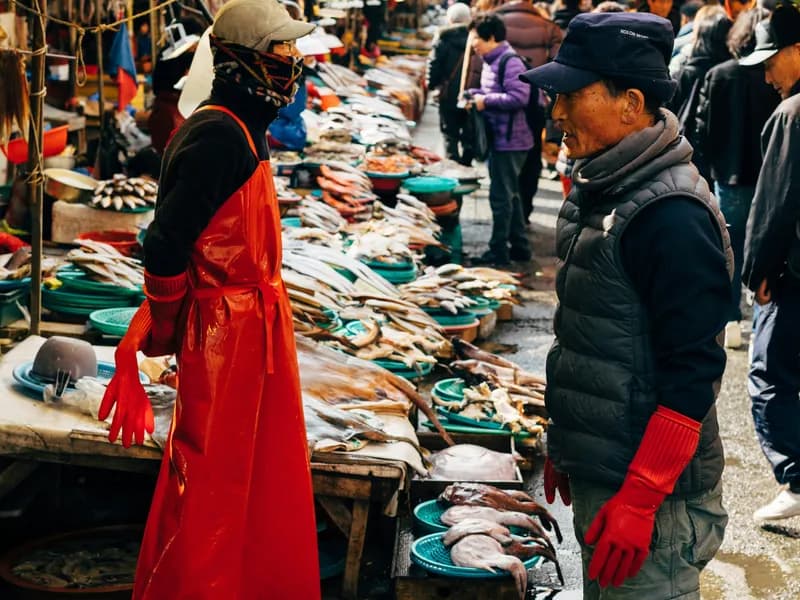
South Korea's largest seafood market — a massive complex where you pick live fish, octopus, sea urchin, or crab from the ground floor vendors and they prepare it on the spot upstairs for a cooking fee (5,000-10,000 KRW). Live octopus (sannakji) costs 10,000-15,000 KRW. Open 5AM-10PM daily, closed 1st and 3rd Tuesday. The 7th floor outdoor terrace has ocean views. Best visited before 9AM when the auction is in full swing. Allow 1.5-2 hours.
Haeundae Beach
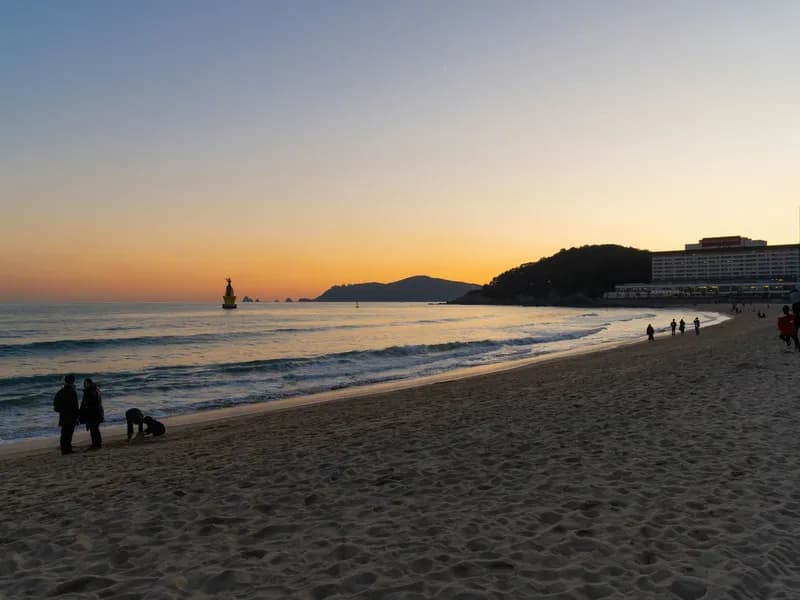
Busan's most famous beach — 1.5km of white sand that draws 100,000+ visitors on summer weekends. Beachfront restaurants serve fresh sashimi. The Haeundae Beach Train (7,000 KRW) rides along a stunning coastal cliffside track. The Busan Aquarium (29,000 KRW) is at the beach entrance. Off-season (September-May) is quiet and atmospheric. The Busan International Film Festival (October) is held at the nearby Busan Cinema Center.
Haedong Yonggungsa Temple
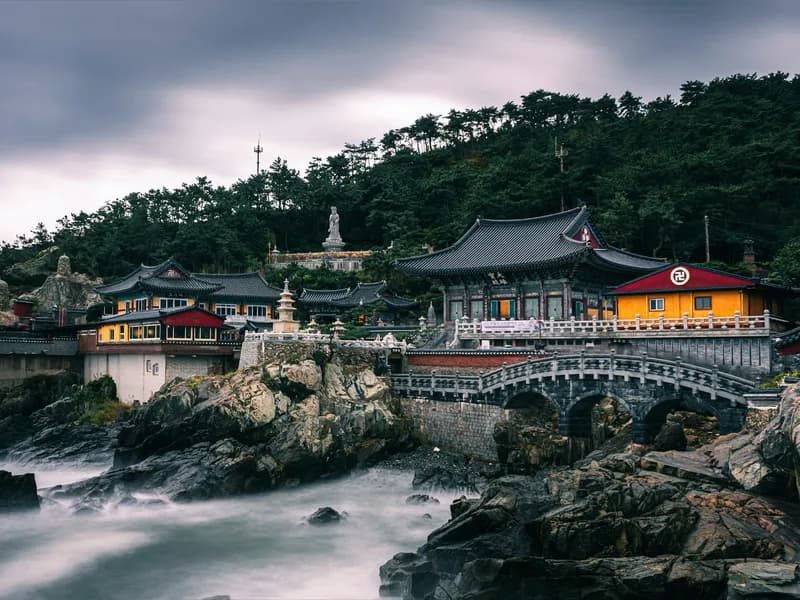
A rare seaside Buddhist temple built on the rocky shoreline in 1376 — most Korean temples are in the mountains, making this one unique. Free entry. Open 5AM-7PM. The 108-step staircase descent to the temple with ocean views is stunning. Visit at sunrise for the most photogenic light. The 10m golden Haesu Gwaneum (maritime Buddha) statue overlooks the East Sea. Allow 1-1.5 hours. 30 minutes from Haeundae by bus 181.
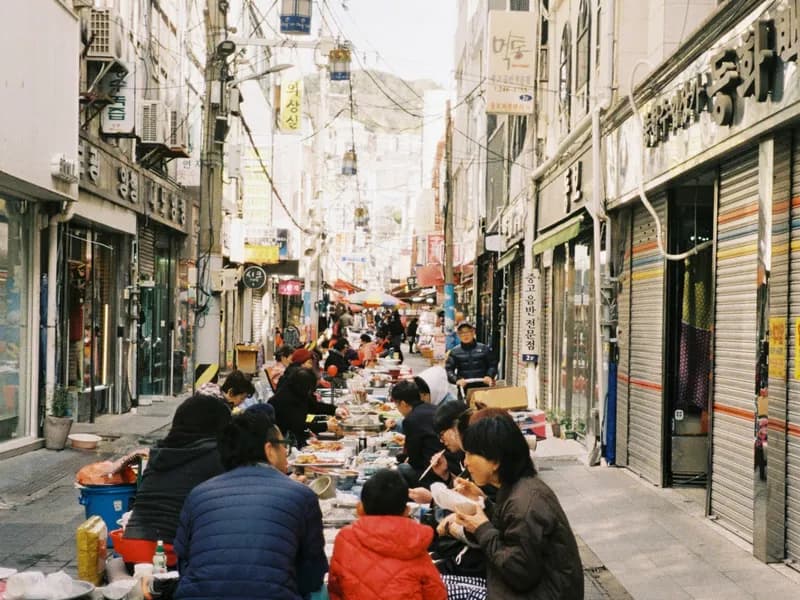
BIFF Square & Nampo-dong Street Food
A vibrant food and shopping district named after the Busan International Film Festival. The famous seed hotteok (sweet pancake with seeds and brown sugar, 1,000 KRW) has queues around the block — worth the wait. Try ssiat hotteok, eomuk (fish cake skewers, 1,000 KRW), and tteokbokki (spicy rice cakes, 3,000 KRW). The Gukje International Market next door sells everything from vintage clothes to army surplus. Best visited evenings. Allow 2 hours for eating and browsing.
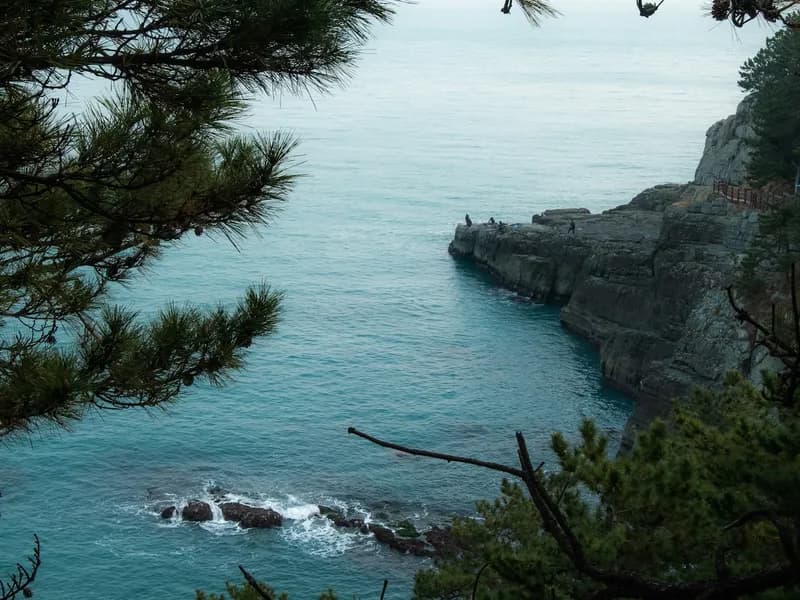
Taejongdae Coastal Park
A natural park on the southern tip of Yeongdo Island with dramatic sea cliffs, a lighthouse, and views stretching to Japan on clear days. Free entry. The Danubi train (3,000 KRW) loops the park if you don't want to walk the 4km trail. The cliffs at the Taejongdae Observatory are the highlight — 100m vertical drops to the crashing sea. The raw seafood village at the bottom serves fresh abalone and sea urchin. Allow 2-3 hours including the hike.
Planned Itinerary
7-Day Busan Itinerary
Arrival & Haeundae Beach
Arrive at Gimhae International Airport (PUS). Take the metro to your hotel and experience Busan's most famous beach.
Airport Limousine Bus or Metro to hotel(1 hour)
Metro Line to Seomyeon or Haeundae. Get a T-money or Cashbee card (2,500 KRW) for all transit. Single ride 1,400 KRW
Check into hotel(1 hour)
Haeundae area for beach, Seomyeon for nightlife, Nampo for culture. Budget 25,000-50,000 KRW
Haeundae Beach sunset walk(1.5 hours)
1.5km white sand. Off-season is atmospheric. The Marine City skyscrapers behind the beach create a unique skyline
Dinner at a Haeundae raw fish restaurant(1.5 hours)
Fresh sashimi (hoe) from 20,000 KRW for a generous plate. The beachfront restaurants offer ocean views. Pair with soju (4,000 KRW)
Gamcheon & Jagalchi Market
Rainbow hillside village in the morning, Korea's biggest fish market in the afternoon.
Gamcheon Culture Village(2.5 hours)
Pastel houses, murals, art installations. Free. Stamp map trail 2,000 KRW (12 art stops). Little Prince statue viewpoint is the money shot. Bus 1-1 or 2-2. Allow 2-3 hours for the full walking route
Lunch at BIFF Square(1 hour)
Ssiat hotteok (seed pancake, 1,000 KRW — queue around the block, worth it), eomuk (fish cake skewers, 1,000 KRW), tteokbokki (3,000 KRW)
Jagalchi Fish Market(2 hours)
Korea's largest. Pick live fish/octopus from ground floor vendors, they prepare it upstairs (cooking fee 5,000-10,000 KRW + side dishes). Live octopus (sannakji) 10,000-15,000 KRW. Open 5AM-10PM. Best before 9AM for the auction
Gukje International Market browse(1 hour)
Adjacent to BIFF Square. Vintage clothes, army surplus, Korean snacks. The covered alleys are a maze of finds
Haedong Yonggungsa & Coastal Train
Seaside temple at sunrise and the spectacular coastal cliff train.
Haedong Yonggungsa Temple at sunrise(1.5 hours)
Free. 108-step descent to the cliffside temple. The golden Haesu Gwaneum Buddha overlooks the East Sea. Bus 181 from Haeundae (30 min). Arrive by 6AM for best light
Haeundae Beach Train (Blueline Park)(1 hour)
7,000 KRW. Glass-capsule train along dramatic coastal cliffs from Mipo to Songjeong. The sea views are spectacular. Also a sky walk (open-air monorail, 7,000 KRW)
Songjeong Beach lunch(1 hour)
Quieter surfer beach at the end of the train line. Samgyeopsal (grilled pork belly) restaurants line the street — 12,000 KRW per person for meat and unlimited sides
Dongbaek Island walk(1 hour)
Connected to Haeundae by a coastal trail. The APEC House (free) and the statue of Princess Hwangok are at the tip. Camellias bloom January-March. Free
Taejongdae & Yongdusan Park
Sea cliffs, lighthouses, and Busan's iconic tower.
Taejongdae Coastal Park(3 hours)
Free. 4km cliff trail or Danubi train (3,000 KRW). 100m vertical sea cliffs. Raw seafood village at the bottom — fresh abalone and sea urchin. Views to Japan on clear days
Songdo Skywalk(45 minutes)
Glass-bottomed walkway over the ocean. Free. Near Amnam Park. Short but thrilling
Yongdusan Park & Busan Tower(1 hour)
Tower entry 12,000 KRW. 360-degree views of the harbor and bridges. The park has a statue of Admiral Yi Sun-sin and flower gardens. Near Nampo metro
Dinner at Dwaeji Gukbap Alley (Pork Soup Rice)(1 hour)
Busan's signature dish — milky pork bone soup with rice and kimchi. 8,000-10,000 KRW. Ssangdungi restaurant is the most famous. Near Seomyeon
Beomeosa Temple & Spa Land
Mountain temple and Korea's best jjimjilbang (Korean spa).
Beomeosa Temple(2 hours)
1,300-year-old Buddhist temple on Geumjeongsan mountain. Free. Bus 90 from Beomeosa metro. The main hall and the approach through ancient trees are serene. Templestay available (50,000-80,000 KRW overnight)
Optional: Geumjeongsan hike(2 hours)
Continue from Beomeosa up the mountain. The fortress walls and views over Busan are rewarding. Moderate difficulty. 2-3 hours for the main trail loop
Spa Land at Centum City(3 hours)
Korea's most famous jjimjilbang. 18,000-22,000 KRW. Multiple themed spa rooms (salt, charcoal, ice), outdoor rooftop pools, and a full Korean bathhouse experience. Inside Shinsegae department store (the world's largest). Essential Korean cultural experience
Free Day & Night Views
Unstructured day and Busan's spectacular night lights.
Seomyeon Underground Shopping Center(1.5 hours)
Trendy fashion, K-beauty products, and street food. Tteokbokki, hotteok, and Korean fried chicken at underground food stalls
Gwangalli Beach and Diamond Bridge night view(2 hours)
The bridge is illuminated with LED lights that change colors. Beach cafes serve cocktails with the bridge as backdrop. Fish cake stalls along the beach walk. The neon reflection on the water is the definitive Busan night image
Departure
Final morning and airport.
Breakfast at a local kimbap shop(30 minutes)
Kimbap (Korean sushi roll) 3,000-4,000 KRW. Quick, cheap, satisfying
Last-minute K-beauty shopping(1 hour)
Olive Young or Innisfree near your hotel. Korean skincare products are significantly cheaper than abroad
Metro to Gimhae Airport(1 hour)
Busan-Gimhae Light Rail connects to airport. Or Limousine Bus 2,000 KRW from major areas
14-Day Busan Itinerary
Arrival & Haeundae Beach
Arrive PUS, transit to hotel, beach sunset.
Metro to hotel(1 hour)
T-money 2,500 KRW
Gamcheon & Jagalchi
Rainbow village and fish market.
Seaside Temple & Coastal Train
Yonggungsa sunrise and cliff train.
Beach Train(1 hour)
7,000 KRW
Taejongdae & Tower
Sea cliffs and city panorama.
Busan Tower(1 hour)
12,000 KRW
Beomeosa & Spa Land
Mountain temple and Korean spa.
Spa Land(3 hours)
18,000-22,000 KRW
Night Views & Shopping
Gwangalli Diamond Bridge at night.
Korean BBQ dinner(1.5 hours)
Samgyeopsal at a local restaurant. 12,000-15,000 KRW per person. Unlimited side dishes
Rest Day
Slow day.
Cafe hopping in Jeonpo Cafe Street(2.5 hours)
Busan's densest cafe district. Specialty coffee 5,000-7,000 KRW. Instagram-worthy interiors
Movie at Busan Cinema Center(2 hours)
Home of BIFF (Busan International Film Festival). The LED-roof building is stunning. Korean films with English subtitles often available
Day Trip to Gyeongju
Korea's ancient capital — 1 hour by KTX. UNESCO World Heritage tombs, temples, and a thousand years of Silla dynasty history.
KTX to Gyeongju(30 minutes)
SRT/KTX 10,000-15,000 KRW from Busan
Bulguksa Temple(1.5 hours)
6,000 KRW. UNESCO. Korea's most important Buddhist temple (751 AD). The stone bridges and pagodas are national treasures
Seokguram Grotto(1 hour)
6,000 KRW. Hilltop grotto with a seated Buddha overlooking the East Sea. 3.5km uphill from Bulguksa (shuttle bus available)
Tumuli Park (royal tombs)(1 hour)
3,000 KRW. 23 ancient burial mounds. Enter the Cheonmachong tomb interior. The green mounds against the city backdrop are surreal
Korean Cooking & Street Food
Hands-on Korean cooking and deep food exploration.
Korean cooking class(3 hours)
Learn to make bibimbap, japchae, and kimchi. 40,000-60,000 KRW. Busan Cooking Class or local Airbnb Experiences
Gukje Market food crawl(2 hours)
Beyond BIFF Square — explore the deeper alleys. Try bindaetteok (mung bean pancake, 3,000 KRW), sundae (Korean blood sausage, 3,000 KRW), and odeng (fish cake in hot broth, free broth refills at most stalls)
Chinatown and Texas Street(1 hour)
Near Busan Station. A multicultural district from the Korean War era. Russian and Chinese restaurants alongside Korean bars. The neon signage is retro-cool
Igidae Coastal Walk
Busan's best hiking trail along dramatic sea cliffs.
Igidae Coastal Trail(3 hours)
5km cliffside trail from Oryukdo to Dongbaek. Free. Suspension bridges, viewing platforms, and the famous 'Olle' trail markers. The views of Haeundae and the city skyline from the cliff edge are Busan's best. Moderate difficulty
Oryukdo Skywalk(30 minutes)
Glass-bottomed platform over the sea at the trailhead. Free. The five islands below are dramatic
Seomyeon nightlife(2 hours)
Busan's main entertainment district. Korean fried chicken and beer (chimaek) is the move — Norangjin or BHC Chicken. Half chicken 10,000-15,000 KRW with draft beer 4,000 KRW
Temple Stay & Meditation
Overnight temple stay experience.
Beomeosa Temple Stay check-in(1 hour)
50,000-80,000 KRW. templestay.com. Includes vegetarian dinner, 4:30AM morning bell, meditation, and temple tour. Sleep on the floor in the monks' quarters
108 prostrations practice(1 hour)
Traditional Buddhist practice. Physically demanding but meditative. The monks guide you through the sequence
Temple dinner (baru gongyang)(1 hour)
Formal temple meal — vegan, eaten in silence with special bowls. No food is wasted. Profound experience
Temple Morning & Return
Wake for 4:30AM morning service and return to the city.
Morning bell ceremony (4:30AM)(1 hour)
The temple bell, drum, wooden fish, and cloud-shaped gong. The sound carries across the mountain in the dark
Free Day
Return to favorites.
Departure
Final kimbap and K-beauty run.
21-Day Busan Itinerary
Arrival & Haeundae
Arrive PUS, beach sunset.
Gamcheon & Jagalchi
Rainbow village and fish market.
Temple & Coastal Train
Yonggungsa and cliff train.
Taejongdae & Tower
Cliffs and panorama.
Beomeosa & Spa Land
Temple, hike, Korean spa.
Night Views
Shopping and Gwangalli Bridge.
Rest Day
Cafes and cinema.
Day Trip to Gyeongju
Ancient Silla capital.
Cooking & Food Crawl
Korean cooking class and market food.
Igidae Coastal Walk
Cliffside trail and chicken beer.
Temple Stay — Night 1
Beomeosa temple lodging.
Temple Stay check-in(1 hour)
50,000-80,000 KRW
Temple Morning & Return
4:30AM bells and forest meditation.
Rest Day
Recovery.
Side Trip to Seoul — Day 1
KTX north to Korea's capital for a 3-night cultural immersion.
KTX to Seoul(2.5 hours)
59,800 KRW
Gyeongbokgung Palace(2 hours)
3,000 KRW. Changing of the guard. Wear a hanbok (traditional dress, free rental shops nearby) for free palace entry
Bukchon Hanok Village evening walk(1.5 hours)
Traditional Korean houses on hilly lanes. Free. Be respectful — people live here
Seoul — Day 2
Temples, markets, and K-pop culture.
Jogyesa Temple(1 hour)
Seoul's chief Buddhist temple. Free. Lantern-decorated
Namdaemun Market(1.5 hours)
Korea's oldest and largest market. Food, fashion, crafts. Kalguksu (knife-cut noodle soup) 7,000 KRW
Myeongdong shopping(2 hours)
K-beauty mecca. Sheet masks from 1,000 KRW. Every skincare brand has a flagship here
N Seoul Tower sunset(1.5 hours)
12,000 KRW. 360-degree views from Namsan. Love lock fence
Seoul — Day 3 & Return
DMZ or palace tour, then KTX back.
Morning: Changdeokgung Palace Secret Garden(2 hours)
3,000 KRW + 5,000 KRW secret garden tour. UNESCO. The 300-year-old garden with lotus ponds is Seoul's most beautiful space
Itaewon lunch(1 hour)
Seoul's international district. Every cuisine represented. Mexican at Vatos, Lebanese at Casablanca
Rest Day
Recovery from Seoul.
Surfing & Beach Culture
Try surfing at Songjeong Beach.
Surfing lesson at Songjeong(2 hours)
Beginner lesson 50,000-70,000 KRW including board and wetsuit. Songjeong has gentle waves perfect for learning. Several surf schools on the beach
Afternoon at Dadaepo Beach(2.5 hours)
Wide sandy beach on the southwest coast. Famous for the Dadaepo Sunset Fountain of Dreams — musical fountain show at sunset (seasonal). Free
Dinner at Millak Waterside Park(1.5 hours)
Buy sashimi from the adjacent raw fish center and eat it on the outdoor terrace overlooking Gwangalli Bridge. BYO soju from convenience store
Rest Day
Fourth rest day.
Farewell Day
Last full day — favorites and farewells.
Departure
Kimbap and K-beauty goodbye.
Travel Tips
Visa & Entry
K-ETA or Visa-Free Entry
US, UK, EU, and most Western passport holders can enter South Korea visa-free for 90 days (K-ETA registration may be required — check k-eta.go.kr, 10,000 KRW, 72 hours processing). Indian passport holders need a tourist visa from the Korean embassy. Transit passengers (under 72 hours) from some countries can visit visa-free. Bring proof of accommodation and return flight.
transport
KTX from Seoul Takes Only 2.5 Hours
The KTX bullet train from Seoul to Busan (325km) costs 59,800 KRW (~$45) and takes 2.5 hours. Book at letskorail.com or buy at the station. Within Busan, the metro (Line 1-4 + Busan-Gimhae Light Rail) covers all major attractions — single ride 1,400 KRW, day pass 5,000 KRW. Get a Cashbee or T-money card (2,500 KRW) for transit and convenience store payments. Buses fill gaps between metro lines.
Budget
Busan Is Cheaper Than Seoul
Street food meals cost 3,000-8,000 KRW ($2.25-6). Restaurant meals: 8,000-15,000 KRW. Fresh sashimi at Jagalchi: 15,000-30,000 KRW for a generous plate. Guesthouses: 25,000-50,000 KRW. Budget 60,000-100,000 KRW/day ($45-75) for comfortable mid-range travel including transit. The fish market is best value for fresh seafood — buy from the ground floor and pay a small fee to have it prepared upstairs.
Fresh Seafood Is the Star — Know How to Order
At Jagalchi and Haeundae raw fish markets, bargain before buying — tourist prices can be inflated. Ask 'eolmayeyo?' (how much?) and negotiate. A reasonable price for a live fish platter for two is 30,000-50,000 KRW. The cooking/serving fee upstairs (corkage equivalent) is 5,000-10,000 KRW per person and includes side dishes. Avoid seafood restaurants that don't display prices — they may charge tourist markups.
Local Customs
Temple Etiquette
Remove shoes before entering any temple hall. Bow respectfully before Buddha statues. Photography is allowed outside but check signs inside — some halls prohibit it. Do not sit with your feet pointing toward the altar. Temple stays (templestay.com, 50,000-80,000 KRW) are available at Haedong Yonggungsa and Beomeosa Temple — an immersive cultural experience including meditation and monastic meals.
Safety
Gotcha: Language Barrier Is Real
English proficiency is lower in Busan than Seoul. Download Papago (Korean-made translation app, better than Google Translate for Korean) and the Naver Map app (Google Maps is less accurate in Korea). Restaurant menus often lack English — take photos of food displays or use the camera translate feature in Papago. Younger Koreans (under 30) usually speak some English. Pointing at menu photos is perfectly acceptable.
Related Articles
StoriesYour First Day in Busan: From a Dawn Fish Market to a Bridge Lit Like a Diamond
Busan looks like a plain working port at 6 a.m. and the most relaxed big city in Korea by midnight. Here's one day — dawn at Jagalchi Fish Market to the Diamond Bridge lighting up over Gwangalli — that makes the whole city finally click into place.
Travel Guides10 Best Things to Do in Busan: Beyond the Beach and the Fish Market
South Korea's second city has a cliffside temple, a rainbow village, the world's busiest fish market, and beaches that rival anything in Southeast Asia. Here's the list.
SeasonalBusan in Cherry Blossom Season: Why April Is South Korea's Best-Kept Secret
Seoul gets all the blossom attention. But Busan's coastal cherry blossoms — with ocean backdrops and fish market breakfasts — hit different. Here's how to time your April trip.
Travel GuidesBusan vs. Seoul: Which Korean City Deserves Your Limited Vacation Days?
The capital has palaces, K-pop, and 10 million people. The port city has beaches, temples on cliffs, and the country's best seafood. One week, one city — here's how to decide.