
8 Douro Valley Experiences That Go Beyond Wine Tasting
8 Douro Valley Experiences That Go Beyond Wine Tasting
Yes, the Douro Valley is a wine destination. Yes, the quintas are why most people come. But limiting your Douro trip to tasting rooms misses a UNESCO World Heritage landscape that would be extraordinary even if nobody had ever planted a grape here.
1. The Porto-Pinhao Train Journey
Three hours from Porto Sao Bento to Pinhao, hugging the Douro River through tunnels and terraced hillsides. The train is old-school — no high-speed rail here — and the pace matches the landscape. ~€15 one way. Sit on the right side heading east.
Pinhao station itself is worth the fare. The platform walls are covered in hand-painted azulejo tiles depicting wine harvest scenes, river boats, and valley landscapes. Free to view.
2. Rabelo Boat Cruise
Traditional flat-bottomed boats that once transported port wine barrels downriver. Modern versions offer day cruises between terraced vineyard walls. Day cruises from Pinhao or Peso da Regua start at €25-40 with lunch and wine. Full-day Porto-to-Pinhao cruises from €75.
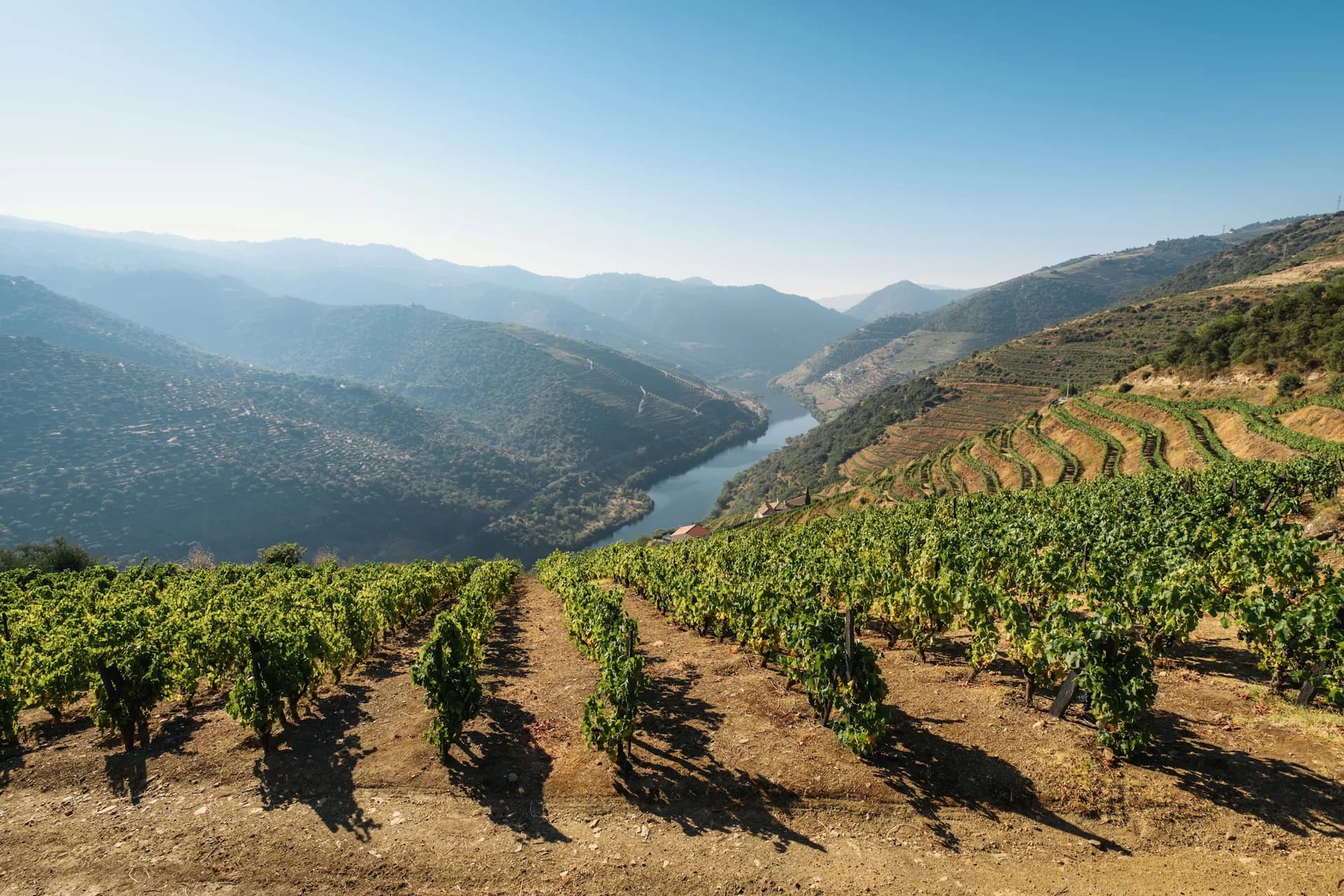
The perspective from the river — looking up at the terraced walls rising on both sides — is the defining Douro visual.
3. N222 Drive
Voted the world's best driving road, the N222 follows the river's north bank through a landscape so photogenic that every bend demands a pullover. The stretch between Peso da Regua and Pinhao is the most dramatic — terraced vineyards, granite villages, and viewpoints that make you forget to look at the road.
Drive it in late afternoon for the best light. Drive slowly. There are no guardrails on many sections.
4. Sao Leonardo da Galafura Viewpoint
The single best panoramic view of the terraced Douro landscape. Free access. The viewpoint sits above the river on the south bank, and the drop — terraces descending hundreds of meters to the water — is staggering. Especially in September when the foliage turns gold and red.
Miguel Torga, Portugal's great poet, wrote about this view: "The garden hung in the sky." He wasn't exaggerating.
5. Museu do Douro
In Peso da Regua, this museum tells the story of the region's winemaking heritage from the 18th-century Marquis of Pombal's regulatory system (the world's first appellation system) to modern viticulture. €7 entry. Open Tue-Sun 10AM-6PM.
Small but well-curated. The history section explains how port wine became Portugal's most famous export and why these terraces exist in the first place.
6. Terraced Vineyard Hikes
The UNESCO-listed terraces are not just beautiful — they're an engineering achievement. Ancient stone walls ("socalcos") hold narrow planting platforms on 60-degree slopes. Some quintas offer guided vineyard walks that explain the centuries of labor behind what looks effortless from a distance.
Quinta do Crasto and Quinta Nova both offer vineyard walks. Allow 1-2 hours. Wear sturdy shoes — the terraces are steep.
7. Harvest Season Participation
September and October. Some quintas invite guests to participate in the grape harvest or the traditional foot-treading (pisa) in stone lagares. Quinta do Crasto is known for maintaining foot-treading for their premium wines. Check availability well in advance — these experiences book up months ahead.
Stomping grapes barefoot in a stone tank that's been used for the same purpose for 200 years is either ridiculous or transcendent. I found it both.
8. Sunset from the Terraces
No ticket required. No booking. Just find a viewpoint — Sao Leonardo da Galafura, the road above Pinhao, or the terrace of any riverside restaurant — and watch the sun descend behind the terraces. The stone walls catch the light in layers, turning from grey to gold to copper.
The Douro is sometimes compared to Napa Valley or the Algarve. It's not like either. It's older, steeper, and more dramatic. The wine is the reason people come. The landscape is the reason they come back.


