
Bariloche for Chocolate, Beer, and Lake Lovers: A Thematic Deep Dive
Bariloche for Chocolate, Beer, and Lake Lovers: A Thematic Deep Dive
Bariloche is known for three things: chocolate, craft beer, and lakes so blue they break cameras. Most visitors touch all three superficially — grab a chocolate box, drink a beer, snap a lake photo. But each of these obsessions goes deep, and understanding why Bariloche excels at all three requires a closer look.
The Chocolate Capital of Argentina
Bariloche's chocolate tradition dates to the 1930s, when European immigrants — primarily Swiss, German, and Italian — brought confectionery expertise to Patagonia. The clean mountain water, cool climate, and cultural DNA combined to create a chocolate scene that's now among the best in the Americas.
Calle Mitre: The Chocolate Mile
The main street has 20+ artisan chocolate shops within a few blocks. This is not a tourist gimmick — it's a genuine industry. Many shops have working kitchens visible through windows. The competition is fierce, which keeps quality high.
The Essential Three:
Rapanui — The largest and most accessible. Enormous variety — truffles, bark, filled chocolates, drinking chocolate. Generous free samples at every counter. A 500g box of mixed chocolates: $7,000-10,000 ARS ($7-10 USD). Their cafe serves hot chocolate so thick you could stand a spoon in it ($3,500 ARS).
Mamuschka — European-style truffles. Smaller batches, more refined flavors. Their raspberry ganache and pistachio praline are outstanding. Slightly pricier, notably more delicate.
Rapa Nui — The original Bariloche chocolatier. More traditional approach. Their alfajores (dulce de leche cookies coated in chocolate, $1,500-2,000 ARS for 6) are the best souvenir.
Beyond the Shops
The Bariloche Chocolate Museum ($5,000 ARS) traces the history of chocolate from Mesoamerica to Patagonia with tastings included. The Easter Chocolate Festival (April) features a 10-ton chocolate egg and a chocolate-themed parade. Yes, really.
For hands-on experience, several shops offer chocolate-making workshops ($15,000-25,000 ARS, 2 hours) where you make your own truffles and bars.
Argentina's Craft Beer Origin Story
Bariloche isn't just a craft beer town. It's THE craft beer town — the place where Argentina's craft revolution started.
The History
Blest opened in 1995 as Argentina's first brewpub, inspired by the German and Czech brewing traditions of Patagonia's immigrant communities. The brewery still operates on the original site, and their Scotch Ale is a classic.
Today, the "Ruta de la Cerveza" (Beer Route) stretches along Route 40 south of town with 10+ breweries. The setting is unlike any beer region in the world — you're drinking craft IPAs with views of snow-capped Andes and turquoise lakes.
The Essential Breweries
Blest — The original. Historic significance, solid beers, lake views from the taproom. Flights: $5,000 ARS for 4 tasters.
Berlina — Modern, ambitious, making some of the best IPAs in South America. The taproom has mountain views and a food menu.
Manush — Smaller, more experimental. Their hazy IPA and barrel-aged porter push boundaries. Relaxed atmosphere, knowledgeable staff.
Cerveceria Bachmann — German-style lagers and weizens. More traditional, extremely well-crafted.
The Beer Route Experience
The Ruta de la Cerveza is best done by car (designated driver essential) or by joining a guided beer tour ($20,000-30,000 ARS, includes transport and tastings at 3-4 breweries).
Flights at most breweries: $4,000-6,000 ARS ($4-6 USD) for 4 tasters. Many have food trucks, live music on weekends, and dog-friendly patios.
The annual Bariloche Beer Festival (January) draws thousands and features 50+ producers.
Seven Lakes and Counting
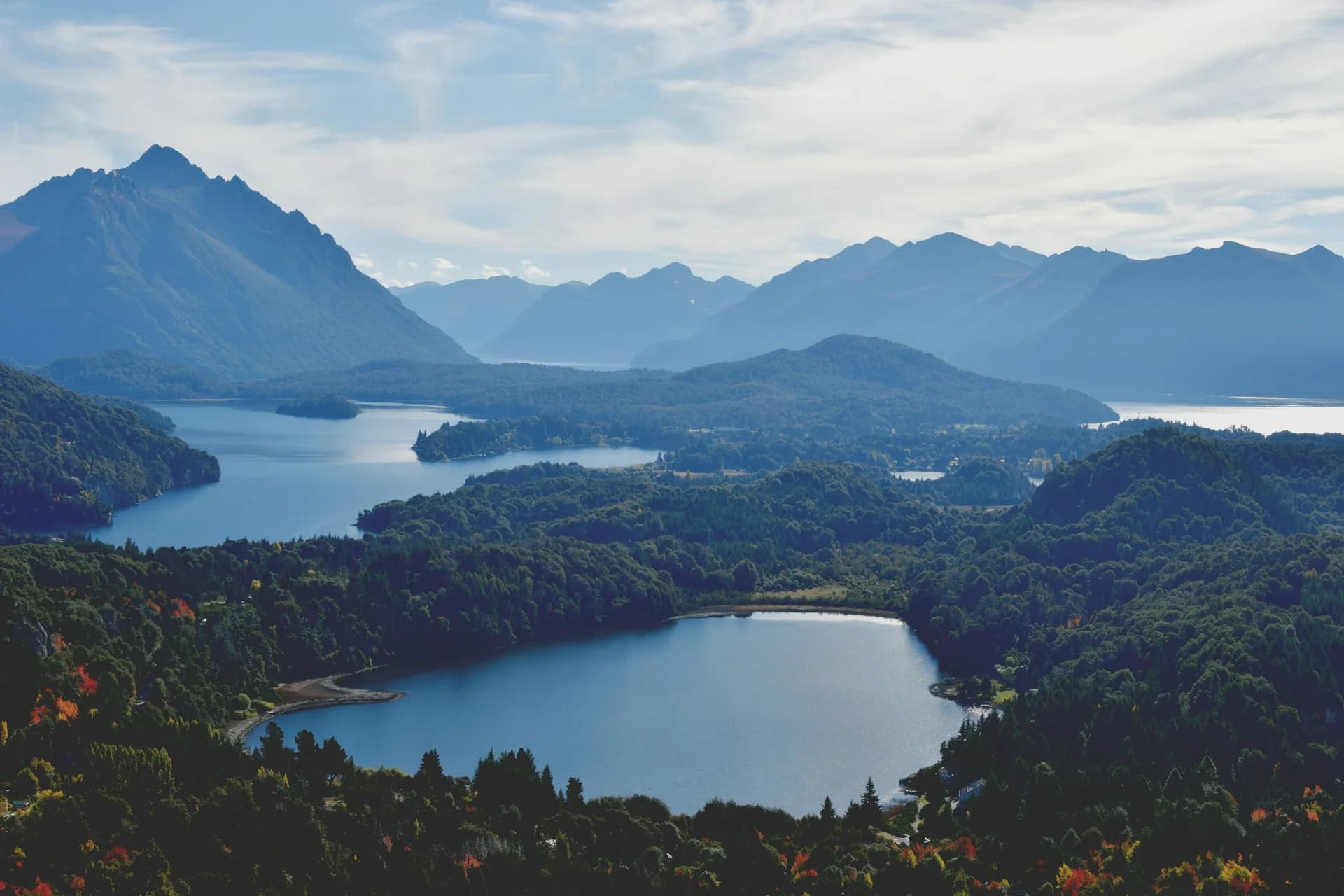
Bariloche sits at the heart of the Argentine Lake District — a region of glacial lakes created during the last ice age. The water colors range from deep blue to turquoise to emerald, depending on the glacial rock flour content and the angle of light.
Nahuel Huapi — The Giant
557 sq km of deep blue water surrounded by mountains. Boat trips to Isla Victoria and the Arrayanes Forest ($30,000-45,000 ARS, full day) are the classic excursion. Kayaking and fishing are available in summer.
The Circuito Chico (60 km driving loop around the lake) reveals the best viewpoints: Punto Panoramico, Bahia Lopez beach, and Cerro Campanario chairlift.
The Ruta de los Siete Lagos
The Route of the Seven Lakes (Route 40, 110 km between Bariloche and San Martin de los Andes) is one of South America's most scenic drives. Seven named lakes — each a different shade of blue, green, or silver — appear between forests and mountain passes.
Free to drive. Allow a full day with stops. Must-stops: Lago Correntoso (turquoise, mirror reflections), Lago Espejo ("Mirror Lake"), and Villa La Angostura for lunch.
The Hidden Lakes
Beyond the famous ones, smaller lakes reward exploration:
Lago Gutierrez — 15 minutes south of town. Quieter, rocky beaches, excellent for a half-day escape.
Lago Mascardi — Trailhead for the Pampa Linda area and Cerro Tronador (an extinct volcano with glaciers). More remote, less visited.
Laguna Toncek (at Refugio Frey) — A high-altitude glacial lake reflecting a cathedral-like granite spire. Requires a 12 km hike. Worth every step.
The Triple Intersection
What makes Bariloche special isn't chocolate OR beer OR lakes. It's the combination. You can spend a morning hiking to a mountain lake, an afternoon tasting craft beer with mountain views, and an evening browsing chocolate shops and eating Patagonian lamb.
No other destination in the world offers this specific triple combination at this quality level. The Swiss Alps have chocolate and lakes but no craft beer scene. Portland has craft beer but no glacial lakes. Belgium has chocolate and beer but no Andes.
Bariloche has all three. And at Argentine blue dollar prices, it's one of the best-value destinations on the planet.
Practical Info
- Getting there: Fly from Buenos Aires (2 hours, $80-200 USD)
- Best time: December-March (summer, warm, all activities open). June-October for skiing.
- Currency hack: Bring USD cash, exchange at blue dollar rate on Calle Mitre. 30-50% more pesos than ATMs/cards.
- Rental car: $25,000-40,000 ARS/day. Essential for Circuito Chico and Siete Lagos.
- Dining: Argentines eat dinner 9-10PM. Restaurants open at 8PM. Tip 10% (cash on table).
- Weather: Changes rapidly. Carry layers, waterproof jacket, and sunscreen (ozone is thinner at this latitude).


