
10 Best Things to Do in the Bazaruto Archipelago (Without the Crowds)
10 Best Things to Do in the Bazaruto Archipelago (Without the Crowds)
Most people never make it here. That's the whole point. The Bazaruto Archipelago sits 30-odd kilometres off Mozambique's coast, a string of five sand-dune islands inside a national park that's been protected since 1971 — and getting to it takes effort. You fly into Vilankulo (airport code VNX), then trade the plane for a boat or a light aircraft hop to the islands. What waits on the other side is water so clear you can read the shadow of your own boat on the seabed, and a stretch of Indian Ocean that still hides the last healthy dugong population in this whole corner of the world.
Here's exactly how to spend your days, and how to do each one right.
1. Snorkel Two Mile Reef for dugongs and turtles
This is the headline act. Two Mile Reef runs between Bazaruto and Benguerra islands, and on a high, slack tide the visibility regularly tops 20 metres. You'll drift over staghorn coral, potato bass the size of a fridge, and — if the day is kind — a dugong grazing the seagrass beds below. Sightings are never guaranteed; these are shy animals and there are only a few hundred left here — if a guaranteed big-animal encounter matters more to you, divers often pair this trip with the manta and whale-shark diving down the coast at Tofo. The smart move is to book the early boat, before the wind picks up and chops the surface. Most lodges run the trip as a half-day for around $60–90 per person, park fee included.
2. Sail a traditional dhow at golden hour
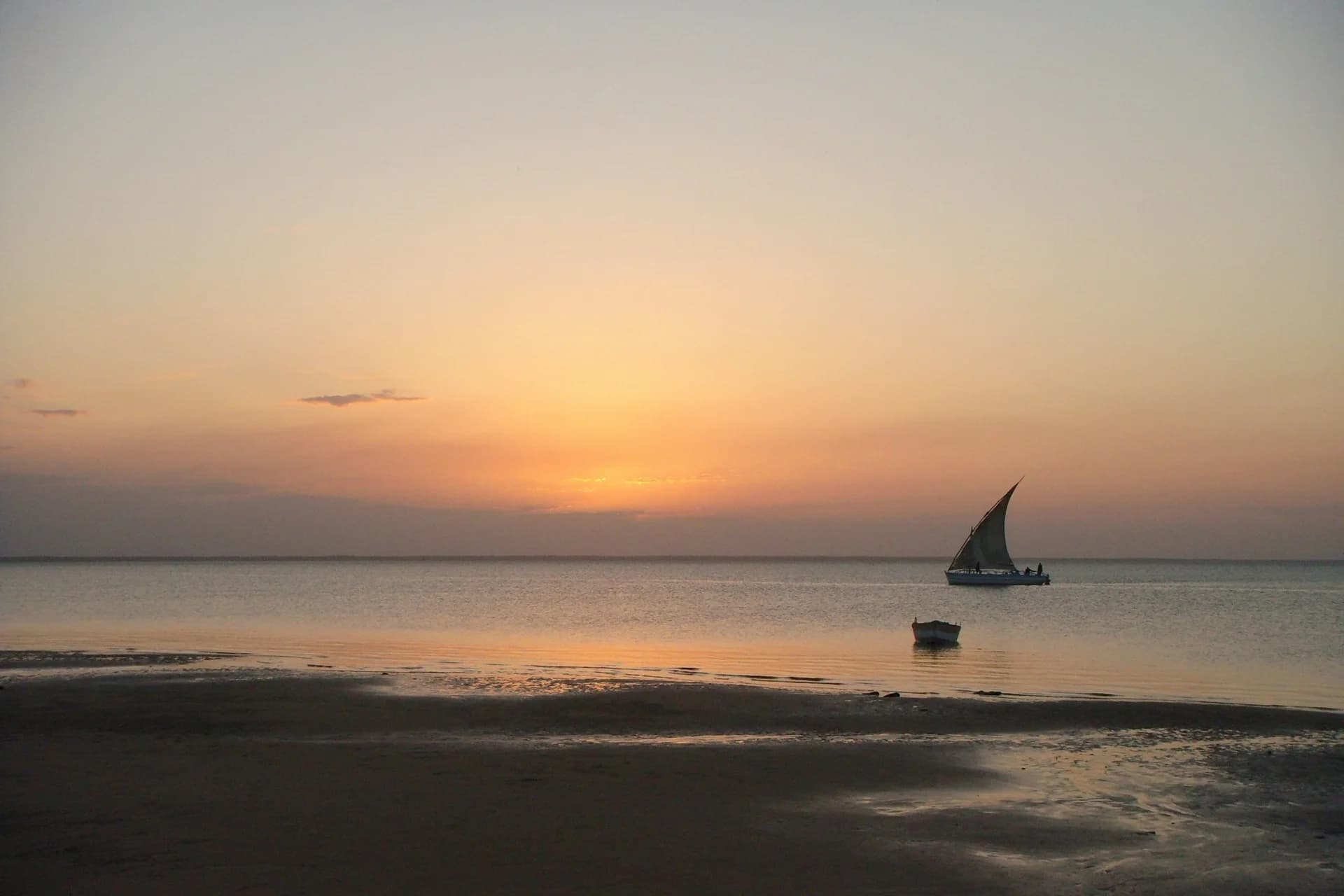
Forget the motorboat for an afternoon. The dhow — a wooden sailboat with a single triangular sail, hand-built the same way for centuries — is how this coast has always moved, and the same rig still works the water all the way north to Zanzibar. Have your lodge or a Vilankulo operator set up a sunset cruise (roughly $40–60 for a couple of hours). There's no engine noise, just the creak of the boom and the slap of water on the hull as the dunes turn copper behind you. Bring a light jacket; the breeze that carries you home gets cool once the sun drops.
3. Climb the giant sand dunes on Bazaruto Island
Bazaruto Island's interior dunes rise over 100 metres, and from the top the whole archipelago unspools in front of you — turquoise channels, pale sandbanks, the dark line of the reef. It's a calf-burning slog up soft sand — the same climb-and-slide rhythm the dune fields at Sossusvlei demand over on Namibia's side of the continent — so go in the cooler hours of early morning or late afternoon and carry more water than you think you need. The reward at the summit is the kind of 360-degree view people fly across continents for. Wear sunglasses; the glare off the white sand is no joke.
4. Spend a day on Benguerra Island
Benguerra is the archipelago's second-largest island and arguably its prettiest — palm-fringed beaches, inland freshwater lakes, and a couple of the country's finest lodges (Azura Benguerra and Kisawa Sanctuary among them). Even if you're not staying in that price bracket, you can land for the day. Walk the eastern beach at low tide when the ocean pulls back to reveal hundreds of metres of rippled sand flats, then find shade under the casuarina trees for a long lunch. It's the picture of an island that hasn't been paved over.
5. Go deep-sea fishing for marlin and sailfish
The drop-off east of the islands is serious blue-water fishing territory. Black marlin, sailfish, king mackerel, and dorado all run these channels, and the archipelago has hosted record-class catches. Charters leave from Vilankulo — expect roughly $450–650 for a half-day boat split between your group. Go catch-and-release where you can; the park's whole reason for existing is to keep these waters alive. If you're prone to seasickness, take something before you board, because once you're past the reef the swell gets honest.
6. Visit a local fishing village
Real people live here, and a village visit is the part of the trip most travellers remember longest. Communities on Bazaruto and the mainland still fish from dhows and dry their catch in the sun. Go with a guide who has a genuine relationship with the village, ask before you photograph anyone, and buy something — a woven basket, a few fresh prawns — so your visit actually puts money in local hands. A little Portuguese goes a long way: bom dia (good morning) and obrigado (thank you) will earn you real smiles — Mozambique shares its Lusophone roots with islands like Cape Verde on the far side of the continent.
7. Find the flamingos at the island's inland lakes
Here's the thing most visitors miss entirely: Bazaruto Island has a string of freshwater lakes tucked behind those huge dunes. They draw flamingos, fish eagles, and — keep your distance — a population of Nile crocodiles. Pink-feathered flamingos against bone-white sand and blue water is a wildly different picture from the reef snorkelling everyone comes for — the same freshwater-where-you-least-expect-it appeal that pulls travellers to Malawi's inland lake shore further north. Pair it with the dune climb, since both sit in the island's interior, and you've built a half-day that almost nobody else on your boat will think to do.
8. Scuba dive the deeper reefs
If snorkelling whets your appetite, the dive sites here run deeper and wilder. Drop onto sites like Aquarium or the outer pinnacles and you're in the company of reef sharks, green and loggerhead turtles, and the occasional manta gliding past the cleaning stations — divers who've explored the reefs of the Andaman Islands will recognise the same mix of healthy coral and big pelagics here. The dive operators in Vilankulo and at the island lodges cater to everyone from open-water newbies to seasoned divers; a guided two-tank dive runs around $120–160 including gear. Conditions are best in the calmer winter months when the water clears up.
9. Picnic on a disappearing sandbank
At low tide, sandbanks rise out of the channels like islands that only exist for a few hours. Ask any boat operator to drop you on one with a cooler and an umbrella, and you've got your own private spit of sand surrounded by water on every side, no footprints but yours. Watch the tide chart like a hawk — that's the catch, and it's why you go with someone who knows these waters. Time it right and it's the most absurdly beautiful lunch you'll ever eat.
10. Drift over to Santa Carolina, the 'Paradise Island'
The smallest inhabited island in the group, Santa Carolina — nicknamed Paradise Island — once held a glamorous 1950s resort whose ruins still stand, slowly being reclaimed by sand and palms. It's a strange, photogenic, faintly melancholy place, ringed by some of the archipelago's best shore snorkelling. Boat access depends on tides and weather, so treat it as a bonus rather than a fixed plan. When it works out, you'll have walked through a lost piece of the coast's history with the reef just a few fin-kicks offshore.
Pro Tips Before You Go
- Pay the park fee and keep the receipt. Every visitor entering Bazaruto National Park pays a daily conservation fee of around $10 per person. It funds the rangers and the dugong protection — this is the good kind of cost.
- Time your trip to the dry season. April through October brings calmer seas, better visibility, and fewer mosquitoes. The November–March window is hotter, wetter, and rougher on the water.
- Sort cash and a SIM in Vilankulo. ATMs are scarce on the islands; draw meticais (MZN) and grab a Vodacom or Movitel SIM in town before you head out, because lodge WiFi can be patchy.
- Pack reef-safe sunscreen. You're swimming over living coral. Bring the mineral stuff and leave the harsh chemical sunblock at home.
- Build in a buffer day. Boats here run on tides and weather, not clocks. Give yourself a spare day in Vilankulo so one windy afternoon doesn't sink your whole itinerary. If you're routing through South Africa anyway, that flexibility makes it easy to bolt on a few days in Cape Town at either end of the trip.
Do even half of this list and you'll understand why the people who make it to Bazaruto tend to come back. It's not the easy beach holiday — it's the one you'll still be talking about years later.
Related Articles
 Travel Guides
10 Things to Do in the Maasai Mara That Aren't Just the River Crossing
 Travel Guides
12 Best Things to Do in Luxor: A Both-Banks Hit List for Ancient Thebes
 Travel Guides