
Cape Verde
Photo: Dominique Josse / Unsplash
Key Facts
Best Time to Visit
November to June (dry season, warm); August-October is hotter and occasionally rainy
Language
Portuguese (official), Cape Verdean Creole (Kriolu)
Currency
Cape Verdean Escudo (CVE), pegged to the Euro; Euros widely accepted
Time Zone
CVT (UTC-1)
Airport
Amilcar Cabral International (SID) on Sal; Nelson Mandela International (RAI) on Santiago
Population
~600,000 (country); ~135,000 in Praia (capital, on Santiago)
Climate
Tropical dry; avg 22-28°C year-round; constant trade winds, very little rain
Safety Rating
Generally Safe (Level 1) — one of Africa's most stable and peaceful nations
Geography
10 volcanic islands (9 inhabited), split into Barlavento (windward) and Sotavento (leeward) groups
Top Highlights
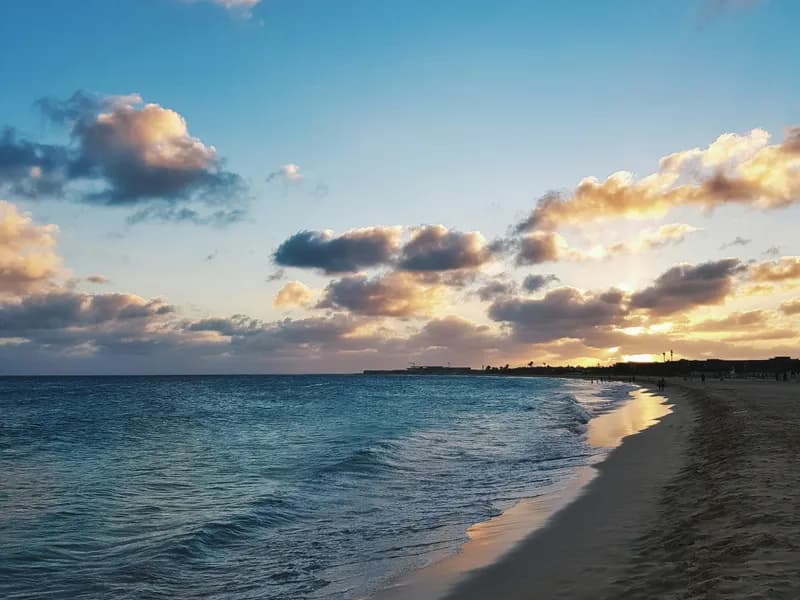
Santa Maria Beach, Sal
A sweeping curve of white sand and turquoise Atlantic water on Sal island's southern tip. The adjacent town has colorful fishing boats, restaurants, and the main tourist strip. Windsurfing and kitesurfing conditions are world-class (November-May). Lounger rental: ~500 CVE. Water temperature stays at 22-26C year-round.
Pico do Fogo Volcano
Cape Verde's highest point at 2,829 m, rising from a massive caldera on Fogo island. The guided summit hike takes 5-6 hours round trip (~3,000-5,000 CVE with mandatory local guide). The last eruption was in 2014-15 — you can walk through the destroyed village of Portela. Vineyards on the lava slopes produce unique Fogo wine.
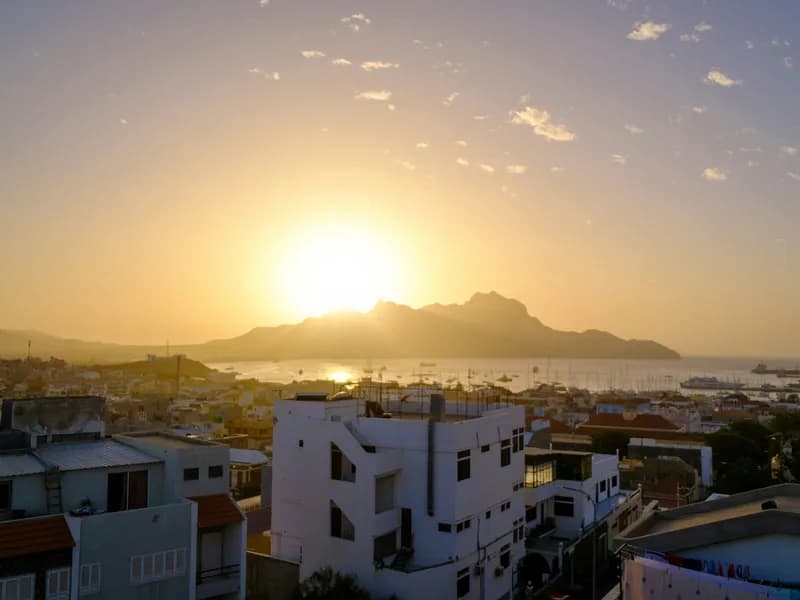
Mindelo, Sao Vicente
Cape Verde's cultural capital, birthplace of the legendary singer Cesaria Evora. A charming port city with colonial architecture, live music bars, and a vibrant Carnival (February). Visit the fish market, stroll the Rua Lisboa, and catch live morna or coladeira music in the evening. The annual Baia das Gatas music festival (August) is superb.
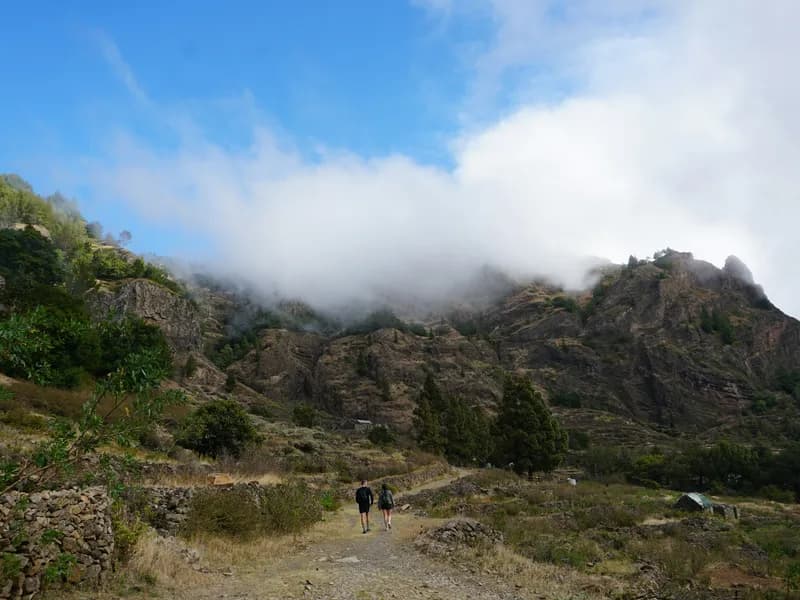
Santo Antao Hiking
The greenest island in the archipelago, with dramatic valleys, terraced agriculture, and trails rivaling Madeira. The Paul Valley and Cova crater hike are highlights. Reached by a 1-hour ferry from Mindelo. Stay in local guesthouses (pensoes) for 2,000-4,000 CVE/night. Hire a local guide (~3,000 CVE/day) for the best routes.
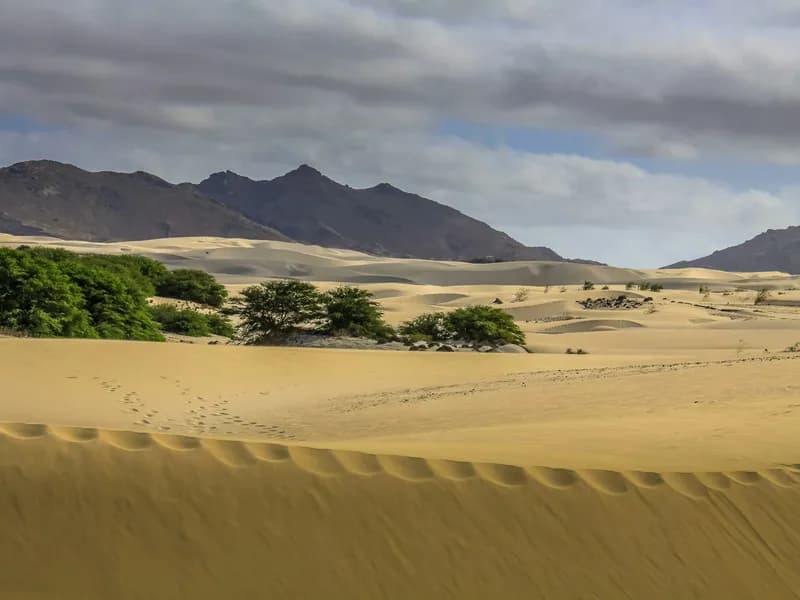
Sal Rei & Boa Vista Beaches
Boa Vista island has some of the most deserted beaches in the Atlantic — endless dunes and not a soul in sight. Praia de Santa Monica stretches for 22 km. Loggerhead turtles nest here June-October (guided night walks available). The town of Sal Rei is small and relaxed with a handful of good restaurants.
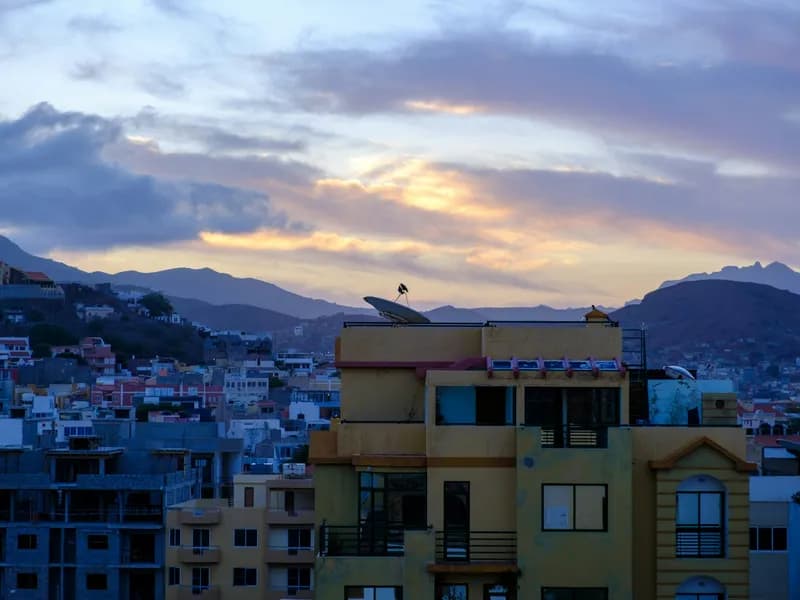
Cesaria Evora Legacy
The 'Barefoot Diva' put Cape Verde on the world music map with her melancholic morna. Visit the Cesaria Evora statue in Mindelo, her childhood home (now a small museum, ~200 CVE entry), and the bars where she first performed. Her music is the emotional heartbeat of the islands — you'll hear it everywhere.
Planned Itinerary
7-Day Cape Verde Itinerary
Arrival on Sal Island
Arrive at Amilcar Cabral International Airport (SID) on Sal island. Pre-register online at ease.gov.cv (airport security tax 3,400 CVE / ~31 EUR). Transfer to Santa Maria on the southern tip.
Airport arrival and transfer(1 hour)
Pre-registration required. Taxi to Santa Maria costs ~1,500 CVE (~15 EUR). The drive is 20 minutes through flat, arid landscape
Check into Santa Maria hotel(30 minutes)
Hotel Morabeza (~€80-120) is the classic choice. Budget: Residencial Nha Terra (~€30). Santa Maria has the best infrastructure on Sal
Walk to Santa Maria Beach(1 hour)
A sweeping curve of white sand and turquoise Atlantic. The adjacent town has colorful fishing boats and restaurants. Water is warm year-round (22-26°C)
Dinner at Restaurante Tam Tam(1.5 hours)
Beachfront Creole restaurant. Grilled tuna with banana, cachupa rica (the national stew). Mains 800-1,500 CVE. Live music some evenings
Sal Island Exploration
Tour the rest of Sal — salt flats, Buracona blue eye, and the colorful fishing town of Palmeira.
Island tour by car or quad(4 hours)
Rent a car (~4,000 CVE/day) or join an island tour (~3,000-5,000 CVE). Sal is flat and dry — more lunar than tropical. The beauty is in the contrasts
Pedra de Lume salt crater(1 hour)
A volcanic crater filled with salt pans. Float in the hyper-saline water (like the Dead Sea). Entry ~500 CVE. The pink and white salt landscape is surreal
Buracona Blue Eye(30 minutes)
A natural lava pool where sunlight creates an electric blue glow in the water at midday. Free access. The effect is strongest 11 AM-1 PM
Lunch in Palmeira(1 hour)
Small fishing port. Fresh grilled fish at a local restaurant for 500-800 CVE. More authentic than Santa Maria
Sunset drinks at Bikini Beach Bar(1.5 hours)
On Santa Maria beach. Caipirinha with grogue (local rum) 400-600 CVE. Watch the kitesurfers in the last light
Fly to Sao Vicente — Mindelo
Morning flight to Sao Vicente island. Mindelo is Cape Verde's cultural capital — music, art, and the spirit of Cesaria Evora.
Flight Sal to Sao Vicente(40 minutes)
Bestfly inter-island flight. Book early — planes are small. ~6,000-10,000 CVE one way
Check into Mindelo hotel(30 minutes)
Kira's Hotel (~€50-80) or Casa Colonial (~€30-50). The harbor area is walkable
Mindelo harbor walk(1.5 hours)
Stroll the Rua Lisboa and the harbor promenade. Colonial Portuguese architecture, pastel buildings, and the Cesaria Evora statue. The fish market is vibrant in the morning
Cesaria Evora childhood home(30 minutes)
Now a small museum (~200 CVE entry). Personal items and photos of the Barefoot Diva who put Cape Verde on the world map
Live morna music evening(2.5 hours)
Mindelo's bars have live music most nights. Cafe Musique, Casa da Morna, or just follow the sound. Morna is melancholic and beautiful — Cape Verde's blues. Grogue and live music from ~9 PM
Santo Antao Day Trip — Green Island Hiking
Ferry to neighboring Santo Antao — the greenest, most dramatic island in the archipelago. Volcanic valleys, terraced agriculture, and world-class hiking.
Ferry from Mindelo to Santo Antao(1 hour)
CV Interilhas ferry departs early morning. ~800 CVE one way. Can be rough in the channel — take motion sickness medication if sensitive
Paul Valley hike(3 hours)
The signature Santo Antao hike — descend through a lush valley of sugarcane, banana, mango, and coffee terraces. Hire a local guide (~3,000 CVE/day). The vertical walls of the valley are staggering
Lunch at a local pensao in Paul(1 hour)
Home-cooked cachupa, grilled fish. 400-800 CVE. The village restaurants are simple but the food is excellent
Drive the coastal road to Porto Novo(1.5 hours)
The cliffside road from Ribeira Grande to Porto Novo is carved into volcanic rock with ocean drops. Dramatic doesn't begin to describe it
Return ferry to Mindelo(1 hour)
Last ferry around 5-6 PM. Confirm times in advance — schedules shift
Rest Day in Mindelo
A slower day in the cultural capital. Markets, art, and the laid-back Mindelo rhythm.
Morning at the fish market(1 hour)
The Mercado de Peixe is active early. Tuna, wahoo, swordfish landed fresh. Watch the filleting and bargaining
Centro Nacional de Artesanato(1 hour)
Cape Verdean crafts — woven baskets, pottery, and pano di terra (traditional cloth). Fixed prices, good quality
Lunch at Pont d'Agua(1.5 hours)
Waterfront restaurant with harbor views. Seafood rice (arroz de marisco) 1,000-1,500 CVE. Live music on weekends
Free afternoon — beach or explore(2 hours)
Laginha Beach is Mindelo's city beach — small but charming. Or walk the backstreets finding street art and hidden bars
Second night of live music(2 hours)
Different bar, different genre. Try coladeira (upbeat dance music) or funaná (accordion-driven, from Santiago island). Mindelo never disappoints musically
Fly to Fogo Island — Volcano Day
Fly to Fogo island to see Cape Verde's dramatic volcanic landscape. The Pico do Fogo (2,829 m) dominates everything.
Flight Sao Vicente to Fogo(1 hour)
Via Praia or direct if available. Bestfly inter-island. The approach over the caldera is jaw-dropping
Transfer to Cha das Caldeiras(1 hour)
Drive from the airport up into the massive caldera. The village of Cha das Caldeiras was destroyed by the 2014-15 eruption — rebuilt on the lava flows. Stay in a local pensao (~€20-40)
Walk through the destroyed village of Portela(1 hour)
The lava flow engulfed half the village. Walls protrude from solidified black rock. Residents returned anyway. Resilience embodied
Fogo wine tasting(1 hour)
Vineyards grow on the volcanic slopes inside the caldera. Manecom cooperative produces Fogo wine. Tasting ~500 CVE. Volcanic terroir in every sip
Dinner in the caldera(1.5 hours)
Simple home-cooked meal at a pensao. Catchupa, grilled cheese, and Fogo wine. The volcano looming above in moonlight
Departure — Fly Out via Praia or Sal
Morning in the caldera, then transfer to the airport for your departure flight.
Sunrise in the caldera(1 hour)
The sun hits the Pico do Fogo summit while the caldera floor is still in shadow. One of Cape Verde's most dramatic sights
Optional: Begin Pico do Fogo summit hike(5 hours)
If departing later, the summit hike (5-6 hours round trip with mandatory guide, 3,000-5,000 CVE) is the ultimate Cape Verde challenge. Start at dawn. The descent through volcanic scree takes 30 minutes of sliding
Transfer to Fogo airport and fly to connection(2 hours)
Fly to Praia (Santiago) or Sal for international connections. Inter-island flights are short but not always daily — confirm schedules
14-Day Cape Verde Itinerary
Arrival on Sal
Arrive at SID airport. Register at ease.gov.cv. Transfer to Santa Maria.
Airport and transfer(1 hour)
Pre-registration required (3,400 CVE). Taxi ~1,500 CVE to Santa Maria
Check into Hotel Morabeza(30 minutes)
~€80-120. Or Residencial Nha Terra ~€30
Santa Maria Beach walk(1 hour)
White sand, turquoise Atlantic. Year-round warm water
Dinner at Tam Tam(1.5 hours)
Grilled tuna, cachupa rica. 800-1,500 CVE
Sal Island Tour
Salt crater, blue eye, and fishing villages.
Island tour(4 hours)
Car rental ~4,000 CVE/day or tour ~3,000-5,000 CVE
Pedra de Lume salt crater(1 hour)
Float in hyper-saline water. ~500 CVE
Buracona Blue Eye(30 minutes)
Electric blue glow at midday. Free
Lunch in Palmeira(1 hour)
Grilled fish 500-800 CVE
Sunset at Bikini Beach Bar(1.5 hours)
Caipirinha with grogue 400-600 CVE
Fly to Mindelo
Cultural capital of Cape Verde. Music, art, Cesaria Evora.
Flight Sal to Sao Vicente(40 minutes)
Bestfly. 6,000-10,000 CVE
Check into Kira's Hotel(30 minutes)
~€50-80
Mindelo harbor walk(1.5 hours)
Rua Lisboa, Cesaria Evora statue, fish market
Cesaria Evora museum(30 minutes)
~200 CVE
Live morna music(2.5 hours)
Cafe Musique or Casa da Morna. Grogue and music from ~9 PM
Santo Antao — Green Island
Ferry to dramatic volcanic valleys. Paul Valley hike.
Ferry to Santo Antao(1 hour)
CV Interilhas ~800 CVE. Can be rough
Paul Valley hike(3 hours)
Descent through sugarcane, banana, coffee terraces. Guide ~3,000 CVE/day
Lunch at local pensao(1 hour)
Cachupa, grilled fish 400-800 CVE
Coastal road to Porto Novo(1.5 hours)
Cliffside road carved into volcanic rock
Rest Day in Mindelo
Markets, art, and the Mindelo rhythm.
Fish market(1 hour)
Tuna, wahoo, swordfish landed fresh
Centro Nacional de Artesanato(1 hour)
Woven baskets, pottery, pano di terra
Lunch at Pont d'Agua(1.5 hours)
Arroz de marisco 1,000-1,500 CVE
Laginha Beach(2 hours)
City beach. Small but charming
Live music night two(2 hours)
Different bar, different genre. Coladeira or funaná
Santo Antao Day 2 — Cova Crater
Return to Santo Antao for the Cova crater hike — a volcanic caldera with terraced farming inside.
Cova crater hike(4 hours)
Hike down into the volcanic crater. Agriculture inside the caldera. Then descend into the Ribeira do Paul valley. Dramatic scenery throughout
Lunch at a ribeira restaurant(1 hour)
Mountain food — goat stew, corn bread. 400-700 CVE
Grogue distillery visit(1 hour)
Sugar cane rum distilled in copper stills. Tasting free. Buy a bottle from 200-500 CVE
Fly to Fogo — Volcano Island
Cape Verde's most dramatic island. Pico do Fogo towers over a caldera village.
Flight to Fogo(1 hour)
Via Praia or direct. Approach over the caldera is jaw-dropping
Transfer to Cha das Caldeiras(1 hour)
Drive up into the caldera. Destroyed and rebuilt village on lava
Walk through Portela ruins(1 hour)
2014-15 lava engulfed half the village. Walls protrude from black rock
Fogo wine tasting(1 hour)
Volcanic soil vineyards. Manecom cooperative. ~500 CVE tasting
Caldera dinner(1.5 hours)
Home-cooked at pensao. Catchupa, Fogo wine. Volcano in moonlight
Pico do Fogo Summit Hike
The ultimate Cape Verde challenge — summit the 2,829 m active volcano.
Summit hike with guide(6 hours)
Mandatory local guide 3,000-5,000 CVE. Start at dawn. 5-6 hours round trip. Strenuous — volcanic scree, thin air. The 360° views from the top are otherworldly
Descent through scree(30 minutes)
The famous scree run — slide down in 30 minutes what took 3 hours to climb
Late lunch at pensao(1 hour)
Post-summit feast. You've earned everything on the menu
Rest and sunset in the caldera(2 hours)
The volcano's shadow stretches across the caldera floor as the sun sets. Deeply peaceful after the climb
Fogo Island & Sao Filipe Town
Explore beyond the caldera. The colonial town of Sao Filipe has cobbled streets and ocean views.
Drive down to Sao Filipe(1 hour)
The road from the caldera to the coast descends through microclimates — lava fields to coffee plantations to tropical coast
Sao Filipe colonial town walk(1.5 hours)
Cobblestone streets, Portuguese colonial sobrados (townhouses), and the town market. More atmospheric than any other Cape Verdean town
Lunch at a Sao Filipe restaurant(1 hour)
Fogo's specialty is djagacida (corn and bean dish) and grilled goat. 500-900 CVE
Black sand beach(1.5 hours)
Fonte Vila beach has black volcanic sand. Dramatic against the turquoise water. Strong currents — don't swim, but walk and photograph
Evening in Sao Filipe(1.5 hours)
Watch the sunset from the town's clifftop. The light on the sobrado facades is warm and golden
Fly to Santiago — Capital Island
Fly to Praia on Santiago, Cape Verde's largest and most African island.
Check into Praia hotel(30 minutes)
Pestana Tropico (~€80) or Pensao Paraiso (~€30)
Cidade Velha (Old City)(3 hours)
UNESCO World Heritage. The first European colonial city in the tropics (1462). The pillory where slaves were punished, the fortress, and the ruins of the first cathedral south of the Sahara. Entry ~300 CVE. Powerful and sobering
Lunch in Cidade Velha(1 hour)
Beachfront restaurants. Grilled fish, cold beer. 500-900 CVE
Sucupira Market in Praia(1.5 hours)
Praia's main market. African fabrics, music, food. More chaotic than other islands — Santiago has the strongest African influence
Rest Day in Praia
Explore Santiago's capital at a relaxed pace.
Plateau (old town) walk(1.5 hours)
Praia's hilltop old town. Presidential palace, museum, colonial buildings
Kebra Kanela beach(2 hours)
Praia's best city beach. More local than touristy
Lunch at Quintal da Musica(1.5 hours)
Cultural restaurant with live music. Cachupa, grilled fish 600-1,000 CVE
Fly to Boa Vista — Desert Island
Fly to Boa Vista for deserted Atlantic beaches and sand dunes.
Check into Sal Rei hotel(30 minutes)
Hotel Dunas (~€60-80). Sal Rei is small and relaxed
Praia de Santa Monica(3 hours)
22 km of deserted beach. Not a soul in sight. The most spectacular beach in Cape Verde. Access by 4x4 tour
Dinner in Sal Rei(1.5 hours)
Fresh fish, cachupa. 600-1,000 CVE
Boa Vista Exploration
Turtle nesting beaches, shipwreck, and desert landscape.
4x4 island tour(5 hours)
~5,000-8,000 CVE. Visit the Cabo Santa Maria shipwreck (rusting hulk on the beach), Viana desert (tiny Sahara), and turtle nesting beaches (Jun-Oct guided night walks)
Praia de Chaves beach(2 hours)
Long sheltered beach good for swimming. Beach bars and restaurants
Lunch at a beach restaurant(1 hour)
Catch of the day. 500-900 CVE
Free evening in Sal Rei(2 hours)
Walk the waterfront. Small-town Cape Verde atmosphere
Departure from Cape Verde
Final morning. Fly from Boa Vista or connect via Sal.
Morning beach(1 hour)
Last Atlantic swim
Last souvenir shopping(1 hour)
Grogue, cachupa mix, pano di terra cloth
Flight to Sal or Praia for international connection(2 hours)
Inter-island to SID or RAI. Allow buffer for connections
21-Day Cape Verde Itinerary
Arrival on Sal
Arrive at SID. Register at ease.gov.cv. Santa Maria.
Airport and transfer(1 hour)
Pre-registration 3,400 CVE. Taxi ~1,500 CVE
Hotel Morabeza(30 minutes)
~€80-120
Dinner at Tam Tam(1.5 hours)
Cachupa rica 800-1,500 CVE
Sal Island Tour
Salt crater, blue eye, fishing villages.
Pedra de Lume(1 hour)
Float in salt. ~500 CVE
Kitesurfing & Beach
Sal is a world-class wind sports destination.
Kite Beach kitesurfing lesson(3 hours)
Multiple schools. ~5,000 CVE/hour. Consistent 15-25 knot trade winds Nov-May
Fly to Mindelo
Cultural capital. Music and Cesaria Evora.
Santo Antao — Paul Valley
Green island. Dramatic volcanic valleys.
Rest in Mindelo
Markets, art, music.
Santo Antao — Cova Crater & Grogue
Second visit for crater hike and rum distillery.
Santo Antao — Overnight Trek
Multi-day trek along the dramatic coastline.
Hike Ponta do Sol to Cruzinha(5 hours)
Coastal trail past vertical terraced villages. One of the world's great hikes
Overnight at local guesthouse(Evening)
2,000-4,000 CVE. Simple but welcoming
Santo Antao — Trek Day 2 & Return
Morning hike, afternoon ferry back.
Fly to Fogo — Volcano
Pico do Fogo caldera and lava village.
Pico do Fogo Summit
2,829 m active volcano summit.
Summit hike(6 hours)
Guide 3,000-5,000 CVE. Dawn start. Scree descent in 30 min
Fogo — Sao Filipe
Colonial town and black sand beach.
Fly to Santiago
Largest, most African island. Cidade Velha.
Cidade Velha (UNESCO)(3 hours)
First European colonial city in tropics. Pillory, fortress, cathedral ruins. ~300 CVE
Santiago Interior
Mountain villages and the African heart of Cape Verde.
Drive to Serra Malagueta(1.5 hours)
Mountain park. Hiking trails through agricultural terraces
Serra Malagueta hike(3 hours)
Descend through cloud forest to valley villages. Local guide ~2,000-3,000 CVE
Drive to Tarrafal(1 hour)
Santiago's best beach. Black volcanic sand, calm swimming
Rest Day in Praia
Capital island rest day.
Lunch at Quintal da Musica(1.5 hours)
Live music. 600-1,000 CVE
Fly to Boa Vista
Desert island. 22 km deserted beaches.
Hotel Dunas in Sal Rei(30 minutes)
~€60-80
Praia de Santa Monica(3 hours)
22 km deserted. 4x4 tour
Boa Vista Exploration
Shipwreck, Viana desert, turtles.
4x4 island tour(5 hours)
5,000-8,000 CVE. Cabo Santa Maria shipwreck, Viana desert, turtle beaches
Rest Day on Boa Vista
Full beach day.
Beach morning(3 hours)
Some of the most deserted beaches in the Atlantic
Return to Sal
Fly back to Sal for final days.
Final Full Day — Sal
Last full day. Beach, music, farewell.
Watch the fishermen at the pier(1 hour)
The colorful fishing boats landing the catch. A daily ritual
Departure from Cape Verde
Final morning. Last cachupa, then airport.
Travel Tips
Visa & Entry
Pre-Registration Required for Many Nationalities
US and EU citizens need to pre-register online at ease.gov.cv before travel (airport security tax of 3,400 CVE / ~31 EUR). UK citizens need a visa — apply at the Cape Verde embassy or online. Processing is usually quick (1-3 days). Some nationalities can purchase a visa on arrival. Check ease.gov.cv for your country.
transport
Inter-Island Travel Requires Planning
Bestfly (formerly TICV) operates inter-island flights — short but not always daily. Book early as planes are small. Ferries connect some islands (CV Interilhas) but are slow and can be cancelled in rough seas. Sal and Boa Vista have international flights; Mindelo and Praia are domestic hubs. Allow flexibility for weather delays.
Windsurf and Kitesurf Capital of Africa
Sal and Boa Vista have consistent 15-25 knot trade winds November through May, making Cape Verde a premier destination for windsurfing and kitesurfing. Kite Beach in Sal has multiple rental and instruction schools. Lessons start from ~5,000 CVE/hour. Even beginners can get up on a board within a few sessions thanks to the reliable conditions.
Budget
Mid-Range Pricing, Not Budget Africa
Cape Verde is pricier than mainland West Africa due to imports. Budget hotels: 3,000-5,000 CVE/night (~$30-50). A local meal of cachupa (the national corn and bean stew): 400-800 CVE (~$4-8). Grogue (local sugarcane rum): 100-200 CVE per glass. Budget travelers can manage on $50-70/day. Bring Euros — they're widely accepted and easily exchanged.
Try Cachupa — The National Dish
Cachupa is a slow-cooked stew of corn, beans, and whatever protein is available (tuna, chicken, chorizo). Cachupa rica (rich version) has multiple meats; cachupa pobre (poor version) is vegetarian. Leftover cachupa fried for breakfast (cachupa refogada) is a Cape Verdean institution. Found at every restaurant for 400-1,000 CVE.
Safety
Watch the Currents — Atlantic Waves Are Powerful
The Atlantic Ocean around Cape Verde has strong currents and powerful waves, especially on north-facing beaches. Drownings of tourists occur every year. Swim only on sheltered beaches (Santa Maria on Sal, Praia de Chaves on Boa Vista). If a beach has no other swimmers, there's probably a reason. Lifeguards are rare.
Local Customs
Morabeza — Cape Verdean Warmth
Cape Verdeans are known for 'morabeza' — a deep-rooted culture of hospitality and warmth. Greet people with 'Oi' or 'Tudo bon?' (everything good?). Handshakes are common, close friends embrace. Music is everywhere — don't miss a live morna or funaná night. Conversations may switch between Kriolu, Portuguese, and improvised sign language.
Related Articles
StoriesIsland-Hopping Cape Verde: From Sal's Beaches to the Rim of a Live Volcano
Land on Sal and you might wonder what the fuss is about. Two weeks, one live volcano, a ferry, and a green valley later, you'll know — here's the island-hopping arc that turns first-day doubt into the trip of the year.
Travel GuidesTop 8 Reasons Cape Verde Should Be on Your 2026 Travel List
Year-round sun, an active volcano with vineyards, the birthplace of morna music, and beaches that look Photoshopped. Here's why this mid-Atlantic archipelago deserves your attention.
Travel GuidesThe Complete Cape Verde Travel Guide: Volcanoes, Music, and the Atlantic's Best-Kept Secret
Ten volcanic islands in the mid-Atlantic, each with its own personality. From Sal's turquoise beaches to Fogo's wine-growing caldera to Mindelo's legendary music bars.
Travel GuidesCape Verde for Music Lovers: Tracing Cesaria Evora's Footsteps in Mindelo
In a harbor bar in Mindelo, a woman with a guitar sang morna so sad it made the rum taste different. This is the island where music isn't entertainment. It's oxygen.