
Busan vs. Seoul: Which Korean City Deserves Your Limited Vacation Days?
Busan vs. Seoul: Which Korean City Deserves Your Limited Vacation Days?
Spend a week in each and a clear preference emerges — but the right pick isn't universal. These two cities attract different energies, different interests, and different versions of South Korea. The one that deserves your limited days depends entirely on what you came for.
The Core Difference
Seoul is a 10-million-person mega-city where ancient palaces sit beneath glass towers, K-pop blares from every storefront, and the subway system has more stations than most cities have blocks. It's intense, modern, and culturally overwhelming in the best way.
Busan is a 3.4-million-person port city where the mountains meet the sea, temples perch on cliffs, and the pace is noticeably slower. It's coastal, grounded, and feels like Seoul went on vacation and decided to relax.
Food
Seoul: Korean BBQ capital. Meat quality at places like Maple Tree House or Baekjeong is world-class. Gwangjang Market does bindaetteok (mung bean pancakes) and mayak gimbap ("addictive" mini rice rolls). Myeongdong's street food strip has creative fusion snacks. The food scene is vast, diverse, and includes everything from Michelin-starred restaurants to 24-hour pojangmacha (tent bars).
Busan: Seafood capital. Jagalchi Fish Market is the single best seafood experience in South Korea — live fish to sashimi in 10 minutes. Busan's milmyeon (cold wheat noodles) and dwaeji gukbap (pork rice soup) are regional specialties you won't find in Seoul. BIFF Square's ssiat hotteok (seed-stuffed sweet pancakes) are a Busan invention.
Verdict: Seoul for Korean BBQ and variety. Busan for seafood and regional dishes. Both are exceptional food cities.
Beaches & Nature
Seoul: No beaches. The Han River has swimming pools along its banks in summer, but actual ocean requires a 2-hour drive to the Gangwon coast. Parks are excellent — Bukhansan National Park for hiking (1-hour subway from Gangnam to the trailhead), Namsan Tower for city views.
Busan: Seven beaches. Haeundae is the famous one — 1.5km of sand with a skyline backdrop. Gwangalli has the bridge. Dadaepo has the fountain light show. The Igidae Coastal Trail offers cliff walks above the Pacific. Haedong Yonggungsa Temple sits directly on the ocean.
Verdict: Busan, decisively. If nature and coastline matter to you, there's no competition.
Cost
| Category | Seoul | Busan |
|---|---|---|
| Budget hotel | 40,000-80,000 KRW ($28.80-57.60) | 30,000-60,000 KRW ($21.60-43.20) |
| Korean BBQ meal | 15,000-30,000 KRW ($10.80-21.60) | 12,000-25,000 KRW ($8.64-18) |
| Sashimi platter | 30,000-50,000 KRW ($21.60-36) | 25,000-40,000 KRW ($18-28.80) |
| Metro ride | 1,250-1,650 KRW ($0.90-1.19) | 1,400 KRW ($1.01) |
| Beer (bar) | 5,000-8,000 KRW ($3.60-5.76) | 4,000-6,000 KRW ($2.88-4.32) |
| Daily budget | $50-100 | $35-75 |
Verdict: Busan is 15-25% cheaper across the board. Accommodation savings are the biggest factor.
Culture & Sightseeing
Seoul: Five grand palaces (Gyeongbokgung, Changdeokgung are the highlights). Bukchon Hanok Village (traditional houses). The DMZ tour (the world's most heavily fortified border, 2 hours north). N Seoul Tower. The War Memorial. Insadong art galleries. K-pop entertainment districts (Gangnam, Hongdae). National Museum of Korea (free, world-class).
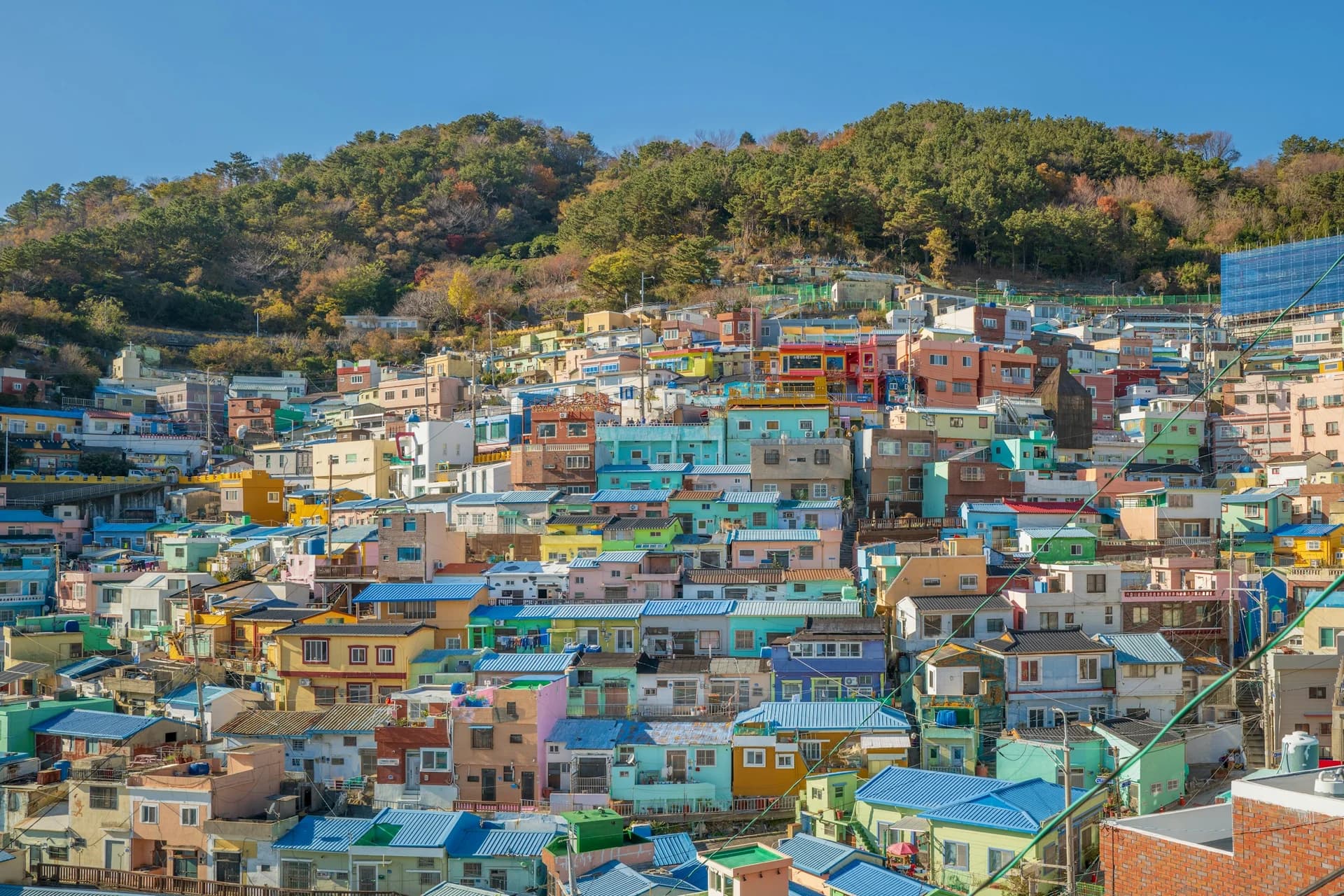
Busan: Gamcheon Culture Village (rainbow hillside art village). Beomeosa Temple (1,300-year-old mountain temple). Taejongdae clifftop park. UN Memorial Cemetery (the only UN cemetery in the world). The Busan Museum. Haedong Yonggungsa Temple.
Verdict: Seoul has more and bigger cultural attractions. Busan has focused, unique ones. Seoul wins on volume; Busan wins on coastal character.
Vibe & Nightlife
Seoul never sleeps. Gangnam has upscale clubs. Hongdae has indie bars and live music until 4AM. Itaewon is the international district with craft cocktails. The subway runs until midnight, and taxis are cheap after that. Seoul's energy is relentless.
Busan has nightlife concentrated in Seomyeon (the "Gangnam of Busan") and Haeundae. It's active but not Seoul-level. The beach bars at Gwangalli with the lit-up bridge are more atmospheric than Seoul's river bars. The vibe is "big city that goes to bed at a reasonable hour."
Verdict: Seoul for nightlife intensity. Busan for cocktails with an ocean view.
Getting Around
Seoul: One of the world's best metro systems — 9 lines, covers virtually everywhere, multilingual signage, clean. Taxis are cheap. Walking is easy in most districts. The city is massive but the transit system makes it manageable.
Busan: Good metro (7 lines) covering the main areas. Buses fill the gaps. But Busan is spread along the coast — distances between attractions are longer than in Seoul. You might need taxis or buses for the coastal sites.
Verdict: Seoul's metro is better. Busan is manageable but less convenient for a tourist.
Who Should Go Where
Choose Seoul if you:
- Love K-pop, K-beauty, and modern Korean culture
- Want palace-and-museum-heavy itineraries
- Enjoy intense nightlife
- Are interested in the DMZ/North Korea history
- Have only 3-4 days in Korea (Seoul packs more into less time)
Choose Busan if you:
- Want beaches and coastal scenery
- Prioritize seafood
- Prefer a slightly slower pace
- Want to spend less money
- Have been to Seoul already and want something different
Choose both if you:
- Have 7+ days in South Korea
- Take the KTX high-speed train (2 hours 30 minutes, 59,800 KRW / $43 one way) between them
- 4 days Seoul + 3 days Busan is the optimal split
The Pick
Busan — and that's a verdict earned even by travelers who fell hard for Seoul.
Seoul is more impressive. More cultural. More energetic. But Busan does something Seoul can't — it makes you exhale. The beach at sunset, the temple on the cliff, the fish market at 7AM with ajummas shouting prices over tank-fresh octopus. It feels like a city that hasn't forgotten it's built on the ocean.
Seoul is the greater city. Busan is the better trip.
The KTX Connection
If you can't choose, don't. The KTX high-speed train connects Seoul Station to Busan Station in 2 hours 30 minutes. Tickets cost 59,800 KRW ($43) one way for standard class. Trains run every 15-30 minutes from 5:30AM to 10PM.
The optimal Korea itinerary: fly into Seoul, spend 3-4 days on palaces, markets, and nightlife, then KTX to Busan for 3 days of beaches, seafood, and coastal temples. Fly out from Gimhae Airport (PUS) — international flights to most Asian hubs.
Busan isn't Seoul's little brother. It's the city that Seoul residents escape to when they need to remember what sky looks like without a skyscraper in it.


