
Canary Islands Showdown: Tenerife vs. Lanzarote vs. Fuerteventura vs. Gran Canaria
Canary Islands Showdown: Tenerife vs. Lanzarote vs. Fuerteventura vs. Gran Canaria
The biggest mistake first-time Canary Islands visitors make is treating all the islands as interchangeable. They're not. Each has a distinct personality, landscape, and ideal traveler. Here's the comparison that helps you choose.
The Personality Test
Tenerife: The all-rounder. Spain's highest peak, black sand beaches, whale watching, resort towns, mountain villages, colonial cities. If you only visit one island, this is it.
Lanzarote: The art island. Volcanic landscapes integrated with Cesar Manrique's architectural vision. Stark, dramatic, unlike anywhere else in Europe.
Fuerteventura: The beach island. Saharan dunes, white sand, endless wind. Europe's best windsurfing. The quietest of the four.
Gran Canaria: The diverse one. Dunes, mountains, nightlife in Las Palmas, rural interior. A continent in miniature.
Beaches
Fuerteventura leads. Corralejo dunes (natural park, Saharan-style sand, turquoise water, free), Playa de Sotavento (6 km of white sand, kitesurfing), and Playa de Cofete (wild, remote, dramatic). The best beach island in the Canaries by a significant margin.
Gran Canaria has Maspalomas dunes (impressive, busy) and Playa de Amadores (sheltered, family-friendly, free).
Tenerife has Playa de las Teresitas (golden sand imported from the Sahara in the 1970s, sheltered, excellent) and black sand beaches designed by Manrique.
Lanzarote has Papagayo beaches (golden sand, sheltered coves, moderate effort to reach) and El Golfo's surreal green lagoon.
| Island | Beach Score |
|---|---|
| Fuerteventura | 10/10 |
| Gran Canaria | 7/10 |
| Tenerife | 6/10 |
| Lanzarote | 6/10 |
Nature & Hiking
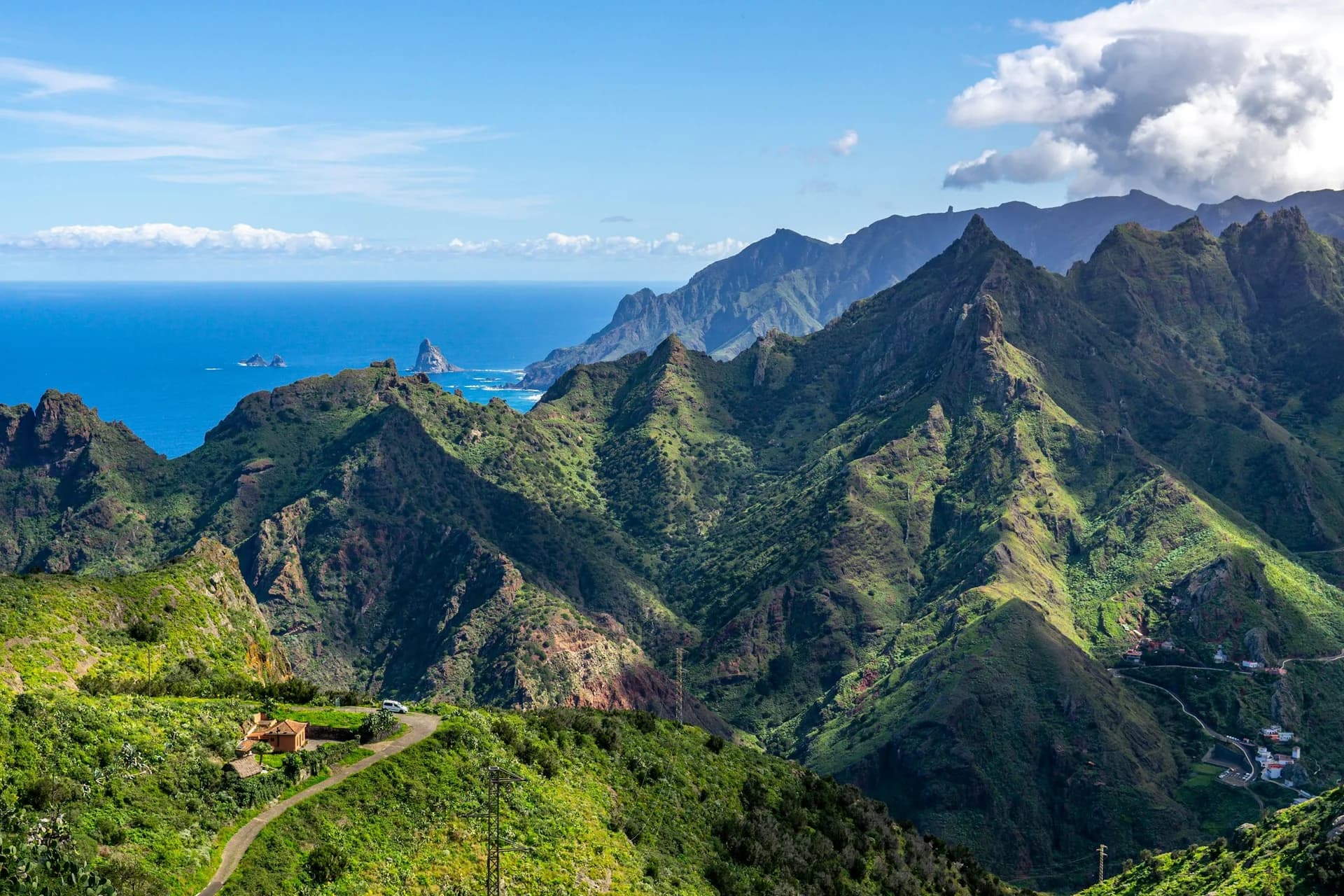
Tenerife leads. Mount Teide (3,718m, cable car 40 EUR, UNESCO World Heritage), Masca Valley hike (permit required, 125 hikers/day), Anaga Rural Park (ancient laurel forest, dramatic ridgelines). The variety is unmatched.
La Gomera (accessible by ferry from Tenerife) has Garajonay National Park — the best hiking in the archipelago, a UNESCO laurel cloud forest.
Lanzarote has Timanfaya National Park (15 EUR, volcanic landscapes from the 1730 eruptions) and the dramatic coastline.
Gran Canaria has Roque Nublo (dramatic volcanic pinnacle, moderate hike) and deep ravines (barrancos) in the interior.
| Island | Nature/Hiking Score |
|---|---|
| Tenerife | 10/10 |
| Lanzarote | 7/10 |
| Gran Canaria | 7/10 |
| Fuerteventura | 4/10 |
Culture & Sightseeing
Lanzarote wins thanks to Cesar Manrique. His integrated art-nature creations — Jameos del Agua, Cueva de los Verdes, Mirador del Rio, Fundacion Cesar Manrique — make the island a living gallery. 5-site pass: 35 EUR.
Tenerife has San Cristobal de la Laguna (UNESCO-listed colonial city, free to wander), the old town of La Orotava, and Icod de los Vinos (home to a 1,000-year-old dragon tree).
Gran Canaria has Las Palmas — a proper city with the Vegueta historic quarter, Columbus's house museum, and excellent restaurants.
Fuerteventura is light on cultural sights. The old capital Betancuria is charming but small.
| Island | Culture Score |
|---|---|
| Lanzarote | 9/10 |
| Tenerife | 7/10 |
| Gran Canaria | 7/10 |
| Fuerteventura | 3/10 |
Nightlife & Food
Gran Canaria leads for nightlife — Las Palmas has a proper city scene with bars, clubs, and the beach-party strip at Playa del Ingles.
Tenerife has nightlife in Playa de las Americas (resort-style) and La Laguna (university-town bars).
Lanzarote and Fuerteventura are quiet after dark.
Food across all islands is similar — fresh fish (vieja, cherne), papas arrugadas (wrinkled potatoes with mojo sauce), and gofio (toasted grain flour). All are cheaper than mainland Spain thanks to lower IGIC tax (7% vs. 21% mainland IVA).
| Island | Nightlife/Food Score |
|---|---|
| Gran Canaria | 8/10 |
| Tenerife | 6/10 |
| Lanzarote | 4/10 |
| Fuerteventura | 3/10 |
Budget
All four islands are excellent value compared to mainland Spain and most Mediterranean destinations. Restaurant dinners for two with wine: 25-40 EUR. Beer: 2-3 EUR. Accommodation ranges from 40 EUR/night (apartments) to 150 EUR (resort hotels).
The IGIC tax advantage means electronics, perfume, and alcohol are noticeably cheaper than mainland Spain.
| Expense | Approximate Cost |
|---|---|
| Mid-range hotel | 60-120 EUR/night |
| Restaurant dinner for two | 25-40 EUR |
| Car rental per day | 20-35 EUR |
| Inter-island flight | 30-60 EUR |
| Inter-island ferry | 20-35 EUR return |
Wind Sports
Fuerteventura is the undisputed champion — consistent trade winds, multiple world championship events, schools everywhere. Followed by Lanzarote (La Santa). Lessons from about 60 EUR.
The Verdict by Traveler Type
| You Are... | Go To... |
|---|---|
| First timer, want everything | Tenerife |
| Beach vacation purist | Fuerteventura |
| Art and culture lover | Lanzarote |
| City + nature mix | Gran Canaria |
| Serious hiker | Tenerife + La Gomera |
| Wind/kite surfer | Fuerteventura |
| Winter sun escape | Any (all are year-round) |
| Family with kids | Tenerife or Gran Canaria |
| Photography | Lanzarote |
| Budget traveler | Fuerteventura |
Can You Do Multiple Islands?
Easily. Binter Canarias flies between all islands (30-45 minutes, from 30 EUR if booked early). Fred Olsen and Naviera Armas ferries connect the main islands. Lanzarote-Fuerteventura ferry: 25 minutes, about 20 EUR return.
A 2-week trip could comfortably cover 3 islands. A 1-week trip: pick 1-2 maximum. Don't try to do all four in a week — you'll spend half your time in transit.
My recommendation for first-timers: Tenerife (4 days) + Lanzarote (3 days). You get the volcano, the beaches, the Manrique art, and two completely different island personalities.
Year-Round Advantage
Unlike most European beach destinations, the Canary Islands work 12 months a year. Winter temperatures rarely drop below 18°C. The south coasts of Tenerife and Gran Canaria are virtually rain-free. This makes them Europe's only true year-round beach destination.
Winter (December-March) is peak season — Europeans escaping cold weather fill the resorts. Shoulder months (April-May, October-November) offer the best combination of pleasant temperatures, lower prices, and ideal hiking conditions. Summer is warm but manageable thanks to the trade winds.
Whichever island you choose, the Canaries deliver a quality of natural landscape — volcanic, oceanic, subtropical — that doesn't exist anywhere else in European territory. For the full narrative of island-hopping between Tenerife, La Gomera, and Lanzarote, read our week across the Canaries travel diary. And if you're drawn to year-round Mediterranean island life, Malta offers similar appeal with 7,000 years of history instead of volcanic geology. Four UNESCO sites. Whales in the channel. Cloud forests on mountain peaks. And year-round temperatures that make the rest of Europe's winter seem like an unnecessary hardship.


