
The Volcanic Light: A Week Across the Canary Islands
The Volcanic Light: A Week Across the Canary Islands
The sand is black. Welcome to the Canary Islands. Not grey, not dark brown — genuinely, densely black. Volcanic basalt ground to powder by centuries of Atlantic surf. Stretch out on Playa Jardin in Puerto de la Cruz, Tenerife, a beach designed by Cesar Manrique (who seems to have designed half of everything interesting in the Canary Islands). For a comparison of what each island offers, see our Canary Islands showdown, and watch the waves crash into rocks that were once molten.
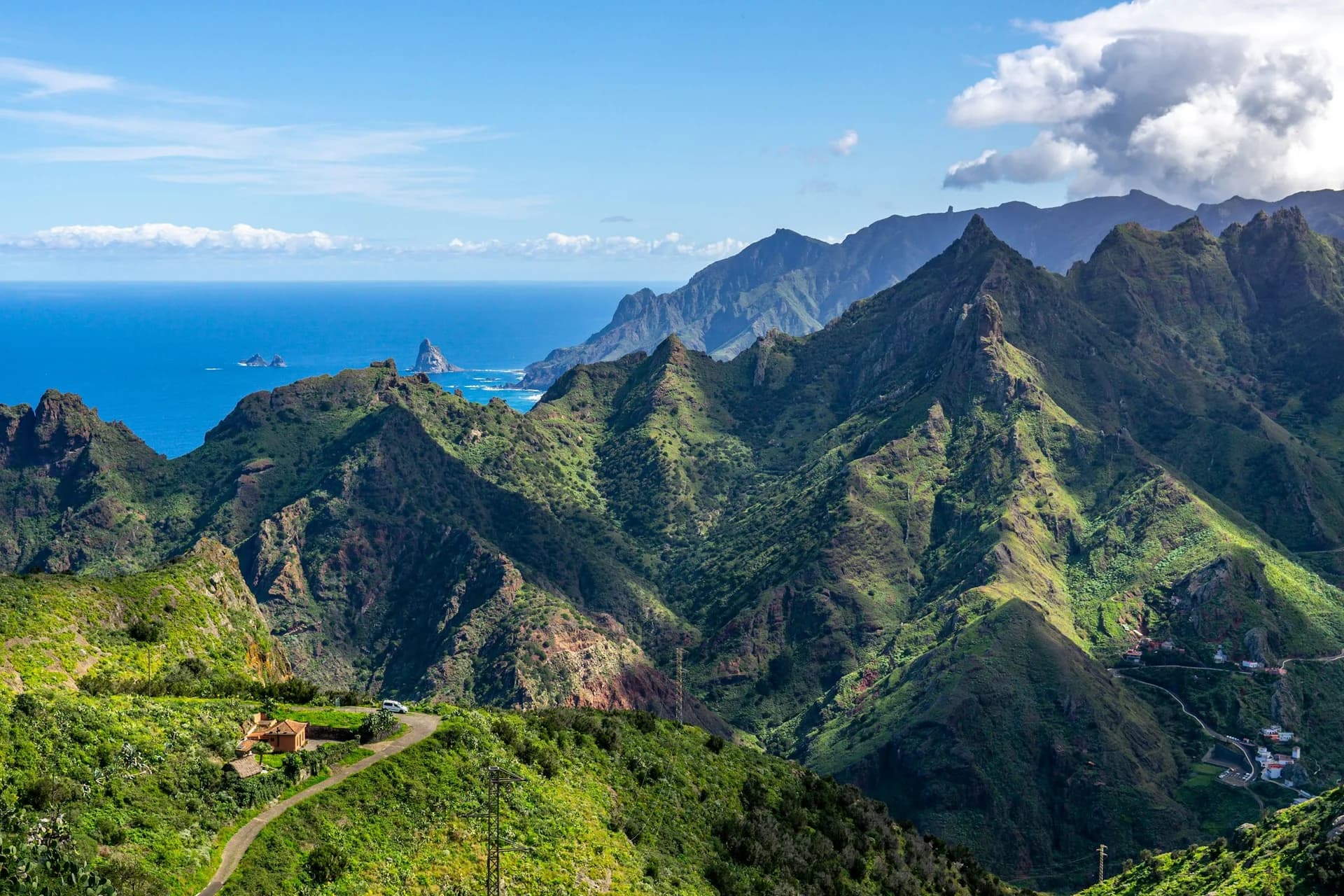
The Canary Islands do something to your sense of scale. You stand on volcanoes that rose from the Atlantic floor. The highest point in Spain — Mount Teide at 3,718 meters — is here, not on the mainland. The islands sit closer to Africa (100 km from Morocco) than to Madrid (1,700 km). And the light, filtered through clear Atlantic air at a subtropical latitude, makes every color more intense than it has any right to be.
Tenerife: The Island That Has Everything
Start on Tenerife, because everyone does, and because the island justifies the default. It is essentially two climates stapled together — the north is green, cloudy, and lush with banana plantations; the south is dry, sunny, and resort-heavy.
Give the first morning to Teide National Park. The road from Puerto de la Cruz climbs through pine forest, breaks above the cloud line (an experience that never gets old — you literally drive through a white ceiling into sunshine), and enters a volcanic caldera that looks like Mars.
The cable car to 3,555 meters (40 EUR return, book at volcanoteide.com) runs when the wind cooperates. At the top station, the air is thin, cold, and absurdly clear. From there, Gran Canaria, La Gomera, La Palma, and El Hierro spread across the Atlantic like stepping stones. The summit itself requires a free permit (limited to 200/day, apply weeks ahead at reservasparquesnacionales.es).
No permit? You can still stand at 3,555 meters, watch your breath freeze in the June sunshine, and decide that is close enough. For most travelers, it is.
The Masca Valley Descent
The Masca Valley hike is Tenerife's signature trail — a 4.5-km descent from the mountain village of Masca (perched at 600 meters in a near-vertical gorge) down to the sea through towering basalt cliffs. Since 2023, a permit is required (free, book at reservasmasca.tenerife.es, limited to 125 hikers per day).
Book three weeks ahead and you should still land a slot. The hike is challenging — steep descents on loose rock, some scrambling, no shade in the lower sections. Plan on 3-4 hours one-way. At the bottom, a boat takes you to Los Gigantes (about 10 EUR).
Masca village itself is worth the drive whether or not you hike. The road from Santiago del Teide has hairpin bends that make the Amalfi Coast look tame. The village clings to a ridge between two gorges with views that are physically startling.
La Gomera: The Forest That Time Forgot
Take the Fred Olsen ferry from Tenerife to La Gomera (50 minutes, about 35 EUR return), even on a whim. It may be the best decision of the trip.
Garajonay National Park is a UNESCO site — a primeval laurel cloud forest (laurisilva) that covered southern Europe 15 million years ago. This is one of the last surviving fragments. Walking through it feels like Jurassic Park without the dinosaurs. Moss-draped trees, ferns taller than you are, mist drifting through canopy gaps.
The trails are well-marked and range from easy to challenging. Free entry. A 3-hour loop from the visitor center can carry you 45 minutes at a stretch without crossing another soul.
La Gomera has something else extraordinary: Silbo Gomero, a whistled language islanders use to communicate across the deep ravines. It is UNESCO-recognized. Catch a demonstration at a restaurant in Vallehermoso, where a man stands on a terrace and whistles a full conversation to someone across a gorge 200 meters away. The whistle carries 2 km. It is genuinely astonishing.
Lanzarote: Where Art Meets Volcano
Fly Binter Canarias from Tenerife to Lanzarote (40 minutes, about 45 EUR). Lanzarote is the most visually striking Canary Island — shaped by 18th-century eruptions (Timanfaya) and the artistic vision of Cesar Manrique, who made it his life's work to integrate architecture with the volcanic landscape.
Timanfaya National Park (15 EUR, bus tour through the 1730 eruption zone) is otherworldly — black lava fields, red craters, and geothermal vents where the ground temperature reaches 400°C just below the surface. At the El Diablo restaurant, food is grilled over volcanic heat. It is a gimmick, but a spectacular one.
Manrique's creations are the island's soul. Jameos del Agua (12 EUR) — an underground volcanic tunnel converted into a concert hall with a blind albino crab colony (seriously). Cueva de los Verdes (12 EUR) — a lava tube tour that ends with one of the best visual surprises in any cave anywhere (worth keeping unspoiled). Mirador del Rio (5 EUR) — a clifftop viewpoint built into the rock with views to La Graciosa island.
A 5-site pass costs 35 EUR and covers all Manrique sites. Allow 2-3 days for Lanzarote.
Fuerteventura: Dunes and Wind
A short ferry from Lanzarote (25 minutes, about 20 EUR return), Fuerteventura is the beach island. The Corralejo dunes — a natural park of Saharan-style sand dunes backing onto turquoise Atlantic water — are surreal. Free. Vast. Empty in the early morning.
Fuerteventura is also Europe's best windsurfing and kitesurfing destination. Consistent trade winds make it world-class year-round. Lessons from about 60 EUR. The wind is a feature, not a bug — but bring a jacket for the evenings.
Whale Watching
The channel between Tenerife and La Gomera hosts a resident pod of about 500 pilot whales and bottlenose dolphins year-round. Licensed boat tours from Los Cristianos or Puerto Colon run 15-30 EUR for 2-3 hours. Sighting rates exceed 90%.
On a 2-hour tour (22 EUR) from Puerto Colon, you can be drifting alongside a pod of pilot whales within 20 minutes — dark, sleek, and completely unbothered by the boat. A dolphin surfs the bow wave. Guides have logged Bryde's whales in these waters too.
Choose operators with the Blue Boat flag for responsible tourism. The whales have been here longer than the tourists.
The Light
It always comes back to the light. The Canary Islands sit at 28°N — the same latitude as Florida, Kuwait, and Delhi. But they are surrounded by ocean, swept by trade winds, and clear of industrial haze. The light is hard, bright, and saturated.
On black sand beaches, the contrast is almost painful — coal-dark ground, turquoise water, blue sky with white trade-wind clouds. On Lanzarote's lava fields, the light reveals textures in the rock that look deliberately sculpted. On Teide at sunset, the shadow of the volcano stretches across the cloud sea below like a pyramid.
Take 600 photographs and not one will quite capture it. The Canary Islands are one of those places where the reality exceeds the image — rare, and worth the flight to experience in person. For another volcanic island experience, Sicily offers Mount Etna's eruptions alongside Greek temples and the Mediterranean's best street food.


