
Cape Winelands in Winter: Why June to August Is the Secret Season for Wine Lovers
Cape Winelands in Winter: Why June to August Is the Secret Season for Wine Lovers
The Cape Winelands in December through March is glorious. Warm days, golden light, picnic blankets on vineyard lawns, the whole postcard. But it's also packed — booked-out restaurants, full parking lots at Babylonstoren, and tasting rooms where you're elbow-to-elbow with tour groups.
Then there's winter.
June to August in the Winelands is cool, green, and quiet. The mountains behind Stellenbosch wear snow caps. The vineyards turn emerald. Fireplaces crackle in 300-year-old tasting rooms. And you don't need a reservation at La Petite Colombe.
Here's why winter is the real season.
The Weather Isn't What You Think
Winter in the Western Cape is Mediterranean — think southern France, not Scandinavia. Temperatures range from 8-18°C. It rains, yes — an average of 10-12 rainy days per month — but it's rarely all-day rain. More often, it's morning drizzle that clears by noon.
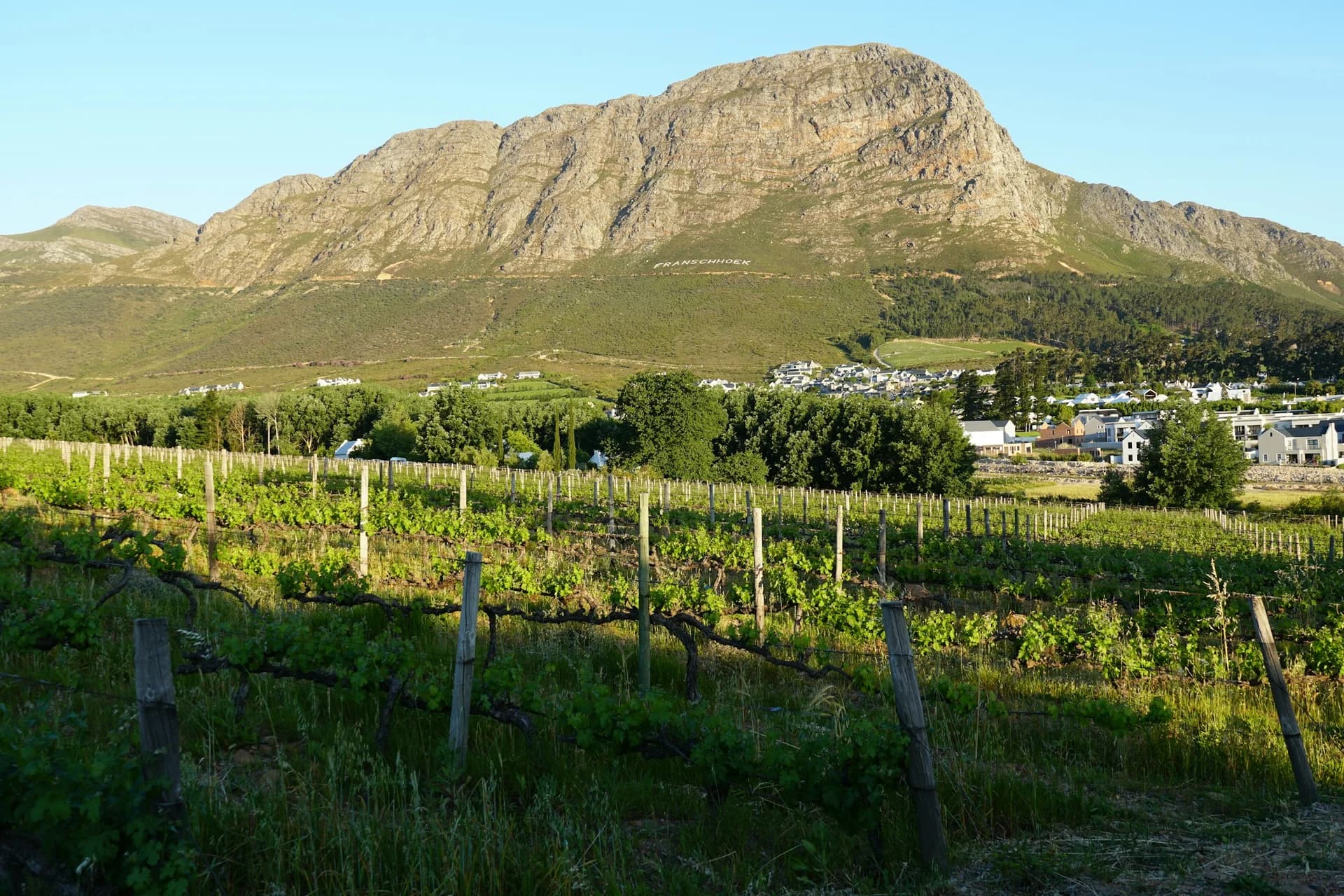
The mountains collect clouds dramatically. The vineyards glow green from the rain. And the light? On a clear winter afternoon, the light in Stellenbosch has a quality that photographers chase — low, warm, golden, with long shadows from the oak trees on Dorp Street.
Bring layers. A good rain jacket. And forget the sunscreen — you won't need SPF 50 in July.
Fireside Tastings Change the Experience
Most Winelands estates switch to winter mode: tasting rooms move indoors, fires are lit, and the pace slows. This is when wine tasting stops being a tourist activity and starts feeling like what it was always meant to be — sitting in a beautiful room, sipping properly, talking to a sommelier who actually has time for you.
Muratie in Stellenbosch — one of the oldest estates (1685) — does winter tastings in a tasting room that hasn't been renovated in decades. Stone walls, old barrels, a fire going, cats sleeping on the floor. Their Laurens Campher (a red blend) paired with a rustic cheese board is peak winter Winelands. Tasting fee: R60 (~$3.30).
Kanonkop — Pinotage specialists — runs tastings from R80 in a warm, intimate room. Their estate Pinotage is world-class. In summer, you'd share the counter with 15 people. In winter, it might be just you and the pourer.
Delaire Graff is luxury year-round (tasting R150 / ~$8), but winter adds the drama of clouds rolling through the valley below the terrace. If the weather clears, the mountain views are sharper than summer's heat haze.
The Price Drop Is Real
| Category | Summer (Dec-Mar) | Winter (Jun-Aug) |
|---|---|---|
| Mid-range hotel | R1,500-3,000/night | R800-1,800/night |
| Luxury lodge | R3,000-8,000/night | R1,800-4,500/night |
| Restaurant reservations | Booked 2 weeks out | Walk-in possible |
| Tasting room crowds | 15-30 people | 3-8 people |
Accommodation drops 30-50%. The tasting fees don't change (R50-200 / $3-11), but many estates offer winter specials — buy-5-get-1-free on bottles, extended tastings with the winemaker, or pairing events.
What Winter Unlocks
Winemaker Dinners
Several estates host intimate winemaker dinners during winter — multi-course meals with wine pairings, hosted by the actual winemaker. These don't happen in summer (too busy). Check estate websites or social media. Babylonstoren, Jordan, and Creation Wines are known for them. Expect R800-1,500 per person ($44-83).
Brandy and Port Season
South Africa's brandy heritage is underrated. Van Ryn's Distillery in Stellenbosch does winter tastings of 10, 12, and 15-year-old potstill brandies in a leather-armchair tasting room. KWV in Paarl has a cathedral cellar with brandy tastings from R60.
Port-style wines (called "Cape Ruby" and "Cape Vintage" in South Africa due to EU naming rules) are also at their best by a fire. Boplaas in Calitzdorp makes some of the finest.
The Green Vineyards
Summer vineyards are golden and dry. Winter vineyards are lush and green — cover crops between the rows, the vines bare and pruned, the soil dark from rain. The photography opportunities are different but arguably better. Snow on the Simonsberg behind green vineyards is the Winelands at its most dramatic.
A Winter Day Itinerary
Morning: Drive the Stellenbosch wine route in the rain. The wet roads between estates are lined with 300-year-old oak trees. First stop: Rust en Vrede for their red blends (R60 tasting).
Late morning: Kanonkop for estate Pinotage. Fireside tasting. Buy a bottle — their Pinotage is R250-400 at the cellar door, easily R600+ in Cape Town restaurants.
Lunch: Walk Dorp Street in Stellenbosch. The oak-lined main street has excellent restaurants and galleries. Overture by Bertus Basson serves seasonal South African cuisine — winter menu might include slow-braised lamb with root vegetables. Mains R180-280.
Afternoon: The Franschhoek Wine Tram (R280 / ~$15) runs in winter on a modified schedule. Fewer stops but the same vintage tram and open-air bus experience, and the valley views through morning mist are ethereal. La Motte and Boschendal are highlights on the route.
Evening: Dinner at Jordan Restaurant in Stellenbosch — hilltop setting with views of the valley (spectacular even in moody weather). Their winter menus pair estate wines with warming dishes. R500-800 for dinner with wine.
Practical Notes
A rental car is essential — roads are well-maintained and scenic. Drive on the left. From Cape Town airport to Stellenbosch: 30 minutes.
Don't drink and drive. South Africa's legal limit is 0.05% — roughly 1-2 glasses. Police roadblocks are common on Winelands roads, especially weekends. Use the spit bucket. Or book a wine tour with a driver ($60-120 per person for a full day, 4-5 estates).
Load shedding (scheduled power cuts) may affect your trip. Check the EskomSePush app. Most estates and good restaurants have generators. Carry cash as backup when card machines go down.
Booking lunch: In summer, you need to book top restaurants 1-2 weeks ahead. In winter, you can often walk in midweek. But it's still worth booking The Tasting Room (Franschhoek), La Petite Colombe, and Babel (Babylonstoren) a few days out.
The Verdict
Summer is the postcard. Winter is the painting. Less people, lower prices, better conversations with winemakers, and a landscape that shifts from golden to green to dramatically moody in a single afternoon.
Bring the rain jacket. Order the Pinotage by the fire. For practical planning, check our 12 Cape Winelands questions answered. And enjoy having the Winelands to yourself.


