The Complete Bruges Travel Guide: Everything You Need for a Perfect Visit
The Complete Bruges Travel Guide: Everything You Need for a Perfect Visit
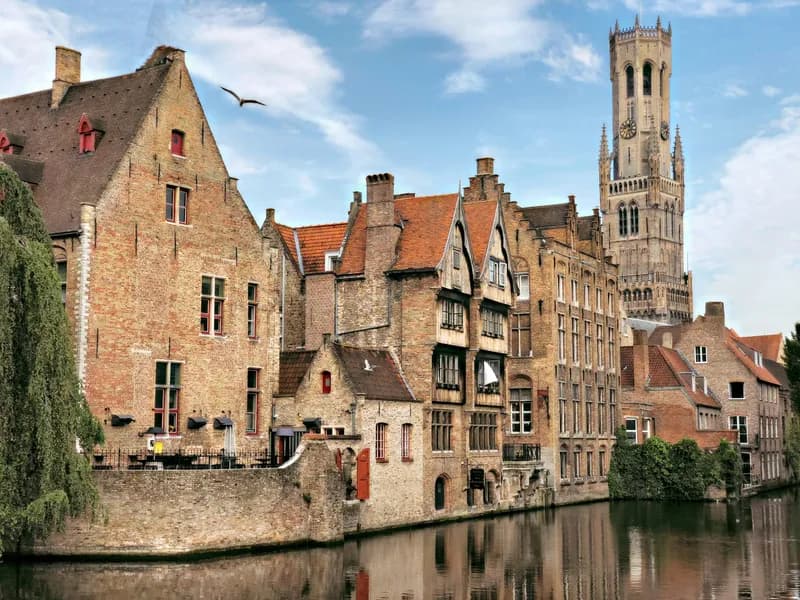
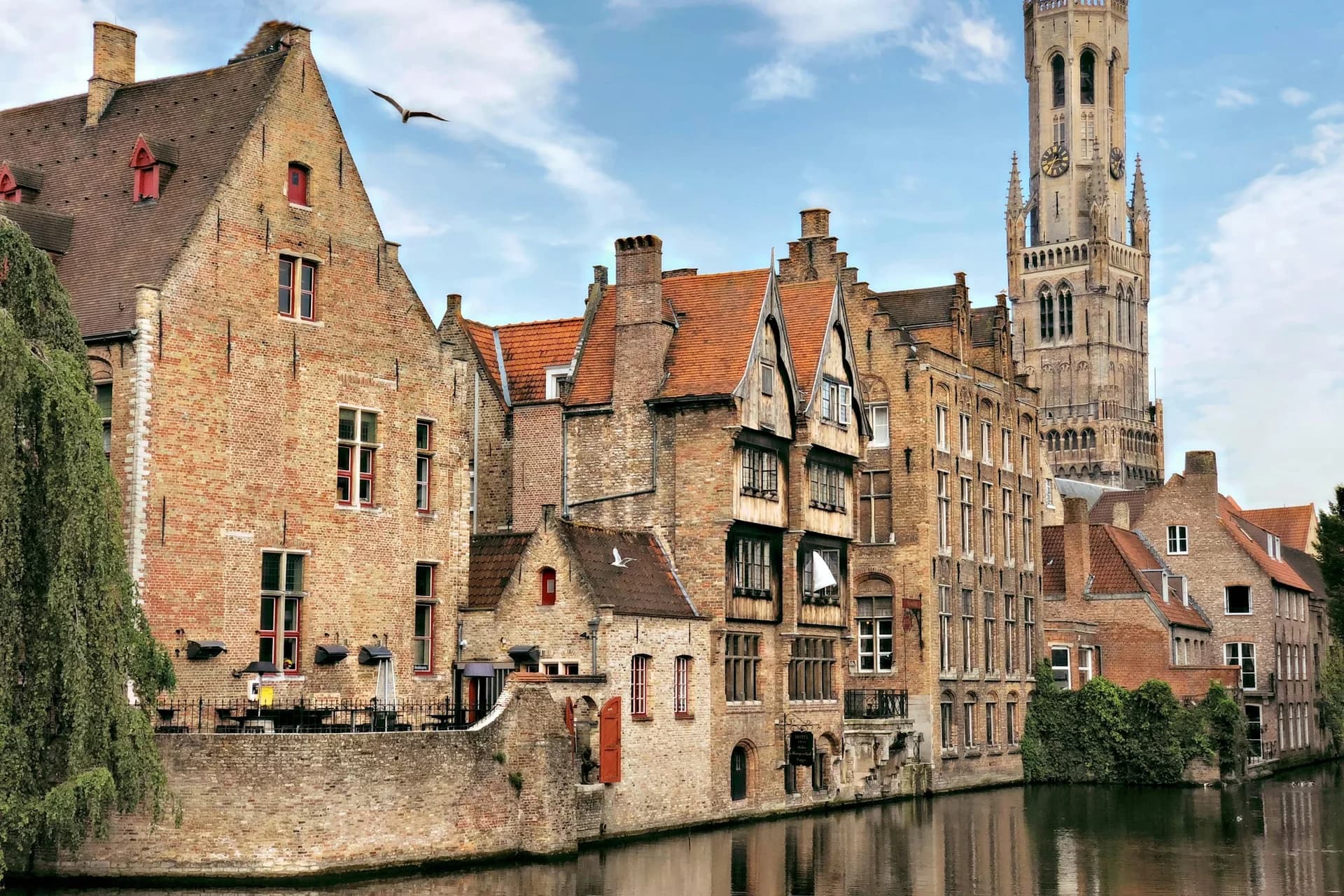
Bruges is the kind of city that looks like someone built a theme park based on the Middle Ages and then forgot to add the ticket gates. But it's real. A hundred and eighteen thousand people live here, the canals have been flowing since the 13th century, and the beer is brewed inside a medieval building with an underground pipeline running beneath the city.
Here's everything you need to plan your trip.
Overview
Bruges (Brugge in Flemish) is a compact, UNESCO-listed medieval city in northwest Belgium. The entire old town is walkable in 20 minutes end to end. It was one of Europe's wealthiest cities in the 14th century — the commercial hub of the Hanseatic League — and when the river silted up and trade moved to Antwerp, the city essentially froze in time. That accident of history is why you're visiting today.
Best Time to Visit
April to September: Warm (12-18°C), long days, canal boats running, outdoor café terraces open. Busiest months are July and August — day-trippers from Brussels flood in by 10AM.
December: Christmas markets, atmospheric lighting, fewer crowds. Cold (3-5°C) and dark by 4:30PM, but that's part of the charm.
Avoid: Rainy November and gray January-February unless you're a dedicated off-season traveler. Belgium's maritime climate means it can rain any day, any month.
Getting There
By air: Fly into Brussels Airport (BRU) — 1.5 hours to Bruges by direct IC train from Brussels-Midi station. Brussels South Charleroi (CRL) is the budget airline hub — 2 hours to Bruges by shuttle + train. Amsterdam Schiphol and Paris CDG are also doable (3-4 hours by train).
By train: Bruges station is a 15-minute walk from the Markt. Trains from Brussels run every 30 minutes (€15-17 one way, 1 hour). From Ghent: 25 minutes, €7. From Paris: Thalys to Brussels-Midi, then IC to Bruges (total ~3 hours).
Getting around: Walk. That's it. The old town is tiny. Rent a bike if you want to explore beyond the center — Fietspunt near the station charges ~€15/day. Cars are pointless; parking garages cost €10-20/day and the streets are narrow cobblestone.
Where to Stay
Bruges is small enough that location barely matters — you're never more than 10 minutes' walk from anything.
- Budget: €70-100/night. Try Snuffel Hostel or B&B Dieltiens. The station area is cheapest but less atmospheric
- Mid-range: €120-180/night. Hotel Jan Brito (15th-century building on a quiet canal), Hotel Adornes (canalside, charming)
- Splurge: €200-350/night. Hotel Dukes' Palace (former ducal palace, stunning), Relais Bourgondisch Cruyce (canal-front, tiny, book months ahead)
Aim for the triangle between Markt, Burg, and Begijnhof for the best location.
What to Do
The Absolute Essentials
Belfry of Bruges: 366 steps, 83 meters, €14. The medieval bell tower is the city's icon. The 47-bell carillon plays every quarter hour. Lines can be 30+ minutes in summer — go early or late. Open daily 9:30AM-6PM, last entry 5PM.
Canal Boat Tour: 30 minutes, €12/adult. Five departure points around the center. March-November, 10AM-5:30PM. No reservation needed — just queue. Honestly? It's touristy and it's worth it. You see hidden garden facades and perspectives you'd never get on foot.
Markt (Market Square): The medieval main square. Colorful guild halls, horse-drawn carriages (€55/30 min for up to 5), and the Belfry looming above. Wednesday morning has a weekly market. Free to explore.
History & Culture
Groeningemuseum: €14. Flemish Primitives — Jan van Eyck, Hans Memling, Hieronymus Bosch. Small, focused, exceptional. Open Tue-Sun 9:30AM-5PM. Allow 1-1.5 hours.
Basilica of the Holy Blood: Free. A 12th-century basilica on Burg Square with two chapels — the lower one is atmospheric Romanesque, the upper is Gothic. Houses a relic said to contain Christ's blood. Relic veneration possible Friday mornings. Allow 30 minutes.
Begijnhof: Free grounds, €2 museum. A 13th-century walled community of whitewashed houses around a tree-lined lawn. Benedictine nuns still live here. Daffodils bloom in spring. One of the most peaceful spots in the city. Allow 30 minutes.
Beer & Food Experiences
De Halve Maan Brewery: €16 tour with tasting. The only active brewery in the old center. Brugse Zot and Straffe Hendrik are brewed here. Tours every hour 11AM-4PM. The 3 km underground beer pipeline is absurd and wonderful. Book online in summer.
Choco-Story Chocolate Museum: €12 (€19 combo with Belgian Beer Experience). 4,000 years of chocolate history, live demonstrations, free tastings. On Wijnzakstraat. Allow 1-1.5 hours.
Food Guide
What to eat in Bruges:
- Belgian waffles: Two types — Brussels (rectangular, crispy) and Liège (round, doughy, caramelized sugar). Street vendors charge €3-5. The best ones are fresh from small shops, not the tourist stands on Markt
- Moules-frites: Mussels and fries. The Belgian national dish. A pot runs €18-24 at a restaurant. Best from September to April (mussel season)
- Stoofvlees: Flemish beef stew cooked in Belgian beer. Rich, dark, perfect with thick-cut fries. €16-20
- Frites: Belgian fries from a frituur (fry stand). Thick-cut, double-fried, served with mayo (not ketchup). €3-4 for a cone
Where to eat:
Skip anything directly on Markt or Burg — 30-50% markup for mediocre quality. Instead:
- De Bottelier: Classic Flemish cuisine, fair prices. 2 blocks from Markt
- Den Dyver: Beer-pairing menu — every dish cooked with Belgian beer. Mains €20-28
- Chez Albert: Best waffle spot according to locals. On Breidelstraat
- Gruuthuse Hof: Traditional, solid, not touristy. Near the Groeningemuseum
A good meal with beer at a non-tourist restaurant costs €20-30/person.
Budget Breakdown
| Category | Budget | Mid-Range |
|---|---|---|
| Accommodation | €70-100/night | €130-180/night |
| Food | €25-35/day | €50-70/day |
| Attractions | €15-30/day (or get City Card) | €32-38 (City Card) |
| Beer | €12-20/day | €20-35/day |
| Daily total | €120-185 | €230-320 |
The Brugge City Card (€32/48hrs or €38/72hrs) includes free entry to 27 museums, one canal boat ride, and discounts. Pays for itself after 2-3 museum visits.
Safety
Bruges is extremely safe. Violent crime is essentially nonexistent for tourists. The main hazards are:
- Cobblestones: Slippery when wet. Wear sturdy shoes
- Cyclists: They share many pedestrian streets. Walk on the right side and stay alert
- Pickpocketing: Rare, but keep your things secure in crowded squares
Useful Phrases
Belgians in Bruges speak Flemish (Dutch), but English is widely spoken. Still, a few words go a long way:
- Dank u (dahnk oo) — Thank you
- Alstublieft (ahls-too-bleeft) — Please
- Proost (prohst) — Cheers
- Hoeveel kost het? — How much does it cost?
- Spreekt u Engels? — Do you speak English? (Almost always: yes)
Final Thoughts
Bruges gets accused of being a tourist trap. It's not. It's a genuinely well-preserved medieval city that also happens to attract millions of visitors. The trick is staying overnight — day-trippers vanish by 5PM, and evening Bruges is a different city. The canals go quiet. The Markt empties. The brewery stays open.
Two nights is the sweet spot. Three if you want to include a day trip to Ghent (25 minutes by train, equally impressive and less crowded). One night is too short — you'll leave feeling like you only scratched the surface of a place that rewards slow exploration and a second beer.
If you're visiting in winter, our guide to Bruges in December covers Christmas markets and seasonal highlights. For a similarly atmospheric medieval city at better value, Tallinn offers Gothic spires and craft beer at a fraction of the cost. And Krakow delivers Central European charm with outstanding nightlife.