
The Complete Gili Islands Guide for 2026: Everything You Need to Know
The Complete Gili Islands Guide for 2026: Everything You Need to Know
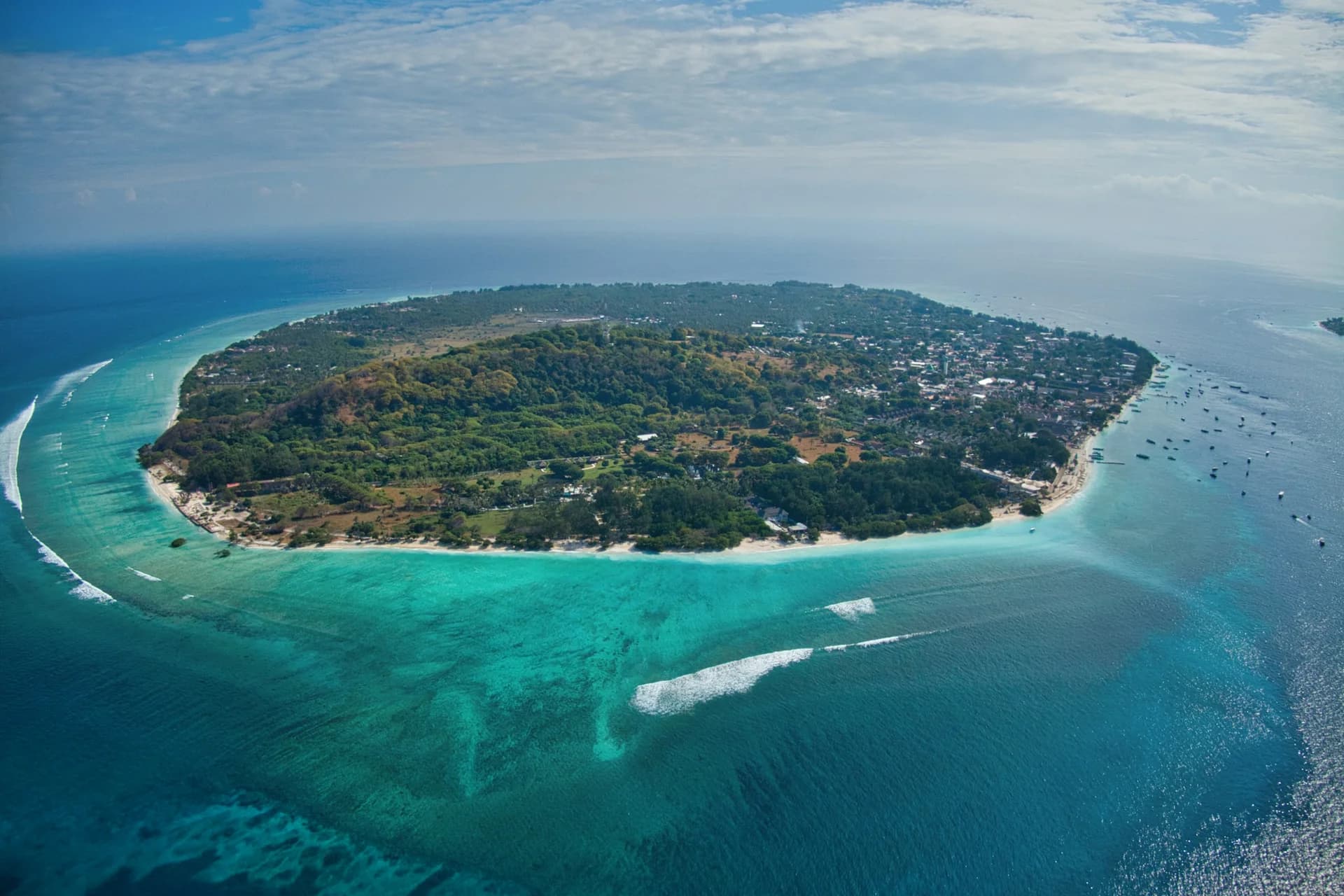
Three tiny coral islands off Lombok's northwest coast, no cars or motorbikes anywhere, sea turtles gliding over reefs you can reach from the sand — the Gili Islands are one of Indonesia's easiest places to fall in love with — and one of the easiest side-trips from Bali, a short fast-boat hop across the strait. This guide covers everything: when to come, how to get there, where to stay, what to do, what it costs, and how to stay safe on islands with no police and no hospital.
Overview: three islands, one archipelago
The Gilis are Gili Trawangan (the largest and liveliest, known for nightlife and over-water swings), Gili Meno (the smallest and quietest, the honeymoon island), and Gili Air (the closest to Lombok, a relaxed all-rounder with a Sasak-village feel). Around 3,500 people live across the three. All are car-free — you move by bicycle, on foot, or by cidomo horse cart. The shared reef means turtle sightings are near-guaranteed wherever you base yourself.
Best time to visit
Aim for the dry season, May to September — calm seas, the best snorkelling visibility, and the smoothest boat crossings. December to February is the rainy season, with rougher water across the strait (sit at the back of the fast boat if you're prone to seasickness). Turtle sightings are good year-round. Temperatures hold steady at 27 to 31°C throughout the year.
Getting there
There's no airport on the islands. Two main routes in:
- Fast boat from Bali (the popular option). Boats leave from Padangbai, Serangan, Sanur, or Amed, taking 1.5 to 2.5 hours and costing 250,000 to 700,000 IDR (~$16 to $45) one way. Book reputable operators and confirm they go direct — some "fast boats" are slow and overloaded.
- Via Lombok. Fly into Lombok International Airport (LOP), then it's roughly 1.5 hours by car plus a short boat. Public boats from Bangsal harbour are cheap (~85,000 IDR).
One thing to know before you land: boats beach directly on the sand, so wear sandals and be ready to wade the last few steps.
Getting around
No motorized vehicles are allowed anywhere on the three islands. Your options are simple: walk, rent a bicycle (~50,000 IDR/day), or take a cidomo horse cart (100,000 to 200,000 IDR depending on distance — agree the fare first). Circling Gili Trawangan by bike takes about an hour on a flat sandy track, with a couple of soft patches where you'll walk. Between islands, hop on the public inter-island boat that loops Trawangan-Meno-Air a couple of times daily (35,000 to 100,000 IDR), or charter a private boat.
A note worth making: animal-welfare concerns have been raised about the cidomo horses working in the heat, so many travellers choose to walk or cycle instead.
Where to stay
Match the island to your trip:
- Gili Trawangan for nightlife and the widest range of accommodation, from backpacker hostels to smart beach resorts. Stay on the quieter north or east coast if you want to sleep, or the west strip if you want to be in the thick of it.
- Gili Meno for over-water villas, deserted beaches, and honeymoon calm. Book ahead — options are limited and fill up.
- Gili Air for the best balance: relaxed beach bungalows, yoga studios, and easy reef access, with real local life around the ring road.
What to do
Snorkel with sea turtles. The Gilis are among the easiest places on Earth to swim with wild green and hawksbill turtles. Turtle Point off Gili Meno's east coast and Gili Trawangan's northeast almost guarantee sightings. Join a group island-hopping boat covering all three islands (100,000 to 150,000 IDR) or rent a mask and fins (35,000 to 50,000 IDR) and swim out from shore. Go in the calm, clear morning — and never touch or chase the turtles.
See the underwater statues. Off Gili Meno, a ring of 48 life-size human figures by sculptor Jason deCaires Taylor rests in 3 to 5 metres of water, slowly becoming an artificial reef. Snorkel it free from the beach at low tide, or reach it on any island-hopping trip.
Dive the reefs. World-class diving with reef sharks, turtles, and seasonal manta rays — the kind of big-reef roster that draws divers to Cairns and the Great Barrier Reef. Shark Point and Manta Point are the signature sites. A two-tank fun dive runs ~900,000 to 1,100,000 IDR; a PADI Open Water course ~5,500,000 IDR. Dive shops share a fixed-price agreement, so choose on reputation.
Catch a sunset on the swings. Gili Trawangan's west coast is lined with beach bars whose over-water swings and hammocks are Instagram legends — a sunset-strip scene to rival Boracay's White Beach. Come for sunset over the sea with Bali's Mount Agung on the horizon. Swings are free with a drink (cocktails 60,000 to 100,000 IDR); arrive by 5:30PM to grab a spot.
Circle an island car-free. Rent a bike and loop Gili Trawangan past turquoise shallows and quiet north-coast beaches, or walk the entire coast of Gili Meno in 90 minutes. The car-free calm is the whole point of these islands.
Food & drink
Gili Trawangan has the most range — the harbour-front night market (Pasar Malam) for point-and-pick seafood BBQ (40,000 to 90,000 IDR), garden cafés, and fine dining at Kokomo (mains 150,000 to 300,000 IDR). Gili Air does superb beachfront sunset dinners at spots like Mowie's Bar (80,000 to 150,000 IDR). A simple local warung meal runs 30,000 to 60,000 IDR across all three islands — always the best value.
Budget
Bring cash. The islands' few ATMs frequently run empty, especially on weekends and on Gili Meno and Gili Air, and charge high foreign-card fees. Many warungs and boat operators are cash-only, and card machines add a 3 to 5% surcharge when they work. Draw enough Indonesian Rupiah in Bali or Lombok to cover your stay plus a buffer. Day to day, the Gilis are affordable: a local meal is a few dollars, snorkel gear is pocket change, and only diving and fine dining push the budget up.
Safety
The Gilis are generally very safe, but a few things are non-negotiable:
- No police, no hospital. Only small clinics that stabilize and evacuate serious cases to Lombok or Bali. Carry travel insurance that covers medical evacuation.
- Strong currents between the islands. Never swim across the channels, and heed local snorkelling advice.
- Skip the "magic mushroom" and "special" shakes advertised at some Gili T bars. Drugs are illegal in Indonesia with harsh penalties, and spiked or over-strength drinks have caused hospitalizations. Stick to sealed drinks from reputable venues.
- Keep valuables in your accommodation's safe.
A few words of local respect
The Gilis have a devout Sasak Muslim population, and you'll hear the mosque call to prayer five times a day. Away from the beach bars — in the inland villages and harbours — dress modestly, ask before photographing locals, and be discreet with alcohol during Ramadan daylight hours. Topless sunbathing is not acceptable. A little respect goes a long way here.
Get those basics right and the Gilis deliver exactly what they promise: turquoise water, wild turtles, powdery sand, and the rare, engine-free quiet of islands where the loudest thing you'll hear is the sea.


