
The Complete Scottish Highlands Guide: Castles, Lochs, and Single Malts
The Complete Scottish Highlands Guide: Castles, Lochs, and Single Malts
The Scottish Highlands occupy roughly half of Scotland's land area but contain barely 5% of its population. It's one of the last great wildernesses in Western Europe — a landscape of mountains, lochs, ancient castles, and whisky distilleries connected by roads that sometimes narrow to a single lane with passing places. If you're exploring the region, Edinburgh is Scotland's capital and the gateway to the Highlands.
It is not convenient. It is not cheap. And it is absolutely extraordinary.
Overview
The Highland council area covers about 26,000 km² — larger than Belgium. Population: roughly 235,000, making it one of the least populated regions in Europe. The landscape is glacial: U-shaped valleys (glens), long narrow lakes (lochs), and mountains (Munros if they're over 914m). If you're exploring the region, London is the most common starting point for UK trips.
Key bases: Inverness (central Highlands, Loch Ness), Fort William (western Highlands, Glen Coe, Ben Nevis), Portree (Isle of Skye).
Best Time to Visit
May to September offers the mildest weather, longest days, and all attractions open. But:
- June-August: Midges (tiny biting flies) are at their worst. Still damp conditions near dawn and dusk. Buy Smidge spray or Avon Skin So Soft (locals swear by it) at any chemist. Head nets (5 GBP) look absurd but work.
- May and September: Fewer midges, fewer tourists, similar weather. September brings spectacular autumn colors.
- Winter: Many attractions close. Roads can be treacherous. But the landscapes are dramatic, accommodation is cheap, and there are no midges. If you're exploring the region, Reykjavik is similarly dramatic landscapes across the North Atlantic.
Getting There & Around
You need a car. Public transport outside main routes is limited. Rent from Edinburgh or Glasgow (from 35-50 GBP/day).
Critical driving info:
- Drive on the left
- Many roads are single-track with passing places — pull into them to let oncoming traffic pass
- Fuel stations are scarce in remote areas — fill up whenever you can
- Highland weather can change in 30 minutes — keep headlights available
- The A82 through Glen Coe and the A87 to Skye are the key scenic routes
Fly to Inverness Airport (INV) for central Highlands access, or use Edinburgh (EDI) or Glasgow (GLA) as road trip starting points.
What to See
Glen Coe
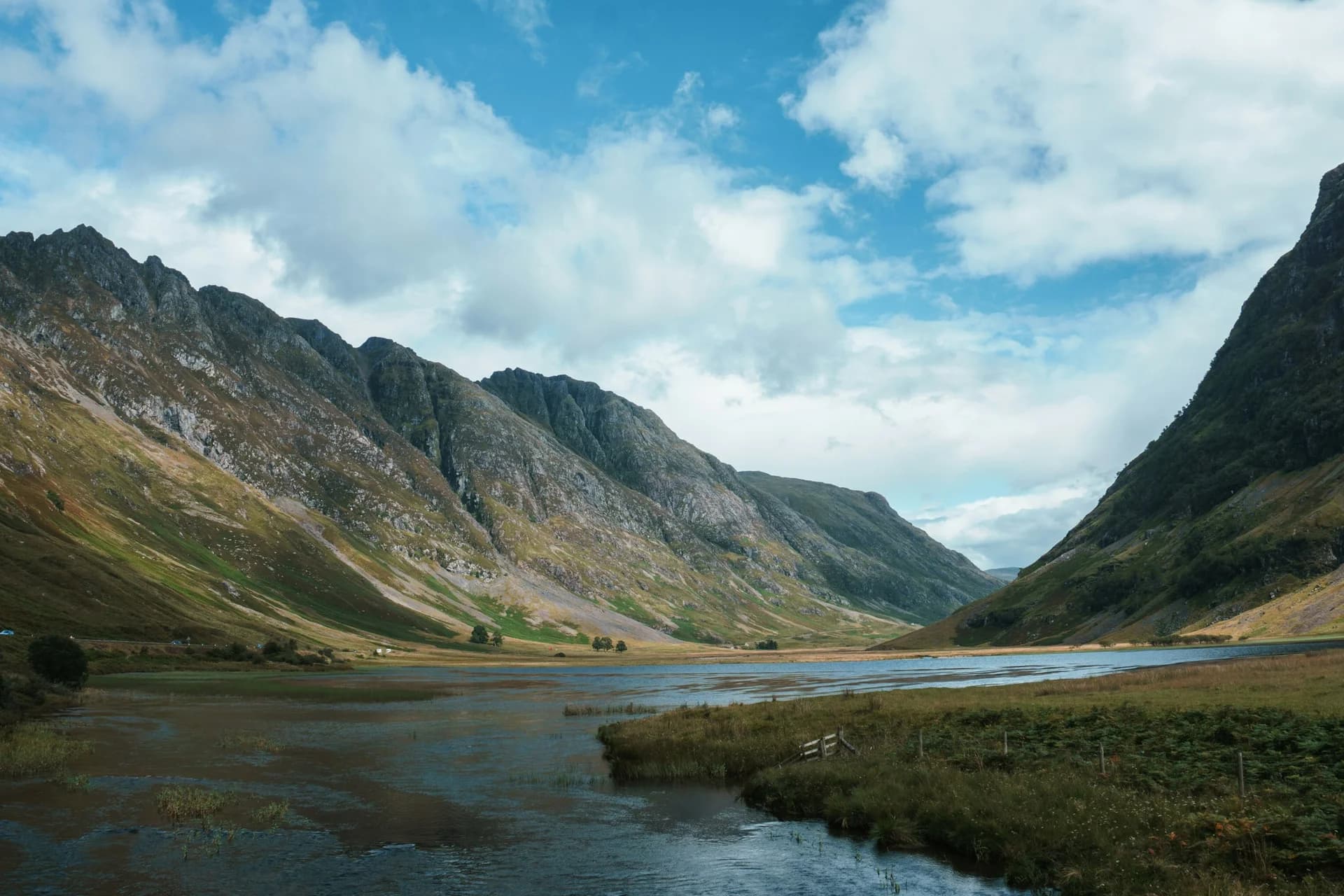
Scotland's most dramatic valley. Free to drive through. The NTS Visitor Centre (free) explains the 1692 Massacre. Hiking trails range from easy valley walks to serious mountain scrambles. The Lost Valley trail (4 hours round trip) is the signature hike. 2 hours south of Inverness. If you're exploring the region, Bath is England's most rewarding historic city.
Isle of Skye
A magical island of rock formations, fairy pools, and sea cliffs. Connected by bridge (free). Allow 2-3 days minimum.
- Old Man of Storr: free, 1-hour hike to pinnacle rock formation
- Fairy Pools: free, 1.5-hour walk through crystal-clear pools
- Neist Point: free, dramatic cliff-top walk to lighthouse
- Accommodation books out months ahead in summer — reserve early
Loch Ness & Urquhart Castle
The 37 km loch, 230 meters deep. Urquhart Castle ruins (12 GBP). Boat cruises from Drumnadrochit (~18 GBP/hour). The Loch Ness Centre & Exhibition (9.50 GBP) covers the monster myth with scientific rigor.
Eilean Donan Castle
Scotland's most photographed castle on a tidal island. Entry: 11 GBP. On the road to Skye near Dornie. Best photographed from the A87 approach.
Glenfinnan Viaduct
The 21-arch Harry Potter bridge. Watch the Jacobite Steam Train cross (from Fort William, 40 GBP return). Free viewpoint, 10-minute walk from the car park (3 GBP parking). Train crosses ~10:45AM and ~3PM — arrive 30 minutes early.
Whisky Distillery Trail
Speyside has 50+ distilleries. Top picks:
- Glenfiddich: free basic tour with tasting
- Macallan: from 20 GBP, architecturally stunning, book ahead
- Dalwhinnie: 12 GBP, Scotland's highest distillery
Highland Games
Traditional athletic events May-September. Caber toss, Highland dancing, pipe bands. The Braemar Gathering (September) is the most famous. Smaller local games are more authentic. Entry: 5-15 GBP.
Where to Stay
Accommodation is limited — especially on Skye and in remote areas.
- B&Bs: 60-120 GBP/night. The backbone of Highland accommodation. Breakfast included.
- Hostels: SYHA network, 20-35 GBP/night. Often in spectacular locations.
- Wild camping: Legal in Scotland under the Scottish Outdoor Access Code. Free. Bring all gear and leave no trace.
- Hotels: 100-200+ GBP/night in towns like Inverness or Fort William.
Book 3-6 months ahead for summer. Seriously.
Food & Drink
- Haggis: The national dish — sheep organs with oatmeal and spices, traditionally served with neeps (turnips) and tatties (potatoes). Better than it sounds. 12-16 GBP.
- Cullen skink: Creamy smoked haddock soup from the northeast. 8-12 GBP.
- Seafood: The west coast has excellent langoustines, scallops, and oysters. Often cheaper than you'd expect.
- Whisky: Try a dram at every pub. Single malts from 5-10 GBP per measure.
Safety
The Highlands are safe from a crime perspective but dangerous from a nature one:
- Mountain weather changes in 30 minutes. Carry waterproofs, warm layers, map, compass, charged phone for any hill walk.
- Check mountainweatherforecast.com before setting out.
- Mobile signal is patchy to nonexistent in remote glens. Tell someone your route.
- Rivers can flash-flood after heavy rain. Don't cross swollen streams.
- The A82 and A87 are scenic but demanding drives — single-lane sections, sharp bends, and limited visibility in rain.
Budget Overview
| Category | Daily Budget |
|---|---|
| Car rental | 35-50 GBP |
| Petrol | 25-35 GBP |
| B&B | 60-120 GBP |
| Food | 30-50 GBP |
| Attractions | 10-25 GBP |
| Daily total | ~160-280 GBP |
The Highlands are not a budget destination, but the wild camping option (free), self-catering from supermarkets, and many free attractions (Glen Coe, Fairy Pools, Old Man of Storr, Neist Point) can bring costs down significantly.
Essential Gear
- Waterproof jacket (non-negotiable)
- Waterproof shoes or boots
- Layers (even summer days can drop to 10°C)
- Midge spray (June-August)
- Midge head net (June-August, 5 GBP)
- OS maps or downloaded offline maps
- Reusable water bottle (Highland water is excellent)
The Scottish Highlands don't do easy. Single-track roads, unpredictable weather, limited accommodation, biting midges. But they give you something in return that easier destinations can't — a landscape so vast, so ancient, and so empty that standing in the middle of it feels like standing at the edge of time.
Bring waterproofs. Book early. Fill your tank. And don't try to see everything in a weekend.


