Corfu FAQ: 13 Questions About Greece's Most Underrated Island, Answered
Corfu FAQ: 13 Questions About Greece's Most Underrated Island, Answered
Corfu doesn't get the press that Santorini, Mykonos, or Crete get. It sits in the Ionian Sea (west side of Greece), not the Aegean. It has Venetian architecture instead of white cubes. It rains more. And it has 4 million olive trees, a kumquat obsession, and beaches that rival anything in the Cyclades.
Here's what you need to know.
Getting There
How do you get to Corfu?
By air: Ioannis Kapodistrias International Airport (CFU) has direct flights from most major European cities in summer (April-October). From North America, connect through Athens, London, or another European hub. The airport is 3 km from Corfu Town — bus #15 takes 10 minutes (€1.50), taxi costs €8-10.
By ferry: From Igoumenitsa on the mainland (1-1.5 hours, from €10/person, €35/car). Ferries run hourly in summer. There's also a crossing from Saranda, Albania (30 min, €19), and overnight ferries from Italy (Bari/Ancona).
Do you need a car?
Almost certainly yes. Public buses connect Corfu Town to major beach towns (Paleokastritsa, Sidari, Kassiopi) but run infrequently — often 2-4 times daily — and don't reach the best hidden beaches (Porto Timoni, Myrtiotissa, Agios Georgios South).
Rent a car from €25-40/day (cheaper with local agencies than international brands). Roads are narrow and winding. Book ahead in July-August when cars sell out. An international driving license is recommended but not always required.
Alternatively, rent a scooter (from €15/day) for beaches and short trips, though the mountain roads can be challenging on two wheels.
Beaches
What are the best beaches?
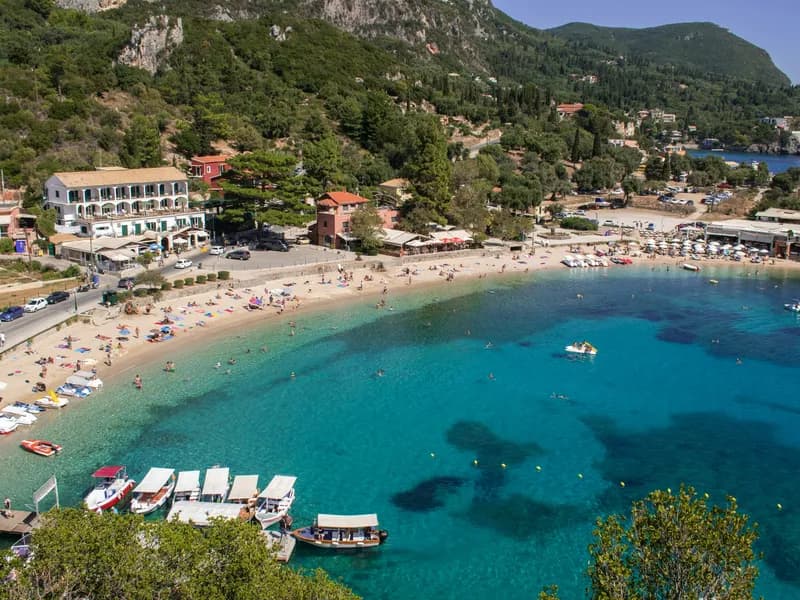
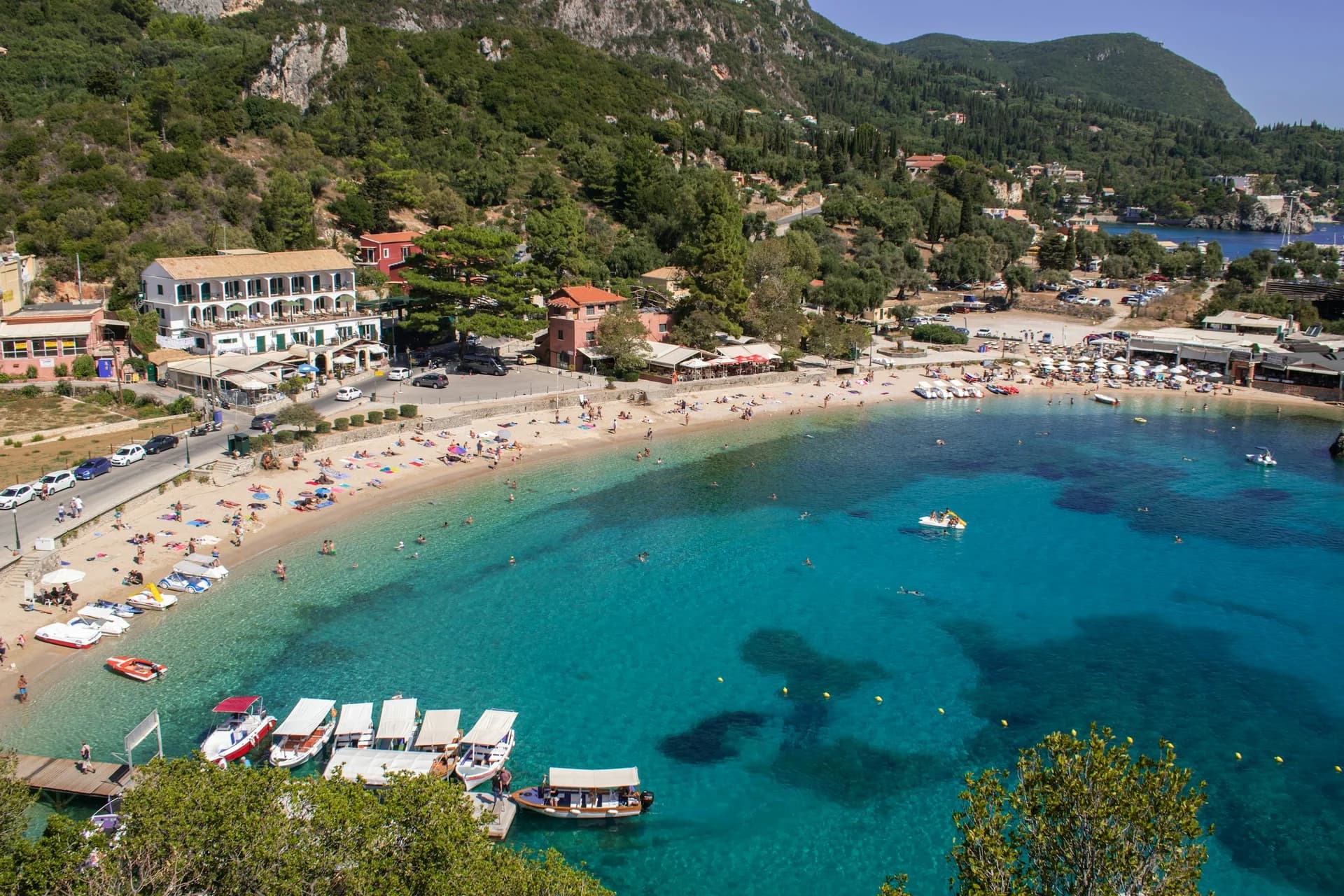
- Paleokastritsa: Six turquoise bays on the northwest coast. Organized beaches with sunbeds (€8/day). Boat trips to grottoes (€10-15). The most photogenic.
- Porto Timoni: Secret double beach reached by a 20-minute downhill hike from Afionas village. No facilities. Crystal-clear water. Worth the hike and the climb back up.
- Canal d'Amour (Sidari): Unusual sandstone rock formations with channels and coves. Free. Crowded in summer — go early.
- Myrtiotissa: Nudist-friendly beach on the west coast. Dramatic cliffs, clear water, limited facilities.
- Glyfada: Wide, organized beach on the west coast with water sports. More touristy but well-equipped.
Do you need water shoes?
Yes. Most Corfu beaches are pebbly or rocky. Sea urchins live on underwater rocks at the waterline. Stepping on one is painful — remove spines with tweezers and soak in vinegar. Invest in a pair of aqua shoes (€5-10 from any beach town shop).
Food & Drink
What's Corfiot cuisine like?
Corfu's food is distinct from the rest of Greece — 400 years of Venetian influence plus Ionian traditions. The key dishes:
- Sofrito: Thin veal slices in garlic-wine-vinegar sauce. The island's signature.
- Pastitsada: Beef or rooster in tomato-cinnamon sauce with thick pasta. Hearty and rich.
- Bourdeto: Spicy fish stew with paprika and tomato. Usually made with scorpionfish.
- Noumboulo: Cured pork tenderloin, smoked with aromatic woods. Corfu's answer to prosciutto.
A full taverna meal with wine costs €12-18/person. Eat in village tavernas, not resort restaurants — the quality is better and the price is 30-50% less.
What's the kumquat thing?
Corfu is the only place in Greece (and one of few in Europe) that grows kumquats. The Mavromatis family distillery in Corfu Town makes kumquat liqueur, marmalade, and candied kumquat. Tasting at the distillery is free. A bottle of kumquat liqueur costs €8-12. It's sweet, citrusy, and makes an excellent souvenir.
Corfu also has excellent olive oil (the Lianolia variety) and local wines — Kakotrygis (white) and Petrokoritho (red).
Practical
How many days do you need?
Minimum 4 days, ideally 5-7. One day for Corfu Town. Two days for beaches (Paleokastritsa, Porto Timoni, Canal d'Amour). One day for the interior (olive groves, mountain villages). One day for the north or south coast.
Corfu is bigger than most people expect — 60 km long, 30 km wide. A long weekend won't cover it.
When should you visit?
May to June and September to October. Warm (22-28°C), fewer crowds, lower prices. July-August is hot (30-34°C), busy, and everything costs more. Book beaches, car rentals, and popular restaurants ahead in peak summer.
Corfu is the greenest Greek island because it gets significant rain in shoulder months (May and October especially). Brief showers, not all-day rain. The upside: the landscape is dramatically greener and more beautiful than the dry Cycladic islands.
Is it expensive?
No. Corfu is good value compared to Santorini or Mykonos.
| Item | Corfu | Santorini |
|---|---|---|
| Taverna dinner | €12-18 | €25-40 |
| Beach sunbed | €8-12 | €15-25 |
| Hotel (mid-range) | €60-110/night | €120-250/night |
| Car rental | €25-40/day | €40-70/day |
| Beer (bar) | €3-4 | €5-7 |
Is Corfu safe?
Very safe (Level 1). Crime against tourists is essentially nonexistent. The main hazards are sea urchins (water shoes), sunburn (it's Greece), and winding roads (drive carefully, especially at night on unlit mountain roads).
Culture
How is Corfu different from other Greek islands?
Corfu spent 400 years under Venetian rule (1386-1797), then brief periods under France and Britain. That history makes it architecturally and culturally distinct:
- Architecture: Venetian, French, and British colonial instead of Cycladic white-and-blue
- Food: Influenced by Italian cuisine (pasta dishes, wine sauces) more than mainland Greek
- Music: A strong tradition of Italian-influenced choral music and brass bands
- Language: Many Corfiots speak Italian alongside Greek and English
- Religion: Greek Orthodox, but with Venetian Catholic influences
The Old Town is UNESCO-listed specifically because of this cultural fusion.
Can you day-trip to Albania?
Yes. Ferries from Corfu to Saranda, Albania run daily (30 min, €19). You can visit the ancient ruins of Butrint (a UNESCO site) and return the same day. Bring your passport — Albania is a separate country. Most nationalities can enter visa-free for short stays.
Should you choose Corfu or Santorini?
Different experiences entirely.
Choose Corfu if: You want beaches (more and better), cheap eating, Venetian architecture, green landscapes, and a more relaxed pace. Corfu is for living.
Choose Santorini if: You want the iconic caldera views, dramatic sunsets, white-and-blue architecture, wine tasting, and the quintessential Instagram Greek island. Santorini is for viewing.
With 10+ days in Greece, do both — they complement each other perfectly.
Quick Reference
| Detail | Info |
|---|---|
| Airport | CFU — 3 km from Corfu Town |
| Currency | Euro (EUR) |
| Language | Greek, English and Italian widely spoken |
| Best months | May-June, September-October |
| Safety | Very Safe (Level 1) |
| Must-eat | Sofrito, pastitsada, kumquat liqueur |
| Must-see | Old Town, Paleokastritsa, Porto Timoni |
| Must-bring | Water shoes, rain jacket, sunscreen |
| Car rental | Essential for exploring beyond Corfu Town |
| ETIAS | Required from 2026 for non-EU visitors (€7) |
For a week-by-week account, read our Corfu travel journal. Food lovers should explore our Corfu cuisine guide. If Corfu sounds appealing but you want more Adriatic, Split and Kotor offer walled-city experiences across the water.