A Week in Corfu: Sun, Olive Trees, and the Beach Nobody Told Me About
A Week in Corfu: Sun, Olive Trees, and the Beach Nobody Tells You About
Corfu rarely makes the first draft of a Greek itinerary. Santorini gets the attention — the caldera views, the white churches, the Instagram of it all. But here's the line that reframes everything: Santorini is for photos. Corfu is for living.
Spend a week here and you'll understand the difference.
Day 1: Arrival and the Venetian Surprise
You fly into Ioannis Kapodistrias Airport (CFU) — 3 km from Corfu Town, 10 minutes by bus #15 (€1.50). The airport is small enough that you walk from the plane across the tarmac to the terminal. Already, this is a different Greece than Athens.
Corfu Town arrives sideways. You might expect the Greek islands of the brochures — white cubes, blue domes. Instead: Venetian architecture. The Liston — a colonnaded arcade modeled on the Rue de Rivoli in Paris. Spianada, the largest square in Greece. Narrow alleys called kantounia with laundry strung between shuttered windows in ochre and terracotta. This isn't the Cyclades. This is an Ionian island that spent 400 years under Venice, then passed through French and British hands. The architecture tells the whole story.
The Old Fortress (€6) juts into the sea on a promontory. The views from the top — Corfu Town below, the Albanian coast across the strait, the Greek mainland to the east — are worth the climb. The New Fortress (€4) is less dramatic but less crowded.
Have dinner at a taverna in the old town. Order sofrito — Corfu's signature dish, thin veal slices in a garlic-wine-vinegar sauce. €11. Add a half-liter of house wine (€4) and a salad (€5), and dinner lands at €20. You'll read the bill twice to be sure.
Day 2: Paleokastritsa and the Monastery
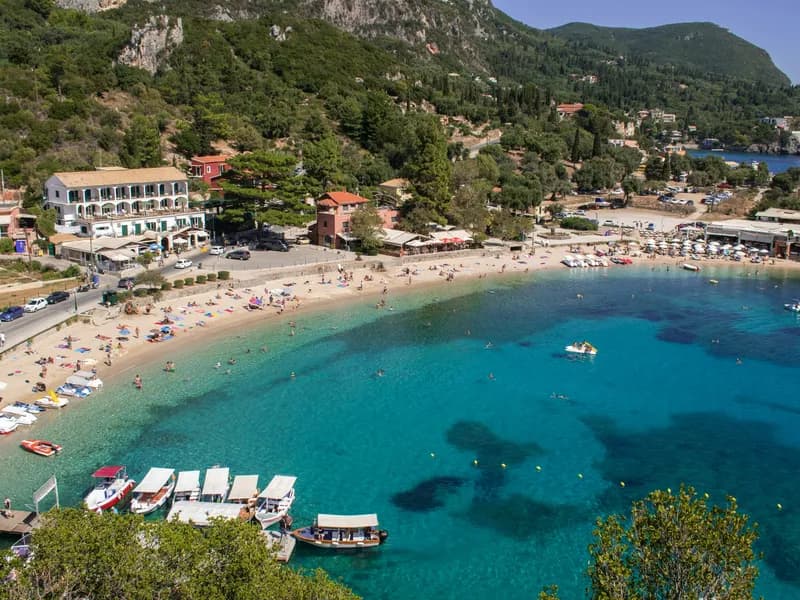
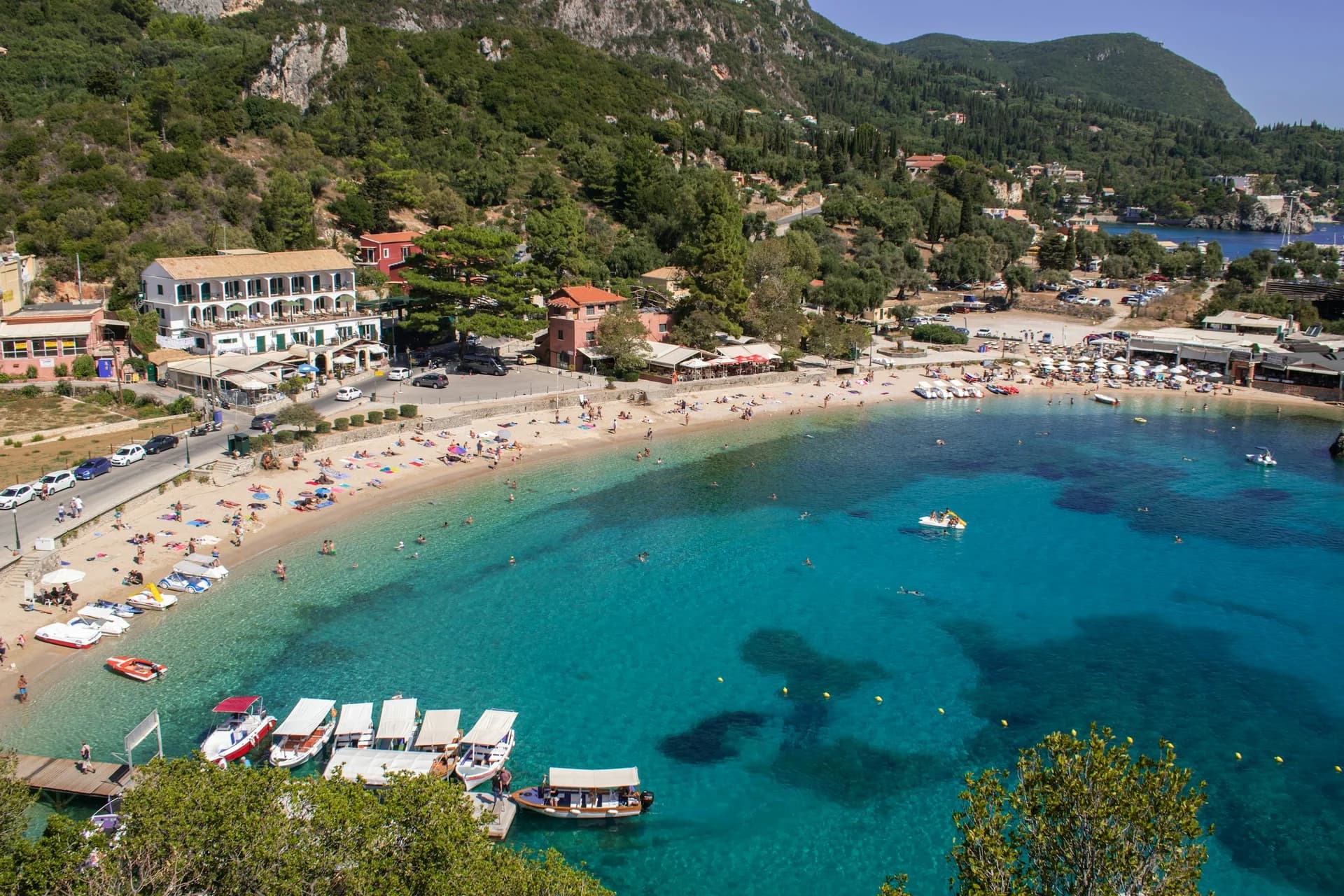
Paleokastritsa sits on the northwest coast — 25 km from Corfu Town, 40 minutes by bus (€3) or 30 minutes by rental car. Six turquoise bays arranged around a headland. The water is the color of mouthwash, and that's the highest compliment available.
The monastery at the top of the headland dates to the 13th century. Small, whitewashed, with a courtyard garden and an icon collection. Free entry (dress modestly — they provide wraps at the door). The view from the monastery terrace down to the bays is the kind of thing that makes the whole idea of clifftop monasteries suddenly make sense.
Rent a sunbed at the main beach (€8/day) and swim until your fingers prune. The water runs 24°C in early June. Take a boat trip to the hidden grottoes along the coast (€12, 30 minutes) — the guide steers the small boat into caves where the light turns the water from blue to electric turquoise.
Lunch at a taverna above the beach: Greek salad (€6) and grilled octopus (€10), tender and charred, dressed with olive oil and lemon. With a beer, the whole thing comes to €19.
Day 3: The Beach Nobody Tells You About
Porto Timoni. A double beach — two bays on either side of a narrow peninsula, reachable only by hiking 20 minutes downhill from Afionas village. It lives on hiking blogs, not in the guidebooks.
The hike down is steep, rocky, and shadeless. Bring water, sunscreen, and proper shoes (not flip-flops). At the bottom: crystal-clear water on both sides of a narrow strip of land. The north-facing beach sits nearly empty — five people total. The south-facing one had eight.
No facilities. No vendors. No beach bars. Just water, rocks, and the sound of cicadas from the hillside above.
The hike back up takes 30 minutes and earns every gasping step.
Dinner in Afionas village waits at a taverna overlooking both bays from above. Order pastitsada — beef in tomato sauce with pasta, Corfu's other signature dish. €10. With the sunset turning the water from blue to gold to pink as you eat, it's the best €10 on the whole trip.
Day 4: The Interior (Where Tourists Don't Go)
Rent a car (€30/day, booked through a local agency in Corfu Town) and drive into the interior — the part of Corfu nobody photographs.
Corfu has 4 million olive trees. Four million. The island is carpeted in ancient, gnarled olive groves. Driving through them on narrow roads — barely one car wide, lined with stone walls and wildflowers — feels like driving through a Cézanne painting.
Stop at a village called Lakones, above Paleokastritsa. Population maybe 100. One taverna, one kafenio (café), one cat. The old man at the kafenio serves a Greek coffee (€1.50) and points at the view without a word. He's right — words aren't necessary.
Visit the Olive Museum in Corfu Town later (€4). Small, well-curated, it explains why Corfu's olive oil is different (the Lianolia variety, pressed late, more intense). Then head to the Mavromatis distillery for kumquat tasting — free. Kumquat is Corfu's unique thing: liqueur, marmalade, preserves, candy, all of it. A bottle of kumquat liqueur runs €8-12. Buy three.
Day 5: Canal d'Amour and the North
Canal d'Amour in Sidari — sandstone rock formations creating narrow channels and small coves on the north coast. Legend says couples who swim through the canal stay together forever. Swim it solo and the locals say it brings good luck instead.
The formations are unusual — smooth, sculpted rock in yellow and orange, like a miniature Utah canyon flooded with Aegean water. Free to visit. It can get crowded in summer, so arrive around 8:30AM and you'll have it mostly to yourself.
Drive to Kassiopi on the northeast coast — a fishing village with a small harbor, a ruined Byzantine fortress, and excellent swimming at Bataria Beach (small, pebbly, emerald water). Lunch at a harbor taverna: grilled swordfish (€12), Greek salad (€6), bread and olive oil (free). Total: €18 plus €4 for a beer.
Day 6: Mouse Island and Relaxation
Pontikonisi (Mouse Island) — a tiny islet near the Kanoni peninsula, 5 km south of Corfu Town. The view from the Kanoni lookout above is one of Corfu's most photographed: the whitewashed Vlacherna Monastery on a causeway, Mouse Island's cypress tree behind it, and planes from the nearby airport passing overhead at landing altitude.
Boat shuttle to the island: €3 round trip. The Byzantine chapel is small and simple. The whole visit takes 30 minutes. The view from above outshines the visit itself, honestly, but both are worth doing.
Spend the afternoon at an organized beach south of Corfu Town. Lounger and umbrella: €10. Read a book. Swim. Order a Mythos beer from the beach bar (€4). Do nothing. Do it well.
Day 7: Departure and the Things You'll Miss
Take a final morning walk through Corfu Town's old town. The kantounia at 7AM stand empty — just cats and sunlight on stone. Find a bakery selling tsitsibira, a local ginger beer (non-alcoholic, €2) unique to Corfu. Have it with a tiropita (cheese pie, €2.50) on a bench in Spianada square.
The airport is 10 minutes from town. No drama, no long transfers.
Would You Go Back?
You'll already be eyeing September flights. Here's what to do differently next time:
- Rent a car from day one. The buses exist but run infrequently outside Corfu Town. A car opens up the whole island — the hidden beaches, the interior villages, the north coast
- Stay in a village, not Corfu Town. The town is great for one day. After that, a village on the west coast (Paleokastritsa area) or northeast (Kassiopi) puts you closer to the best swimming
- Bring water shoes. Most beaches are pebbly or rocky. Sea urchins are real, and a stray one can cost you 20 minutes with tweezers
- Pack a light rain jacket. Corfu is the greenest Greek island because it rains — even in shoulder months, brief showers happen
Corfu isn't Santorini. It doesn't photograph as dramatically. But it eats better (€12 for a taverna dinner that would cost €30 on Santorini), swims better (more beaches, cleaner water, fewer crowds), and feels more like an actual place where people live than a backdrop for vacation photos.
Four million olive trees. Venetian architecture. Kumquat everything. And Porto Timoni — the double beach nobody tells you about, the one you'll end up telling everyone about.
That's Corfu.
For practical Q&A, our Corfu FAQ covers car rental, beaches, and budgeting. Our Corfu food guide dives deep into the Venetian-influenced cuisine. If you're island-hopping, Santorini offers iconic caldera views, while Athens makes a natural mainland base.