Everything You've Wanted to Know About Fukuoka (But Couldn't Find Reliable Answers For)
Everything You've Wanted to Know About Fukuoka (But Couldn't Find Reliable Answers For)
Fukuoka is the city travelers discover the moment they realize Japan isn't just Tokyo, Kyoto, and Osaka — and it comes with a thousand questions. Here are the answers to the ones that actually matter.
Getting There & Around
Q: How do you get to Fukuoka from Tokyo?
Shinkansen from Tokyo Station: about 5 hours, ~23,000 JPY one-way, and covered by the Japan Rail Pass. Budget airlines (Peach, Jetstar) fly Narita to Fukuoka for 5,000-12,000 JPY when booked early. But the real trick is skipping Tokyo entirely — direct flights land in Fukuoka from Seoul, Shanghai, Taipei, and Bangkok.
Q: Is the airport really that close to the city?
Yes. Fukuoka Airport (FUK) sits genuinely 5 minutes and 260 JPY by subway from Hakata Station. Two stops. It's the closest major airport to a city center in Japan, possibly in all of Asia. You can land and be eating ramen within 20 minutes — and that's not an exaggeration.
Q: Do you need a transit pass?
The Fukuoka Tourist City Pass (1,580 JPY for the full area) covers subway, buses, and Nishitetsu trains including the run to Dazaifu. Single subway rides are 210-340 JPY. Doing 5+ rides in a day? The pass pays for itself. Otherwise, your Suica/ICOCA/nimoca IC card works on everything.
Food & Drink
Q: Where's the best tonkotsu ramen in Fukuoka?
It depends what you're after. Ichiran Hakata headquarters delivers the famous solo-booth experience, where you customize every aspect of your bowl (890 JPY) — a full production, and the ramen is consistently excellent. But the honest pick for pure flavor is Shin Shin near Tenjin Station. 650 JPY for a bowl locals line up for, with broth slightly lighter than Ichiran's and chashu that melts.
Order "kaedama" (extra noodles, 100-200 JPY) — it's the Hakata custom. Ask for "barikata" for extra-firm noodles. That's the correct Fukuoka move.
Also worth a stop: Ramen Stadium on the 5th floor of Canal City Hakata — 8 regional ramen shops under one roof, ideal for comparing styles side by side.
Q: What are yatai and how do they work?
Yatai are open-air food stalls that set up nightly along the Naka River in Nakasu and Tenjin. Over 100 of them, each seating 8-10 people around a counter. They appear around 6PM and close around 2AM. Expect ramen, yakitori (from 150 JPY per skewer), gyoza, oden, and whatever the stall owner specializes in.
Here's the etiquette nobody spells out: order at least one drink per person — drink margins keep stalls profitable. Don't linger more than an hour, because space is limited and there are people waiting. Most stalls are cash only. Don't photograph the chef without asking. Arrive before 8PM to skip the long waits.
Tip: the Tenjin-area stalls run less touristy than Nakasu. Locals know it.
Q: Is Fukuoka really cheaper than Tokyo and Osaka?
Noticeably. Ramen from 600 JPY (versus 900+ in Tokyo). Convenience store bentos from 400 JPY. Business hotels from 4,500 JPY/night. A full day of sightseeing with food runs under 5,000 JPY easily. Yatai meals average 1,500-2,500 JPY including drinks. It's very likely Japan's most affordable big city.
Sightseeing
Q: Is Canal City worth visiting?
Canal City Hakata is a massive Jon Jerde-designed shopping complex with 250+ shops, free fountain shows every 30 minutes, and the aforementioned Ramen Stadium. The architecture alone earns the visit even if you never shop — the interior is a canyon of curves with a canal running straight through it. Open 10AM-9PM, a 10-minute walk from Hakata Station. Allow 1-2 hours.
Q: What about Dazaifu Tenmangu?
Absolutely go. It's 30 minutes from Hakata by Nishitetsu train (410 JPY). Dazaifu Tenmangu is a Shinto shrine dedicated to the god of learning — students come from all over Japan before exams. The grounds are free, the treasure house is 500 JPY, and the approach street sells umegae mochi (grilled rice cakes, 130 JPY) that are dangerously addictive.
Pair it with the nearby Kyushu National Museum (700 JPY). Allow 3-4 hours total.
Q: Is Ohori Park worth it?
For a peaceful morning, yes. This serene 39-hectare park wraps around a lake modeled on China's West Lake, 15 minutes by subway from Hakata. The Japanese garden section costs 250 JPY. Rowboat rental is 600 JPY for 30 minutes. The 2km lakeside path is made for a jog or a slow walk.
Culture & Nightlife
Q: What's the deal with Nakasu at night?
Nakasu is Kyushu's largest entertainment district — generally safe, well-lit, and full of restaurants. Steer clear of the touts aggressively recruiting for bars, though; they lead to overpriced places with hidden charges. Stick to established restaurants and yatai stalls. The Tenjin side of the river runs more relaxed for evening dining.
Q: Should you visit Kushida Shrine?
For a quick stop, yes. Founded in 757, it's Hakata's most important shrine and home to the Hakata Gion Yamakasa festival each July. A massive Yamakasa float stands on display year-round inside the grounds. Free entry, 5 minutes from Canal City. The adjacent Hakata Machiya Folk Museum (200 JPY) explains local textile traditions. Budget 30-45 minutes total.
Q: What about Fukuoka Tower?
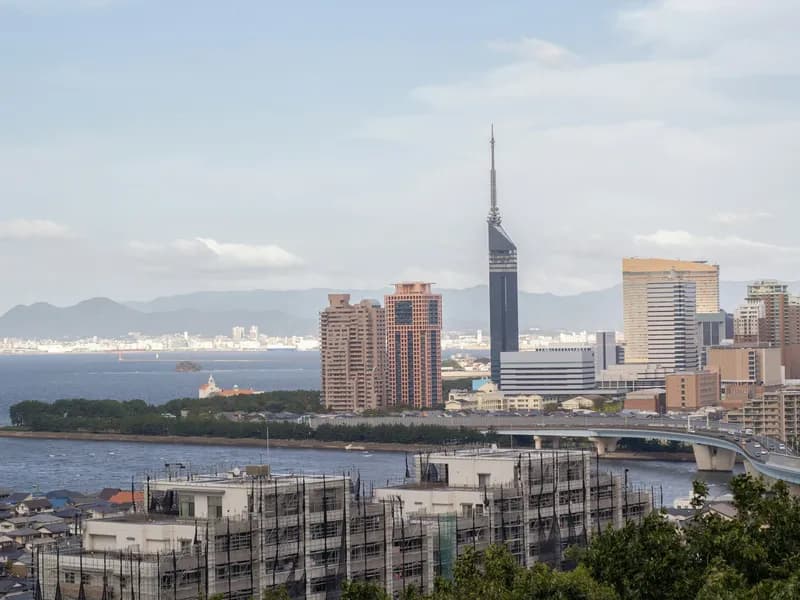
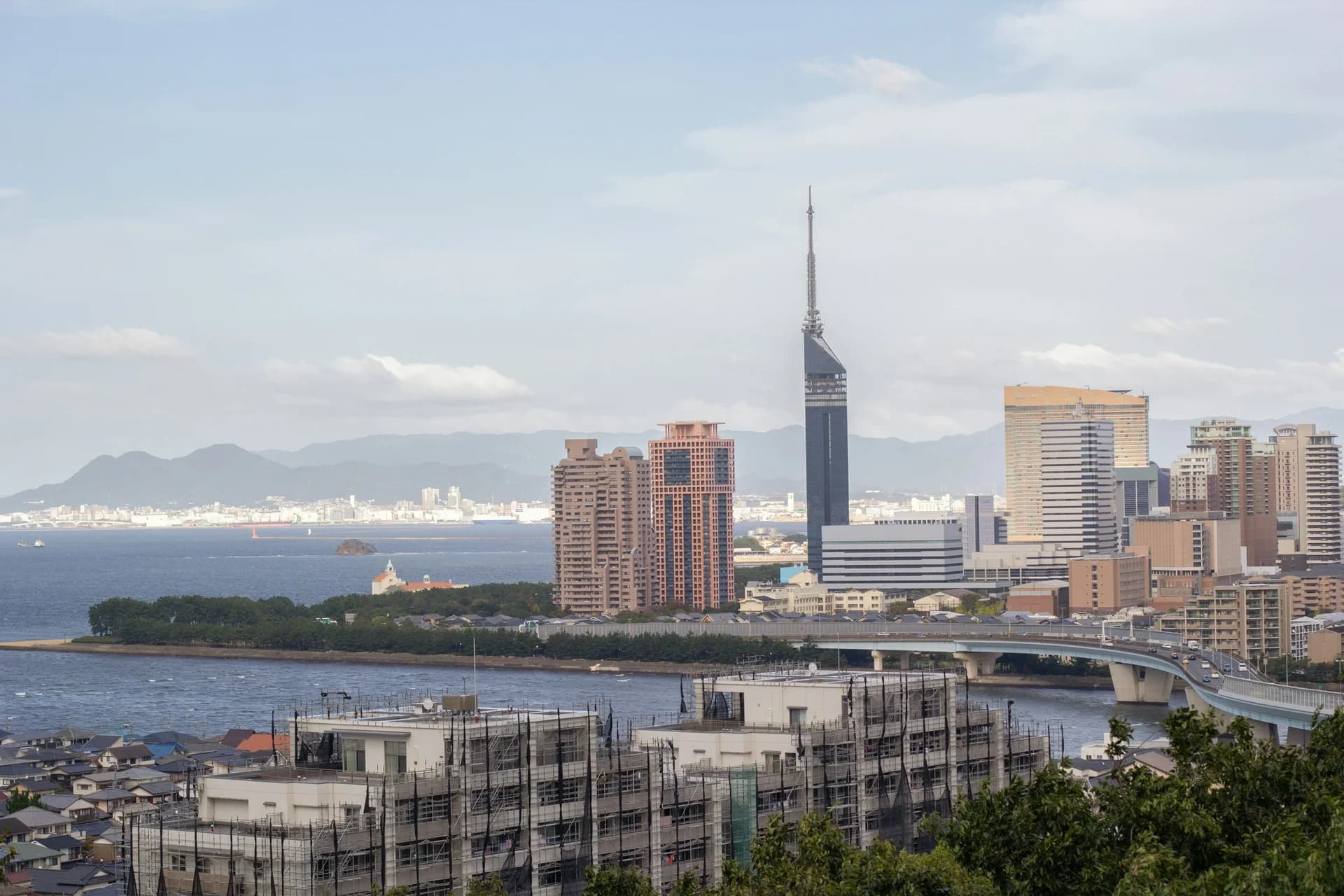
Japan's tallest seaside tower at 234m, with a 360-degree observation deck at 123m (800 JPY). The night view is good — not spectacular like Kobe's Mount Rokko, but solid. The adjacent Momochi Beach is a popular evening hangout. 15 minutes by bus from Tenjin.
Quick Reference
| Item | Cost |
|---|---|
| Subway (single ride) | 210-340 JPY |
| Tonkotsu ramen | 600-900 JPY |
| Yatai dinner + drinks | 1,500-2,500 JPY |
| Business hotel | 4,500-8,000 JPY/night |
| Dazaifu day trip | ~1,500 JPY (train + mochi) |
| Tourist City Pass | 1,580 JPY |
Fukuoka is the Japan trip for travelers who've already done Tokyo and Osaka and want something more laid-back, more affordable, and more food-focused. Which, honestly, describes most of us.