
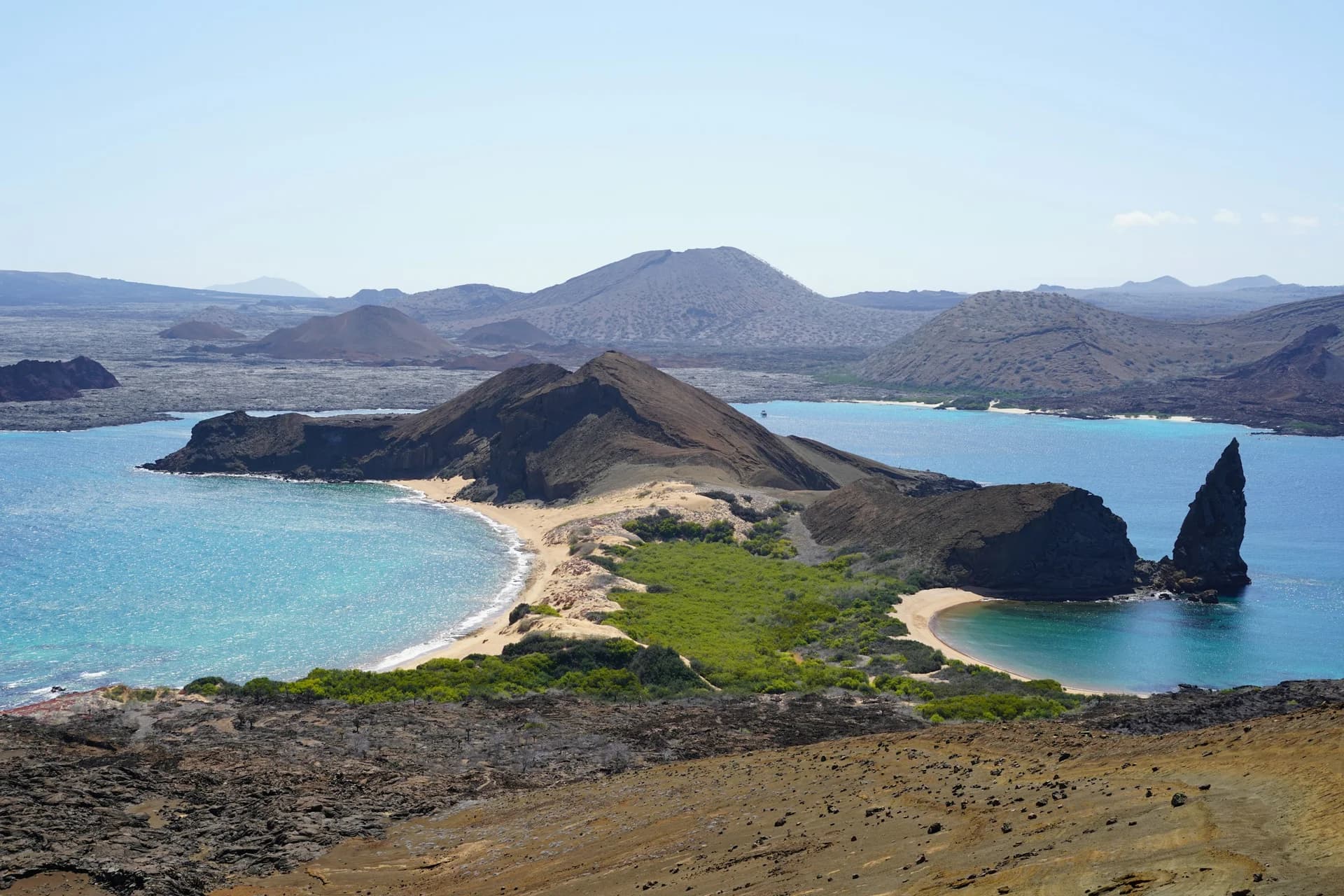
Wildlife, Lava, and Loneliness: Why the Galapagos Islands Are the World's Greatest Nature Classroom
Wildlife, Lava, and Loneliness: Why the Galapagos Islands Are the World's Greatest Nature Classroom
The theme of the Galapagos is indifference. Not human indifference — animal indifference. These creatures evolved without land predators, and they have not yet learned to fear the upright apes who show up with cameras and snorkel masks. A sea lion will sleep on your beach towel. A marine iguana will sneeze salt spray on your leg without so much as an apologetic glance. A blue-footed booby will perform its entire mating dance — the lifting of one impossibly blue foot, then the other, the sky-pointing, the whistling — three meters from your face, as if you simply aren't there.
That indifference to human presence is the rarest thing in travel. It's also, paradoxically, what makes the islands so fragile.
The Rules That Make It Work
Before you set foot on any trail, the rules are clear: maintain a 2-meter distance from all wildlife at all times. No exceptions. Park rangers enforce this strictly, and fines reach $1,000 USD. Don't touch, don't feed, don't chase. If an animal approaches you — and they will — stand still.
On North Seymour, a tourist reaching toward a nesting frigatebird with an inflated red throat pouch will get an instant, sharp correction from the guide. That's the system working exactly as designed. The animals trust the consistency, and the consistency exists because everyone on the trail holds the line.
The Tortoise Room
The Charles Darwin Research Station in Puerto Ayora on Santa Cruz Island is where conservation stops being an abstraction and becomes something you can stand next to.
The breeding center houses giant Galapagos tortoises at every life stage — from hatchlings the size of hockey pucks to 150-year-old adults weighing over 400 kilograms. The station's program brought several subspecies back from the brink of extinction. Lonesome George, the last Pinta Island tortoise, lived here until 2012; his preserved body is displayed in a glass case as a reminder of what the program now exists to prevent.
Entry is free. Open daily 7:30AM-12:30PM and 2PM-5PM. Allow 1.5 hours. Make it your first stop on Santa Cruz — the context it gives you changes how you see everything else on the islands.
Snorkeling at Los Tuneles
Isabela Island is the largest in the archipelago, and Los Tuneles might be its strangest feature — a maze of collapsed lava tubes forming bridges, arches, and tunnels over crystal-clear water. The snorkeling here is unlike any reef you've swum.
Float face-down through a lava archway and you may find yourself eye-to-eye with a Pacific green sea turtle munching algae off the rocks, a meter away, wearing the patient expression of a creature that has been eating algae for 80 years and intends to keep going regardless of who is watching.
The same tour (~$120 USD from Puerto Villamil, including gear) turns up white-tipped reef sharks resting on the sandy bottom, seahorses clinging to coral fans, and spotted eagle rays gliding beneath you with the casual grace of creatures entirely unbothered by gravity.
Kicker Rock and the Hammerheads
Kicker Rock — a 150-meter volcanic tower split in two, rising from deep ocean near San Cristobal — will test any swimmer who isn't fully at home in open water.
The tour boat drops you in the channel between the two rock faces. Look down and the seafloor is simply absent: deep blue fading to black. Hammerhead sharks cruise below at 20-30 meters, and there's no shame in staying near the surface. Visibility runs to roughly 25 meters, and within the first five minutes it's common to spot Galapagos sharks — big ones, 2+ meters — circling lazily in the current.
The nerves are part of it, and so is the reassurance: your guide stays beside you, and the sharks are completely disinterested in the humans up top. They're hunting fish, not tourists.
Kicker Rock tours run ~$150 USD from Puerto Baquerizo Moreno. June through November offers the best shark sightings. Bring a 3mm wetsuit — water temperatures drop to 18-22°C in those months.
The Economics of Getting There
The Galapagos are not cheap. Plan for that upfront.
Transit Control Card (TCT): $20 USD at the Quito or Guayaquil airport before your flight. Mandatory. Keep it — you need it to exit.
National Park Entry Fee: $100 USD for foreign adults, cash only, upon arrival at the airport. Not optional.
Flights from mainland Ecuador: $350-500 USD round trip from Quito or Guayaquil via LATAM or Avianca. Book 2-3 months ahead.
Daily budget (land-based island hopping): $150-250 USD mid-range. Includes accommodation, meals, and day tours.
Liveaboard cruises: $3,000-8,000 per week. They access more remote islands, at a price to match.
The smarter play for most travelers: island-hop independently. It's 40-60% cheaper than cruises, and you still see most of the major sites. Public ferries connect Santa Cruz, Isabela, and San Cristobal for $30 USD each (2-2.5 hours — the seas can be rough, so take Dramamine).
Tortuga Bay — The Free Beach That Rivals Any Resort
A 2.5 km paved trail from Puerto Ayora leads to Tortuga Bay, a white-sand beach where marine iguanas bask on the rocks and nobody charges you a cent to be there.
The first beach is exposed and the waves are strong — good for surfing, bad for swimming. Walk 10 more minutes to the sheltered second beach, where the water is calm, shallow, and warm. Kayak rentals are available for a few dollars. Give it a full afternoon: sea turtles surface here without ceremony, mouths full of seagrass, then slide back under.
Free entry. Trail closes at 5PM. Bring water and sunscreen.
What the Galapagos Teaches You
You arrive expecting wildlife. You leave with a philosophy lesson.
These islands work because humans agreed to be guests, not owners. The 2-meter rule isn't just about protecting animals — it's about recognizing that this is their space, not ours. Visitors pass through a place that functioned perfectly for millions of years without them.
If you're exploring more of the region, Cusco offers a complementary experience worth considering.
If you're exploring more of the region, Great Barrier Reef offers a complementary experience worth considering.
The blue-footed booby doesn't dance for you. It dances because dancing is what boobies do. Your presence is irrelevant to its purpose. And standing three meters away, watching it lift one absurd blue foot and then the other, you realize that being irrelevant to nature is actually a privilege.
Not everything has to be about us.


