
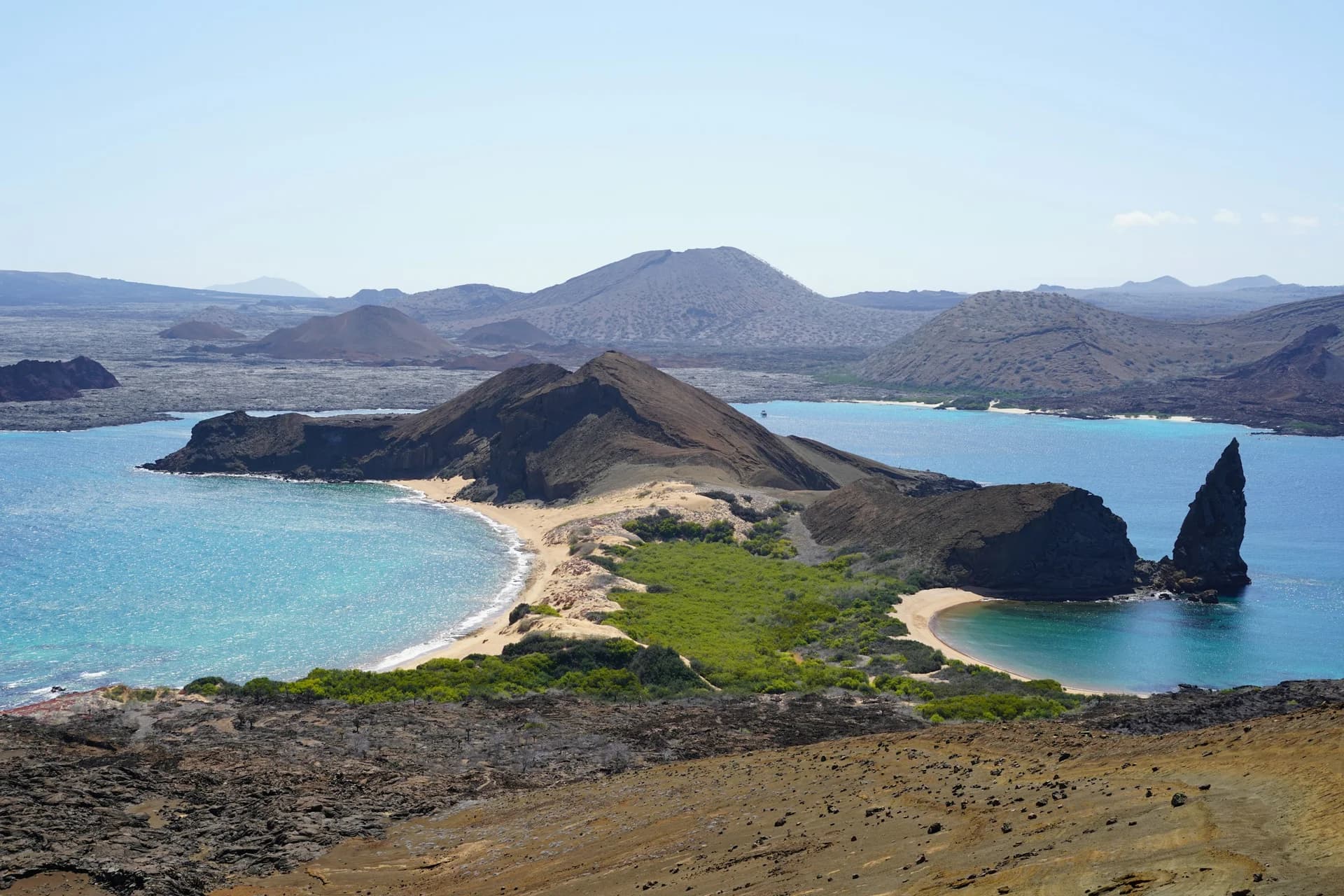
Galapagos vs. Great Barrier Reef: Which Marine Destination Is Worth Your Money?
Galapagos vs. Great Barrier Reef: Which Marine Destination Is Worth Your Money?
These are arguably the two greatest marine destinations on the planet. Anyone planning a once-in-a-lifetime trip eventually asks the same question: "If there's only budget and time for one, which one?" The honest answer is that they deliver completely different experiences. Here's how they break down.
Why Compare These Two?
Both are UNESCO World Heritage Sites. Both center on marine wildlife encounters. Both require significant travel and investment. And both have strict environmental protections that shape how you experience them.
But the Galapagos is about animal behavior — watching species that evolved without predators and treat humans as furniture. The Great Barrier Reef is about coral ecosystems — the sheer scale of a living structure visible from space.
Cost
Galapagos
- Park entry: $100 USD per person (plus $20 TCT)
- Flights from mainland Ecuador: $350-500 round trip
- Daily budget (land-based): $150-250 USD
- Liveaboard cruise: $3,000-8,000/week
- Total for 8 days: $1,200-2,500 (independent) or $4,000-9,000 (cruise)
Great Barrier Reef
- Reef tax: ~$7 AUD ($5 USD) per person per day
- Flights from Sydney to Cairns: $150-300 AUD round trip
- Daily budget: $150-300 AUD ($100-200 USD)
- Liveaboard dive trip: $800-2,500 AUD/3 days ($530-1,650 USD)
- Total for 8 days: $1,500-3,500 AUD ($1,000-2,300 USD)
Winner: Great Barrier Reef — significantly cheaper to reach and explore, especially from Australia or Asia. The Galapagos' $100 park fee and expensive inter-island transport add up fast.
Wildlife Encounters
Galapagos
The headline: animals that don't run away. Sea lions swim circles around you. Marine iguanas sneeze salt water onto your feet. Blue-footed boobies dance three meters from your face. Hammerhead sharks patrol Kicker Rock. Giant tortoises hold court at the Darwin Station.
The interactions feel personal because the animals don't flee. You're sharing space on their terms.
Great Barrier Reef
The reef's wildlife is more diverse in raw numbers — 1,500+ species of fish, 400+ types of coral, 30 species of whales and dolphins, six species of sea turtles, dwarf minke whales (June-July). But the animals here behave normally — they swim away when you approach, hide in coral, maintain distance.
Mantas at Lady Elliot Island and whale sharks at Ningaloo (nearby, not technically GBR) are exceptional. But the encounters feel observational rather than intimate.
Winner: Galapagos — the fearlessness of the wildlife creates encounters no other destination can match.
Snorkeling Quality
Galapagos
Visibility varies — 10-25 meters depending on season and location. Water temperature ranges from 18°C (June-November) to 26°C (December-May). The underwater landscape is volcanic rock, not coral reef — so it's dark, dramatic, and full of big animals (sharks, rays, turtles, sea lions) rather than colorful coral gardens.
Best spots: Los Tuneles (Isabela), Kicker Rock (San Cristobal), Pinzon Island.
Great Barrier Reef
Visibility is typically 15-30 meters (outer reef sites). Water temperature: 23-29°C. The coral formations are the star — giant bommies, wall dives, swim-throughs in technicolor. Fish diversity is staggering. The outer reef (Agincourt, Ribbon Reefs) is far superior to inner reef sites.
Best spots: Agincourt Reef (from Port Douglas), Cod Hole (Ribbon Reefs), Lady Elliot Island.
Winner: Great Barrier Reef — for pure snorkeling, the coral diversity and warm, clear water are superior. The Galapagos' cold water and rocky substrate are better suited to diving than snorkeling.
Accessibility
Galapagos
Requires a flight to mainland Ecuador (Quito or Guayaquil) plus a connecting flight to the islands. From the US East Coast, plan 10-14 hours of travel. Inter-island ferries are rough and infrequent (one departure per day). There's no ferry between Santa Cruz and San Cristobal, and breakdowns happen.
Great Barrier Reef
Fly to Cairns (direct from Sydney in 2.5 hours, from many Asian cities). Day trips to the outer reef depart daily from Cairns, Port Douglas, and Airlie Beach. Liveaboard trips depart multiple times weekly. Infrastructure is well-established and reliable.
Winner: Great Barrier Reef — far easier to reach and navigate, with more departure options and reliable transport.
Environmental Urgency
Galapagos
The islands face threats from invasive species, illegal fishing, and growing tourism. But park management is strict, visitor numbers are controlled (though rising), and conservation programs are showing results. The ecosystem feels healthy, if under pressure.
Great Barrier Reef
Multiple mass bleaching events (2016, 2017, 2020, 2022, 2024) have killed significant coral coverage. Climate change is the primary threat, and it's accelerating. The reef is in genuine trouble. This isn't alarmism — marine biologists have documented the decline for a decade.
Winner (if you can call it that): Both need your visit. Tourist dollars fund conservation. But if urgency matters, the Great Barrier Reef may not look like this for much longer.
Comparison Table
| Category | Galapagos | Great Barrier Reef |
|---|---|---|
| Cost (8 days) | $1,200-9,000 | $1,000-2,300 |
| Wildlife Intimacy | ★★★★★ | ★★★☆☆ |
| Snorkeling Quality | ★★★☆☆ | ★★★★★ |
| Diving Quality | ★★★★☆ | ★★★★★ |
| Accessibility | ★★☆☆☆ | ★★★★☆ |
| Unique Experiences | ★★★★★ | ★★★★☆ |
| Budget-Friendliness | ★★☆☆☆ | ★★★☆☆ |
| Environmental Health | ★★★★☆ | ★★☆☆☆ |
The Verdict by Traveler Type
Nature photographers: Galapagos. The close wildlife encounters and dramatic volcanic landscapes produce better shots.
Scuba divers: A genuine tie. Galapagos for big animals (hammerheads, whale sharks at Darwin and Wolf). GBR for coral diversity and easier logistics.
Families with kids: Great Barrier Reef. Warmer water, calmer conditions at inner reef sites, and easier access from Cairns.
Budget travelers: Great Barrier Reef. A $250 AUD day trip from Cairns delivers a solid outer reef experience. The Galapagos minimum spend is $1,200+ for even the most frugal itinerary.
Bucket-list chasers: Galapagos. There is nothing else like it on Earth. The wildlife behavior alone justifies the expense.
Couples/honeymooners: Great Barrier Reef. Better luxury options, warmer water, and easy to pair with other Australian destinations (Sydney, Melbourne, Uluru).
The FairTravels Take
If you're exploring more of the region, Cusco offers a complementary experience worth considering.
If you're exploring more of the region, Costa Rica offers a complementary experience worth considering.
If you're choosing one and you care most about wildlife encounters that rewrite your understanding of the natural world: Galapagos. If you care most about world-class coral snorkeling and diving in a more accessible, more affordable package: Great Barrier Reef.
But the real move? Do both — and do the reef first. Go to the Galapagos first and the reef's wildlife, for all its diversity, will feel distant by comparison. Once those sea lions have swum circles around you, every other marine encounter has a lot to live up to.


