Ghent for Art and History Obsessives: From Van Eyck to Veggie Day
Ghent for Art and History Obsessives: From Van Eyck to Veggie Day
Here's a claim worth defending: Ghent is more interesting than Bruges. Make no mistake — Bruges is gorgeous. But Bruges knows it's gorgeous, and that self-awareness inflates both prices and crowds. Ghent has the same medieval beauty plus a living university city humming underneath it, a contemporary art scene that punches well above its weight, and — almost casually — one of the most important paintings in Western art history, just sitting there in the cathedral. If you're exploring the region, Bruges is Belgium's other medieval canal city.
Consider this a guide for people who care about art and history. If that's you, Ghent might be your perfect city.
Why Ghent Matters for Art History
The Ghent Altarpiece
Jan van Eyck's "Adoration of the Mystic Lamb," completed in 1432, is considered one of the most important paintings in Western art. It's a polyptych — 12 panels when fully opened — and it represents a revolution in oil painting technique. The detail is microscopic. The colors, nearly 600 years later, are still extraordinary. If you're exploring the region, Amsterdam is the Dutch capital just hours north.
It lives in St. Bavo's Cathedral. The cathedral is free to enter. The altarpiece itself costs 16 EUR (includes audioguide, which you'll want — the symbolism is dense). Open Mon-Sat 10AM-5PM, Sun 1PM-5PM. If you're exploring the region, Paris is a quick train ride to the French capital.
The recently restored panels are breathtaking up close. Van Eyck painted individual blades of grass, reflections in gemstones, the weave of fabric. Stand in front of it, and you understand why this painting changed European art. If you're exploring the region, London is connected by Eurostar via Brussels.
It's also been stolen more times than any other artwork in history — by Napoleon, by the Nazis, and parts of it are still missing. The audioguide covers that history, and it reads like a thriller.
Top 10 Art & History Experiences
-
The Ghent Altarpiece — 16 EUR, St. Bavo's Cathedral. The main event. Allow 1-1.5 hours with the audioguide.
-
Gravensteen Castle — 12 EUR. A 12th-century moated castle in the center of the city. The Counts of Flanders built this as a statement of power. The ramparts offer rooftop views. The weapons and torture instruments exhibition is quirky and slightly disturbing.
-
St. Michael's Bridge — Free. Stand on this bridge and three medieval towers line up in perfect alignment: St. Nicholas' Church, the Belfry, and St. Bavo's Cathedral. This is Ghent's postcard shot, and it's best at blue hour.
-
The Belfry of Ghent — 10 EUR. Climb 366 steps for panoramic views. The belfry dates to 1313 and holds a carillon of 54 bells. Time your visit with a concert (check the schedule) and the sound from inside the tower is overwhelming.
-
STAM City Museum — 10 EUR. Housed in a medieval abbey, this museum tells Ghent's story from its origins to the present through interactive exhibits. The floor map of the medieval city is stunning.
-
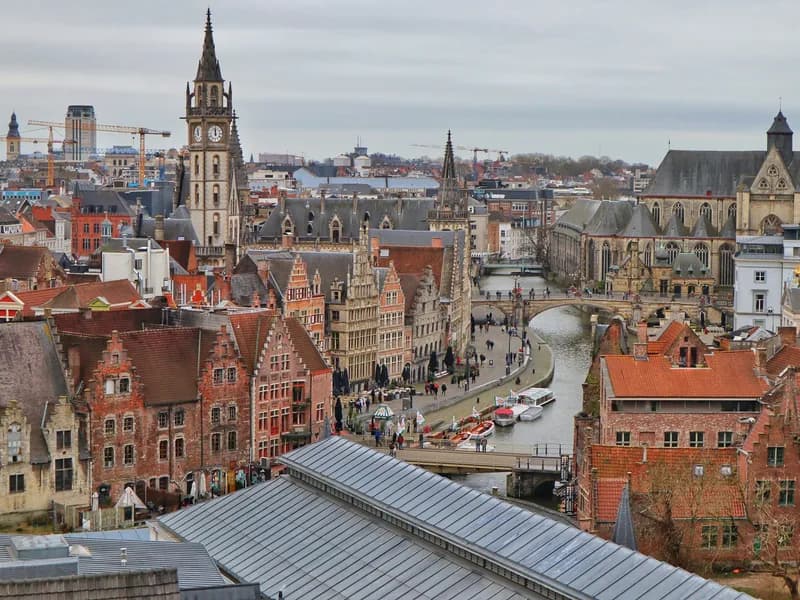
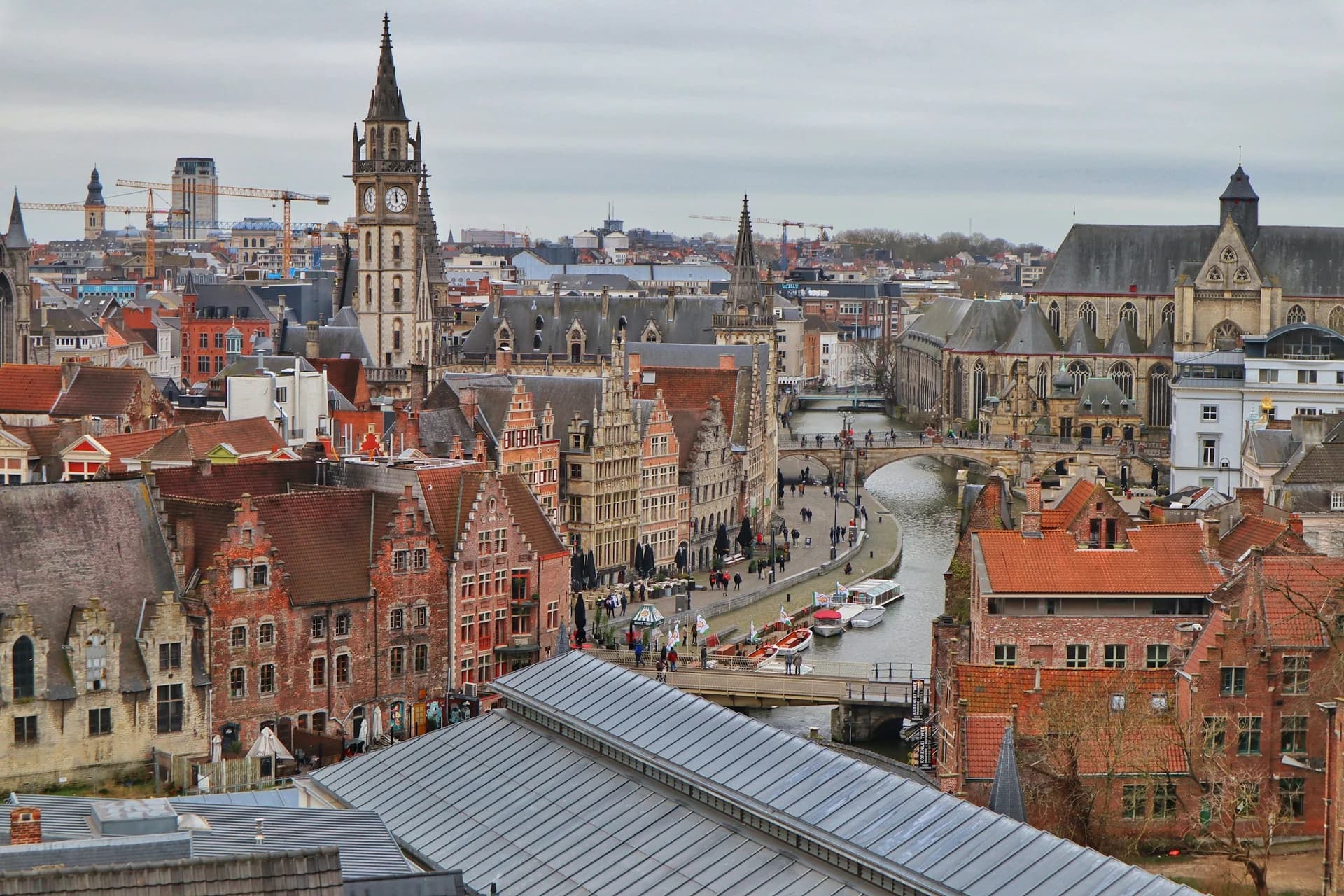
Graslei and Korenlei — Free. The medieval guild houses lining the harbor are Ghent's most photographed facades. Walk along the water, read the guild signs, and picture the medieval traders who built these buildings to advertise their wealth.
-
Patershol Medieval Quarter — Free to wander. A tangle of narrow cobblestone streets behind Gravensteen, once a red-light district, now Ghent's most atmospheric dining neighborhood. The buildings are mostly 17th century.
-
MSK (Museum of Fine Arts) — 12 EUR. Covers Flemish art from medieval to contemporary, including Hieronymus Bosch and Rubens. Less famous than the Bruges and Brussels collections but less crowded and well-curated.
-
SMAK (Museum of Contemporary Art) — 12 EUR. Right next to MSK, focusing on post-war and contemporary art. The rotating exhibitions are consistently strong. The permanent collection includes major works by Bacon, Beuys, and Panamarenko.
-
Design Museum Gent — 10 EUR. Art Nouveau and contemporary design in a historic mansion. The Art Nouveau rooms are exquisite, and the contemporary design exhibitions rotate regularly.
The Veggie Day That Changed a City
Ghent was the first city in the world to officially promote a weekly vegetarian day — Donderdag Veggiedag (Thursday Veggie Day). This isn't a gimmick. The city has an unusually developed vegetarian food scene that grew straight out of the initiative.
De Warempel and Komkommertijd serve plant-based Flemish cuisine that's genuinely excellent. On Thursdays, many restaurants roll out special veggie menus.
That tells you something about Ghent's character: it's progressive without being performative. It doesn't shout about its values. It just implements them and moves on.
The Food Beyond Veggie Day
Waterzooi is Ghent's signature dish — a creamy stew traditionally made with fish (the original) or chicken (the popular version). Try it at Het Pakhuis or the Groot Vleeshuis (a medieval meat hall converted into a food court). 12-18 EUR.
Belgian frites from a proper frituur (chip shop) with stoofvleessaus (carbonade flamande sauce) cost 3-5 EUR and are legitimately one of the great street foods.
Belgian chocolate: skip the tourist shops and head to Van Hoorebeke or Yuzu for handmade pralines.
Belgian beer: this is Ghent, so trying the local pours is practically required. Gruut is Ghent's own brewery — the only one in Belgium that uses herbs instead of hops. Their blond and amber are both excellent. The bar sits near the Groentenmarkt.
Why Not Bruges?
This comparison keeps coming up because it's the one travelers actually face. Here's the honest version:
| Factor | Ghent | Bruges |
|---|---|---|
| Medieval beauty | Equally stunning | Equally stunning |
| Crowds | Manageable, even in summer | Can be overwhelming |
| Prices | 20-30% cheaper | Tourist markup |
| University energy | Yes (70,000 students) | No |
| Contemporary culture | Strong (SMAK, student scene) | Limited |
| Major artwork | Ghent Altarpiece | Michelangelo's Madonna |
| Day trip from Brussels | 30 min train, 10 EUR | 60 min train, 15 EUR |
Bruges is a beautiful museum city. Ghent is a beautiful living city. Both are worth visiting. But for a full weekend with only one choice, Ghent wins every time.
Practical Details
- Train from Brussels: 30 minutes, ~10 EUR, every 15 minutes
- From Bruges: 25 minutes by train
- Getting to center: Tram 1 from Ghent-Sint-Pieters station to Korenmarkt (3 EUR)
- The historic center is car-free and very walkable
- CityCard Gent: 38 EUR/48h — includes all museums, a boat trip, and public transit. Excellent value if visiting multiple sights.
- Canal boat tour: ~8 EUR, 40 minutes, departs from Graslei every 15-20 min (March-November)
- Budget lunch: 12-18 EUR | Beer: 4-5 EUR | Hotel: 70-110 EUR/night
Ghent doesn't ask you to love it. It doesn't need to. It has Van Eyck and waterzooi and a castle with a moat and guild houses reflected in canal water and the first veggie day in the world and a beer brewed with herbs instead of hops. It trusts that if you show up and pay attention, you'll figure it out.