Hawaii for Nature Lovers: The Ultimate Island-by-Island Guide
Hawaii for Nature Lovers: The Ultimate Island-by-Island Guide
Hawaii is not one destination. It's six major islands, each with a completely different personality. One has active volcanoes. Another has the most dramatic sea cliffs on Earth. A third has a road with 600 curves and 59 bridges. The mistake most visitors make is treating Hawaii as a single beach vacation. It's not. It's an outdoor adventure laboratory surrounded by ocean.
Here's the nature lover's guide, island by island.
The Big Island (Hawaii Island): Fire and Ice
The Big Island is where Earth is still being made. Kilauea, one of the world's most active volcanoes, sits inside Hawaii Volcanoes National Park ($30 per vehicle, valid 7 days). Drive Crater Rim Drive around the caldera, walk through the Thurston Lava Tube, and check the NPS website for current eruption status — sometimes you can watch flowing lava.
The Mauna Kea summit (4,207 meters) is one of the world's best stargazing locations. The visitor station at 2,800 meters offers free telescope viewing on clear nights. Driving to the summit requires a 4WD vehicle and acclimation to altitude.
Must-do nature experience: The Kilauea Iki Trail — a 6.4 km loop that descends into a volcanic crater you walk across. The ground is still warm in places. Allow 2-3 hours.
Kauai: The Garden Isle
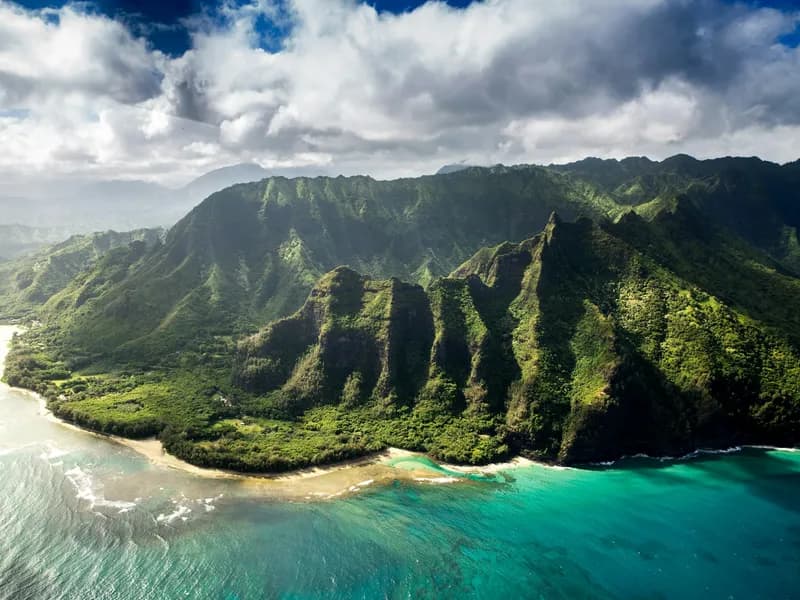
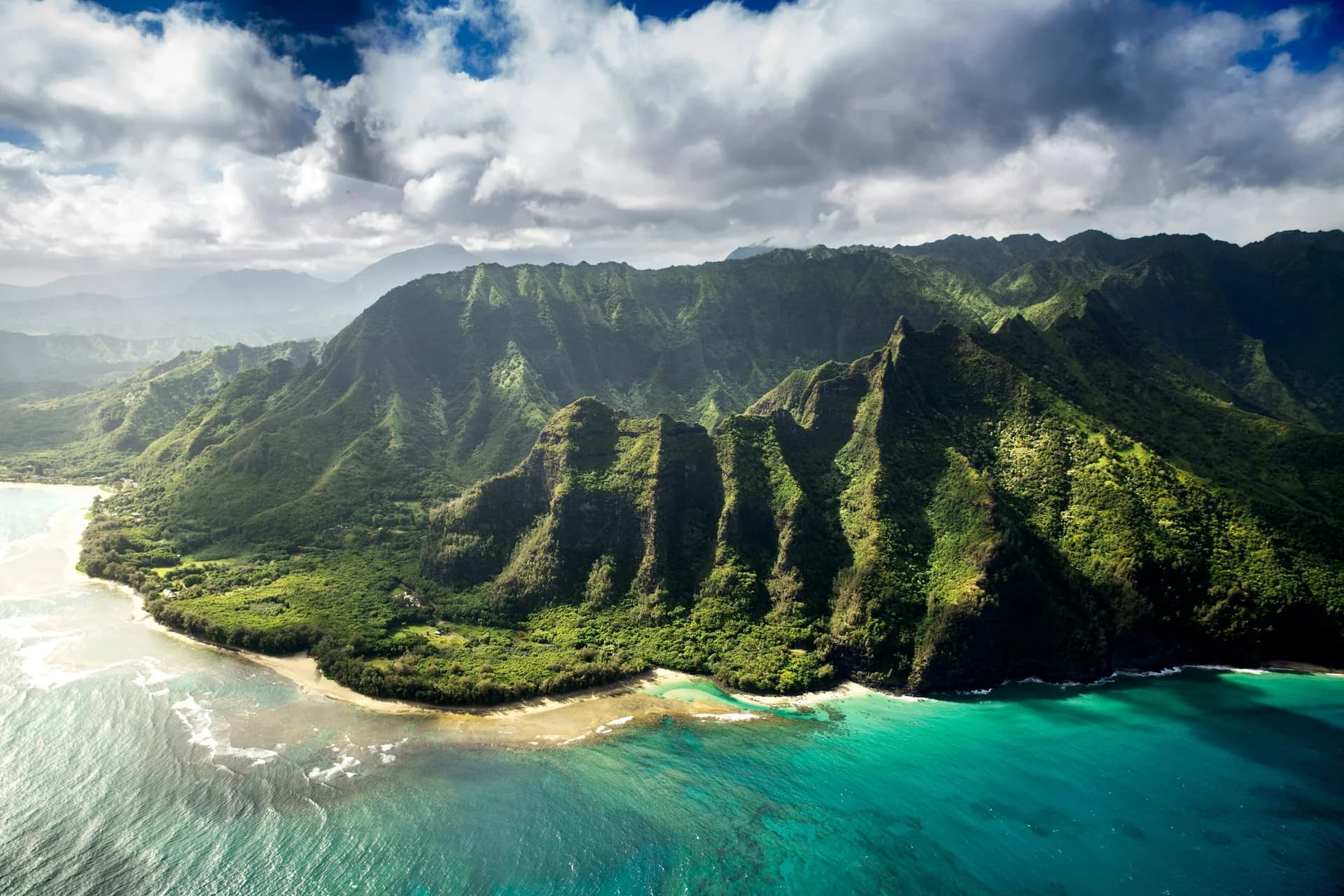
Kauai is the oldest main Hawaiian island, which means the most dramatic erosion. The Na Pali Coast — 17 miles of towering sea cliffs, emerald valleys, and waterfalls — is accessible only by boat, helicopter, or the grueling 11-mile Kalalau Trail.
Boat tours run $150-200 per person. Helicopter tours (the only way to see deep into the valleys): $250-350. The Kalalau Trail requires a permit ($35/person) booked months ahead.
Waimea Canyon — the "Grand Canyon of the Pacific" — is free to view from multiple lookout points along Waimea Canyon Drive. At 3,000 feet deep and 14 miles long, the colors rival Arizona's original.
Must-do nature experience: A Na Pali Coast boat tour on the catamaran. The scale of the cliffs from sea level is humbling.
Maui: Wind, Water, and the Road to Hana
The Road to Hana is a legendary 64-mile drive with 600+ curves, 59 bridges, and waterfalls at every turn. Start before 8AM, allow a full day, and stop often. Key stops: Twin Falls (free, easy 20-minute walk), Wai'anapanapa Black Sand Beach ($5 parking), and the Pipiwai Trail to Waimoku Falls at Haleakala National Park ($30 entry).
Haleakala Crater at sunrise — 10,023 feet above sea level, above the clouds, watching the sun emerge from the Pacific — is transcendent. Sunrise reservations are required ($1 plus park entry) and book out months ahead.
Molokini Crater: a crescent-shaped volcanic crater 3 miles off Maui's coast with crystal-clear 150-foot visibility and 250+ fish species. Boat tour: $80-150 per person, 4-5 hours.
Must-do nature experience: Haleakala sunrise, then the Road to Hana in the same day (ambitious but possible if you start at 3AM for sunrise).
Oahu: More Than Waikiki
Most visitors never leave Waikiki Beach. Their loss. Hanauma Bay ($25 per person, reservations required, closed Mon-Tue) is a volcanic crater turned snorkeling paradise with 400+ fish species. Get there at 7AM opening.
Diamond Head hike ($5 per person + $10 parking, reservations required): 1.6-mile round trip inside a volcanic crater to a summit with 360-degree views of Waikiki and the Pacific. Takes 1.5-2 hours.
The North Shore in winter (October-March) has some of the biggest waves on Earth — 30-60 foot faces at Pipeline and Waimea Bay. For experts only. But watching from the beach is free and extraordinary.
Must-do nature experience: Hanauma Bay snorkeling at 7AM, when the fish are abundant and the crowds haven't arrived.
Cross-Island Tips for Nature Lovers
- Rental car is essential everywhere except Waikiki. Book 2-3 months ahead for peak season.
- Respect the ocean. Rip currents, shore breaks, and high surf kill tourists every year. Swim only at lifeguarded beaches.
- Stay on marked trails. Hawaii's native ecosystems are fragile. Off-trail hiking destroys endangered plants.
- Don't take lava rocks. It's illegal and culturally offensive.
- Check weather by microclimate. The windward (east) side gets rain; the leeward (west) side is dry. A 20-minute drive can change everything.
- Protect your car at trailheads. Car break-ins are extremely common. Leave nothing visible — not even in the trunk.
The Perfect Nature-Focused 10-Day Itinerary
Days 1-3: Big Island — Volcanoes National Park (2 days), Mauna Kea stargazing, Akaka Falls.
Days 4-7: Maui — Haleakala sunrise, Road to Hana, Molokini snorkeling, Iao Valley.
Days 8-10: Kauai — Na Pali Coast boat tour, Waimea Canyon, Poipu Beach snorkeling.
Skip Oahu if you're prioritizing nature (or add 2 days for Hanauma Bay and North Shore). Inter-island flights run $60-150 and take 30-45 minutes.
The Bottom Line
For more on Hawaii, check out our The Week the Pacific Taught Me to Pay Attention.
Hawaii's nature is world-class and varied in a way that few places on Earth can match. Active volcanoes, 17-mile sea cliffs, underwater craters, cloud forests, and black sand beaches — all within a 45-minute flight of each other. The beaches are beautiful, but they're the opening act. The real show is the geology, the ecology, and the raw power of an island chain still being formed by volcanic fire.