
Koh Samui in Monsoon Season: Why October Might Be the Best Time to Visit
Koh Samui in Monsoon Season: Why October Might Be the Best Time to Visit
Here's what everyone tells you: visit Koh Samui December to April. Dry season. Blue skies. Perfect beach weather.
Here's what nobody tells you: December to April is when Chaweng Beach has wall-to-wall sunloungers, restaurant prices jump 30%, and you can't get a sunset table at Fisherman's Village without a reservation made last week.
Then there's late October. Monsoon season. The internet says don't go.
Go anyway. It may be the best trip decision you make all year.
What "Monsoon Season" Actually Looks Like
First, kill the mental image of non-stop rain. Koh Samui's monsoon (October–December) doesn't mean constant downpour. It means:
- Rain most days, typically in 1-3 hour bursts
- Morning often starts clear
- Afternoons are the wettest
- Some days it doesn't rain at all
- Maybe 3-5 days per month of heavy, all-day rain
A typical 8-day October trip shakes out something like this: 5 sunny mornings, 3 rainy afternoons, 1 full day of rain, and 2 days with zero rain. Temperatures hold at 28-31°C. The humidity is... present. Very present.
The Gulf of Thailand monsoon is milder than the Andaman coast (Phuket side). Samui doesn't get the violent storms that batter Phuket in June-August. The rain is heavy but usually short, and it's warm rain — you dry off in 20 minutes.
The Price Difference Is Real
Let's talk numbers.
| Item | Peak Season (Dec-Mar) | Monsoon (Oct-Nov) |
|---|---|---|
| Mid-range resort | 3,000-5,000 THB ($86-143) | 1,500-2,500 THB ($43-71) |
| Luxury resort | 8,000-15,000 THB ($228-428) | 4,000-8,000 THB ($114-228) |
| Ang Thong day trip | 2,500 THB ($71) | Often unavailable |
| Motorbike rental | 250-300 THB ($7-8.57) | 150-200 THB ($4.29-5.71) |
| Beachfront restaurant meal | 300-500 THB ($8.57-14) | 200-350 THB ($5.71-10) |
The accommodation savings alone are significant. A resort in Lamai that charges 4,500 THB ($128)/night in January will go for around 2,200 THB ($63) in October. Same room, same pool, same breakfast. Half the price.
What You Can Actually Do in the Rain
Morning: Temple Circuit While It's Dry
Most October mornings on Samui are clear until noon. That's your window for outdoor activities.
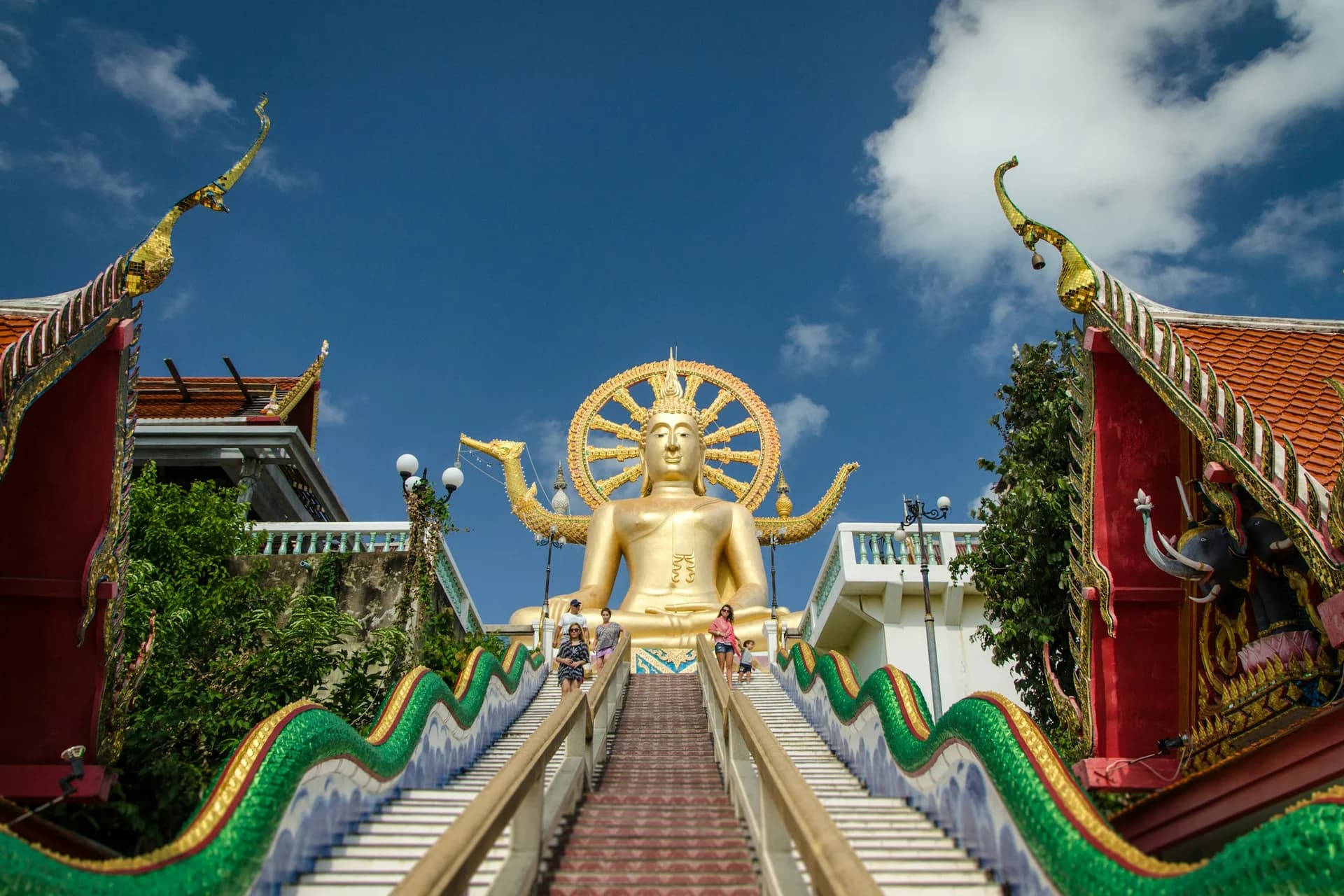
Big Buddha at 8AM is extraordinary in monsoon season. The temple compound is nearly empty. The gold catches the morning light differently when there are rain clouds on the horizon — the contrast between golden statue and dark sky is more dramatic than any blue-sky photo.
Wat Plai Laem, the lakeside temple with the 18-armed Guanyin, is even better. The reflection in the lake is clearer when there's no wind, and monsoon mornings tend to be still.
Afternoon: Cooking Classes and Spas
Rain hits? Perfect. This is cooking class time.
Sitca Cooking Class (1,500 THB / $43) runs rain or shine. You're under a covered kitchen anyway. Spend 3-4 hours learning to make green curry, pad thai, tom yum, and mango sticky rice. Eat everything you cook. Walk back to your hotel in the rain feeling accomplished and overfed.
Spas during monsoon season are also a move. The Thai massage shops along Chaweng and Lamai drop their prices because walk-in traffic disappears. A 2-hour Thai massage that costs 600 THB ($17) in January drops to 400 THB ($11). The sound of rain on the roof during a massage is genuinely therapeutic.
Rainy Day: Muay Thai
Lamai Muay Thai Camp doesn't care about rain. The training is in a covered ring. A single drop-in session (400-500 THB / $11-14) will make you forget about the weather entirely because you'll be too busy trying to breathe.
Three sessions across eight days is a reasonable pace, and your abs will ache for a week after. You'll also learn how to throw a proper roundhouse kick, which is more useful than a suntan.
The Photography Argument
Here's the case that monsoon season produces better photos than dry season.
Dry season Samui photos look like stock images — blue sky, blue water, palm tree, done. Monsoon season gives you:
- Dramatic cloud formations over the Gulf
- Lightning over the water at night (safe to photograph from shore)
- Rain on temple rooftops — the wet surfaces reflect colors
- Double rainbows (two in eight days is normal)
- Vivid green — the foliage is at peak lushness after months of rain
- Golden hour light that cuts through cloud breaks in ways that flat blue sky can't replicate
The storm light — when the sun breaks through heavy clouds in a single beam over the ocean — is the kind of shot that landscape photographers wait hours for. In monsoon season, it happens almost daily around 4-5PM. That kind of reliable, once-a-day spectacle is worth planning a trip around — the same instinct that sends travelers to the steppe for Mongolia's Naadam festival.
What You Lose
There's no pretending the trade-offs don't exist.
Ang Thong Marine Park closes November-December. The seas are too rough for the tour boats. If Ang Thong is your must-do, come in dry season.
Boat trips to Koh Tao are unreliable. The crossing gets rough. Speedboat trips may be cancelled or deeply uncomfortable. If diving at Koh Tao is the reason for your trip, October isn't ideal.
Beach days are interrupted. You'll get 3-4 hours of prime beach time most days, not 8. If you need 8 hours of unbroken sunbathing, monsoon season isn't your move.
Jellyfish. Box jellyfish are present in Gulf waters October-March. Beaches post warning flags. Vinegar stations are placed at major beaches. Stay informed and swim cautiously.
What You Gain That Money Can't Buy in Peak Season
Solitude. That's the real currency here — and it's the same reason travelers seek out quieter islands like Koh Chang even in peak season.
Chaweng Beach in January: shoulder-to-shoulder sunloungers, music from three different bars competing, jet ski operators approaching every 10 minutes.
Chaweng Beach in October: your sunlounger, your stretch of sand, and the occasional runner. The jet ski guys are on break. The beach bar isn't empty — it's just... manageable.
Bophut's Fisherman's Village on a Friday night in peak season is packed. In October, you walk in, sit at any table you want, and the staff have time to chat. The Friday market still runs, but the stalls aren't overwhelmed.
Picture a sunset dinner at a Taling Ngam restaurant overlooking the Gulf. Peak season, that table requires a reservation a week ahead. In October, you walk in at 5:30PM and get the best seat. The sunset goes purple and orange behind rain clouds, and the server says, "Same sunset, nobody here to see it."
That sentence is the entire argument for monsoon-season travel.
A Monsoon Itinerary
Day 1: Arrive, check in, Fisherman's Village dinner Day 2: Big Buddha and Wat Plai Laem (morning), Thai cooking class (afternoon) Day 3: Lamai Beach morning, Muay Thai drop-in session, night market Day 4: Na Muang waterfall hike (waterfalls are biggest in monsoon), spa afternoon Day 5: Scooter around the south coast — Taling Ngam viewpoint, Hua Thanon fishing village, sunset at Lad Koh Viewpoint Day 6: Rain day — cooking class #2 or spa day Day 7: Chaweng Beach morning, shopping, departure
Total budget for 7 nights (mid-range): approximately 22,000-28,000 THB ($628-800), including accommodation, food, activities, and transport. The same itinerary in January would cost 35,000-45,000 THB ($1,000-1,285).
The Verdict
Monsoon-season Koh Samui is a different island. It's quieter, cheaper, greener, and more photogenic — at the cost of some beach hours and boat trip access.
If your definition of a Thai island holiday is 8 hours of unbroken sunbathing, don't come in October. But if you want the temple visits without the crowds, the cooking classes without the waitlists, the beach bars without the competition for seats, and the resort rooms at half price — October is the secret season. It's a good month to be moving around Asia in general: the same weeks bring Kolkata's Durga Puja, one of the continent's most electric festivals.
Bring a light rain jacket. Leave the beach-only expectations at home. The rain passes. The prices don't come back until December.


