Ladakh for Adventure Seekers: The Ultimate High-Altitude Bucket List
Ladakh for Adventure Seekers: The Ultimate High-Altitude Bucket List
Ladakh exists at the intersection of extreme geography and human stubbornness. It's a cold desert above 3,500 meters where people built monasteries on cliff faces, dug irrigation channels through rock, and carved roads into mountains that said no.
For adventure travelers, Ladakh is the final level. Everything happens at altitude. Everything involves discomfort. And everything rewards you with the kind of scenery that makes the suffering feel like the point.
Here's the thematic breakdown for the adrenaline-seekers.
Why Ladakh Is Special for Adventure
Most adventure destinations offer one thing at extreme levels — Kathmandu has the trekking to Everest Base Camp, New Zealand has the bungee, Costa Rica has the wildlife. Ladakh offers multiple adventure types in a single region, all amplified by altitude:
- Motorcycle touring above 5,000 meters
- River rafting on the Indus and Zanskar
- Trekking through landscapes that look like another planet
- Mountain passes that test your cardiovascular limits
- A frozen river trek available nowhere else on Earth
And unlike many adventure destinations, Ladakh's infrastructure is functional but minimal — which means the experiences feel raw rather than packaged, much like the salt-flat stillness of the Rann of Kutch.
Top 10 Adventure Experiences
1. The Khardung La Motorcycle Run
The Royal Enfield motorcycle crossing Khardung La (5,359m) is the defining image of Ladakh adventure tourism — only Tajikistan's Pamir Highway rivals it for sheer high-altitude riding. And despite the Instagram saturation, it lives up to the hype.
Rent a Royal Enfield Himalayan or Classic 350 in Leh: 1,500-2,500 INR ($18-30) per day with helmet and basic insurance. The ride from Leh to Khardung La takes 2-3 hours up. The road is paved for the first half, then degrades to gravel and rocks. Military trucks share the road. The final 5km of switchbacks above 5,000m will test your lungs and your nerve.
At the top: thin air, prayer flags, and a tea stall where a cup of chai costs 30 INR ($0.36) and tastes like survival.
The full circuit — Leh to Nubra Valley via Khardung La and back — takes 2 days minimum. Budget riders camp; comfort seekers book guesthouses in Hunder (1,200-2,000 INR / $14-24 per night).
Difficulty: Moderate to Hard. Requires motorcycle experience. Altitude sickness is a real risk — acclimatize in Leh for at least 2 full days before attempting.
2. The Chadar Trek (Frozen River)
This is the big one. The Chadar Trek — walking on the frozen Zanskar River for 6-9 days in January-February — is one of the world's most extreme treks available to non-professional adventurers.
Temperatures drop to -25°C to -35°C at night. You walk on ice that varies from solid to thin. You sleep in caves along the river canyon. The ice makes sounds — groans, cracks, pops — all night.
The trek has become more regulated in recent years. Permits are required, group sizes are limited, and guides are mandatory. Cost: 25,000-40,000 INR ($300-480) through a registered operator, including guide, porter, food, and equipment.
Difficulty: Very Hard. Requires excellent fitness, cold tolerance, and basic trekking experience. Not for beginners.
3. Markha Valley Trek
The most popular multi-day trek in Ladakh and a perfect introduction to high-altitude trekking — the same village-homestay rhythm that a Karakol guesthouse owner describes across the Kyrgyz Tien Shan. The route crosses two passes above 5,000m — Ganda La (4,950m) and Kongmaru La (5,260m) — and passes through tiny villages where you can stay in homestays.
Duration: 6-8 days. Start/End: Chilling village (40km from Leh). Homestay accommodation: 800-1,200 INR ($9.60-14.40) with meals. Independent trekking is possible but a guide (1,500-2,000 INR / $18-24 per day) is recommended.
The view from Kongmaru La — Stok Kangri (6,153m) to the south, the Indus Valley spreading north — is one of the great trekking vistas in the Himalayas, rivaling the Annapurna panoramas that draw trekkers to Pokhara.
Difficulty: Moderate to Hard. Multi-day, high-altitude, but no technical climbing required.
4. Stok Kangri Summit
At 6,153 meters (20,187 feet), Stok Kangri is the highest trekking peak in Ladakh that doesn't require mountaineering experience. The summit push involves glacier walking, crampon use, and extreme altitude — but no technical rock or ice climbing.
Duration: 4-5 days round trip from Stok village. Guide mandatory: 12,000-18,000 INR ($144-216) including equipment rental. Season: June-September.
The summit day starts at 1AM. You climb by headlamp across a glacier in -15°C darkness, reaching the summit (hopefully) at sunrise. The view includes K2 and Nanga Parbat on clear days.
Difficulty: Hard. Requires high fitness, prior trekking experience, and proper acclimatization. Altitude sickness is common above 5,500m.
5. Zanskar River Rafting
The Zanskar River, before it meets the Indus, runs through a gorge with Class III-IV rapids. Multi-day rafting trips cover 30-80km of the river with canyon camping.
Day trips from Leh: 2,500-3,500 INR ($30-42) for 2-3 hours of rapids on the Indus near Phey village. Multi-day Zanskar expeditions: 15,000-30,000 INR ($180-360) for 3-5 days including all equipment and meals.
The water is glacier-fed and cold. Dry suits are provided. Season: July-September.
Difficulty: Moderate (day trips), Hard (multi-day Zanskar).
6. The Manali-Leh Highway
The 474km road from Manali to Leh crosses four passes above 4,000m and two above 5,000m. It's one of the world's great road journeys — 2 days by car or 4-5 days by bicycle.
Yes, people cycle it. The Manali-Leh cycling route is a rite of passage for Indian adventure cyclists. You climb from 2,050m (Manali) to 5,328m (Tanglang La) and back down to 3,500m (Leh). Total ascent: approximately 10,000 meters over 5 days.
By car: hire a driver from Manali (5,000-7,000 INR / $60-84 one way, 2 days). By motorcycle: Royal Enfield rental in Manali (1,200-2,000 INR / $14-24 per day). The road opens late May or early June depending on snowfall and closes in October — riders chasing a second high-altitude loop often tack on the Spiti Valley circuit next door in Himachal.
Difficulty: Moderate (by car), Very Hard (by bicycle).
7. Pangong Kayaking
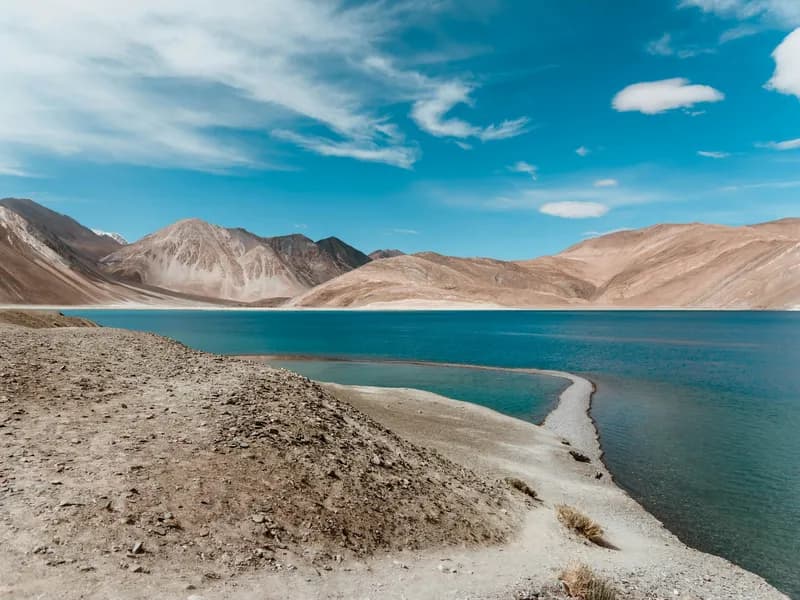
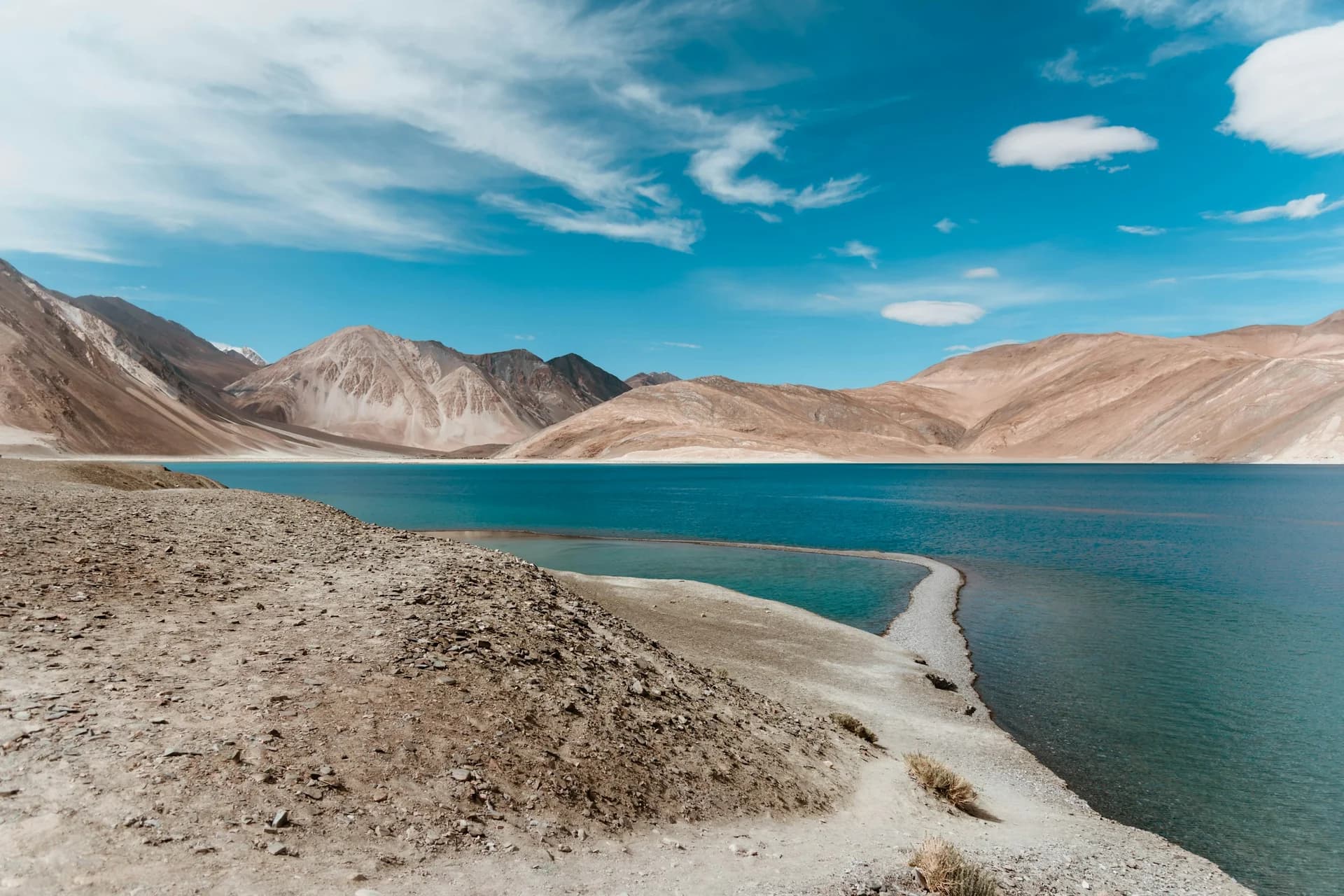
Kayaking on Pangong Tso at 4,350 meters is available through a few operators in summer months. The turquoise water, the surrounding mountains, and the absolute silence create a paddling experience that's unlike anything at sea level — the same otherworldly, high-altitude stillness you feel in the lagoons of the Atacama Desert.
Cost: 1,500-2,500 INR ($18-30) for a 1-2 hour session. Equipment provided. No prior kayaking experience needed for calm-water sessions.
The challenge isn't the paddling — it's the altitude. Exertion at 4,350m means your breathing rate doubles. Take it slow.
Difficulty: Easy to Moderate (altitude is the variable).
8. Mountain Biking the Sham Valley
The "Baby Trek" — a 3-4 day circuit through the Sham Valley west of Leh — is excellent on mountain bikes. The route passes through villages at 3,200-3,600m with moderate climbs, river crossings, and apricot orchards.
Rental bikes in Leh: 800-1,500 INR ($9.60-18) per day for a decent mountain bike. Self-guided is possible with GPS tracks. Homestays along the route: 800-1,000 INR ($9.60-12) with meals.
Difficulty: Moderate. Suitable for fit recreational cyclists with altitude acclimatization.
9. Hemis National Park Wildlife Trek
Hemis National Park is home to the snow leopard — one of the world's most elusive large predators. Winter treks (January-March) offer the best chance of spotting one, as the cats descend to lower altitudes following blue sheep.
Specialized snow leopard tracking treks run 5-10 days with expert guides and spotting scopes. Cost: 50,000-100,000 INR ($600-1,200) including everything. Success rate varies year to year — roughly 40-60% chance of a sighting during peak winter.
Even without a snow leopard, the trek through Hemis NP in winter is extraordinary — frozen rivers, ibex on cliff faces, and a silence so complete you can hear your own heartbeat.
Difficulty: Hard (winter conditions, remote terrain).
10. Tso Moriri Circuit
Tso Moriri is Pangong's lesser-known, equally beautiful neighbor — a high-altitude lake at 4,522m surrounded by snow-capped 6,000m peaks. The 3-4 day circuit trek around the lake passes through changpa (nomadic herder) camps and offers wildlife sightings including kiang (wild ass), marmots, and migratory birds.
The area requires an Inner Line Permit. Homestays in Korzok village: 1,000-1,500 INR ($12-18) with meals. Guide recommended: 1,500-2,000 INR ($18-24) per day.
Difficulty: Moderate to Hard. High altitude, remote, limited rescue options.
Practical Planning
Best time: June-September for most activities. January-February for Chadar Trek and snow leopard tracking.
Acclimatization: Non-negotiable — the same discipline that Everest Base Camp trekkers swear by. Spend 2 full days in Leh before any physical activity above 4,000m. Drink 3-4 liters of water daily. Diamox (acetazolamide) helps — consult your doctor before the trip.
Permits: Inner Line Permits required for Nubra, Pangong, Tso Moriri, and other areas near the borders. Process at the DC Office in Leh or online: 600 INR ($7.20). Takes 1-2 hours.
Gear: Layers are everything. Temperatures swing from 25°C at noon to -5°C at night (summer) or -30°C (winter). A good down jacket, thermal base layers, UV-protective sunglasses, and SPF 50+ sunscreen are non-negotiable.
Budget: 15,000-30,000 INR ($180-360) per week for budget adventure travel, not including major guided treks.
Ladakh doesn't do comfort. It does grandeur. For travelers seeking a different kind of Indian adventure, Jaipur and the Rajasthani circuit offer desert forts and royal palaces at more forgiving altitudes. And for adventure seekers willing to trade hot showers for high passes, it delivers something that no controlled adventure park ever could: the real thing.