The Night I Got Lost in Bruges (And Found Something Better)
Getting Lost in Bruges — And Finding Something Better
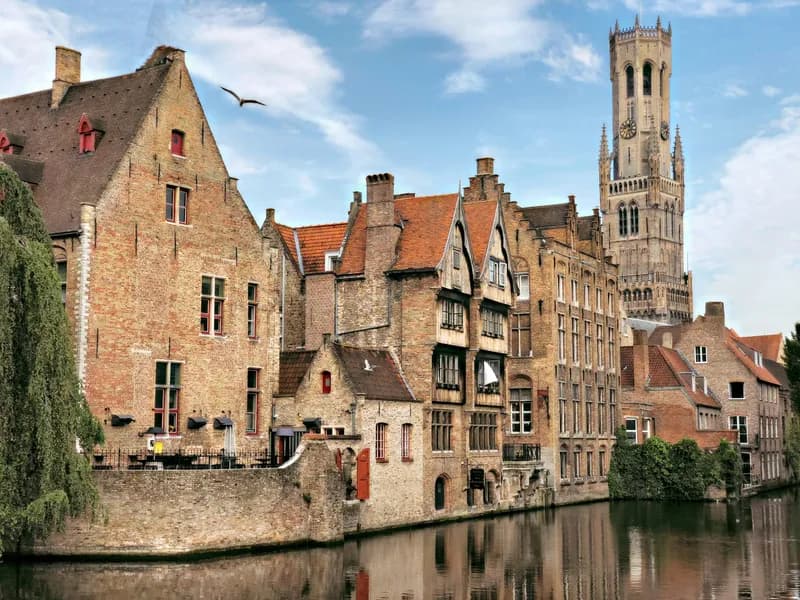
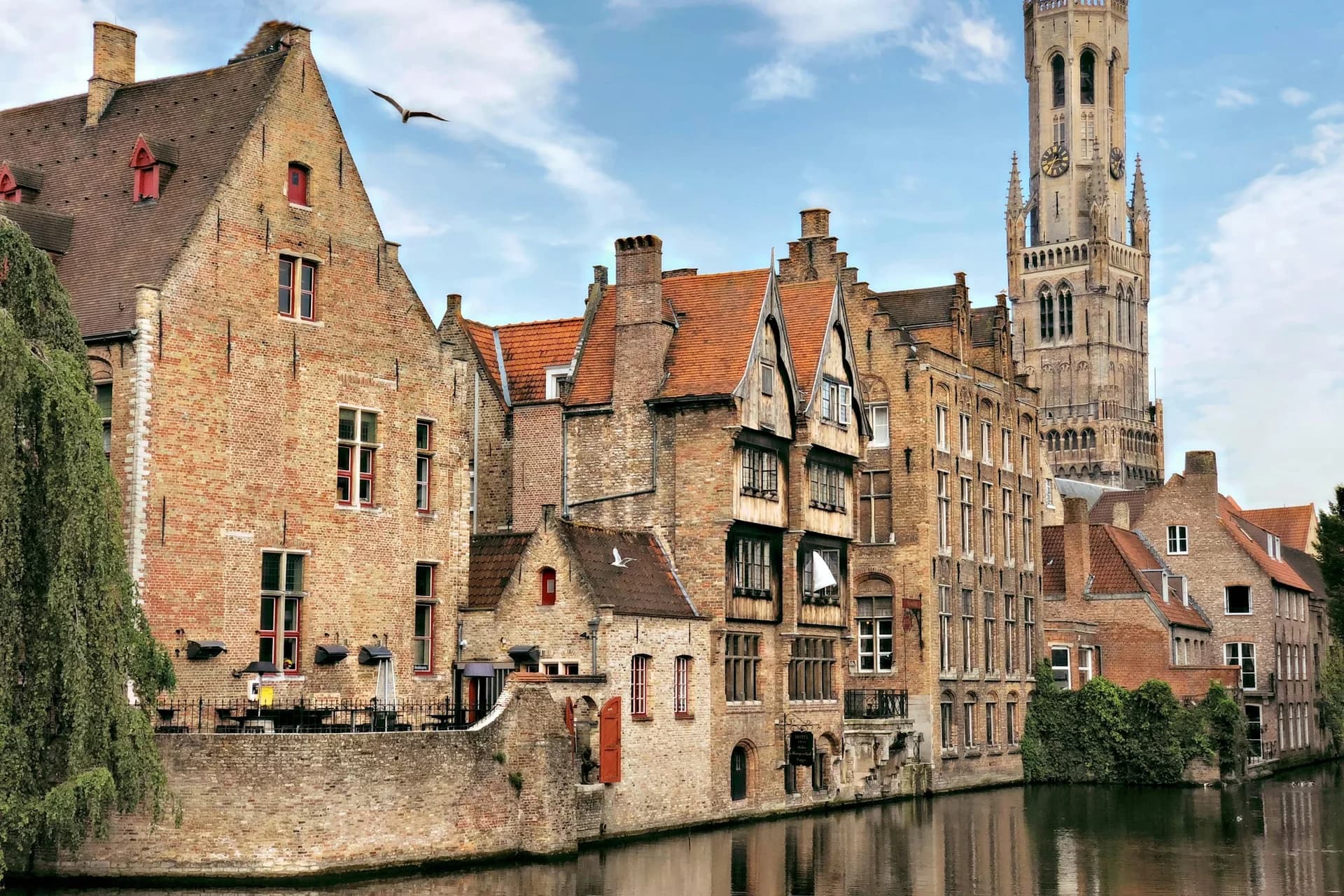
The canal water turns black and still after dark, reflecting a string of lights strung between two buildings you couldn't name if you tried. Phones die — somewhere between the third beer café and the chocolate shop on Katelijnestraat — and the medieval streets that look charmingly identical in daylight turn genuinely confusing by 11PM.
This is how you get lost in Bruges. And it might be the best thing that happens to you in Belgium.
The Plan That Wasn't
You arrive on the morning IC train from Brussels-Midi — one hour, €16, unremarkable except for the flat Flemish farmland scrolling past the window like a screensaver. The plan is always simple: two nights, hit the big sights, eat waffles, buy chocolate, leave. (The complete Bruges travel guide has the actual itinerary breakdown — this is the story of what happens anyway.)
The Markt hits first. Forty thousand square meters of medieval square, guild halls in colors that shouldn't work together but do, and the Belfry rising 83 meters above everything like a stone exclamation point. Horse-drawn carriages clop across cobblestones. A busker plays Django Reinhardt on a guitar missing a string.
Climb the Belfry. Three hundred and sixty-six steps. The staircase narrows until you're pressing against stone walls worn smooth by centuries of shoulders. At the top, time the 47-bell carillon mid-cycle and it's not the gentle tinkling you imagine, but a physical thing — sound so close it vibrates in your sternum. Below, the Flemish countryside stretches flat and green to the horizon. You can see Zeebrugge and, if you squint and lie to yourself a little, the North Sea.
The Boats and the Blood
The canal boat tour is the thing every guidebook tells you to do, and for once, they're right. Thirty minutes, €12, and you see the backs of buildings that face away from the streets — hidden gardens, crumbling walls held up by ivy, a window where someone is practicing cello — the same hidden-backstreet view you get drifting through Colmar's Little Venice in Alsace. The guide points out the spot where a scene from "In Bruges" was filmed. Everyone on the boat nods like they've seen it. Watch it the night you get home — it holds up.
Burg Square sits right behind the Markt. The Basilica of the Holy Blood stands here — a 12th-century building with two levels. The lower chapel is Romanesque, dim, thick-walled, the kind of space that makes you whisper even if you're not religious. Upstairs is Gothic and gilded — the same dark, devotional stonework you'll meet in Transylvania's fortified churches. The relic itself — a phial said to contain Christ's blood — rests in a silver reliquary you can view on Fridays. Come on a Thursday instead and the chapel is nearly empty, and the silence is worth more than the relic.
Chocolate and Its Consequences
Budget €20 for chocolate. You'll spend €47.
The problem is that Bruges has more chocolate shops per square meter than just about any city — a food-shop density only somewhere like Bologna really matches — and each one offers tastings. Dumon on Eiermarkt does classic pralines — simple, clean, no gimmicks. A box of 16 runs about €18. The Chocolate Line by Dominique Persoone is the experimental end — he's the man who built a chocolate snorting device for a Rolling Stones party. His wasabi and bacon truffles are either brilliant or insane, depending on your tolerance for culinary theater. Buy both.
At Choco-Story, the chocolate museum on Wijnzakstraat (€12 entry), a Belgian chocolatier gives a live demonstration of tempering chocolate by hand. The tasting at the end is dark, bitter, 80% cacao. Ask what makes Belgian chocolate different and you'll get the honest answer: "The law. Belgium requires more cocoa butter than other countries. It's not romanticism. It's regulation."
Honest. You'll like him for it.
The Beer Turn
De Halve Maan brewery sits in the center of the old town like it owns the place, which it basically does — they've been brewing here since 1856. The €16 tour walks you through the brewing process, up to a rooftop terrace with a view that justifies the price on its own, and ends with a glass of Brugse Zot.
Brugse Zot — "Bruges Fool" — is a blonde ale that's deceptively light. Drink one and think, this is easy. Drink three and the 6% ABV has been accumulating like compound interest.
Ask the guide about the underground beer pipeline. Three kilometers, from the brewery to the bottling plant outside the city walls, laid in 2016 because the tanker trucks were damaging the medieval streets. "Also," she'll add, "it's cool."
It is cool.
From there, 't Brugs Beertje — a beer café on Kemelstraat that's been open since 1983 and stocks over 300 Belgian beers. The walls are covered in beer mats. The bartender has opinions about everything. Ask for a recommendation and you might get a Straffe Hendrik Quadrupel (11% ABV) handed over without comment. It tastes like dark bread and plums and decisions you'll feel in the morning — the kind of opinionated, beer-is-serious bar culture you'll also find in Dublin's oldest pubs.
Lost
This is where the plan falls apart. Somewhere between 't Brugs Beertje and a hotel near the Begijnhof — a 10-minute walk you did perfectly that morning — you turn left instead of right. Or right instead of left. The medieval streets in Bruges don't follow logic. They follow 13th-century property lines and water channels that dried up 500 years ago — the same gleeful disorientation you'll feel getting lost in the old-town maze of Rovinj on the Croatian coast.
Phone dead. Streets empty. Cobblestones wet — it rained while you were inside, because this is Belgium and it rains when you're not looking. Every lane looks the same: narrow, brick, lit by a single lamp that casts more shadow than light.
Turn a corner and hit a canal you don't recognize. The reflection of a church spire ripples on the water. A cat sits on a stone wall and watches you with the absolute confidence of an animal that knows exactly where it is.
Then you hear music.
Not busking-on-the-Markt music. Actual music — someone playing piano in a room above a bar you'd walked past without noticing. The sign reads Herberg Vlissinghe.
Push the door open.
The Oldest Bar in Bruges
Herberg Vlissinghe has been serving drinks since 1515. Five hundred and eleven years. The interior is dark wood, candle stubs in bottles, and a back garden that in summer has bocce courts. In December, at 11PM, it's you and three Belgians who look like they've been there since 1515.
Order a jenever — Belgian gin, served in a small tulip glass, €3.50. The bartender, a woman in her 60s, pours it to the brim. "You drink the first sip without lifting the glass," she says. "Lean down. Otherwise you'll spill."
Lean down. The juniper hits first, then something floral, then a warmth that starts in your chest and radiates outward. One of the Belgians at the bar nods approvingly.
His name is Marc. A retired history teacher from Ghent who comes to Bruges once a month specifically to drink at Vlissinghe. "The tourists go to the places that look medieval," he says. "This one is medieval."
Talk for an hour. About beer, about Flemish painting ("Van Eyck invented oil painting" — an oversimplification, but you don't argue; the Rubens end of that story sits up the line in Antwerp), about why Belgian waffles are actually two completely different things. Brussels waffles: rectangular, crispy, airy. Liège waffles: round, dense, caramelized sugar. "Ordering a 'Belgian waffle' in Belgium is like ordering a 'European wine,'" he says.
Marc draws a map on a napkin. Five lines, two turns, a landmark: "turn right at the Virgin Mary statue on the corner — there are eleven of them in the old town, but this one has a blue candle." You'll find your hotel in four minutes.
The Morning After
Walk to the Begijnhof at 7AM. The 13th-century walled courtyard is empty. Frost on the grass. A Benedictine nun crosses the green carrying a prayer book. The whitewashed houses catch the first low sun. No tourists. No sound except your shoes on wet stone — the same early, unhurried hush you'd otherwise have to chase down a lane in a Cotswolds village.
From there to Minnewater — the Lake of Love — where swans drift in water so still it looks like glass. Then back through the old town, past the Groeningemuseum (worth an afternoon — Jan van Eyck's 'Madonna with Canon van der Paele' will stop you cold for 15 minutes), past the Markt where the Wednesday market sets up with cheese and bread and flowers — a civilized hour compared to the 5AM opening of Hamburg's Fischmarkt.
Find Herberg Vlissinghe again in daylight. The sign is smaller than you remembered. The bocce garden is there, behind a gate. A cat — possibly the same one from the canal — sits on the wall.
What Bruges Actually Is
Bruges gets called a fairy tale, a museum, a tourist trap. It's none of those things. It's a city where people live and work inside buildings that are 600 years old, where a brewery runs a pipeline under medieval streets because trucks would crack the cobblestones, where the oldest bar in town still pours jenever for €3.50 and a retired teacher from the next city over treats it as a monthly pilgrimage. It's the same unhurried, genuinely lived-in feeling you get along Ljubljana's car-free riverbanks, where the café terraces seem to outnumber the visitors.
You can see it in a day. You shouldn't.
Stay until the day-trippers leave. Get lost. Follow the music. Lean down for the first sip.
If you want more of this — slow drinking culture, walkable centers, train rides through flat farmland — Amsterdam's about two hours up the line, and feels like Bruges's louder, taller cousin.