
Punta Cana Travel Guide 2026: Everything You Need for an All-Inclusive Week
Punta Cana Travel Guide 2026: Everything You Need for an All-Inclusive Week
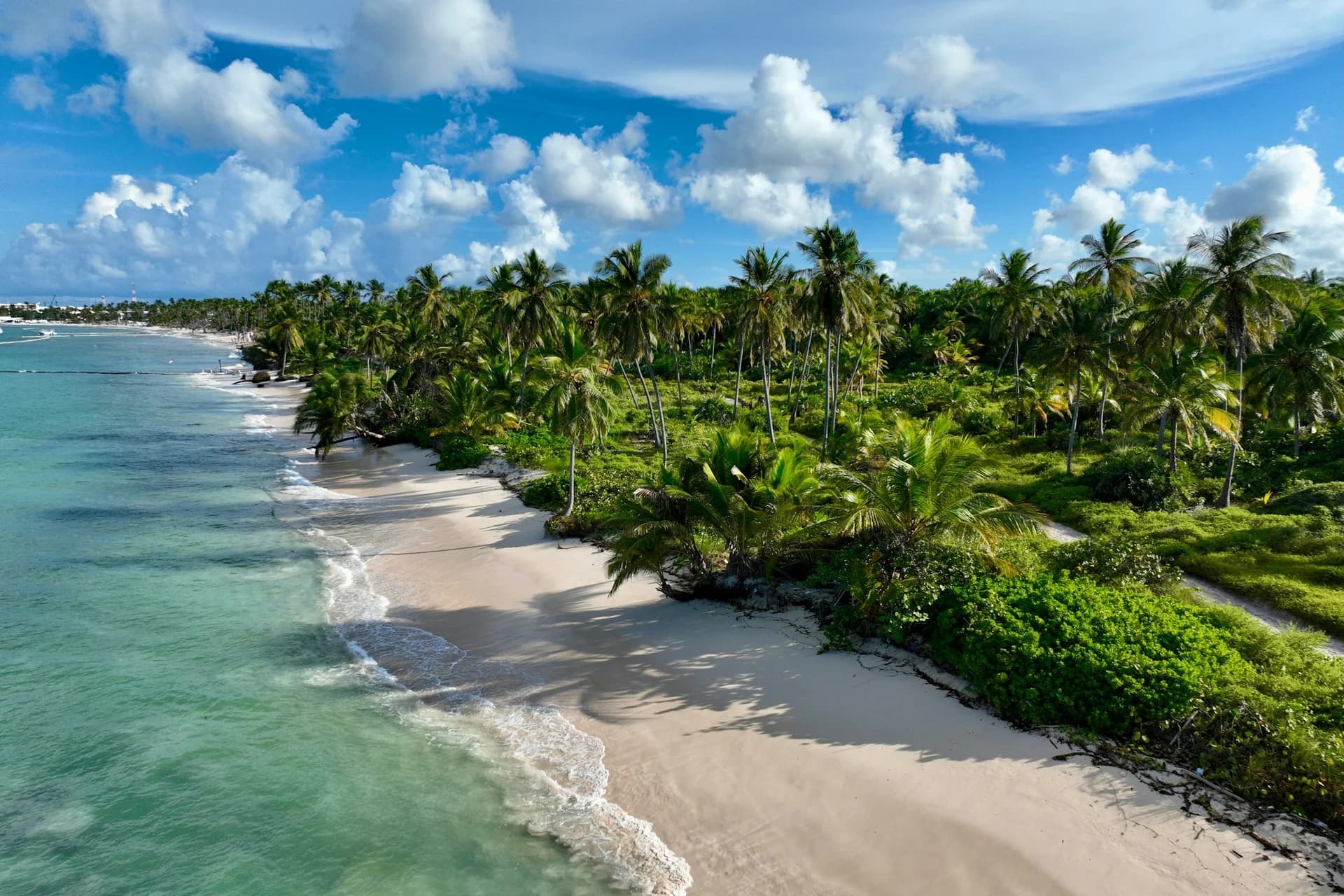
Thirty miles of palm-fringed white sand. Warm, calm, turquoise Caribbean shallows. A coast built almost entirely around the all-inclusive resort — and yet, just inland, jungle cenotes the color of cobalt, protected island sandbars, and one of the oldest cities in the Americas a few hours west.
Punta Cana is the Dominican Republic's easternmost resort zone, and it does easy better than almost anywhere. This is the guide to doing it well: when to come, how to get in, where to sleep, what to actually do, and what it'll cost.
Overview
Punta Cana sits at the island's far eastern tip, fronting the Caribbean. The wider Verón–Punta Cana area holds 100,000-plus people; the resort strip itself is purpose-built for visitors. Spanish is the language, though English is widely spoken at resorts. The currency is the Dominican Peso (DOP), but US dollars are accepted everywhere in the tourist zone. The time zone is AST (UTC-4), no daylight saving.
The model here is the all-inclusive. One price, one wristband, everything covered — the same formula that built the resort strips of Bodrum on Turkey's Aegean coast. Lean into it — but leave the resort at least a few times, because the best of Punta Cana is the day trips.
Best time to visit
December to April is the dry season and the clear winner: less rain, lower humidity, calmer seas, cleaner sand. Temperatures sit between 26 and 31°C year-round, cooled by Caribbean trade winds, so it's never cold — just wetter or drier.
Hurricane season runs June to November and peaks August-October. You can still get a sunny week then, and prices drop, but you're gambling on afternoon rain and on sargassum seaweed washing ashore in the warmer months (resorts rake it daily, but it's seasonal). For a one-shot trip, book the dry months. Early December and late April are the sweet-spot shoulders — dry weather, fewer crowds, lower rates than the Christmas and February-March peaks.
Getting there
You'll fly into Punta Cana International Airport (PUJ), with its distinctive thatched-roof, open-air terminals — a genuinely pleasant first impression. From the US East Coast it's often just 3.5-4 hours — comparable to the hop to Cancún.
Two bits of paperwork:
- The free online Dominican Republic E-Ticket (a QR code) must be completed within 72 hours before both arrival and departure. Do it in advance to skip airport queues.
- The old US$10 tourist card is now bundled into most airfares, so you likely won't pay it separately.
Most visitors (US, Canada, EU, UK) don't need a visa for stays up to 30 days.
Transfers matter. There's no real public bus network in the resort zone, and PUJ airport taxis charge fixed, high rates — US$35-60 to most hotels. Skip the airport taxi line and pre-book a resort or private transfer instead — it's smoother, often cheaper, and you're not negotiating after a long flight. The ride to a Bávaro resort runs 25-40 minutes. Uber operates in some areas, but pre-booked transfers are the reliable play for arrival.
Where to stay
Three main zones, each a different flavor.
Bávaro is the heart of it. The longest, most famous beach (the signature Caribbean white-sand strip), the densest cluster of all-inclusives, and the most options at every price point. Great for first-timers, families, and anyone who wants beach, restaurants, and nightlife all within reach. Walk away from the hotel cluster, north or south, for quieter palm-shaded sand — the same trick that works along Gran Canaria's resort beaches.
Cap Cana, just south, is the upscale enclave — a yacht marina, manicured grounds, over-the-water dining at La Yola, Juanillo Beach's calm public sand, and Scape Park on its doorstep. This is where the luxury resorts and boutique properties cluster. Calmer, more polished, pricier.
Uvero Alto, north of Bávaro, is the quieter, more remote stretch. Newer resorts, fewer crowds, a get-away-from-it-all feel — at the cost of a longer transfer from PUJ and less within walking distance. Choose it if seclusion beats convenience for you.
All-inclusive vs boutique: the all-inclusive resorts are the default and usually the best value if you'll eat and drink on-site. But the Dominican Republic does have boutique and smaller hotels (more so in Cap Cana and Bávaro village) for travelers who'd rather eat out and explore than wear a wristband — the same independent streak that draws people to walkable beach towns like Puerto Vallarta over the big resorts. If your plan is to roam, a boutique base plus off-resort meals can work out well — a local meal in Verón or Bávaro village costs a fraction of resort à-la-carte prices.
One reservation tip regardless of where you stay: book your à-la-carte restaurant slots the day you check in. Popular ones fill days ahead at all-inclusives.
What to do
The resort is the easy part. These are the days worth leaving it for.
Saona Island — the signature full-day catamaran-and-speedboat trip into protected Cotubanamá National Park (~US$75-110 with lunch and open bar). The mid-sea natural pool, a waist-deep sandbar full of starfish, is the highlight — the same warm, clear water that makes the reef-fringed shallows of Isla Mujeres off Cancún so good for snorkeling. Book a smaller-group operator to dodge the party crowds. Look but don't lift the starfish out of the water.
Hoyo Azul at Scape Park — a cobalt-blue, spring-fed cenote at the foot of a cliff near Cap Cana, set in a jungle of zip-lines and caves, much like the blue lagoons and cave swims of Vang Vieng. Day passes ~US$45 for the Hoyo Azul trail up to ~US$160 with the full adventure menu; buy online for a discount. Bring water shoes for the rocks and reef-safe sunscreen for the swim.
A catamaran day generally — whether to Saona, to Isla Catalina's reef wall off La Romana (~US$80-120, the region's best snorkeling and diving), or a closer snorkel boat from Cabeza de Toro. The calm dry-season sea makes these glorious — the same flat-water conditions that make the island-hopping boat days out of Cebu so reliable.
The beaches — Bávaro for calm swimming, Macao for wild Atlantic surf and buggy-tour stops (heed the flag warnings — currents are real), Juanillo in Cap Cana for calm public sand with beach bars — the same gentle Caribbean swimming you'll find on Barbados. The Indigenous Eyes Ecological Park offers a cool, shaded contrast: a 1,500-acre reserve with a dozen swimmable freshwater lagoons (entry ~US$50).
Further afield: Altos de Chavón, the re-created Mediterranean village above the Chavón River (free entry, ~1 hour west), and Santo Domingo's Zona Colonial, the oldest European city in the Americas — a long 2.5-3 hour drive each way, but a rewarding day for the Catedral Primada de América and the cobbled Calle Las Damas, the same colonial-Americas streetscape you'll walk in Colonia del Sacramento's old town.
Food and drink
The national plate is la bandera — rice, beans, and stewed meat — on every table. Sancocho is the hearty stew locals love. Fresh fish fried with tostones (smashed green plantains) at a Macao beach shack, with a cold Presidente beer, is one of the great cheap meals here. To drink: a morir soñando (orange juice and milk), or local rum.
Skip buying mamajuana, cigars, or jewellery off the beach and roadside vendors — the pitch is pushy and the quality unreliable. Buy bottled spirits and souvenirs (larimar jewellery, Dominican cacao) from a reputable shop instead.
Budget
All-inclusive resort rates vary wildly by season and tier, but the wristband is where most of your spend goes — and it usually covers food, drinks, entertainment, and non-motorized watersports. Beyond that:
- Airport transfer: US$35-60 by airport taxi, often less pre-booked
- Saona day trip: ~US$75-110 per person
- Hoyo Azul / Scape Park: ~US$45-160 depending on activities
- Buggy/ATV tour: ~US$50-90 per person
- Surf lesson at Macao: ~US$30
- Indigenous Eyes entry: ~US$50
- A local off-resort meal: a fraction of resort à-la-carte prices
- Tips: US$1-2 per service (bartenders, housekeeping, bellhops) — expected even at all-inclusives
Carry small US-dollar or peso bills for tips, taxis, and beach vendors. The all-inclusive plus three or four excursions is the realistic shape of most budgets here.
Safety
Punta Cana rates Generally Safe (Level 1-2) — resort zones are well-policed. Use normal caution off-resort, as you would anywhere.
The real safety notes are about the water and the sun:
- Resort beaches are calm, but open Atlantic beaches like Macao have strong rip currents. Heed the flag warnings and swim where lifeguards are present.
- Drink bottled water, not tap.
- Reef-safe sunscreen protects both you and the coral — and many tours require it.
- Decline the pushy beach and roadside vendors politely; it's a sales pitch, not a threat.
Useful Spanish phrases
English gets you far at resorts, but a few words go a long way off-resort — and this starter set carries over to any Spanish-speaking trip, from Santo Domingo to Arequipa:
- Hola / Buenos días — Hello / Good morning
- Gracias / Por favor — Thank you / Please
- ¿Cuánto cuesta? — How much is it?
- La cuenta, por favor — The bill, please
- ¿Dónde está el baño? — Where's the bathroom?
- Una cerveza, por favor — A beer, please (you'll want a Presidente)
- No, gracias — No, thank you (your friend with beach vendors)
- Salud — Cheers
Learn those eight and you'll be tipping bartenders, ordering fish at a shack, and declining mamajuana like you've done it before. Now book the dry-season week, pre-book that transfer, and go float in the warm turquoise.
Related Articles
 Travel Guides
10 Things to Do in the Maasai Mara That Aren't Just the River Crossing
 Travel Guides
12 Best Things to Do in Luxor: A Both-Banks Hit List for Ancient Thebes
 Travel Guides