
Punta Cana
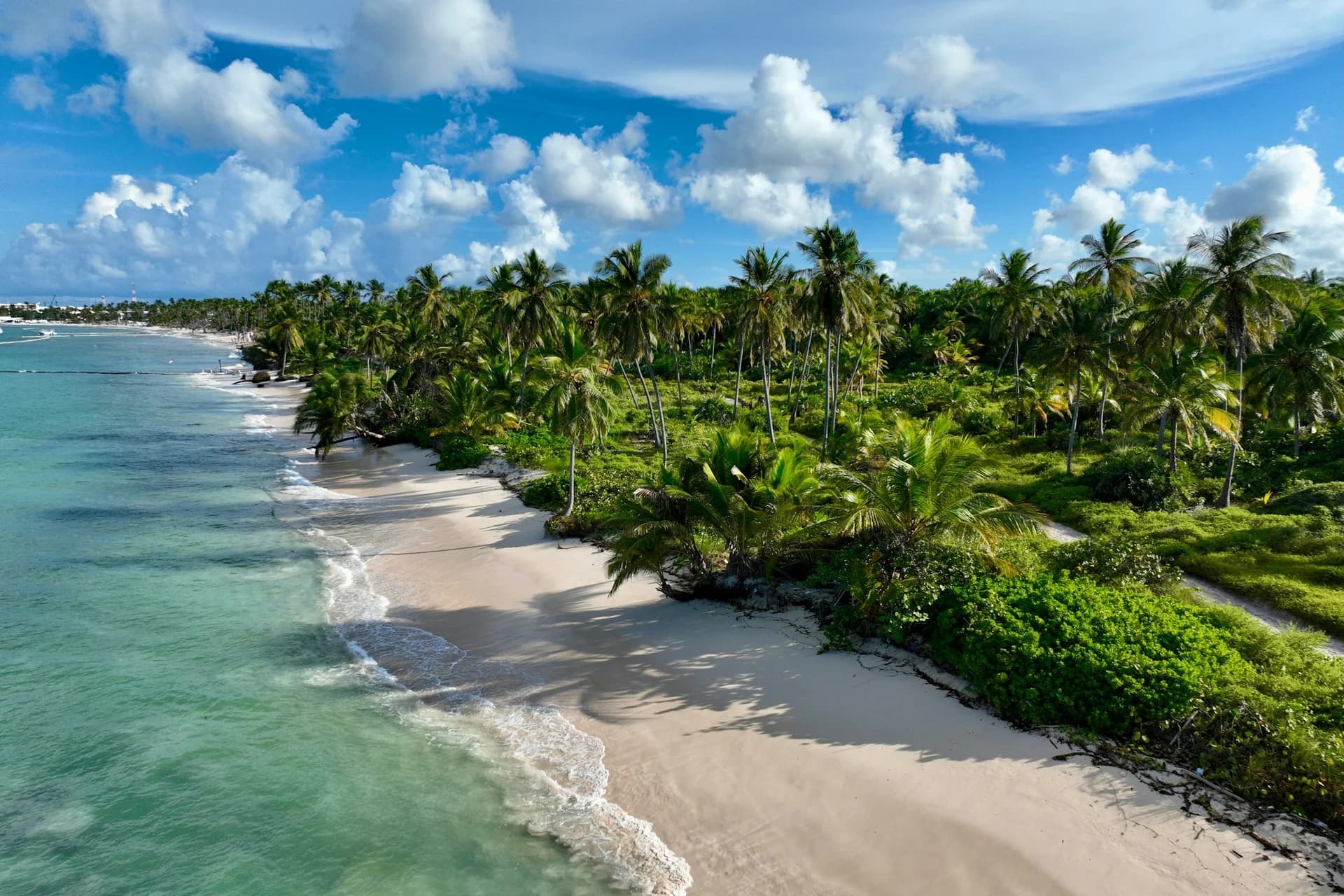
Photo: Andreas Felske / Unsplash
Key Facts
Best Time to Visit
December to April for dry, sunny weather; hurricane season runs June to November, peaking August-October
Language
Spanish; English widely spoken at resorts
Currency
Dominican Peso (DOP); US dollars widely accepted in tourist areas
Time Zone
AST (UTC-4), no daylight saving
Airport
Punta Cana International Airport (PUJ), with its thatched-roof open-air terminals
Population
approx. 50,000 in Punta Cana; the wider Verón–Punta Cana area approx. 100,000+
Climate
Tropical — hot and humid year-round (26-31°C), cooled by Caribbean trade winds
Safety Rating
Generally Safe (Level 1-2) — resort zones are well-policed; use normal caution off-resort
Tourist Card
The US$10 tourist card is now included in the price of most airline tickets
Top Highlights
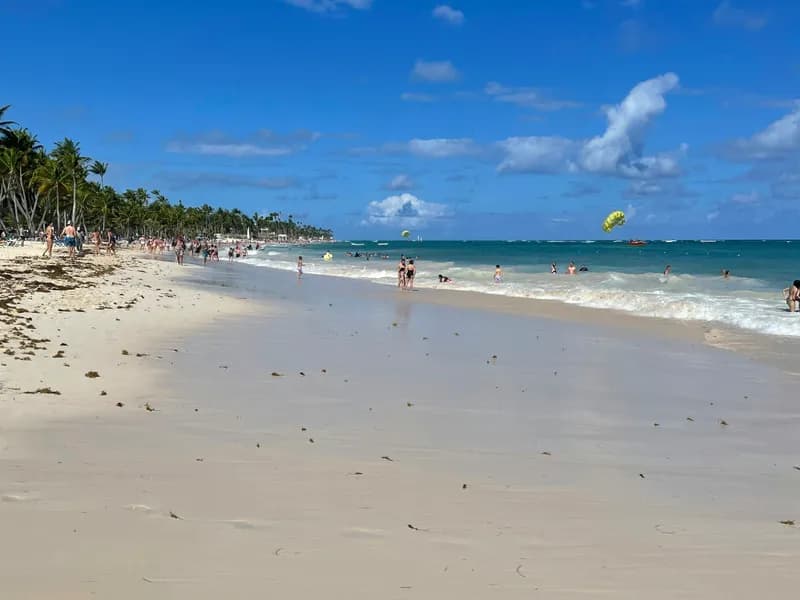
Bávaro Beach
The signature stretch of powder-white sand and calm turquoise water that fronts most of Punta Cana's resorts, regularly ranked among the Caribbean's best. Free public access (the beaches are public by law); busiest near the big hotels. Walk north or south of the resort cluster for quieter, palm-shaded sand.

Saona Island
A protected island of postcard beaches and starfish-filled sandbars in Cotubanamá National Park, visited on full-day catamaran-and-speedboat tours (~US$75-110 with lunch and an open bar). Allow a full day; the natural pool stop in waist-deep water mid-sea is the highlight. Book a smaller-group operator to avoid the party crowds.
Hoyo Azul (Scape Park)
A stunning cobalt-blue natural cenote at the foot of a cliff, set within Scape Park's jungle of zip-lines and caves. Day passes ~US$45-160 depending on activities; the Hoyo Azul trail is a short jungle walk. Allow half a day. Bring water shoes and reef-safe sunscreen for the swim in the cool spring water.
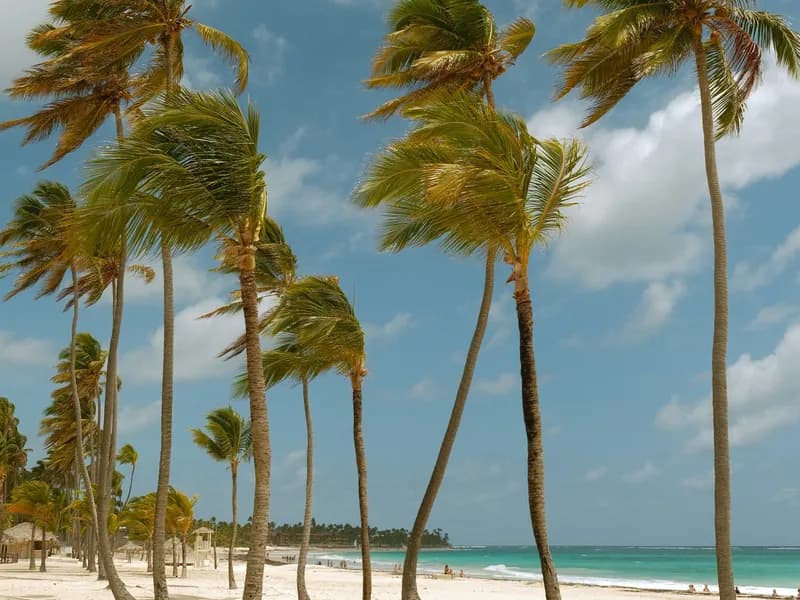
Macao Beach
A wild, public, undeveloped beach with Atlantic surf, popular for surf lessons and buggy-tour stops north of the resort strip. Free; basic shacks sell fresh fish and cold beer. The waves and currents are stronger than the sheltered resort beaches, so it's better for surfing and walking than calm swimming.

Indigenous Eyes Ecological Park
A 1,500-acre private reserve with a dozen freshwater lagoons (several open for swimming) and shaded jungle trails, run by the Puntacana resort foundation. Entry ~US$50; open daytime hours, allow 2 hours. A refreshingly cool, quiet, and educational contrast to the beach scene.

Isla Catalina
A small island off La Romana with a vibrant 'wall' dive and snorkel site teeming with coral and fish, reached by boat tour (~US$80-120). Allow a full day including the drive west. A quieter, more reef-focused alternative to Saona — among the best snorkelling and diving in the region.

Altos de Chavón
A re-created 16th-century Mediterranean village perched above the Chavón River near La Romana, with a stone amphitheatre, artisan workshops, and an archaeology museum. Entry is free (parking/tours extra); about 1 hour west of Punta Cana. A scenic, atmospheric half-day cultural detour from the beaches.
Planned Itinerary
7-Day Punta Cana Itinerary
Arrival & Bávaro Beach
Land at PUJ, settle into your Bávaro all-inclusive, and ease into island time with a first sunset on the sand. Complete the free DR E-Ticket QR form before you fly so you breeze through immigration.
Pre-booked transfer from Punta Cana International (PUJ) to Bávaro resort(25-40 minutes)
Skip the airport taxi queue (US$35-60 fixed rate); a resort or private transfer is smoother. PUJ's thatched-roof open-air terminals are a gentle welcome.
Check in and orientation walk of the resort(1 hour)
Find the à-la-carte restaurant reservations desk early — popular slots book up days ahead at all-inclusives.
Sunset stroll on Bávaro Beach(1.5 hours)
Powder-white sand and calm turquoise shallows fronting the resort strip. Walk north or south of the hotel cluster for quieter, palm-shaded stretches.
Dinner at the resort buffet + a Presidente beer(1.5 hours)
Ease in tonight; carry a couple of US$1-2 bills to tip bartenders — tipping is expected even at all-inclusives.
Bávaro Beach & Resort Day (Rest)
A deliberate slow day to acclimatise to the heat and the all-inclusive rhythm before the excursions begin. Hydrate, sun, swim, repeat.
Morning on Bávaro Beach with a complimentary kayak or paddleboard(2-3 hours)
Most resorts include non-motorised watersports. The water is bath-warm and glassy before midday; reef-safe sunscreen only.
Poolside lunch and a swim-up bar drink(1.5 hours)
Retreat from the midday heat (peaks 31°C). A piña colada or a fresh-cracked coconut hits the spot.
Afternoon siesta or spa treatment(2 hours)
Mid-afternoon is for shade and rest — pace yourself for a week of early-start tours.
Evening resort show and dinner(2 hours)
Catch the nightly merengue or live-music show; politely decline the roving cigar and 'mamajuana' vendors.
Saona Island Catamaran
The region's signature full-day trip: a catamaran-and-speedboat run to the protected sandbars of Saona in Cotubanamá National Park. Allow the entire day.
Early pickup and drive to the Bayahibe departure dock(1.5-2 hours)
Most tours collect from Bávaro resorts around 7-7:30am and drive west to Bayahibe. Book a smaller-group operator (~US$75-110 pp with lunch and open bar) to dodge the party-boat crowds.
Natural pool stop for starfish spotting(1 hour)
The boat anchors mid-sea over a waist-deep sandbar — the trip's highlight. Look but don't lift the starfish out of the water.
Beach time and buffet lunch on Saona Island(2-3 hours)
Postcard palms and shallow turquoise water at Mano Juan fishing village. A Dominican BBQ lunch is included.
Catamaran return with merengue and rum(1.5 hours)
The sail back is the party leg — open bar and dancing. Bring a dry bag for phones.
Scape Park & Hoyo Azul Cenote
Trade the coast for jungle and a cobalt cenote at the foot of a cliff near Cap Cana. A half-day of adventure, with the afternoon free for the beach.
Transfer to Scape Park, Cap Cana(30 minutes)
About 20-30 min south of Bávaro. Day passes run ~US$45 for the Hoyo Azul trail up to ~US$160 with zip-lines and caves — buy online for a discount.
Jungle walk and swim at Hoyo Azul(1.5 hours)
A short trail leads to the stunning blue spring-fed cenote. The water is cool and clear — water shoes help on the rocks.
Zip-lines or the Eyes Cenotes cave swim (optional add-on)(1.5 hours)
If you bought the upgraded pass, fly the canyon zip-lines or swim the cave cenotes before the midday heat.
Lunch at Juanillo Beach, Cap Cana(1.5 hours)
Nearby Juanillo is a calm public beach with beach bars; a great spot to wind down after the park.
Afternoon back at the resort pool(2 hours)
Recover from the morning's activity; nap through the heat.
Cap Cana Marina & Indigenous Eyes Reserve
A refined day around the Cap Cana marina and the cool freshwater lagoons of the Indigenous Eyes Ecological Park — a quiet, shaded contrast to the beach scene.
Morning at Indigenous Eyes Ecological Park(2 hours)
A 1,500-acre reserve with a dozen freshwater lagoons (several swimmable) and shaded jungle trails, run by the Puntacana resort foundation. Entry ~US$50; refreshingly cool and educational.
Lunch at La Yola, Cap Cana Marina(1.5 hours)
An over-the-water restaurant at the marina serving fresh seafood with yacht views — a splurge worth it once. Citrus nearby is another local favourite.
Stroll the Cap Cana marina and yacht docks(1 hour)
Window-shop the boutiques and watch the sportfishing boats come in.
Sunset and dinner back near Bávaro(2 hours)
Head back to the resort strip; if you want a non-resort meal, Jellyfish Restaurant sits right on the Bávaro sand.
Macao Beach Buggy Adventure
A muddy, fun half-day on the wild Atlantic coast at Macao — surf, dune buggies, and fresh fish from a beach shack. Higher energy, so save the afternoon for recovery.
Dune buggy or ATV tour to Macao Beach(3-4 hours)
Operators (~US$50-90 pp) bounce through farm tracks and red-dirt roads to wild, undeveloped Macao. Expect mud — wear clothes you don't mind ruining and a bandana for dust.
Surf lesson or beach walk at Macao(1 hour)
Macao has real Atlantic waves — good for beginner surf lessons (~US$30). Heed flag warnings; currents are stronger than the sheltered resort beaches.
Fresh-fish lunch at a Macao beach shack(1 hour)
Basic shacks fry up just-caught fish with tostones and cold Presidente for a few hundred pesos.
Spa, pool, and an early dinner back at the resort(3 hours)
Rinse off the mud and rest; tomorrow is departure logistics.
Last Beach Morning & Departure
A final swim, souvenir shopping, and the transfer back to PUJ. Re-complete the DR E-Ticket QR form before heading to the airport.
Final morning swim and sunrise walk on Bávaro Beach(1.5 hours)
One last dip in the warm turquoise water before checkout.
Souvenir shopping and checkout(1 hour)
Buy bottled rum, larimar jewellery, or cacao from a reputable shop — not from beach vendors. Settle any incidentals and keep small bills for housekeeping tips.
Lunch and pre-departure relax(1.5 hours)
A last buffet meal or a beach bar lunch before the transfer.
Transfer to Punta Cana International (PUJ)(25-40 minutes)
Allow extra buffer for PUJ's relaxed but sometimes slow check-in. Have your departure E-Ticket QR ready.
14-Day Punta Cana Itinerary
Arrival & Bávaro Beach
Land at PUJ, settle into your Bávaro all-inclusive, and ease into island time with a first sunset on the sand. Complete the free DR E-Ticket QR form before you fly so you breeze through immigration.
Pre-booked transfer from Punta Cana International (PUJ) to Bávaro resort(25-40 minutes)
Skip the airport taxi queue (US$35-60 fixed rate); a resort or private transfer is smoother. PUJ's thatched-roof open-air terminals are a gentle welcome.
Check in and reserve à-la-carte restaurants(1 hour)
Popular dinner slots book days ahead at all-inclusives — sort your week's reservations on day one.
Sunset stroll on Bávaro Beach(1.5 hours)
Powder-white sand and calm turquoise shallows. Walk north or south of the hotel cluster for quieter, palm-shaded sand.
Dinner at the resort buffet + a Presidente beer(1.5 hours)
Carry US$1-2 bills to tip bartenders — tipping is expected even at all-inclusives.
Bávaro Beach & Resort Day (Rest)
A deliberate slow day to acclimatise to the heat and the all-inclusive rhythm before excursions begin.
Morning on Bávaro Beach with complimentary kayak or paddleboard(2-3 hours)
Most resorts include non-motorised watersports; the water is glassy before midday. Reef-safe sunscreen only.
Poolside lunch and a swim-up bar drink(1.5 hours)
Retreat from the midday heat (peaks 31°C).
Afternoon siesta or spa treatment(2 hours)
Mid-afternoon is for shade and rest.
Evening resort show and dinner(2 hours)
Catch the nightly merengue or live-music show.
Saona Island Catamaran
The region's signature full-day trip: a catamaran-and-speedboat run to the protected sandbars of Saona in Cotubanamá National Park. Allow the entire day.
Early pickup and drive to the Bayahibe departure dock(1.5-2 hours)
Tours collect from Bávaro around 7-7:30am and drive west to Bayahibe. Book a smaller-group operator (~US$75-110 pp with lunch and open bar) to dodge party-boat crowds.
Natural pool stop for starfish spotting(1 hour)
The boat anchors mid-sea over a waist-deep sandbar — the trip's highlight. Look but don't lift the starfish.
Beach time and buffet lunch on Saona Island(2-3 hours)
Postcard palms and shallow turquoise water at Mano Juan fishing village; Dominican BBQ lunch included.
Catamaran return with merengue and rum(1.5 hours)
The sail back is the party leg — open bar and dancing. Bring a dry bag for phones.
Scape Park & Hoyo Azul Cenote
Trade the coast for jungle and a cobalt cenote at the foot of a cliff near Cap Cana. A half-day of adventure with a free beach afternoon.
Transfer to Scape Park, Cap Cana(30 minutes)
About 20-30 min south of Bávaro. Passes run ~US$45 (Hoyo Azul trail) to ~US$160 (with zip-lines and caves); buy online for a discount.
Jungle walk and swim at Hoyo Azul(1.5 hours)
A short trail leads to the stunning blue spring-fed cenote. Cool, clear water; water shoes help on the rocks.
Lunch at Juanillo Beach, Cap Cana(1.5 hours)
A calm public beach with beach bars to wind down after the park.
Afternoon back at the resort pool(2 hours)
Recover from the morning; nap through the heat.
Cap Cana Marina & Indigenous Eyes Reserve
A refined day around the Cap Cana marina and the cool freshwater lagoons of the Indigenous Eyes Ecological Park.
Morning at Indigenous Eyes Ecological Park(2 hours)
A 1,500-acre reserve with a dozen swimmable freshwater lagoons and shaded jungle trails, run by the Puntacana resort foundation. Entry ~US$50.
Lunch at La Yola, Cap Cana Marina(1.5 hours)
An over-the-water restaurant with yacht views; Citrus nearby is another local favourite.
Stroll the Cap Cana marina and yacht docks(1 hour)
Window-shop the boutiques and watch the sportfishing boats come in.
Sunset and dinner back near Bávaro(2 hours)
Jellyfish Restaurant on the Bávaro sand is a fine non-resort option.
Macao Beach Buggy Adventure
A muddy, fun half-day on the wild Atlantic coast at Macao — surf, dune buggies, and fresh fish from a beach shack.
Dune buggy or ATV tour to Macao Beach(3-4 hours)
Operators (~US$50-90 pp) bounce through farm tracks to wild, undeveloped Macao. Expect mud — wear clothes you don't mind ruining.
Surf lesson or beach walk at Macao(1 hour)
Macao has real Atlantic waves — good for beginner surf lessons (~US$30). Heed flag warnings; currents are stronger here.
Fresh-fish lunch at a Macao beach shack(1 hour)
Just-caught fish fried with tostones and cold Presidente for a few hundred pesos.
Spa, pool, and early dinner at the resort(3 hours)
Rinse off the mud and rest.
Resort Relaxation Day (Rest)
A full rest day to recharge between the first week's tours and the day trips to come. Beach, pool, and slow living.
Late breakfast and a long Bávaro beach morning(3 hours)
No alarm today — float, read, and let the trade winds do their thing.
Optional resort watersports or beach volleyball(1.5 hours)
Use the included gear; or just claim a palapa and a book.
Afternoon spa or hammock time(2 hours)
Mid-trip recovery before the inland day trips ramp back up.
Beachside dinner and a quiet evening(2 hours)
An early night ahead of the long Santo Domingo drive tomorrow.
Santo Domingo Colonial Zone Day Trip
A long but rewarding day trip west to the capital's UNESCO-listed Colonial Zone — the oldest European city in the Americas. It's ~2.5-3 hours each way, so an early start is essential.
Early drive to Santo Domingo(2.5-3 hours)
Join a guided tour or hire a pre-booked driver; the highway is straightforward but it's a long haul each way. Leave by 6:30-7am.
Walking tour of the Zona Colonial(2.5 hours)
See Catedral Primada de América (the New World's first cathedral), the Alcázar de Colón (Columbus's son's palace), and the cobbled Calle Las Damas.
Lunch in the Zona Colonial(1.5 hours)
Try Dominican classics — la bandera (rice, beans, stewed meat) or sancocho — at a courtyard restaurant near Plaza España.
Free time and the drive back to Punta Cana(3.5 hours)
Browse the artisan shops on El Conde pedestrian street, then settle in for the long ride home; you'll arrive after dark.
Montaña Redonda Sunrise & Miches Coast
Head to the iconic swings and hammocks atop Montaña Redonda for sweeping views over Laguna Redonda and the Miches coast, northwest of Punta Cana.
Drive to Montaña Redonda near Miches(1.5-2 hours)
About 90 min-2 hrs northwest. The last stretch to the 300m summit is by 4x4 truck (~300-500 DOP shuttle) — don't drive a small car up.
Swings, hammocks, and photos at the summit(1.5 hours)
The famous Instagram swings and 'magic carpet' hammocks frame panoramic views of the lagoon and Atlantic. Small entry/parking fee (~100-200 DOP).
Seafood lunch on the Miches coast(1.5 hours)
Stop at a beach comedor for fresh fish before the area gets developed further.
Return drive and resort evening(2 hours)
Back to Bávaro for sunset and dinner.
Snorkel & Reef Day — Catalina or Cabeza de Toro
A water-focused day on the region's best reefs. Choose the Catalina Island wall off La Romana for a full-day trip, or stay closer with a snorkel boat from Cabeza de Toro.
Boat trip to Isla Catalina (or local Cabeza de Toro reef)(Full day (Catalina) or half day (local))
Catalina's vibrant 'wall' dive/snorkel site (~US$80-120, incl. drive west) is among the region's best for coral and fish — quieter and more reef-focused than Saona. Closer to home, snorkel boats from Cabeza de Toro reach a shallow natural pool.
Snorkelling over the coral reef(2 hours)
Bring or rent a mask that fits; reef-safe sunscreen is required to protect the coral.
Lunch on board or at the dock(1 hour)
Most operators include a beach or boat lunch with rum punch.
Return and beach sunset(2 hours)
Back to Bávaro to rinse off and relax.
Dominican Cooking & Merengue Class
Slow the pace with a cultural day: learn to cook Dominican staples and dance merengue, the country's national rhythm.
Dominican cooking class(3 hours)
Learn to make la bandera, tostones, and fresh juices with a local host (~US$40-70). Many classes include a market visit for ingredients.
Lunch of the dishes you cooked(1 hour)
Sit down to the meal you prepared, paired with a fresh morir soñando (orange-and-milk drink).
Merengue and bachata dance lesson(1.5 hours)
Resorts and local studios offer lessons in the national dances — you'll use them at the evening shows all week.
Evening at a local Bávaro restaurant(2 hours)
Try picapollo (Dominican-style fried chicken) at a local spot in Bávaro village for a fraction of resort à-la-carte prices.
Altos de Chavón & La Romana Culture
A scenic half-day west to the re-created Mediterranean village of Altos de Chavón above the Chavón River, then a calm beach afternoon.
Drive to Altos de Chavón, La Romana(1-1.5 hours)
About an hour west. Entry to the village is free (parking/tours extra).
Explore the village, amphitheatre, and museum(2 hours)
Wander the stone artisan workshops, the Greek-style amphitheatre, and the Regional Museum of Archaeology with its Taíno artefacts. Views over the Chavón River gorge are superb.
Lunch overlooking the river(1.5 hours)
Several restaurants on the bluff serve Italian and Dominican plates with the gorge view.
Afternoon at Bayahibe or Dominicus Beach(2 hours)
Stop at calm, family-friendly Bayahibe on the way back for a swim before the drive home.
Resort Relaxation & Beach (Rest)
One last full rest day to soak up the resort, the beach, and the warm shallows before heading home.
Lazy morning on Bávaro Beach(3 hours)
Claim a palapa, swim the calm turquoise water, and enjoy the trade winds.
Poolside lunch and a final spa treatment(2 hours)
A massage or facial to end the trip relaxed.
Souvenir shopping(1.5 hours)
Buy larimar jewellery, Dominican cacao/chocolate, and bottled rum from a reputable shop — not from beach vendors.
Farewell dinner at your favourite à-la-carte(2 hours)
Book your top-pick restaurant for the last night and tip generously.
Last Beach Morning & Departure
A final swim and the transfer back to PUJ. Re-complete the DR E-Ticket QR form before heading to the airport.
Final morning swim and walk on Bávaro Beach(1.5 hours)
One last dip in the warm turquoise water before checkout.
Checkout and settle incidentals(45 minutes)
Keep small bills for housekeeping and bellhop tips.
Lunch and pre-departure relax(1.5 hours)
A last buffet or beach-bar meal before the transfer.
Transfer to Punta Cana International (PUJ)(25-40 minutes)
Allow buffer for PUJ check-in. Have your departure E-Ticket QR ready.
21-Day Punta Cana Itinerary
Arrival & Bávaro Beach
Land at PUJ, settle into your Bávaro all-inclusive, and ease into island time with a first sunset on the sand. Complete the free DR E-Ticket QR form before you fly so you breeze through immigration.
Pre-booked transfer from Punta Cana International (PUJ) to Bávaro resort(25-40 minutes)
Skip the airport taxi queue (US$35-60 fixed rate); a resort or private transfer is smoother. PUJ's thatched-roof open-air terminals are a gentle welcome.
Check in and reserve à-la-carte restaurants(1 hour)
Popular dinner slots book days ahead at all-inclusives — sort your first week's reservations on day one.
Sunset stroll on Bávaro Beach(1.5 hours)
Powder-white sand and calm turquoise shallows. Walk north or south of the hotel cluster for quieter, palm-shaded sand.
Dinner at the resort buffet + a Presidente beer(1.5 hours)
Carry US$1-2 bills to tip bartenders — tipping is expected even at all-inclusives.
Bávaro Beach & Resort Day (Rest)
A deliberate slow day to acclimatise to the heat and the all-inclusive rhythm before excursions begin.
Morning on Bávaro Beach with complimentary kayak or paddleboard(2-3 hours)
Most resorts include non-motorised watersports; the water is glassy before midday. Reef-safe sunscreen only.
Poolside lunch and a swim-up bar drink(1.5 hours)
Retreat from the midday heat (peaks 31°C).
Afternoon siesta or spa treatment(2 hours)
Mid-afternoon is for shade and rest.
Evening resort show and dinner(2 hours)
Catch the nightly merengue or live-music show; politely decline the roving cigar and 'mamajuana' vendors.
Saona Island Catamaran
The region's signature full-day trip: a catamaran-and-speedboat run to the protected sandbars of Saona in Cotubanamá National Park. Allow the entire day.
Early pickup and drive to the Bayahibe departure dock(1.5-2 hours)
Tours collect from Bávaro around 7-7:30am and drive west to Bayahibe. Book a smaller-group operator (~US$75-110 pp with lunch and open bar) to dodge party-boat crowds.
Natural pool stop for starfish spotting(1 hour)
The boat anchors mid-sea over a waist-deep sandbar — the trip's highlight. Look but don't lift the starfish.
Beach time and buffet lunch on Saona Island(2-3 hours)
Postcard palms and shallow turquoise water at Mano Juan fishing village; Dominican BBQ lunch included.
Catamaran return with merengue and rum(1.5 hours)
The sail back is the party leg — open bar and dancing. Bring a dry bag for phones.
Scape Park & Hoyo Azul Cenote
Trade the coast for jungle and a cobalt cenote at the foot of a cliff near Cap Cana. A half-day of adventure with a free beach afternoon.
Transfer to Scape Park, Cap Cana(30 minutes)
About 20-30 min south of Bávaro. Passes run ~US$45 (Hoyo Azul trail) to ~US$160 (with zip-lines and caves); buy online for a discount.
Jungle walk and swim at Hoyo Azul(1.5 hours)
A short trail leads to the stunning blue spring-fed cenote. Cool, clear water; water shoes help on the rocks.
Zip-lines or Eyes Cenotes cave swim (optional add-on)(1.5 hours)
If you bought the upgraded pass, fly the canyon zip-lines or swim the cave cenotes before the heat builds.
Lunch at Juanillo Beach, Cap Cana(1.5 hours)
A calm public beach with beach bars to wind down after the park.
Cap Cana Marina & Indigenous Eyes Reserve
A refined day around the Cap Cana marina and the cool freshwater lagoons of the Indigenous Eyes Ecological Park.
Morning at Indigenous Eyes Ecological Park(2 hours)
A 1,500-acre reserve with a dozen swimmable freshwater lagoons and shaded jungle trails, run by the Puntacana resort foundation. Entry ~US$50.
Lunch at La Yola, Cap Cana Marina(1.5 hours)
An over-the-water restaurant with yacht views; Citrus nearby is another local favourite.
Stroll the Cap Cana marina and yacht docks(1 hour)
Window-shop the boutiques and watch the sportfishing boats come in.
Sunset and dinner back near Bávaro(2 hours)
Jellyfish Restaurant on the Bávaro sand is a fine non-resort option.
Macao Beach Buggy Adventure
A muddy, fun half-day on the wild Atlantic coast at Macao — surf, dune buggies, and fresh fish from a beach shack.
Dune buggy or ATV tour to Macao Beach(3-4 hours)
Operators (~US$50-90 pp) bounce through farm tracks to wild, undeveloped Macao. Expect mud — wear clothes you don't mind ruining.
Surf lesson or beach walk at Macao(1 hour)
Macao has real Atlantic waves — good for beginner surf lessons (~US$30). Heed flag warnings; currents are stronger here.
Fresh-fish lunch at a Macao beach shack(1 hour)
Just-caught fish fried with tostones and cold Presidente for a few hundred pesos.
Spa, pool, and early dinner at the resort(3 hours)
Rinse off the mud and rest.
Resort Relaxation Day (Rest)
A full rest day to recharge after the first week's tours. Beach, pool, and slow living.
Late breakfast and a long Bávaro beach morning(3 hours)
No alarm today — float, read, and let the trade winds do their thing.
Optional resort watersports or beach volleyball(1.5 hours)
Use the included gear; or just claim a palapa and a book.
Afternoon spa or hammock time(2 hours)
Recovery before the long Santo Domingo day trip tomorrow.
Beachside dinner and a quiet evening(2 hours)
An early night ahead of the early drive west.
Santo Domingo Colonial Zone Day Trip
A long but rewarding day trip west to the capital's UNESCO-listed Colonial Zone — the oldest European city in the Americas. It's ~2.5-3 hours each way, so an early start is essential.
Early drive to Santo Domingo(2.5-3 hours)
Join a guided tour or hire a pre-booked driver; leave by 6:30-7am for the long haul each way.
Walking tour of the Zona Colonial(2.5 hours)
See Catedral Primada de América (the New World's first cathedral), the Alcázar de Colón, and the cobbled Calle Las Damas.
Lunch in the Zona Colonial(1.5 hours)
Try la bandera or sancocho at a courtyard restaurant near Plaza España.
Free time and the drive back to Punta Cana(3.5 hours)
Browse El Conde pedestrian street, then settle in for the long ride home; you'll arrive after dark.
Montaña Redonda & Miches Coast
Head to the iconic swings and hammocks atop Montaña Redonda for sweeping views over Laguna Redonda and the Miches coast, northwest of Punta Cana.
Drive to Montaña Redonda near Miches(1.5-2 hours)
About 90 min-2 hrs northwest. The last stretch to the 300m summit is by 4x4 truck (~300-500 DOP shuttle) — don't drive a small car up.
Swings, hammocks, and photos at the summit(1.5 hours)
The famous swings and 'magic carpet' hammocks frame panoramic views of the lagoon and Atlantic. Small entry/parking fee (~100-200 DOP).
Seafood lunch on the Miches coast(1.5 hours)
Stop at a beach comedor for fresh fish before the area develops further.
Return drive and resort evening(2 hours)
Back to Bávaro for sunset and dinner.
Snorkel & Reef Day — Isla Catalina
A water-focused full day on the region's best wall reef off La Romana — quieter and more reef-focused than Saona.
Drive west and boat to Isla Catalina(Full day)
Catalina's vibrant 'wall' dive/snorkel site (~US$80-120, incl. the drive west to La Romana) teems with coral and fish — among the best snorkelling and diving in the region.
Snorkelling over the coral wall(2 hours)
Bring or rent a mask that fits; reef-safe sunscreen is required to protect the coral.
Lunch on the island(1 hour)
Most operators include a beach lunch with rum punch.
Return and beach sunset(2 hours)
Back to Bávaro to rinse off and relax.
Dominican Cooking & Merengue Class
Slow the pace with a cultural day: learn to cook Dominican staples and dance merengue, the country's national rhythm.
Dominican cooking class(3 hours)
Learn to make la bandera, tostones, and fresh juices with a local host (~US$40-70). Many classes include a market visit for ingredients.
Lunch of the dishes you cooked(1 hour)
Sit down to the meal you prepared, paired with a fresh morir soñando.
Merengue and bachata dance lesson(1.5 hours)
Resorts and local studios offer lessons in the national dances — you'll use them at the evening shows.
Evening at a local Bávaro restaurant(2 hours)
Try picapollo (Dominican-style fried chicken) at a local spot in Bávaro village for a fraction of resort prices.
Resort Relaxation & Beach (Rest)
A planned rest day before the multi-night Samaná side trip — repack into a small overnight bag and recharge.
Lazy morning on Bávaro Beach(3 hours)
Claim a palapa, swim the calm shallows, and let the trade winds do their thing.
Poolside lunch and a spa treatment(2 hours)
A massage to loosen up before the road trip.
Pack an overnight bag for Samaná(45 minutes)
Confirm whether your resort holds your room or you check out; pack light for 2 nights on the peninsula.
Early dinner and an early night(1.5 hours)
You'll leave early for the long drive north.
Samaná Peninsula — El Limón Waterfall (Side Trip 1 of 3)
Drive 3-3.5 hours north to the lush Samaná peninsula, the DR's most scenic coast. First stop: the El Limón waterfall by horseback through the rainforest. Overnight in Las Terrenas or Samaná town.
Scenic drive to the Samaná peninsula(3-3.5 hours)
A pre-booked driver or rental car heads north past Miches; the coastal scenery shifts to jungle-clad hills. Confirm fuel and tolls in advance.
Horseback ride to El Limón Waterfall(2.5 hours)
From El Limón village, a guided horse-and-hike trip (~US$30-50 incl. guide) reaches the 40m falls — swim in the cool plunge pool at the base.
Check in at a Las Terrenas guesthouse(1 hour)
Las Terrenas has a relaxed Euro-Caribbean vibe with boutique stays — a contrast to Punta Cana's mega-resorts.
Sunset dinner on Playa Las Terrenas(2 hours)
Beachfront French-Dominican restaurants line the shore; fresh seafood and cold beer at the water's edge.
Samaná — Whale Watching or Cayo Levantado (Side Trip 2 of 3)
A full Samaná day. From mid-January to mid-March, thousands of humpback whales gather in Samaná Bay; outside that window, swap in the idyllic Cayo Levantado (Bacardi Island).
Humpback whale-watching tour in Samaná Bay (Jan-Mar)(3-4 hours)
Licensed boats from Samaná town (~US$60-75) reach the breeding grounds where humpbacks breach and sing — one of the Caribbean's great wildlife spectacles. Outside whale season, skip to the next activity.
Beach day on Cayo Levantado(3 hours)
A tiny postcard island in the bay with calm turquoise water; boats run from Samaná town. Lunch shacks sell fried fish and coconuts.
Explore Las Galeras or Playa Rincón (optional)(2 hours)
Playa Rincón is regularly rated one of the Caribbean's best beaches — a wild, palm-backed crescent near the peninsula's tip.
Second night on the peninsula(Evening)
Another relaxed beachfront dinner; rest before the long drive back tomorrow.
Return to Punta Cana & Recovery (Rest)
Drive back south to your Bávaro base and decompress after the Samaná side trip with a quiet beach afternoon.
Morning drive back to Punta Cana(3-3.5 hours)
Retrace the route south; stop for a roadside coffee and fresh fruit en route.
Re-check in and unwind at the resort pool(2 hours)
Settle back into the all-inclusive rhythm.
Easy beach afternoon on Bávaro(2 hours)
Float and nap; the road days are over.
Relaxed dinner at a favourite à-la-carte(2 hours)
Re-book a top restaurant for tonight.
Altos de Chavón & La Romana Culture
A scenic half-day west to the re-created Mediterranean village of Altos de Chavón above the Chavón River, then a calm beach afternoon at Bayahibe.
Drive to Altos de Chavón, La Romana(1-1.5 hours)
About an hour west. Entry to the village is free (parking/tours extra).
Explore the village, amphitheatre, and museum(2 hours)
Wander the stone artisan workshops, the Greek-style amphitheatre, and the Regional Museum of Archaeology with its Taíno artefacts. The Chavón River gorge views are superb.
Lunch overlooking the river(1.5 hours)
Restaurants on the bluff serve Italian and Dominican plates with the gorge view.
Afternoon at Bayahibe or Dominicus Beach(2 hours)
Stop at calm, family-friendly Bayahibe for a swim before the drive back.
Cacao Farm Tour & Higüey Basilica
Inland to the agricultural heart of the region — a working cacao/chocolate farm and the towering Basílica de Higüey, the country's most important pilgrimage church.
Cacao farm and chocolate-making tour(2.5 hours)
Farms near Higüey (~US$30-50) walk you from cacao pod to bean to bar; you'll roast, grind, and taste your own chocolate and Dominican coffee.
Visit the Basílica de Higüey(1 hour)
The soaring modernist concrete arch of the Basílica de Nuestra Señora de la Altagracia dominates Higüey — a striking, free-to-enter pilgrimage site about 45 min from Bávaro.
Lunch at a Higüey comedor(1 hour)
Eat where locals do — heaping plates of la bandera for a few hundred pesos.
Return and beach evening(2 hours)
Back to Bávaro for a sunset swim.
Slow Beach Day & Spanish Lesson (Rest)
A gentle, low-key day mixing beach time with a short Spanish lesson to deepen the cultural side of the trip.
Beginner Spanish lesson(1.5 hours)
Many resorts and local tutors offer a fun intro session (~US$20-40) — enough to order food, haggle, and chat with vendors confidently.
Long, lazy Bávaro beach morning(2.5 hours)
Practise your new phrases with the beach-bar staff; float in the warm shallows.
Poolside lunch and siesta(2 hours)
Shade through the midday heat.
Sunset cocktails on the beach(1.5 hours)
A quiet evening; tip the bartender and enjoy a Dominican rum.
Bayahibe Diving / Snorkel Base Day Trip
A water-focused day from Bayahibe, the region's main dive base — wrecks, reefs, and the protected waters of Cotubanamá National Park.
Drive west to Bayahibe(1-1.5 hours)
The laid-back fishing village turned dive hub is the launch point for the area's best diving and snorkelling.
Two-tank dive or guided snorkel trip(3-4 hours)
Dive the St George shipwreck or the coral gardens of Cotubanamá (~US$80-130 for two tanks; ~US$45-60 to snorkel). PADI centres here cater to all levels.
Lunch on the Bayahibe waterfront(1 hour)
Fresh-caught fish at a casual dockside spot.
Return and resort evening(2 hours)
Back to Bávaro to rinse the salt and relax.
Final Beach & Cap Cana Send-Off (Rest)
A final relaxed day to revisit a favourite spot, shop for souvenirs, and savour the last full day in the sun.
Morning swim at Juanillo Beach, Cap Cana(2 hours)
Return to calm, beautiful Juanillo for a last great swim and a beach-club lounge.
Farewell lunch at the Cap Cana marina(1.5 hours)
A last seafood meal at La Yola or Citrus with the yacht-basin view.
Souvenir shopping(1.5 hours)
Buy larimar jewellery, Dominican cacao/chocolate, and bottled rum from a reputable shop — not from beach vendors.
Farewell dinner and last resort show(2.5 hours)
Book your top à-la-carte for the final night and tip generously.
Last Beach Morning & Departure
A final swim and the transfer back to PUJ. Re-complete the DR E-Ticket QR form before heading to the airport.
Final morning swim and walk on Bávaro Beach(1.5 hours)
One last dip in the warm turquoise water before checkout.
Checkout and settle incidentals(45 minutes)
Keep small bills for housekeeping and bellhop tips.
Lunch and pre-departure relax(1.5 hours)
A last buffet or beach-bar meal before the transfer.
Transfer to Punta Cana International (PUJ)(25-40 minutes)
Allow buffer for PUJ check-in. Have your departure E-Ticket QR ready.
Travel Tips
Visa & Entry
Tourist Card and E-Ticket
Most visitors (US, Canada, EU, UK) don't need a visa for stays up to 30 days, and the US$10 tourist card is now bundled into airfares. You must, however, complete the free online Dominican Republic E-Ticket form (a QR code) within 72 hours before both arrival and departure — do this in advance to skip airport queues.
Budget
All-Inclusive vs Eating Out
Punta Cana is built around all-inclusive resorts, which usually offer the best value if you'll eat and drink on-site. If you venture out, a meal at a local spot in Verón or Bávaro village costs a fraction of resort à-la-carte prices. Carry small US-dollar or peso bills for tips, taxis, and beach vendors.
transport
Pre-Book Airport Transfers
There is no real public bus network in the resort zone, and PUJ airport taxis charge fixed (high) rates — US$35-60 to most hotels. Arrange a resort or private transfer in advance, or use Uber where available. For exploring, group excursions and pre-booked drivers are far cheaper and safer than hailing rides.
Safety
Rip Currents and Sargassum
Resort beaches are calm, but open Atlantic beaches like Macao have strong currents — heed flag warnings and swim where lifeguards are present. Brown sargassum seaweed can wash ashore in summer; resorts rake it daily but it's seasonal and beyond anyone's control. Drink bottled water and use reef-safe sunscreen.
Local Customs
Tipping and the 'Mamajuana' Pitch
Tipping is part of the culture even at all-inclusives — US$1-2 for bartenders, housekeeping, and bellhops goes a long way. A common sales gotcha is the pushy roadside or beach vendor of cigars, jewellery, and the spiced rum 'mamajuana'; haggle hard or politely decline, and buy bottled spirits from reputable shops, not the beach.
Related Articles
Travel GuidesPunta Cana Travel Guide 2026: Everything You Need for an All-Inclusive Week
The full annual guide to Punta Cana: when to go, getting through PUJ, where to stay across Bávaro, Cap Cana, and Uvero Alto, the must-do excursions, food, budget, safety, and a few Spanish phrases.
Travel GuidesPunta Cana vs Cancún: Which All-Inclusive Caribbean Beach Wins for 2026
Two of the Caribbean's biggest all-inclusive capitals, compared honestly: cost, beaches, excursions, food, nightlife, flights, and crowds. Plus which one fits your traveler type.
SeasonalWhen to Visit Punta Cana: The Dry-Season Window Worth Booking
Punta Cana is warm year-round, but December through April is the season that earns the airfare. Here's the weather, the events, the packing list, and a sample week built around the dry months.