
Seven Days in the Scottish Highlands: Whisky, Castles, and Horizontal Rain
Seven Days in the Scottish Highlands: Whisky, Castles, and Horizontal Rain
Pick up the rental car in Edinburgh on a Monday morning — a Ford Focus with manual transmission runs about 42 GBP per day. The guy at the counter hears "the Highlands, in June?" and pauses before delivering the only advice that matters: bring layers. You'll want every single one. If you're exploring the region, Edinburgh is Scotland's capital and the gateway to the Highlands.
Day 1: Edinburgh to Glen Coe
The drive from Edinburgh to Glen Coe takes about 3 hours via the A82. The landscape shifts gradually — rolling farmland becomes moorland becomes mountains, and by the time you enter Glen Coe, you're driving through something that looks like Earth's rough draft. If you're exploring the region, London is the most common starting point for UK trips.
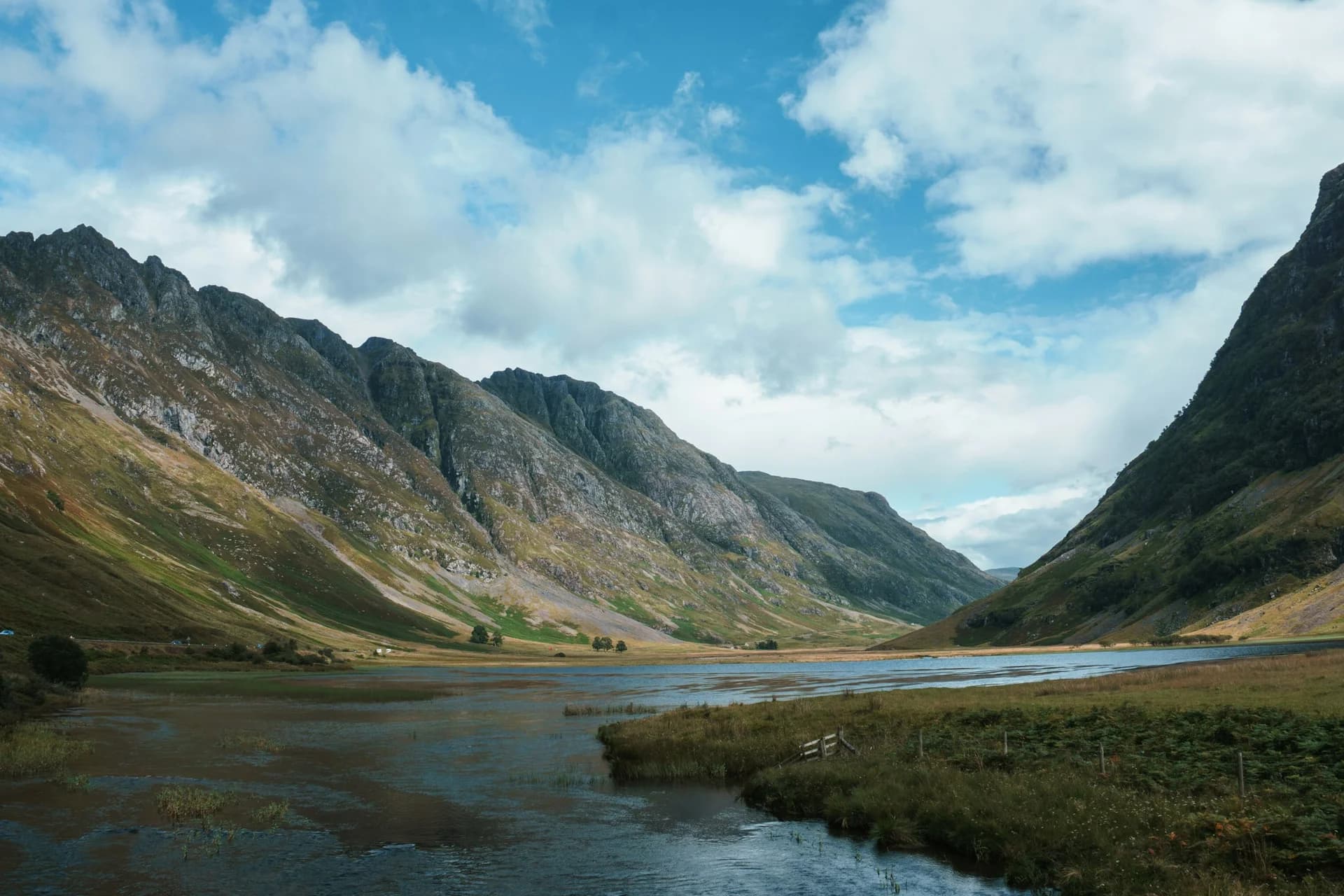
Glen Coe is Scotland's most dramatic valley: a U-shaped glacial glen surrounded by towering mountains, permanently clouded in mist, and shadowed by the 1692 massacre of Clan MacDonald. The Glen Coe Visitor Centre (NTS, free entry) tells that history plainly and without sentimentality, then sends you back out to the scenery. If you're exploring the region, Reykjavik offers similarly dramatic landscapes across the North Atlantic.
You'll pull over more than once just to stare. The scale is difficult to process. Mountains rise on both sides like walls, waterfalls streak down the rock faces, and the road threads through the bottom of it all like a thread in a cathedral. If you're exploring the region, Bath is England's most rewarding historic city.
Bed down at a B&B in Glencoe village — 85 GBP for the night, breakfast included: porridge with cream and whisky, served at 8AM, because Scotland.
Weather: Rain. Horizontal rain, specifically.
Day 2: Glen Coe Hiking and Glenfinnan
Start the morning on the Lost Valley trail, which climbs into a hidden valley where the MacDonalds allegedly hid stolen cattle. Figure about 4 hours round trip, steep and rocky. When the cloud lifts halfway up, the entire valley system opens beneath you — the kind of view that makes a person feel very small in the best way. If you're exploring the region, Bergen and Norway's fjords offer a similar dramatic beauty.
In the afternoon, drive to Glenfinnan Viaduct — the 21-arch railway bridge from the Harry Potter films. The Jacobite Steam Train crosses at 10:45AM, with a 3PM crossing as a second chance if you miss the morning one.
Park (3 GBP) and walk 10 minutes to the viewpoint. Arrive 30 minutes early — it's necessary, since crossing time draws a crowd of maybe 80. The steam train emerges from behind the mountain, arcs across the 21 arches under a plume of white smoke, and vanishes into the hillside. Genuinely magical, even for grown adults who've never read a single page of Harry Potter.
The Jacobite runs from Fort William (from 40 GBP return). Book ahead.
Weather: Misty morning, afternoon sun, evening rain.
Day 3: Eilean Donan Castle and the Road to Skye
Drive from Fort William toward Skye along the A87 and stop at Eilean Donan Castle — Scotland's most photographed castle, sitting on a small tidal island where three lochs meet.
Entry is 11 GBP. The interior is restored rather than ruined, which gives it a different feel from most Scottish castles, and the views from the battlements are extraordinary. The approach road (A87) hands you the classic photo angle.
Cross the bridge to the Isle of Skye in late afternoon. The bridge replaced the ferry in 1995 and is free to cross. Stay in Portree — Skye's main town — where rooms run around 110 GBP/night. That's cheaper than expected for June, but only if you book months ahead: Skye fills up 3-6 months in advance for summer.
Weather: Sunshine all day. The locals seemed suspicious of it.
Day 4: Isle of Skye
Give Skye a full day. Begin at the Old Man of Storr — a pinnacled rock formation visible from the road, with a hike to the base that takes about 1 hour, free. The fog tends to roll in right as you reach the top, which is either atmospheric or frustrating depending on your perspective. Choose atmospheric.
Drive on to the Fairy Pools near Glenbrittle — a series of crystal-clear pools and waterfalls at the foot of the Black Cuillins. Free, a 1.5-hour walk. The water is painfully cold (around 8°C) but the blue-green color is unlike anything else in the UK — the kind of small, earned reward that makes a place worth the discomfort, the same stubborn lesson that runs through Bogotá's chaotic first twelve hours.
Save the evening for Neist Point lighthouse on the western tip of Skye. Free access, a 30-minute walk from the car park along dramatic cliff-top paths. Time it for sunset. The lighthouse sits on a headland jutting into the Atlantic, and the light — golden, low, filtered through sea spray — is the best of the whole week: the kind of raw North Atlantic light you'll also find out in the Faroe Islands.
Weather: Fog, then sun, then fog, then spectacular sunset. Classic Skye.
Day 5: Skye to Loch Ness
Drive back across the bridge and head for Loch Ness. The A87 and A82 route is about 2 hours. The first section is single-track with passing places — pull into them to let oncoming traffic by. This is Highland etiquette, not optional — the same unwritten courtesy that governs the one-lane bridges on the South Island backroads out of Christchurch.
Urquhart Castle sits on the shore of Loch Ness, dramatically ruined and dramatically positioned. Entry is 12 GBP, open daily 9:30AM-6PM in summer. The views up and down the loch from the castle ruins are the classic Loch Ness photographs.
Take a boat cruise from Drumnadrochit (~18 GBP, 1 hour). The loch is 37 km long and 230 meters deep, and the sonar screen tends to throw up a few interesting blips while the guide stays diplomatically noncommittal about the monster.
Stay in Inverness — the "capital of the Highlands" — where a hotel runs about 90 GBP. Fish and chips at a pub will set you back 14 GBP for a generous portion.
Weather: Rain in the morning. Afternoon cleared up. Evening drizzle.
Day 6: Whisky Day
This is the day to plan for: Speyside, about 90 minutes southeast of Inverness, home to over 50 whisky distilleries — the single strongest argument for choosing a Highlands week over a Dublin whiskey circuit.
Start the morning at Glenfiddich — a free basic tour, 30 minutes, with a tasting included. The distillery has been producing since 1887, the tour covers the process clearly, and the free dram at the end is a 12-year-old single malt.
In the afternoon, visit Macallan — from 20 GBP, architecturally stunning (the new distillery building is a work of art), with a tasting that reaches into higher-end expressions. Book well ahead; this one sells out.
Work in Dalwhinnie (12 GBP) on the way back — the highest distillery in Scotland at 326 meters elevation. It's smaller, quieter, and the whisky carries a honey sweetness from the mountain water.
Five drams by 3PM means the smart move is to leave the driving to someone else. Plan ahead and book a Speyside whisky tour bus (about 60 GBP with pickups), so the day stays about the whisky, not the wheel.
Weather: Sunshine. Perfect whisky weather (is there bad whisky weather?).
Day 7: Drive South
The drive from Inverness back to Edinburgh takes about 3.5 hours via the A9. Break it at Cairngorms National Park for a 2-hour hike through old-growth Caledonian pine forest — the kind that once covered all of Scotland and still stretches across the pine country north of Oslo.
Return the car in Edinburgh. Over the week you'll cover something like 1,847 miles, with petrol running about 190 GBP total. Fuel stations are scarce in remote areas, so fill up whenever you see one, regardless of tank level.
Weather: Rain. The circle was complete.
Would You Go Back?
You'll already be planning it — but next time, give it 10 days minimum. The Highlands cover an area larger than Belgium, and squeezing Glen Coe, Skye, Loch Ness, AND Speyside into a week means a lot of driving. With more time, add the Outer Hebrides, the NC500 coastal route, and more hiking.
Consider September, too, for autumn colors and fewer midges. Those tiny biting flies are brutal in June — Smidge spray and a head net become essential by day 3. And if the horizontal rain ever wears thin, the gentler Cotswolds wait well to the south as a soft-focus, English-countryside counterpoint to all this rock and weather.
Budget Summary (7 Nights, Solo)
| Category | Total (GBP) |
|---|---|
| Car rental (7 days) | 294 |
| Petrol | 190 |
| Accommodation (mix B&B + hotel) | 630 |
| Food & drink | 280 |
| Attractions & tours | 115 |
| Whisky purchased | 85 |
| Total |


