My Tel Aviv Diary: 5 Days of Hummus, Beaches, and Never Sleeping
Tel Aviv in 5 Days: Hummus, Beaches, and a City That Never Sleeps
Come to Tel Aviv expecting Middle Eastern seriousness and you'll get Mediterranean chaos instead — 14 kilometers of beach, some of the best street food on Earth, and a nightlife scene that makes Berlin look punctual. This city runs on coffee, hummus, and a cheerful refusal to go to bed.
Day 1: Arrival and the Shabbat Surprise
Land at Ben Gurion on a Friday afternoon and the rhythm of the trip is set before you reach the city. The security interview at passport control is thorough — "Why are you visiting? Where are you staying? Have you been to any other Middle Eastern countries?" — but professional and quick. Expect an entry card rather than a stamp (it spares travelers headaches with countries that don't recognize Israel), and you can be through in 20 minutes.
The train from Ben Gurion to HaHagana station runs 13.50 ILS and takes 15 minutes — and if it's Friday, you may be catching one of the last departures before the entire public transit system shuts down for 25 hours. Buses, trains, trams — all stopped from Friday afternoon until Saturday evening. That's Shabbat.
Walk from HaHagana to Florentin in about 20 minutes and you'll watch the streets empty in real time. Shops close. The pace shifts from workday to something quieter.
But Tel Aviv is the most secular city in Israel, and by 9PM the restaurants on Rothschild Boulevard fill right back up. Pull up to a kiosk (kioskia) on the boulevard — a small counter selling beer (18 ILS), iced coffee (15 ILS), and sandwiches. People gather on the benches and lawn. Someone always seems to have a guitar. The Bauhaus buildings glow in the streetlight.
For dinner around 10PM, a small Florentin restaurant delivers shakshuka (42 ILS), a glass of wine (35 ILS), and bread with za'atar. The kitchen stays open until 2AM. "It's Tel Aviv," the waiter will say, as if that explains everything. It does.
Day 2: The Shabbat Day
Saturday morning. No buses. No shops. And yet the city is wide awake — on foot and on bikes.
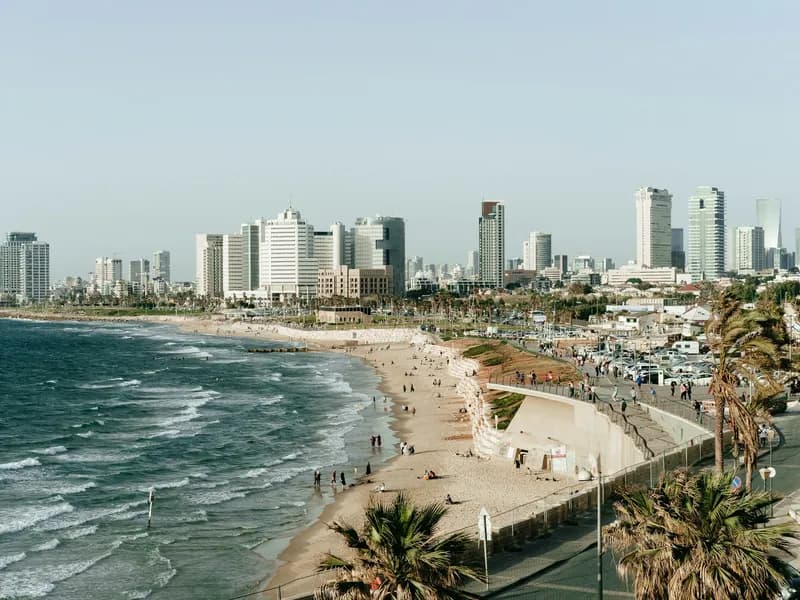
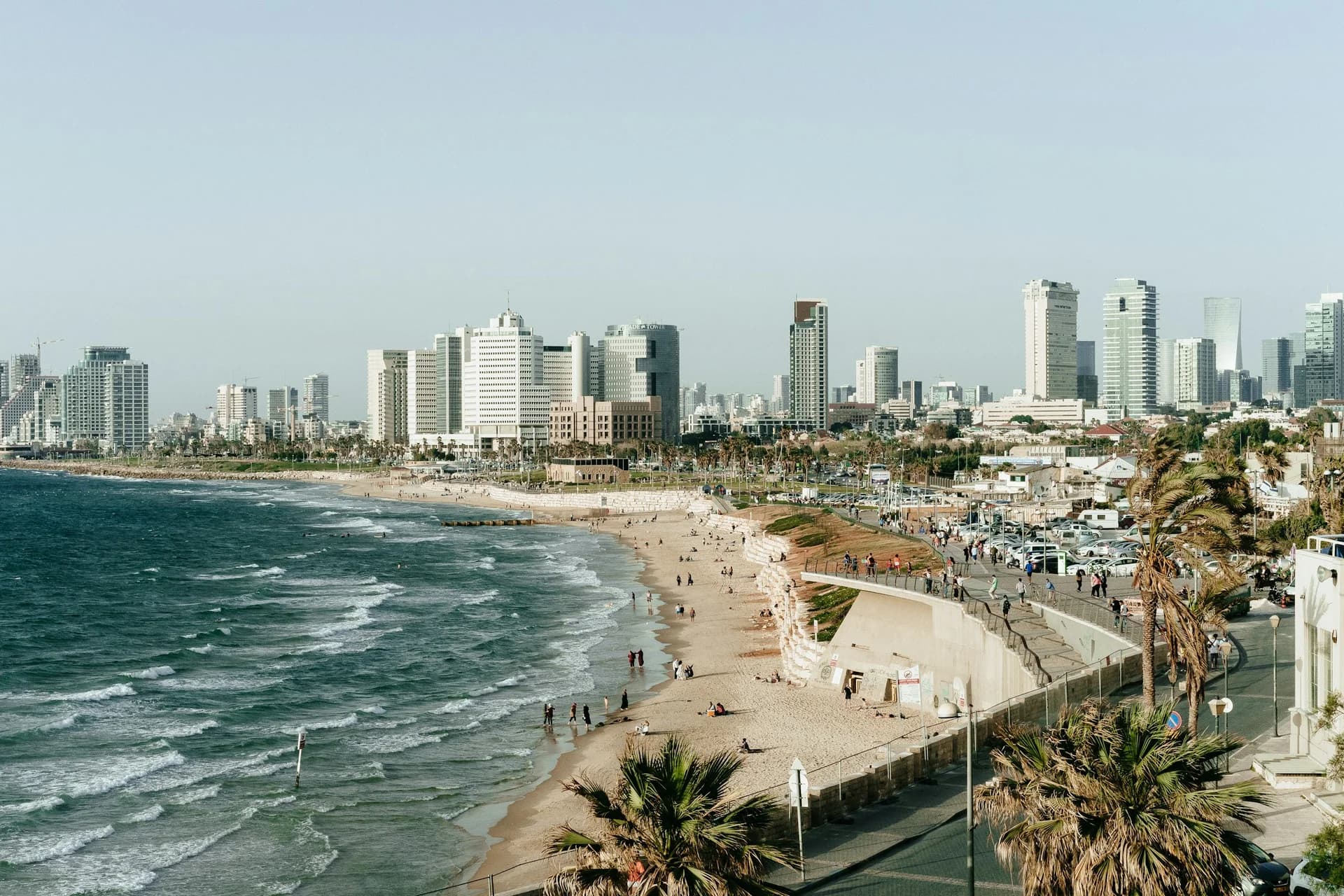
Rent a Tel-O-Fun bike (17 ILS for the day, first 30 minutes of each ride free) and ride the tayelet (boardwalk) from the port south to Jaffa. Fourteen kilometers of coastline — families on the beach, runners on the path, surfers in the water. The Mediterranean runs warm and turquoise. Swim at Gordon Beach, dry off in the sun, and grab a freshly squeezed orange juice from a beach vendor (15 ILS).
For brunch, Benedict on Rothschild sets out an Israeli breakfast (65 ILS) that's frankly staggering: shakshuka, multiple salads, bread, labneh, eggs, juice. Plan to be full for six hours.
In the afternoon, head to Old Jaffa. The ancient port city (4,000+ years old) anchors the southern end of Tel Aviv's coastline. Wander the stone alleys, past galleries and ceramic shops, up to the viewpoint above the port. The skyline of Tel Aviv stretches north — modern towers rising from the white Bauhaus blocks. The contrast between ancient Jaffa and new Tel Aviv is striking enough to keep you on that wall for 20 minutes.
The Jaffa Flea Market (Shuk HaPishpeshim) mostly closes for Shabbat, but a few stalls stay open — vintage Judaica, old cameras, furniture. The surrounding restaurants (Uri Buri for seafood, Dr. Shakshuka for eggs) stay full.
For dinner, find a tiny hummus joint near the Clock Tower in Jaffa: hummus with fava beans, warm pita, pickled vegetables, 30 ILS. The owner — a large, friendly man with forearms like a blacksmith — brings a second plate of pita before you can ask. "You need more bread." Not a question.
Day 3: The Market and the Food Scene
Shabbat ends at sunset Saturday, and by Sunday morning the city snaps back to full speed. Get to Carmel Market (Shuk HaCarmel) by 9AM.
The market is sensory overload — stalls of pomegranates, dates, spices, dried fruits, halva in 30 flavors, freshly squeezed juice (10-15 ILS). A falafel pita (20 ILS) from a stall near the southern entrance arrives stuffed impossibly full: six crispy balls, tahini, pickled cabbage, amba (mango chutney).
Tel Aviv has more vegans per capita than any city on Earth, and the evidence is easy to find. Anastasia (a vegan restaurant on Frishman Street) serves a vegan shakshuka (55 ILS) of tofu and bell peppers that would convince any carnivore. Over at HaKosem on Shlomo HaMelech, the sabich (fried eggplant, egg, tahini in pita, 35 ILS) is a real contender for best street food in the city.
For evening, book North Abraxas in the Levinsky Market area. Modern Israeli cuisine — roasted cauliflower with tahini (48 ILS), lamb kebab with sumac (72 ILS), a glass of Israeli Syrah (45 ILS). The food scene here is genuinely world-class — chefs drawing on Middle Eastern, North African, and Mediterranean traditions with zero pretension.
Day 4: The White City and Neve Tzedek
Walk Rothschild Boulevard end to end and keep looking up. The 4,000+ Bauhaus buildings — flat roofs, horizontal windows, rounded balconies — were built by Jewish architects who fled 1930s Germany, adapting the Bauhaus style to the Mediterranean climate. They added balconies for air flow, used white paint to reflect heat, and raised buildings on pilotis (columns) to catch the breeze.
Independence Hall (28 ILS, Rothschild 16) is where David Ben-Gurion declared the State of Israel in 1948. The room is preserved exactly as it was, with the portrait of Theodor Herzl above the podium and the original microphone.
Neve Tzedek, just south, is Tel Aviv's oldest neighborhood (1887) — winding streets with boutiques, galleries, and the Suzanne Dellal Centre for contemporary dance. For a late lunch, Dallal (mains 70-90 ILS, housed in a restored Ottoman-era building) plates what may be the best pasta in Tel Aviv, surprisingly enough.
In the evening, start with a cocktail at Alphabet Bar (65 ILS for an excellent gin-based drink), then meet Tel Aviv nightlife proper. Begin at a bar in Florentin around 11PM. Move to Kuli Alma (underground club, 50 ILS cover) by 1AM, where the music shifts from indie rock to house to techno. Leave at 4AM and the streets are still full of people.
Day 5: The Goodbye Hummus
Save your last morning for the bus (5.90 ILS on a Rav-Kav card) to Abu Hassan in Jaffa. Arrive at 10AM and the line may be 15 people deep — but it moves fast. Cash only. Order the hummus with whole chickpeas (masabacha, 28 ILS) and warm pita. The hummus comes smooth, lemony, rich with tahini, and served warm. Add hot sauce (shatta) and eat the whole plate with your hands and the bread.
This is the hummus that explains why people get emotional about hummus. It isn't a condiment. It's a complete food — ancient, satisfying, and just about perfect.
Abu Hassan closes when the hummus runs out, usually by 1:30-2PM. Cash only. No reservations. No concessions to modernity. Just hummus.
For the final afternoon, walk the tayelet one more time. The Mediterranean lies flat and blue. Surfers ride small waves near the break at the Hilton Beach. A busker plays oud (an Arabic lute) near the Jaffa port, and the sound carries across the water.
The Verdict
Would you go back? Immediately.
Tel Aviv may be the most alive city on the Mediterranean. For a completely different energy along the same sea, Barcelona offers Gaudi's architecture and tapas culture. But here the momentum — from the 6AM joggers on the tayelet to the 4AM dancers at Kuli Alma — simply doesn't stop. The food is extraordinary and affordable at the street level. The beaches are beautiful and free. The culture (Bauhaus, Jaffa's ancient port, the startup energy, the LGBTQ+ openness) is unlike any other Mediterranean city.
It's expensive — one of the world's most expensive cities — but the street food makes budget travel genuinely possible. A falafel pita for 20 ILS, hummus at Abu Hassan for 28 ILS, a beer at a kiosk for 18 ILS — eat and drink spectacularly for 80-100 ILS ($22-28) per day if you stay on the street.
Plan for Shabbat. Check the security situation. Bring sunscreen. For local insider tips, read our Tel Aviv interview with Noa. Or compare Tel Aviv's vibe with Barcelona in our Mediterranean city showdown.
And get to Abu Hassan before the hummus runs out.
Budget Summary
| Category | Daily Average |
|---|---|
| Accommodation | 400-600 ILS ($110-165) |
| Street food meals | 80-120 ILS ($22-33) |
| Restaurant dinner | 150-250 ILS ($42-70) |
| Transport | 25-50 ILS ($7-14) |
| Activities | 30-50 ILS ($8-14) |
| Daily total | 685-1,070 ILS ($190-296) |