What a Tel Aviv Local Really Wants You to Know: An Honest Interview
What a Tel Aviv Local Really Wants You to Know: An Honest Interview
Noa Levy, 34, moved to Tel Aviv from Haifa to study architecture. Twelve years later, she runs a design studio in Florentin, writes about food for a local magazine, and has opinions about everything from hummus to nightlife to why tourists waste time on the wrong beaches. Pull up a stool at a kiosk on Rothschild Boulevard, order an iced coffee (15 ILS) and shakshuka, and here's what she'll tell you.
Q: What's the first thing tourists get wrong about Tel Aviv?
They confuse it with the rest of Israel. Tel Aviv is secular, liberal, beach-focused, and unapologetically hedonistic — the LGBTQ+ capital of the Middle East and home to one of the world's best nightlife scenes. It's nothing like Jerusalem, so arrive expecting religious tourism and you'll spend the trip confused.
The other rookie mistake: not planning for Shabbat. From Friday afternoon (around 4PM) to Saturday evening, most public transport stops, many restaurants close, and shops shut. Secular Tel Aviv stays more open than other Israeli cities — restaurants around Rothschild and Florentin keep going — but the buses stop, and that catches people off guard.
Q: How do you deal with Shabbat as a local?
Treat it as the best time to be here. The streets empty of cars. People walk and cycle everywhere. The beaches fill up. Saturday-morning brunch culture is huge — every cafe in the city lays out a massive Israeli breakfast (shakshuka, salads, bread, cheese, eggs — 50-80 ILS per person). The city turns quieter and more human.
Just plan ahead. Stock up on groceries by Friday afternoon. Carry cash (ATMs work, but open shops can be scarce). Walk, or grab a bike — Tel-O-Fun bike share (17 ILS/day) runs straight through Shabbat.
Q: Best beach?
Tourists pile onto Gordon Beach because every guidebook points them there. It's fine — popular, volleyball nets, good swimming. But the locals' pick is Banana Beach (south of Gordon, younger crowd, has a bar) or Metzitzim Beach (north, calmer, with a dog-friendly section).
The real Tel Aviv beach experience happens at night. After 9PM in summer, the sand turns into a social gathering spot — guitars, picnic spreads, arak (anise liquor) cut with grapefruit juice. Swimming at midnight with the city lights rippling across the water is about as Tel Aviv as it gets.
Q: The hummus question — where should tourists eat?
(She leans forward.) Abu Hassan in Jaffa. No question. It's been there forever, it's cash only (25 ILS for a plate of the best hummus on Earth), and it closes when the hummus runs out — usually by 2PM. The line moves fast. Don't sit — eat at the counter, dip your bread, and go.
People will steer you toward Abu Adham or Hummus Ashkara. They're good. Abu Hassan is better. This isn't a debate.
For shakshuka: Dr. Shakshuka in Jaffa (45 ILS). It arrives in the pan, still bubbling, with warm bread for dipping. Order the Tunisian version with merguez sausage.
Q: What about the food scene beyond hummus?
Tel Aviv has become one of the world's great food cities. (For another Mediterranean food capital with a completely different flavor, see Barcelona.) The city has more vegans per capita than anywhere on Earth, which means the vegan cooking here is genuinely good — not sad salads, but creative, full-flavored plates.
Must-eat:
- Sabich (sabich Frishman, 35 ILS): Fried eggplant, hard-boiled egg, tahini, and amba in a pita. Better than falafel — and worth arguing about.
- Malabi at Shuk HaCarmel: Rosewater milk pudding with syrup and pistachios. 15 ILS. The best dessert in the city.
- Miznon (Bograshov Street): Raz Rahav's casual spot. The cauliflower in a pita (45 ILS) is legendary.
- OCD (tasting menu, 850 ILS): The splurge. Counter seating, 18 courses, wine pairings. Book weeks ahead.
Q: What's overrated?
The White City Bauhaus tours. The buildings matter historically (4,000+ Bauhaus/International Style buildings, UNESCO-listed), but most tourists take one look at the concrete facades and think "these are just... buildings." The Bauhaus Center on Dizengoff offers good context (free ground floor) — but unless architecture genuinely moves you, skip the guided tour (100 ILS) and walk Rothschild Boulevard at your own pace.
The Carmel Market shuk has also gotten crowded and overpriced compared to five years ago. Still worth a wander for the energy — just don't buy spices there. They're cheaper at regular stores.
Q: What's underrated?
Florentin. The gritty, street-art-covered, cafe-filled stretch south of Neve Tzedek. No tourist attractions — just excellent bars, bakeries, and the best people-watching in the city. Walk Florentin Street and the surrounding alleys.
The Tayelet (boardwalk): 14 km of coastal promenade linking every beach. Runners, cyclists, and walkers use it from dawn to midnight. Strolling from the Tel Aviv port south to Jaffa at sunset takes about an hour and ranks as the best free thing to do in the city.
Levinsky Market: A small indoor market in Florentin built around spices, dried fruits, and Georgian/Turkish/Yemenite food. Less famous than Carmel Market, more interesting, and cheaper.
Q: Nightlife — what should visitors know?
Tel Aviv nightlife starts late. Really late. Bars fill up after 11PM. Clubs don't get going until 1AM. Plenty stay open past dawn. Thursday and Friday are the big nights.
The Rothschild Boulevard kiosks (kioskiot) are the pre-going-out move — cheap beer (15-25 ILS at a kiosk vs. 35-50 ILS at a bar), outdoor seating, easy social energy.
For clubs: Kuli Alma (underground art/music), The Block (techno, serious sound system), Beit Kandinof (eclectic, live music). Cover: 50-100 ILS; cocktails: 45-65 ILS.
The LGBTQ+ scene is fully woven into the city — Tel Aviv Pride (June) is the biggest in the Middle East.
Q: Is Tel Aviv safe?
(A pause.) Day to day, yes. Very safe. The city functions normally — beaches, restaurants, clubs every night. Women walk alone at 3AM without worry.
Still, check your government's travel advisory before you go. Security is a reality: if a siren sounds, you have 90 seconds to reach a shelter (mamad), and every building has one. Follow the locals. The Iron Dome system covers the city. Never leave bags unattended — security forces will destroy them.
In peaceful periods, which is most of the time, Tel Aviv feels as safe as any European city.
Q: Budget tips?
Street food. Falafel (15-25 ILS), sabich (30-35 ILS), a hummus plate (25-35 ILS). You can eat incredibly well for 60-80 ILS a day on street food alone.
Happy hours (usually 5-8PM) cut cocktail prices by 30-50%. Business-lunch menus (50-80 ILS at sit-down restaurants) are the dining hack. Kiosk beers run 15-25 ILS versus 35-50 ILS at a bar.
Lean on Tel-O-Fun bikes (17 ILS/day, first 30 minutes of each ride free) and buses (5.90 ILS) instead of taxis.
Tel Aviv is expensive by global standards — one of the priciest cities in the world. But it bends to a budget if you eat street food, drink at kiosks, and ride public transport.
Q: The perfect Tel Aviv day?
Wake at 8. Iced coffee from a kiosk (12 ILS) and a walk on the tayelet. A morning swim at Metzitzim Beach. Brunch — an Israeli breakfast at Benedict or Cafe Nana (60-80 ILS). Drift through Neve Tzedek's boutiques and galleries. Afternoon: the Jaffa flea market and hummus at Abu Hassan.
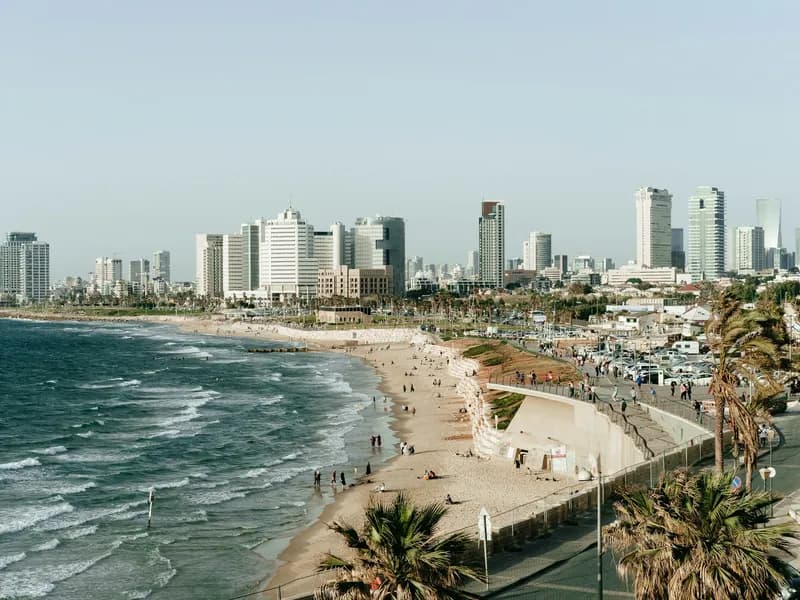
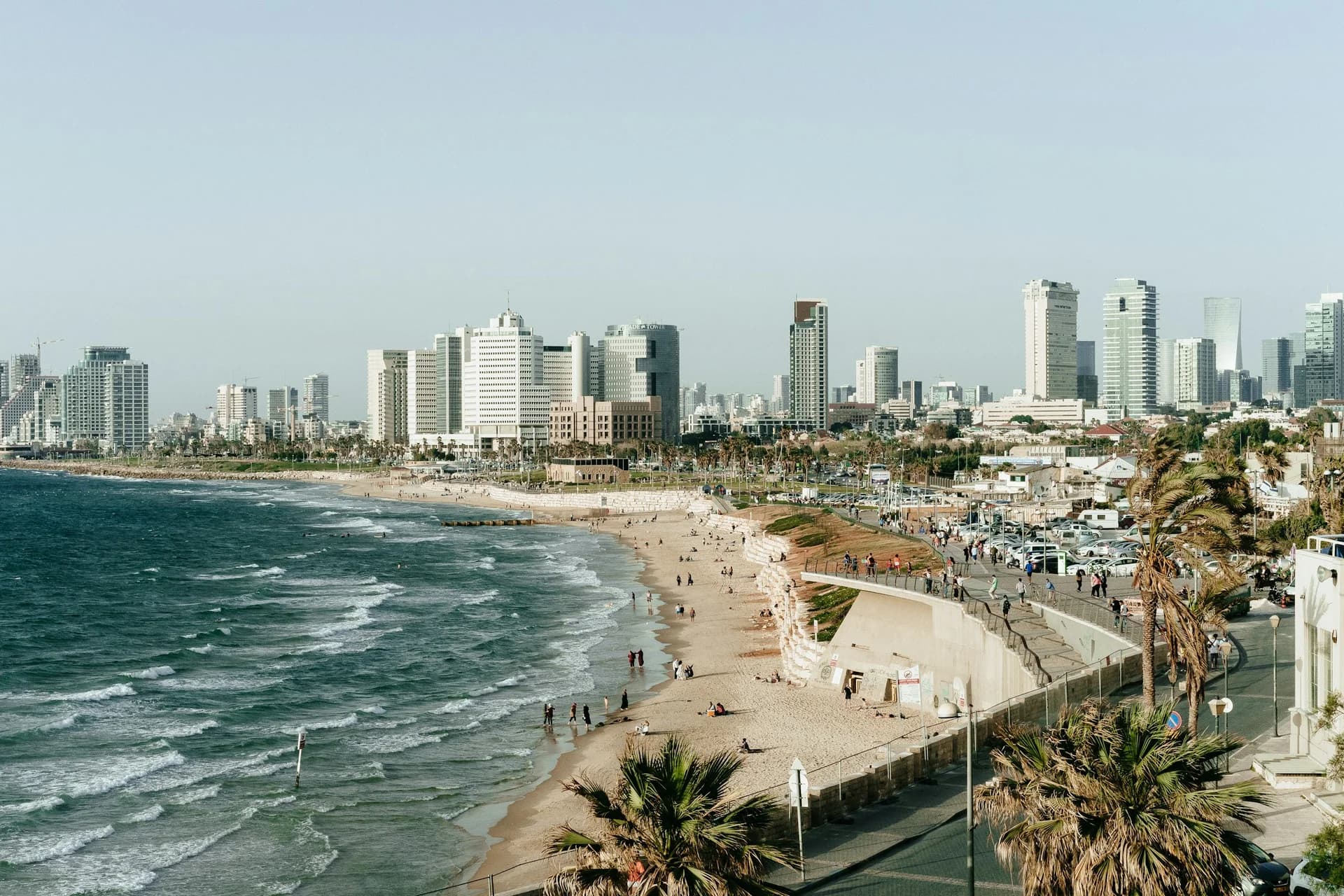
Sunset from the Jaffa port, looking north at the Tel Aviv skyline. Aperitivo at a Rothschild kiosk. Dinner at whatever restaurant just opened — Tel Aviv reinvents its dining scene every six months. Late night: a bar in Florentin, then the beach at midnight.
For day-by-day details, read our Tel Aviv diary. Or set it against Barcelona in our Mediterranean showdown.
That's a perfect day. That's Tel Aviv.
One last tip from Noa: during Shabbat, the bakeries in Florentin — specifically Lechem Basar on Vital Street — bake fresh challah on Friday mornings. "Get there before 11AM. The challah alone justifies the visit."