Top 10 Things to Do in Namibia (That Aren't Sossusvlei)
Top 10 Things to Do in Namibia (That Aren't Sossusvlei)
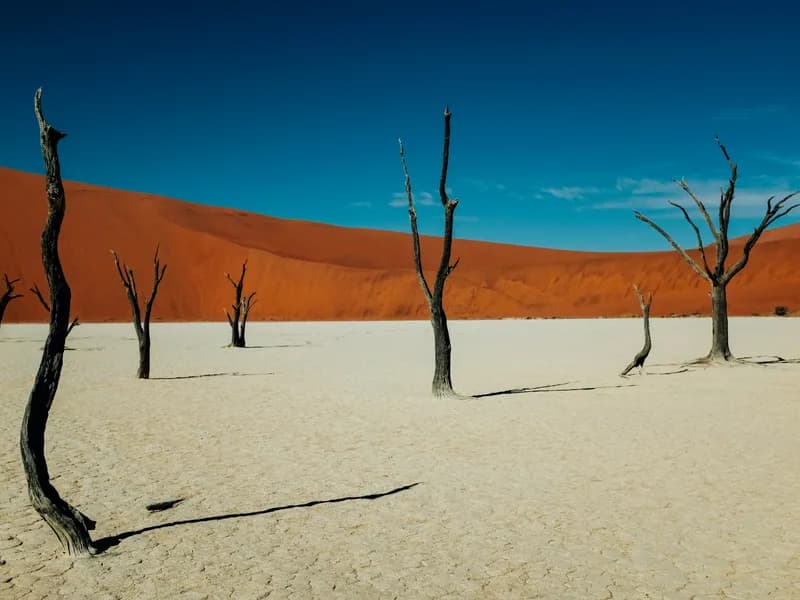
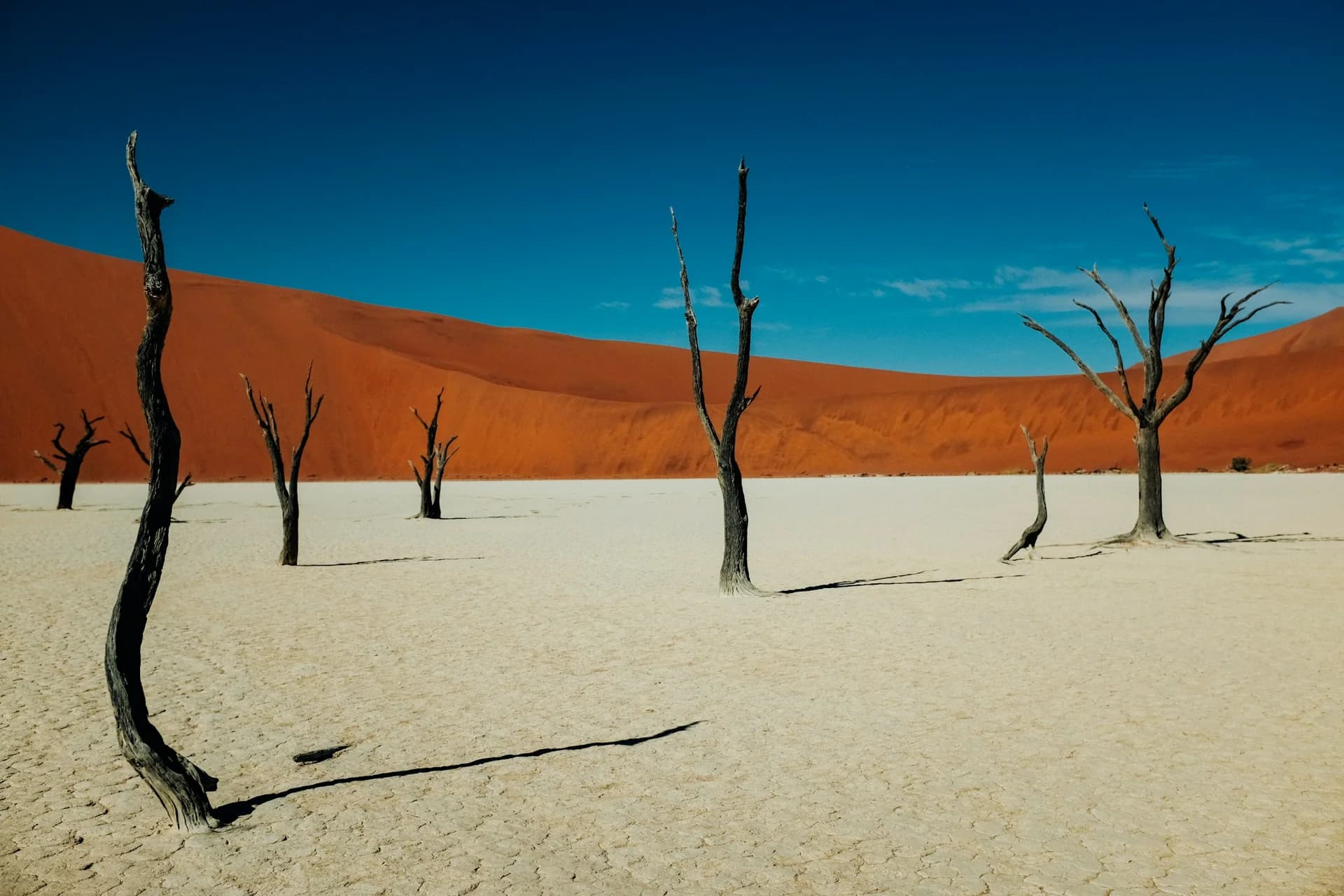
Make no mistake — Sossusvlei is magnificent. Climbing Dune 45 at sunrise, walking across the cracked white pan of Dead Vlei with its 900-year-old dead trees, feeling the red sand shift beneath your feet. It earns every photo that's ever been taken of it.
But Namibia is so much more than one postcard. Across 8,000+ kilometers of gravel roads, a whole second country reveals itself — experiences that rival the dunes and draw a fraction of the attention. These ten are the ones worth building a trip around.
1. Self-Drive Through Etosha at Dawn
Etosha National Park is one of Africa's great game parks, and unlike most, you can self-drive it. No guide fees, no schedule — just you, a 4x4, and a vast salt pan ringed by waterholes where elephants, rhinos, lions, and the endemic black-faced impala come to drink.
The waterholes at the NWR camps (Okaukuejo, Halali, Namutoni) are floodlit at night, so you can sit on a stone wall at 11 PM and watch rhinos materialise out of the darkness. Entry: 150 NAD per day. Book NWR camps at nwr.com.na months in advance — they sell out.
Pro tip: The Okaukuejo waterhole between 9 PM and midnight is the single best place in Namibia to see black rhinos. On a good night, you'll count four.
2. Camp at Spitzkoppe Under the Stars
A granite inselberg rising 700 meters from the flat desert floor, dubbed the Matterhorn of Namibia. The community campsite costs 200 NAD per person plus 150 NAD entry. There are no facilities. No electricity. No running water. Bring everything.
What you get in return: some of the darkest night skies in the world, a natural rock arch that frames the Milky Way perfectly, and the kind of silence that makes you realize how noisy "quiet" places normally are. The sunset light on the granite goes orange, then pink, then purple.
3. Walk the Fish River Canyon Rim
The world's second-largest canyon: 160 km long, 550 meters deep. The famous 5-day, 85 km hiking trail through the canyon floor runs May-September only, requires a fitness certificate, and books out months ahead through NWR.
But even without the trail, the viewpoints at Hobas are staggering. The canyon drops away so abruptly that your stomach lurches. Entry: 80 NAD. Sunset here is extraordinary — the layers of rock glow in bands of red, orange, and purple.
Pro tip: The viewpoint trail from Hell's Bend to the main lookout is an easy 2 km walk with four or five vantage points. Most people only stop at the first one. Keep walking.
4. Meet the Cape Cross Seal Colony
Over 200,000 Cape fur seals crowded onto a single stretch of the Skeleton Coast. The noise is deafening. The smell is... unforgettable. But the spectacle of that many animals in one place — mothers nursing pups, bulls fighting over territory, thousands barking and shuffling on the rocks — is pure wildlife theater.
Entry: 100 NAD. The boardwalk takes you right through the colony. November-December is pupping season, which is simultaneously adorable and brutal (the jackals know when the pups arrive too).
5. Drive the Skeleton Coast
The southern section of the Skeleton Coast is accessible by car from Swakopmund, and the name tells you everything. Shipwrecks rusting on the beach. Bleached whale bones in the sand. Fog rolling in from the Atlantic like a wall. It's beautiful in a way that's more unsettling than pretty.
The northern concession requires fly-in safaris starting at around $800/night, which puts it out of reach for most. But the southern section — free to drive — holds enough eerie beauty for a full day.
6. Visit a Himba Community Near Opuwo
The semi-nomadic Himba people in the Kunene region are known for their ochre-covered skin, intricate hairstyles, and a way of life that has resisted modernity more successfully than almost any other group in southern Africa. Respectful visits can be arranged through lodges near Opuwo or Epupa Falls.
Always go with a local guide. Bring practical gifts — maize meal, cooking oil, not candy or money. Ask before photographing. And understand that these are real communities, not theme parks. The best visits feel like a conversation, not a zoo.
7. Kayak with Seals at Walvis Bay
Pelican Point in Walvis Bay offers kayaking with seals and dolphins in a sheltered lagoon. Morning tours run ~$60-80 per person and last 3-4 hours. The young seals are curious and will swim right up to your kayak, occasionally trying to climb aboard. Pelicans, flamingos, and dolphins are common sightings.
This is the kind of activity that sneaks up on you — the seals have zero fear and enormous personalities, and it may well be the most unexpectedly fun few hours of your whole trip.
8. Stargaze at NamibRand Nature Reserve
Africa's first International Dark Sky Reserve, with Bortle Scale 1 darkness — as dark as it gets on Earth. Several luxury lodges offer guided astronomy sessions, and the budget option is Spitzkoppe (mentioned above).
The Milky Way from NamibRand doesn't look like a band across the sky. It looks like someone tore the universe open. Bring binoculars and a warm jacket — winter desert nights drop to 0-5°C.
9. Hike the Waterkloof Trail
A 17 km guided hiking trail in the Naukluft Mountains, accessible only in dry season (April-November). Steep, challenging, and spectacularly beautiful — you follow a river gorge through Namib-edge mountains with natural swimming pools along the way.
The trail is maintained by NWR and requires booking at nwr.com.na. Bring at least 3 liters of water. The chain-assisted sections over rock faces are thrilling if you don't mind exposure.
10. Eat Potjiekos Under the Stars at a Rest Camp
Potjiekos — a slow-cooked stew made in a three-legged cast-iron pot over coals — is Namibia's outdoor cooking tradition. At NWR rest camps and private campsites, you can cook your own (buy ingredients at the supermarket in Windhoek or Swakopmund) or find it served at lodge restaurants.
The version with game meat — oryx, kudu, springbok — is uniquely Namibian. Combine it with a fire, a cold Windhoek Lager, and that sky, and you have the perfect Namibian evening.
Pro tip: Spar and Pick n Pay in Windhoek stock pre-marinated game meat specifically for braai and potjie. Grab some before you head into the wilderness.
The Driving Rules That Matter
Because you'll spend a lot of time behind the wheel in Namibia:
- Never drive after sunset. Kudu, oryx, and warthogs cross roads at night. A kudu weighs 300 kg. At speed, it's a car-destroying, potentially fatal collision. Plan to arrive at every destination by 5 PM.
- Two spare tires. Not one. Two. On gravel roads, blowouts happen — and they happen far from help.
- Keep speed under 80 km/h on gravel. Rollovers from overcorrecting on loose gravel are the #1 cause of tourist injuries.
- Fill your tank at every fuel station. The next one might be 200+ km away. Or closed.
Namibia is one of Africa's safest countries for self-drive travel, but the distances and conditions demand respect. Rent a 4x4 in Windhoek ($60-120/day) and give yourself at least 14 days to cover the highlights without exhausting yourself.
The country is bigger than it looks on the map. And slower. And more beautiful at every turn.
For the ultimate night experience, read our Namibia stargazing guide. And if you're planning a broader southern Africa itinerary, the Okavango Delta and Victoria Falls pair naturally with Namibia.