
Namibia
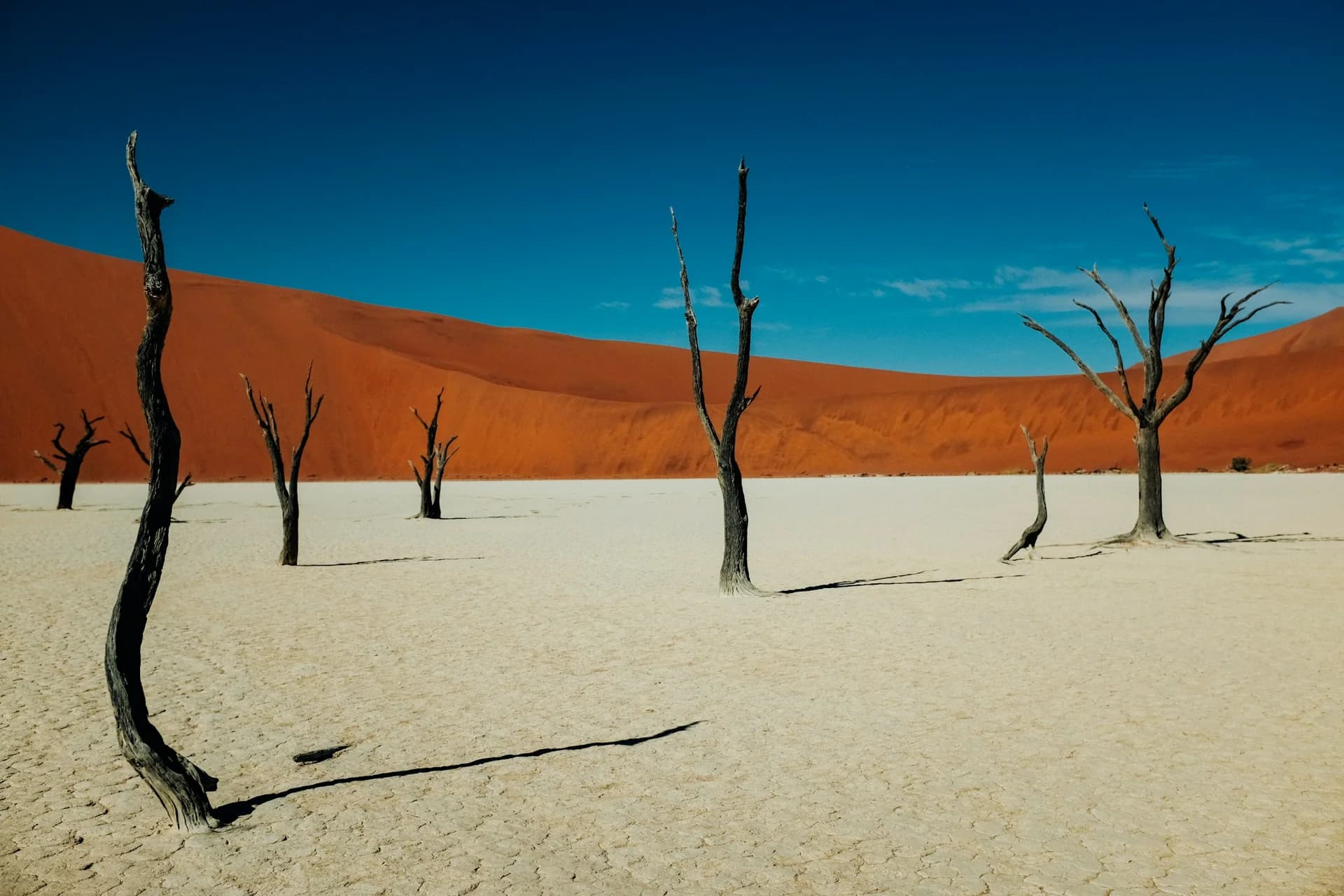
Photo: Ashim D'Silva / Unsplash
Key Facts
Best Time to Visit
May to October (dry season, best wildlife viewing); dunes year-round
Language
English (official), Afrikaans, Oshiwambo, German
Currency
Namibian Dollar (NAD), pegged 1:1 to South African Rand (ZAR); both accepted
Time Zone
CAT (UTC+2)
Airport
Hosea Kutako International (WDH) — 45 km east of Windhoek
Population
~2.6 million (country); ~460,000 Windhoek metro
Climate
Arid to semi-arid; hot summers (Oct-Apr, 30-40°C), mild winters (May-Sep, 18-25°C days, cold nights)
Safety Rating
Exercise Increased Caution (Level 2) — one of Africa's safest countries
Driving
Self-drive is the most popular way to explore; drive on the left; many gravel roads
Top Highlights
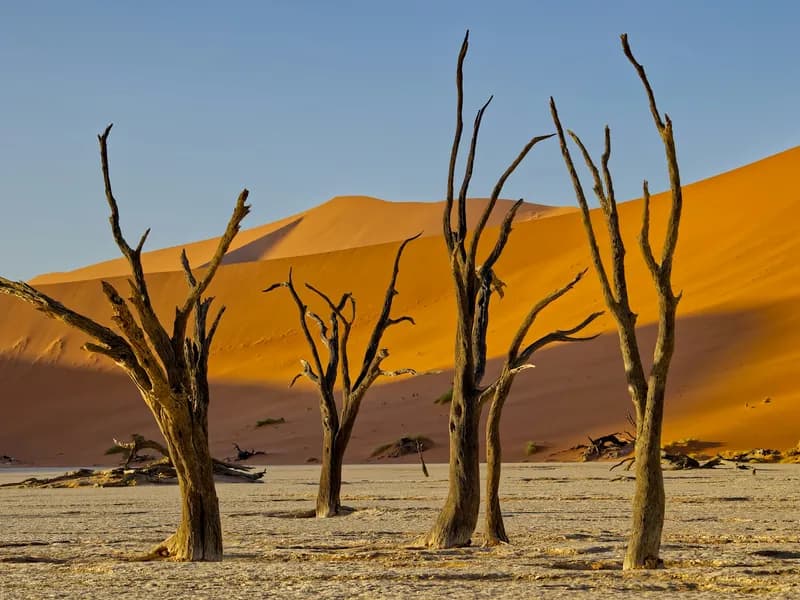
Sossusvlei & Dead Vlei
The world's tallest red sand dunes (up to 325 m) surrounding a white clay pan dotted with 900-year-old dead camelthorn trees. Park gate opens at sunrise — arrive early to climb Dune 45 (the most accessible) or Big Daddy. Entry: 80 NAD (~$4.50) per person plus 10 NAD per vehicle.
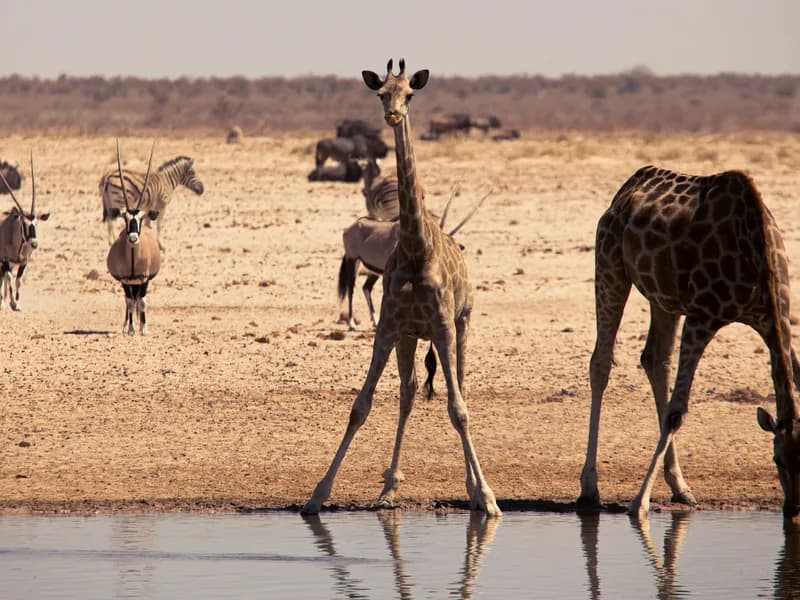
Etosha National Park
One of Africa's great game parks centered on a vast salt pan. Self-drive is easy with well-marked roads and floodlit waterholes at camps. Entry: 150 NAD/day. Best wildlife viewing May-October when animals concentrate around waterholes. Lions, elephants, rhinos, and the endemic black-faced impala.
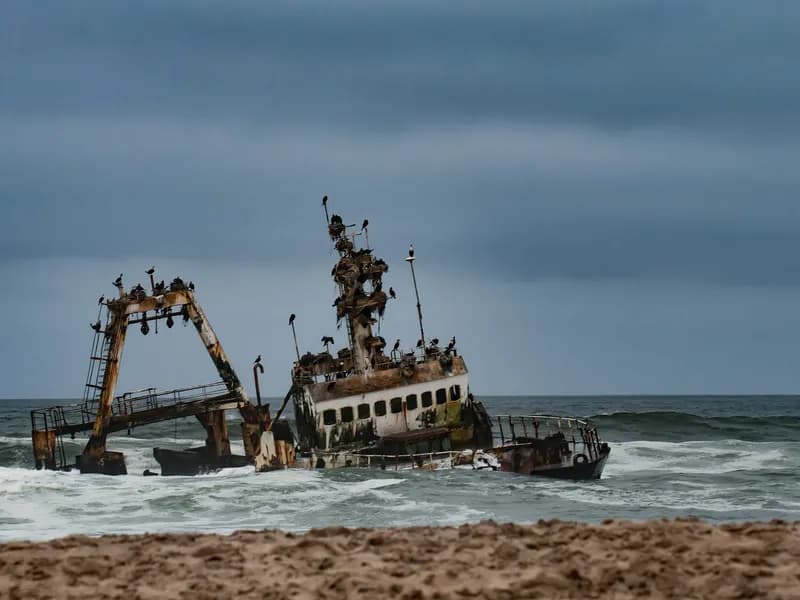
Skeleton Coast
A hauntingly beautiful stretch of Atlantic coastline littered with shipwrecks and bleached whale bones. The southern section is accessible by car from Swakopmund; the northern concession requires fly-in safaris (~$800+/night). Cape Cross seal colony has 200,000+ fur seals (entry 100 NAD).
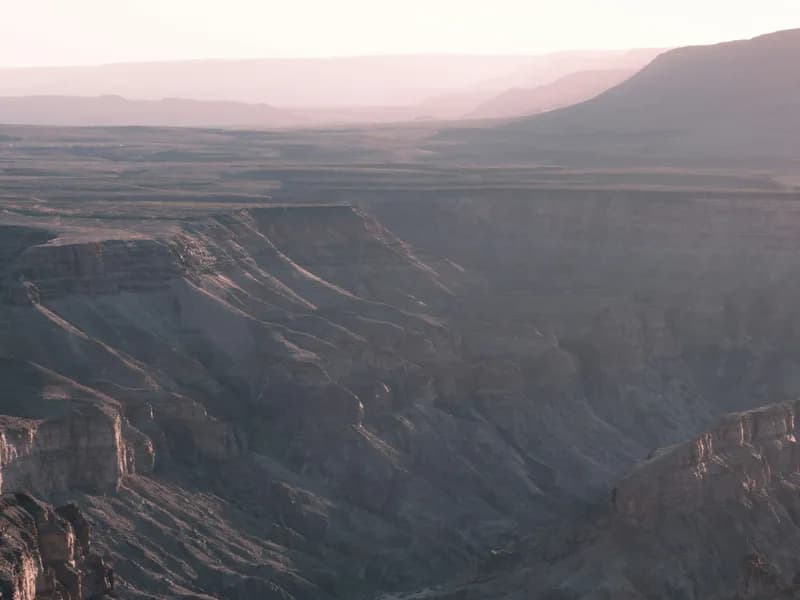
Fish River Canyon
The world's second-largest canyon (160 km long, 550 m deep). The viewpoint at Hobas is accessible year-round (entry 80 NAD). The famous 5-day, 85 km hiking trail runs May-September only and requires a fitness certificate. Book months in advance through NWR.
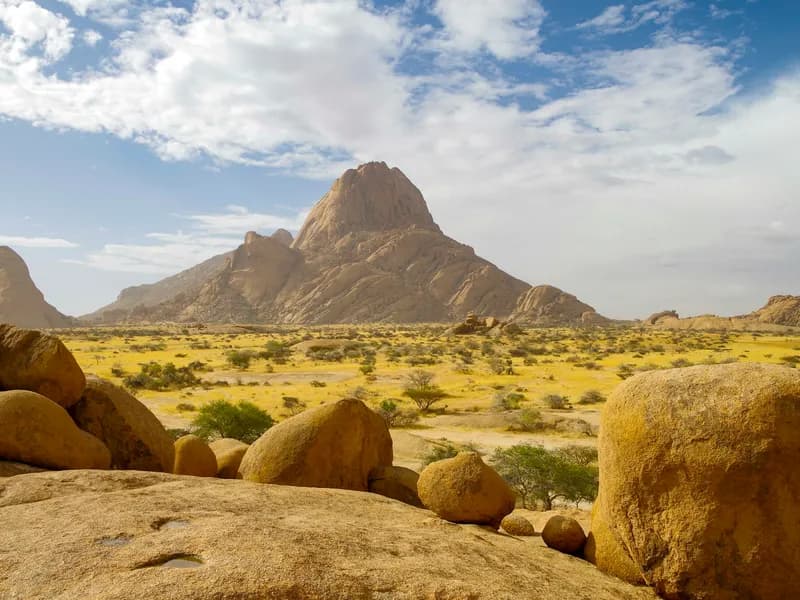
Spitzkoppe
A dramatic granite inselberg rising 700 m from the desert floor, dubbed 'the Matterhorn of Namibia.' Excellent for rock climbing, bush camping, and photographing the natural rock arch at sunset. Community campsite: 200 NAD/person, entry 150 NAD. No facilities — bring everything.
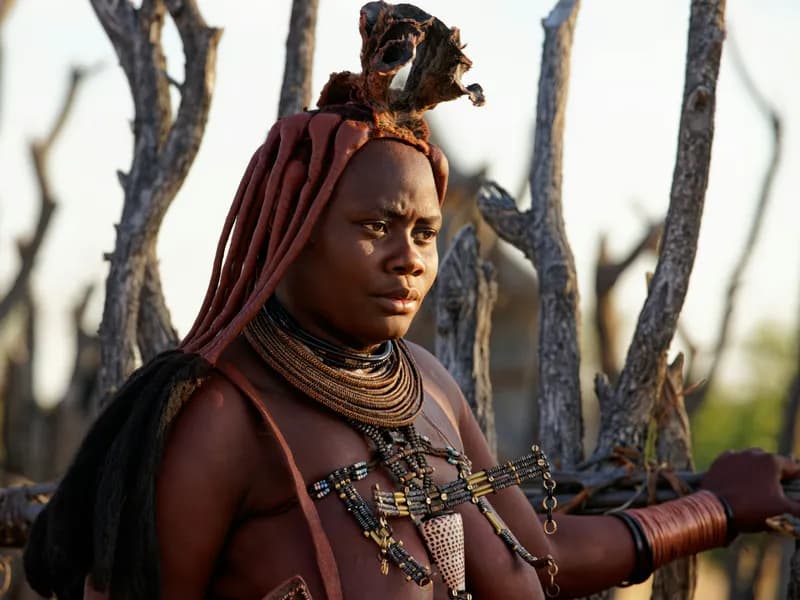
Himba Village Visit
The semi-nomadic Himba people in the Kunene region are known for their ochre-covered skin and intricate hairstyles. Respectful visits can be arranged through lodges near Opuwo or Epupa Falls. Always go with a local guide, bring useful gifts (maize meal, not candy), and ask before photographing.
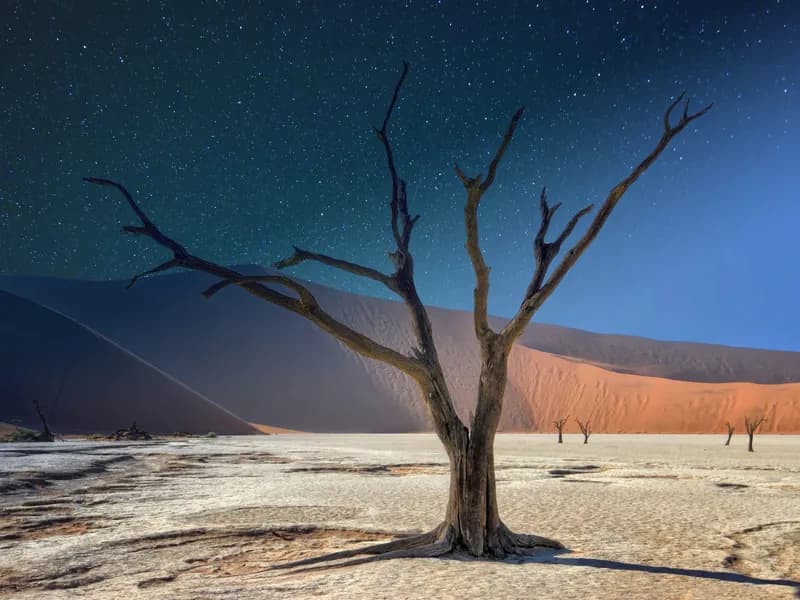
NamibRand Nature Reserve Stargazing
Africa's first International Dark Sky Reserve, with virtually zero light pollution. Several luxury lodges offer guided astronomy sessions with telescopes. The Milky Way is visible to the naked eye in extraordinary detail. Best viewing April-September during dry, cloudless winter nights.
Planned Itinerary
7-Day Namibia Itinerary
Arrival in Windhoek
Arrive at Hosea Kutako International Airport (WDH), 45 km east of Windhoek. Pick up your rental 4x4 and explore the compact capital before heading south tomorrow.
Pick up rental 4x4(1 hour)
Rent from Namibia2Go or Advanced Car Hire at the airport. Budget ~$60-120/day for a fully equipped 4x4 with two spare tires, camping gear optional. Drive on the left. Get a road map — GPS doesn't cover all gravel roads
Drive to Windhoek city center(45 minutes)
Straight shot on the B6 highway. Check into your hotel — Hilton Windhoek or the boutique Am Weinberg for mid-range (~$80-150/night)
Walk through Independence Avenue(1.5 hours)
Windhoek's main street passes Christuskirche (German colonial church), the Independence Memorial Museum (free), and craft shops. Safe to walk during daylight
Dinner at Joe's Beerhouse(1.5 hours)
A Windhoek institution — game meat platters, oryx steak, kudu carpaccio. Massive portions. Mains 150-280 NAD (~$8-15). Quirky decor of recycled materials. Book for 7PM
Drive to Sossusvlei — Red Dune Country
5-hour drive southwest to the Sossusvlei area (380 km). The landscape transforms from savanna to desert as the red dunes appear on the horizon.
Drive Windhoek to Sossusvlei area(5 hours)
Take the B1 south then B2/C19 to Sesriem. Mix of tar and well-maintained gravel. Fill up fuel at Solitaire (famous for its apple pie). Keep speed under 80 km/h on gravel
Check into lodge near Sesriem Gate(30 minutes)
Sossusvlei Lodge (~$150-250/night) or Desert Camp (~$100) are closest to the gate. Inside the park, NWR Sesriem Camp is the only option — book months ahead at nwr.com.na
Afternoon Elim Dune walk(1.5 hours)
If you arrive early enough, Elim Dune (2 km from Sesriem) is accessible without entering the main park. A gentle introduction to the red dune landscape with great sunset views
Stargazing from the desert(1 hour)
NamibRand is Africa's first International Dark Sky Reserve. Step outside after dinner — the Milky Way is visible in extraordinary detail. Many lodges offer telescope sessions
Sossusvlei & Dead Vlei at Sunrise
The park gate opens at sunrise — be first in line for the most magical light on the world's tallest red sand dunes.
Sunrise at the Sesriem Gate(30 minutes)
Gate opens at first light (~5:30-6:00 AM depending on season). Entry 80 NAD per person plus 10 NAD per vehicle. Get there 15 minutes before opening
Climb Dune 45(1.5 hours)
The most accessible dune, 45 km from the gate. A steep but rewarding climb — the ridge-line sunrise shadows are what you came for. Barefoot is easier than shoes on the soft sand
Dead Vlei(2 hours)
Drive to the 4x4 parking area (or take the shuttle, 200 NAD return) and walk 1.1 km to Dead Vlei. The 900-year-old dead camelthorn trees on the white clay pan against towering orange dunes is one of Earth's most surreal landscapes
Sesriem Canyon afternoon(1 hour)
A narrow canyon carved into the rock near the park gate. Walk the 1 km riverbed — cool shade and geological layers visible in the walls. Free with park entry
Sundowner at the lodge(1 hour)
Most lodges offer sunset drinks overlooking the desert. Windhoek Lager or a gin and tonic as the dunes turn blood-red
Drive to Swakopmund — Coastal Desert Town
5-hour drive northwest to Swakopmund, a quirky German colonial town where the Namib Desert meets the Atlantic Ocean.
Drive Sossusvlei to Swakopmund(5 hours)
Via Solitaire and the Kuiseb Pass. Stop at Solitaire for the legendary apple pie (the middle-of-nowhere gas station cafe). The landscape shifts from red desert to moonscape to coast
Check into Swakopmund accommodation(30 minutes)
The Delight (boutique, ~$100/night), Beach Lodge (~$150), or Secret Garden Guesthouse (budget, ~$50). The town is walkable and charming
Walk through the German colonial center(1.5 hours)
Swakopmund looks like a Bavarian village dropped on the African coast. The Lighthouse, Hohenzollern Building, and the Jetty are landmarks. Strange, surreal, beautiful
Dinner at The Tug(1.5 hours)
Built in a converted tugboat on the beach. Fresh oysters (6 for ~100 NAD), kingklip fish, and ocean views. Book ahead — it's the town's most popular restaurant
Cape Cross Seals & Skeleton Coast
Day trip north along the Skeleton Coast to the massive Cape Cross seal colony — 200,000+ Cape fur seals on a single beach.
Drive to Cape Cross seal colony(1.5 hours)
120 km north on the C34 coastal road. Entry 100 NAD. The sight (and smell) of 200,000+ fur seals is overwhelming. Breeding season (Nov-Dec) is the most dramatic
Skeleton Coast southern section(2 hours)
The haunting coastline of shipwrecks, whale bones, and crashing Atlantic waves. Several accessible wrecks between Cape Cross and Henties Bay. Stop and explore — the desolation is strangely beautiful
Lunch in Henties Bay(1 hour)
Small fishing town on the coast. Die Strandkombuis does good fish and chips for ~80-120 NAD. The town has an end-of-the-world feeling
Return to Swakopmund and free evening(1 hour)
Back via the coastal road. Evening stroll on the Swakopmund Mole (pier) with sunset over the Atlantic
Drive to Etosha — Safari Country
4.5-hour drive northeast to Etosha National Park. Afternoon game drive along the waterholes. Self-drive safari begins.
Drive Swakopmund to Etosha (Okaukuejo)(4.5 hours)
Via Usakos and Outjo on the B2/B1. Tar road all the way. Fill up fuel in Outjo — last town before the park. Entry 150 NAD/day per person
Check into Okaukuejo Camp(30 minutes)
NWR camp inside the park. Book months ahead at nwr.com.na. The floodlit waterhole 50 meters from the restaurant is the reason to stay here — animals visit all night
Afternoon game drive to nearby waterholes(3 hours)
Self-drive to Nebrownii, Okondeka, and Olifantsbad waterholes. Look for elephants, springbok, oryx, and giraffe. The salt pan shimmers white on the horizon
Evening at Okaukuejo waterhole(2 hours)
Grab a drink from the bar and sit at the floodlit waterhole after dark. Black rhinos often appear between 8-11 PM. Elephants drink in family groups. One of Africa's greatest free wildlife spectacles
Etosha Morning Game Drive & Departure
Early morning game drive when animals are most active, then drive back to Windhoek for your departure flight.
Sunrise game drive around Okaukuejo(3 hours)
Leave at first light. The waterholes at dawn attract lions, hyenas, and jackals alongside the grazers. Drive slowly (max 60 km/h in the park) and stop at every waterhole
Drive from Etosha to Windhoek(4.5 hours)
Exit via Anderson Gate, then B1 south to Windhoek. Tar road, straightforward drive. Remember: never drive after sunset due to wildlife on roads
Return rental car and departure(1.5 hours)
Return 4x4 at WDH airport. Allow 3 hours before international flights. The airport has a small souvenir shop for last-minute Namibian crafts
14-Day Namibia Itinerary
Arrival in Windhoek
Arrive at Hosea Kutako International Airport (WDH). Pick up rental 4x4 and explore the compact capital.
Pick up rental 4x4(1 hour)
Namibia2Go or Advanced Car Hire at the airport. ~$60-120/day for a fully equipped 4x4 with two spare tires. Drive on the left
Drive to Windhoek city center(45 minutes)
B6 highway to city. Check into Am Weinberg boutique hotel (~$100-150/night)
Walk Independence Avenue(1.5 hours)
Christuskirche, Independence Memorial Museum (free), craft shops
Dinner at Joe's Beerhouse(1.5 hours)
Namibian institution. Game meat platters, oryx steak, kudu carpaccio. Mains 150-280 NAD. Book for 7PM
Drive South to Sossusvlei
5-hour drive southwest to the red dunes. Landscape transforms from savanna to desert.
Drive Windhoek to Sossusvlei area(5 hours)
B1 south then C19. Fill up at Solitaire for the famous apple pie. Keep speed under 80 km/h on gravel
Check into Sossusvlei Lodge(30 minutes)
~$150-250/night. NWR Sesriem Camp inside the park is cheaper but must book months ahead
Afternoon Elim Dune walk(1.5 hours)
2 km from Sesriem, accessible without main park entry. Gentle intro to the red dunes
Desert stargazing(1 hour)
NamibRand Dark Sky Reserve. The Milky Way is visible in extraordinary detail
Sossusvlei & Dead Vlei at Sunrise
Gate opens at sunrise. Be first in line for magical light on the world's tallest red sand dunes.
Sunrise at Sesriem Gate(30 minutes)
Gate opens ~5:30-6:00 AM. Entry 80 NAD per person plus 10 NAD per vehicle
Climb Dune 45(1.5 hours)
Most accessible dune, 45 km from gate. Barefoot is easier on soft sand. Sunrise shadows on the ridge are what you came for
Dead Vlei(2 hours)
Walk 1.1 km from 4x4 parking. 900-year-old dead camelthorn trees on white clay against orange dunes. Earth's most surreal landscape
Sesriem Canyon(1 hour)
1 km canyon walk near the park gate. Cool shade. Free with park entry
Lodge sundowner(1 hour)
Sunset drinks as the dunes turn blood-red
NamibRand Stargazing & Scenic Drive
Explore the greater Namib region — the vast NamibRand reserve and the iconic desert landscapes.
Second sunrise in the dunes(2 hours)
Climb Big Daddy (325 m, the tallest dune) for a different perspective. Strenuous — 2 hours round trip. The view from the top is 360° desert
Drive through NamibRand landscapes(3 hours)
If staying at a NamibRand lodge, take a guided nature drive through the private reserve. The rolling grass and red sand are cinematically beautiful
Afternoon rest by the pool(2 hours)
The desert heat demands a midday break. Most lodges have pools overlooking the landscape
Guided stargazing session(2 hours)
Several NamibRand lodges offer telescope-guided astronomy. Identify constellations invisible from the Northern Hemisphere. Saturn's rings are visible through a good telescope
Drive to Swakopmund via Kuiseb Pass
5-hour drive northwest to Swakopmund. The Kuiseb Pass marks the dramatic boundary between red and yellow desert.
Drive Sossusvlei to Swakopmund(5 hours)
Via Solitaire and Kuiseb Pass. Stop at Solitaire for apple pie. The landscape shifts from red desert to moonscape to coast
Check into Swakopmund(30 minutes)
The Delight (~$100/night) or Secret Garden Guesthouse (~$50)
Walk the German colonial center(1.5 hours)
Bavarian village on the African coast. Lighthouse, Hohenzollern Building, the Jetty
Dinner at The Tug(1.5 hours)
Converted tugboat on the beach. Fresh oysters (6 for ~100 NAD), kingklip fish. Book ahead
Cape Cross & Skeleton Coast
Day trip north to the massive Cape Cross seal colony and the haunting Skeleton Coast shipwrecks.
Drive to Cape Cross(1.5 hours)
120 km north on C34. Entry 100 NAD. 200,000+ fur seals — overwhelming sight and smell
Skeleton Coast shipwrecks(2 hours)
Shipwrecks and whale bones on a desolate Atlantic coastline. Several accessible wrecks between Cape Cross and Henties Bay
Lunch in Henties Bay(1 hour)
Die Strandkombuis for fish and chips ~80-120 NAD
Return and evening stroll(1 hour)
Swakopmund Mole (pier) at sunset over the Atlantic
Swakopmund Adventure Day
Rest day with optional adventure activities. Swakopmund is Namibia's adventure capital — sandboarding, quad biking, or skydiving.
Morning sandboarding(3 hours)
Alter Action Sandboarding (~$40-60) takes you to the dunes south of town. Lie-down boarding reaches 80 km/h. Stand-up is available for experienced boarders
Lunch at Kucki's Pub(1 hour)
Beloved Swakopmund institution. Schnitzel, burgers, and German beer. Mains 100-180 NAD
Free afternoon — museum or beach(2 hours)
Swakopmund Museum (30 NAD) has excellent exhibits on Namibian history and geology. Or simply walk the long beach
Sundowner at Tiger Reef(1.5 hours)
Beach bar and restaurant south of town. Cocktails overlooking the Atlantic surf. The desert meets the ocean in every direction
Spitzkoppe — The Matterhorn of Namibia
Drive to Spitzkoppe, a dramatic granite inselberg rising 700 m from the desert floor. Camp or day trip.
Drive Swakopmund to Spitzkoppe(2 hours)
150 km east via Usakos. Gravel road in good condition. Entry 150 NAD, camping 200 NAD/person
Explore the rock arch and San paintings(2 hours)
The natural rock arch is magnificent at sunset. Small Bushman cave paintings nearby — ask the guides at the entrance to point them out
Rock climbing or boulder scrambling(2 hours)
The granite faces offer world-class climbing for experienced climbers. Casual visitors can scramble around the lower boulders
Sunset at the rock arch(1.5 hours)
The arch frames the sunset perfectly. One of Namibia's most photographed spots. Bring a tripod
Bush camping under the stars(Evening)
If camping, the Spitzkoppe sky is phenomenal. No facilities — bring everything. The granite glows red in moonlight
Drive to Etosha — Game Reserve
Drive north to Etosha National Park (4-5 hours from Spitzkoppe). Check into Okaukuejo Camp for the famous floodlit waterhole.
Drive Spitzkoppe to Etosha (Okaukuejo)(4.5 hours)
Via Usakos and Outjo. Fill up fuel in Outjo. Entry 150 NAD/day per person
Check into Okaukuejo Camp(30 minutes)
NWR camp — book months ahead at nwr.com.na. The floodlit waterhole is 50 meters from your room
Afternoon game drive(3 hours)
Self-drive to Nebrownii and Olifantsbad waterholes. Elephants, springbok, oryx, giraffe. The salt pan shimmers white on the horizon
Okaukuejo waterhole after dark(2 hours)
Grab a drink and sit at the floodlit waterhole. Black rhinos often appear 8-11 PM. Africa's greatest free wildlife spectacle
Etosha Full Day Safari
Full day of self-drive safari across Etosha's vast salt pan. Drive between camps, stopping at every waterhole.
Sunrise game drive from Okaukuejo(3 hours)
Leave at first light. Morning waterholes attract lions, hyenas, and jackals. Max 60 km/h in the park
Drive to Halali Camp (midway)(2 hours)
Stop at waterholes along the way — Aus, Salvadora, and Sueda. Each has different regulars. Halali's Moringa waterhole has great elephant activity
Continue to Namutoni Camp(2 hours)
The eastern section has more water and lush vegetation. Namutoni is a restored German fort — the most photogenic camp
Evening at Namutoni waterhole(1.5 hours)
Klein Namutoni waterhole often has different species than Okaukuejo — check for cheetah and the endemic black-faced impala
Eastern Etosha & Drive South
Morning game drive in the eastern section, then drive south toward the Waterberg Plateau.
Sunrise game drive eastern Etosha(3 hours)
Fisher's Pan and the Andoni area in the northeast are less visited. Look for cheetah on the open plains. The rare black-faced impala is found only in this area of Etosha
Drive to Waterberg Plateau(3 hours)
Heading south. The Waterberg is a flat-topped sandstone plateau rising 200 m above the savanna. A completely different landscape
Check into Waterberg Camp or Wilderness lodge(30 minutes)
NWR Waterberg Camp (budget) or Waterberg Wilderness (mid-range, ~$120/night with plateau views)
Sunset walk on the plateau rim(1.5 hours)
Several marked trails along the cliff edge. The views over the Kalahari bushveld are vast. Look for klipspringer (small antelope) on the rocks
Waterberg Plateau Nature Reserve
A day exploring the unique flat-topped plateau — home to rare sable antelope, white rhino, and roan antelope introduced for conservation.
Guided plateau game drive(3 hours)
The plateau top is only accessible via guided NWR game drives (~300-500 NAD). Sable antelope, white rhino, roan antelope, and Cape buffalo were introduced here as a breeding sanctuary
Waterberg historical trail(2 hours)
The Waterberg was the site of a decisive 1904 battle in the Herero-German war. The cemetery and memorial plaques tell a sobering story. Free self-guided walk
Swimming pool and rest(2 hours)
The camp pool overlooks the cliff edge — one of Namibia's most scenic swimming spots
Sundowner on the plateau rim(1 hour)
Watch the Kalahari bushveld turn golden. The silence is total
Drive Back to Windhoek
3-hour drive south to Windhoek. Final afternoon exploring the capital's markets and restaurants.
Drive Waterberg to Windhoek(3 hours)
Tar road via Otjiwarongo and Okahandja. Stop at Okahandja woodcarving market for souvenirs — carved wooden animals, bowls, and masks at fair prices
Namibia Craft Centre(1 hour)
On Tal Street in the old brewery. High-quality Namibian crafts — jewelry, baskets, textiles, carvings. Fixed prices, fair trade
Lunch at Nice Restaurant(1 hour)
Franco-Namibian cuisine downtown. Game meat done French style. Mains 150-250 NAD
Farewell dinner at Stellenbosch Wine Bar(1.5 hours)
South African wines paired with game meat tapas. A sophisticated end to an epic road trip. Mains 180-300 NAD
Departure from Windhoek
Final morning. Return the rental car and depart from WDH airport.
Morning at the Independence Memorial Museum(1 hour)
Free entry. The hilltop museum covers Namibian history from colonialism through independence. The views over the city from the terrace are excellent
Last souvenir shopping(1 hour)
Katutura market for crafts, or the Maerua Mall for packaged Namibian products — biltong, rooibos tea, Namibian gin
Return rental car and departure(1.5 hours)
Return 4x4 at WDH airport. Allow 3 hours before international flights
21-Day Namibia Itinerary
Arrival in Windhoek
Arrive at Hosea Kutako International Airport (WDH). Pick up your 4x4 and explore Namibia's compact capital.
Pick up rental 4x4(1 hour)
Namibia2Go or Advanced Car Hire. ~$60-120/day with two spare tires. Drive on the left
Drive to Windhoek(45 minutes)
B6 to city center. Am Weinberg boutique hotel ~$100-150/night
Walk Independence Avenue(1.5 hours)
Christuskirche, Independence Memorial Museum (free), craft shops
Dinner at Joe's Beerhouse(1.5 hours)
Game meat platters — oryx steak, kudu carpaccio. Mains 150-280 NAD
Drive South to Sossusvlei
5-hour drive to the red dune country. Stop at Solitaire for the legendary apple pie.
Drive Windhoek to Sossusvlei area(5 hours)
B1 south then C19. Fill up at Solitaire. Max 80 km/h on gravel
Check into Sossusvlei Lodge(30 minutes)
~$150-250/night or NWR Sesriem Camp (book months ahead at nwr.com.na)
Afternoon Elim Dune(1.5 hours)
2 km from Sesriem. Gentle dune climb without park entry
Desert stargazing(1 hour)
Africa's first Dark Sky Reserve. Milky Way in extraordinary detail
Sossusvlei & Dead Vlei Sunrise
Gate opens at sunrise. Climb Dune 45, then walk to Dead Vlei's surreal landscape.
Sunrise at Sesriem Gate(30 minutes)
Entry 80 NAD per person plus 10 NAD per vehicle. Arrive 15 minutes early
Climb Dune 45(1.5 hours)
Barefoot on soft sand. Ridge-line sunrise shadows are iconic
Dead Vlei(2 hours)
1.1 km walk from parking. 900-year-old dead trees on white clay against orange dunes
Sesriem Canyon(1 hour)
1 km canyon walk, cool shade, geological layers. Free with park entry
Lodge sundowner(1 hour)
Dunes turn blood-red at sunset
Big Daddy Dune & NamibRand
Climb the tallest dune for 360-degree views, then afternoon in the NamibRand private reserve.
Climb Big Daddy (325 m)(2.5 hours)
Strenuous 2-hour climb up the tallest dune. 360° desert views from the summit. Slide down into Dead Vlei — the descent takes 10 minutes
Drive through NamibRand(2 hours)
Rolling grass, red sand, and cinematic landscapes. Many lodges offer guided nature drives
Rest by the pool(2 hours)
Desert heat demands midday breaks. Most lodges have pools
Guided stargazing(2 hours)
Telescope astronomy session. Saturn's rings visible on clear nights
Drive to Swakopmund
5-hour drive to the quirky German colonial town where desert meets the Atlantic.
Drive to Swakopmund via Kuiseb Pass(5 hours)
Via Solitaire. Landscape shifts from red desert to moonscape to coast
Check into Swakopmund(30 minutes)
The Delight (~$100/night) or Beach Lodge (~$150)
Walk the colonial center(1.5 hours)
Bavarian architecture on the African coast. Lighthouse, Jetty
Dinner at The Tug(1.5 hours)
Converted tugboat. Fresh oysters (6 for ~100 NAD), kingklip fish. Book ahead
Cape Cross & Skeleton Coast
200,000+ fur seals at Cape Cross and haunting shipwrecks on the Skeleton Coast.
Drive to Cape Cross(1.5 hours)
120 km north on C34. Entry 100 NAD. Overwhelming sight and smell
Skeleton Coast shipwrecks(2 hours)
Desolate Atlantic coastline with accessible wrecks between Cape Cross and Henties Bay
Lunch in Henties Bay(1 hour)
Die Strandkombuis fish and chips ~80-120 NAD
Evening stroll on Swakopmund Mole(1 hour)
Pier at sunset over the Atlantic
Rest Day — Swakopmund Adventures
Adventure or rest day in Namibia's adventure capital.
Morning sandboarding(3 hours)
Alter Action Sandboarding ~$40-60. Lie-down boarding reaches 80 km/h
Lunch at Kucki's Pub(1 hour)
Schnitzel, burgers, German beer. Mains 100-180 NAD
Swakopmund Museum(1.5 hours)
30 NAD. Excellent Namibian history and geology exhibits
Sundowner at Tiger Reef(1.5 hours)
Beach bar overlooking Atlantic surf
Spitzkoppe Granite Peaks
Drive to the dramatic Spitzkoppe inselberg. Rock arch, San paintings, and bush camping.
Drive to Spitzkoppe(2 hours)
150 km east. Entry 150 NAD, camping 200 NAD/person
Rock arch and San paintings(2 hours)
Natural arch is magnificent. Small Bushman cave paintings nearby
Boulder scrambling(2 hours)
Granite faces for climbers; lower boulders for casual exploration
Sunset at the rock arch(1.5 hours)
Frames the sunset perfectly. Bring a tripod
Bush camping(Evening)
No facilities — bring everything. Granite glows red in moonlight
Drive to Damaraland — Twyfelfontein
Drive to Damaraland and the UNESCO World Heritage rock engravings at Twyfelfontein.
Drive Spitzkoppe to Twyfelfontein(4 hours)
Via Uis and Khorixas. The landscape becomes increasingly wild and red
Twyfelfontein Rock Engravings(1.5 hours)
UNESCO World Heritage site. Over 2,000 rock engravings up to 6,000 years old. Entry 80 NAD plus mandatory guide. The animal engravings are remarkably detailed
Organ Pipes and Burnt Mountain(1 hour)
Nearby geological formations — basalt columns (Organ Pipes) and a ridge of scorched-looking rock. Free access
Check into Damaraland lodge(30 minutes)
Mowani Mountain Camp (~$200/night) has stunning boulder-top suites. Camp Kipwe is a dramatic alternative
Desert Elephant Tracking
Track the rare desert-adapted elephants of Damaraland with expert guides. One of Namibia's most remarkable wildlife encounters.
Early morning elephant tracking(4 hours)
Guided tracking excursion (~500-800 NAD/person) following the dry riverbeds where desert elephants browse. These elephants have adapted to survive with less water than any other population. Your guides read tracks and dung to locate herds
Lunch at the lodge(1 hour)
Most Damaraland lodges include meals. Eat overlooking the ancient granite boulders
Damara Living Museum(1.5 hours)
Community-run cultural museum near Twyfelfontein. Traditional Damara skills — fire-making, trapping, medicine. Entry ~100 NAD. Genuine cultural exchange, not a tourist show
Sunset drive(1.5 hours)
The Damaraland landscape at golden hour — red rocks, quiver trees, and endless horizons
Drive to Etosha National Park
Drive east to Etosha (4 hours). Enter via the western Galton Gate for the less-visited western section.
Drive Damaraland to Etosha(4 hours)
Via Kamanjab. Fill up fuel. Enter via Galton Gate (western entrance) for the Hobatere area
Check into Okaukuejo Camp(30 minutes)
The famous floodlit waterhole is 50 meters from your room. Book months ahead at nwr.com.na. Entry 150 NAD/day
Afternoon game drive(3 hours)
Self-drive to Nebrownii and Olifantsbad waterholes. Elephants, springbok, oryx, giraffe
Okaukuejo waterhole after dark(2 hours)
Black rhinos often appear 8-11 PM. Africa's greatest free wildlife spectacle
Etosha Full Day — West to East
Full-day self-drive safari across the park, stopping at every waterhole.
Sunrise game drive from Okaukuejo(3 hours)
First light brings lions, hyenas, jackals. Max 60 km/h. Stop at every waterhole
Drive to Halali Camp(2 hours)
Waterholes en route: Aus, Salvadora, Sueda. Halali's Moringa waterhole has elephant activity
Continue to Namutoni(2 hours)
Eastern section is lusher. Namutoni is a restored German fort
Evening at Namutoni waterhole(1.5 hours)
Klein Namutoni for cheetah and the endemic black-faced impala
Eastern Etosha — Full Day
Explore the less-visited eastern Etosha. Fisher's Pan and the Andoni plains.
Sunrise drive to Fisher's Pan(3 hours)
Northeast Etosha is less visited. Cheetah on open plains, endemic black-faced impala
Dik Dik Drive loop(2 hours)
The densely-bushed loop near Namutoni has different species — Kirk's dik-dik, honey badger, and leopard (if very lucky)
Afternoon at Zwei Vlei waterhole(2 hours)
Park at a waterhole and wait. Patience is rewarded — animals come to you. Bring binoculars and a long lens
Second evening at Namutoni waterhole(1.5 hours)
Different animals visit each night. The anticipation never gets old
Rest Day at Etosha
A slower day. Morning game drive, then relaxing at camp. Let the waterhole come to you.
Leisurely morning drive(2.5 hours)
No rush today. Pick 2-3 waterholes near camp and sit quietly. The animals are more relaxed when you're patient
Camp pool and rest(3 hours)
The NWR camps have pools. Read, journal, edit photos. Rest your driving muscles
Afternoon waterhole sit(2 hours)
Bring a cold drink to the Okaukuejo waterhole. In peak season, you might see elephants, rhinos, and lions all in one session
Final Etosha sunset(1 hour)
The salt pan glows pink at sunset. A vast, flat, almost lunar landscape
Drive to Waterberg Plateau
Exit Etosha and drive south to the Waterberg — a flat-topped sandstone mesa rising above the savanna.
Drive to Waterberg Plateau(3 hours)
Tar road south. The plateau rises 200 m above the surrounding bushveld
Check into Waterberg Wilderness(30 minutes)
~$120/night with plateau views
Sunset walk on plateau rim(1.5 hours)
Cliff-edge trails with views over the Kalahari. Look for klipspringer antelope
Waterberg Nature Reserve
Explore the plateau — guided game drives to see rare sable antelope and white rhino, and the sobering historical sites.
Guided plateau game drive(3 hours)
~300-500 NAD. Sable antelope, white rhino, roan antelope, Cape buffalo introduced as conservation breeding populations
Historical trail(2 hours)
Site of the 1904 Battle of Waterberg in the Herero-German war. Cemetery and memorial plaques tell a sobering story
Pool overlooking the cliff(2 hours)
One of Namibia's most scenic swimming spots
Sundowner on the rim(1 hour)
Golden light over the Kalahari bushveld. Total silence
Drive to Kunene — Himba Country
Drive northwest to the Kunene region and Epupa Falls. This is remote, wild Namibia — Himba territory.
Drive Waterberg to Opuwo(6 hours)
Long drive via Otjiwarongo and Outjo. Fill up fuel at every opportunity — stations are scarce. The road to Opuwo is increasingly remote
Check into Opuwo Country Lodge(30 minutes)
~$80-120/night. The only comfortable option in town. Pool with Kunene views
Opuwo market(1 hour)
A remarkable cultural crossroads — Himba women in traditional ochre and leather trade alongside modern Namibians. Respectful photography only with permission
Arrange Himba village visit for tomorrow(30 minutes)
Through the lodge. Always go with a local guide. Bring useful gifts — maize meal, not candy
Himba Village & Epupa Falls
Morning Himba village visit, then drive to the stunning Epupa Falls on the Kunene River bordering Angola.
Himba village visit(2.5 hours)
Guided visit to a semi-nomadic Himba settlement. Learn about ochre-covered skin, intricate hairstyles, and pastoral lifestyle. Respectful, guided interaction — never visit independently
Drive to Epupa Falls(3 hours)
180 km on rough gravel from Opuwo. 4x4 essential. The falls are on the Kunene River, Namibia's border with Angola
Epupa Falls viewpoint(1.5 hours)
A dramatic series of cascades through baobab-lined gorges. Best flow during rainy season (Jan-May). Crocodiles inhabit the pools — don't swim
Camp at Epupa Falls campsite(Evening)
Community campsite right beside the falls, 200-300 NAD/person. Fall asleep to the sound of the cascading Kunene
Return South via Palmwag
Drive south through Kaokoveld to Palmwag Concession — desert-adapted wildlife and dramatic landscapes.
Drive Epupa to Palmwag area(6 hours)
Via Opuwo and south. Remote gravel roads. The Kaokoveld landscape is hauntingly beautiful — red earth, scattered palms, and vast emptiness
Check into Palmwag Lodge(30 minutes)
~$150-250/night. Set in a palm-oasis along a dry riverbed. Good for desert rhino tracking
Afternoon desert drive(2 hours)
The Palmwag concession has desert-adapted elephants, lions, and the largest free-roaming black rhino population outside a national park
Sunset over the Etendeka tableland(1 hour)
The flat-topped mountains glow red in the last light. The solitude is profound
Drive Back to Windhoek
Long drive south back to Windhoek (6-7 hours). Final afternoon in the capital.
Drive Palmwag to Windhoek(7 hours)
Via Kamanjab, Outjo, and Otjiwarongo on tar roads. Stop at Okahandja woodcarving market for souvenirs
Okahandja woodcarving market(45 minutes)
Carved wooden animals, bowls, masks at fair prices. Support local artisans
Namibia Craft Centre(1 hour)
Tal Street in old brewery. High-quality jewelry, baskets, textiles. Fixed prices, fair trade
Farewell dinner at Stellenbosch Wine Bar(1.5 hours)
South African wines with game meat tapas. Mains 180-300 NAD. A sophisticated end to an epic journey
Departure from Windhoek
Final morning in Namibia. Return the 4x4 and fly home.
Independence Memorial Museum(1 hour)
Free entry. Hilltop museum covering Namibian history. Great city views from the terrace
Last souvenir shopping(1 hour)
Katutura market for crafts, Maerua Mall for packaged goods — biltong, rooibos, Namibian gin
Return rental car and departure(1.5 hours)
Return 4x4 at WDH airport. Allow 3 hours before international flights
Travel Tips
Visa & Entry
Visa-Free for Most Western Passports
US, UK, EU, Canadian, and Australian citizens receive a free 90-day tourist stamp on arrival. No visa required. Passport must be valid 6 months beyond travel dates with at least 2 blank pages.
transport
Self-Drive Is King — But Prepare for Gravel
Namibia is one of Africa's best self-drive destinations. Rent a 4x4 with two spare tires from Windhoek (~$60-120/day). Most roads are well-maintained gravel but reduce speed to 80 km/h to avoid blowouts and rollovers — the #1 cause of tourist injuries. Fuel stations can be 200+ km apart; fill up at every opportunity.
Distances Are Enormous
Windhoek to Sossusvlei is 380 km (5 hours), to Etosha 430 km (5 hours), to Fish River Canyon 770 km (8+ hours). Plan a loop itinerary of at least 14 days to avoid exhausting back-and-forth drives. Internal flights on FlyNamibia connect Windhoek to Sossusvlei, Etosha (Mokuti), and the coast.
Budget
Mid-Range Country, Not Budget
Namibia is pricier than many African destinations. Budget camping: $40-60/day. Mid-range lodges: $150-300/day. Luxury safari lodges: $500-1,500/day. Supermarkets in Windhoek and Swakopmund are well-stocked; self-catering saves significantly. Fuel costs ~20 NAD/liter.
Book NWR Camps Early for Etosha
Namibia Wildlife Resorts (NWR) operates the only camps inside Etosha National Park. Okaukuejo, Halali, and Namutoni fill up months in advance during peak season (Jul-Oct). Book at nwr.com.na. Private lodges outside the park gates are alternatives but don't offer the floodlit waterhole experience.
Safety
Wildlife on Roads After Dark
Never drive after sunset outside cities. Kudu, oryx, and warthogs regularly cross roads and a collision at speed is life-threatening — kudu weigh up to 300 kg. Plan your driving to arrive at destinations by 5 PM. This is the single most important safety rule in Namibia.
Local Customs
Respect Community Conservancies
Much of rural Namibia is managed by community conservancies that share tourism revenue with local people. Pay entry fees willingly, buy crafts directly from community shops, and don't drive off-road in conservancy areas. This model has helped Namibia's wildlife populations recover dramatically.
Related Articles
StoriesWhat It's Really Like Living in Namibia: A Windhoek Local's Honest Take
After 15 years in Windhoek, I've watched Namibia transform from Africa's best-kept secret to a bucket-list destination. Here's what the guidebooks miss.
Travel GuidesNamibia for Stargazers: The Darkest Skies You'll Ever See
In NamibRand Nature Reserve, Africa's first Dark Sky Reserve, the Milky Way isn't just visible. It casts shadows. Here's how to plan the ultimate stargazing trip.
Travel GuidesTop 10 Things to Do in Namibia (That Aren't Sossusvlei)
Everyone knows about the red dunes. Here are the ten experiences that made Namibia my favorite country in Africa — and most visitors never get to half of them.