
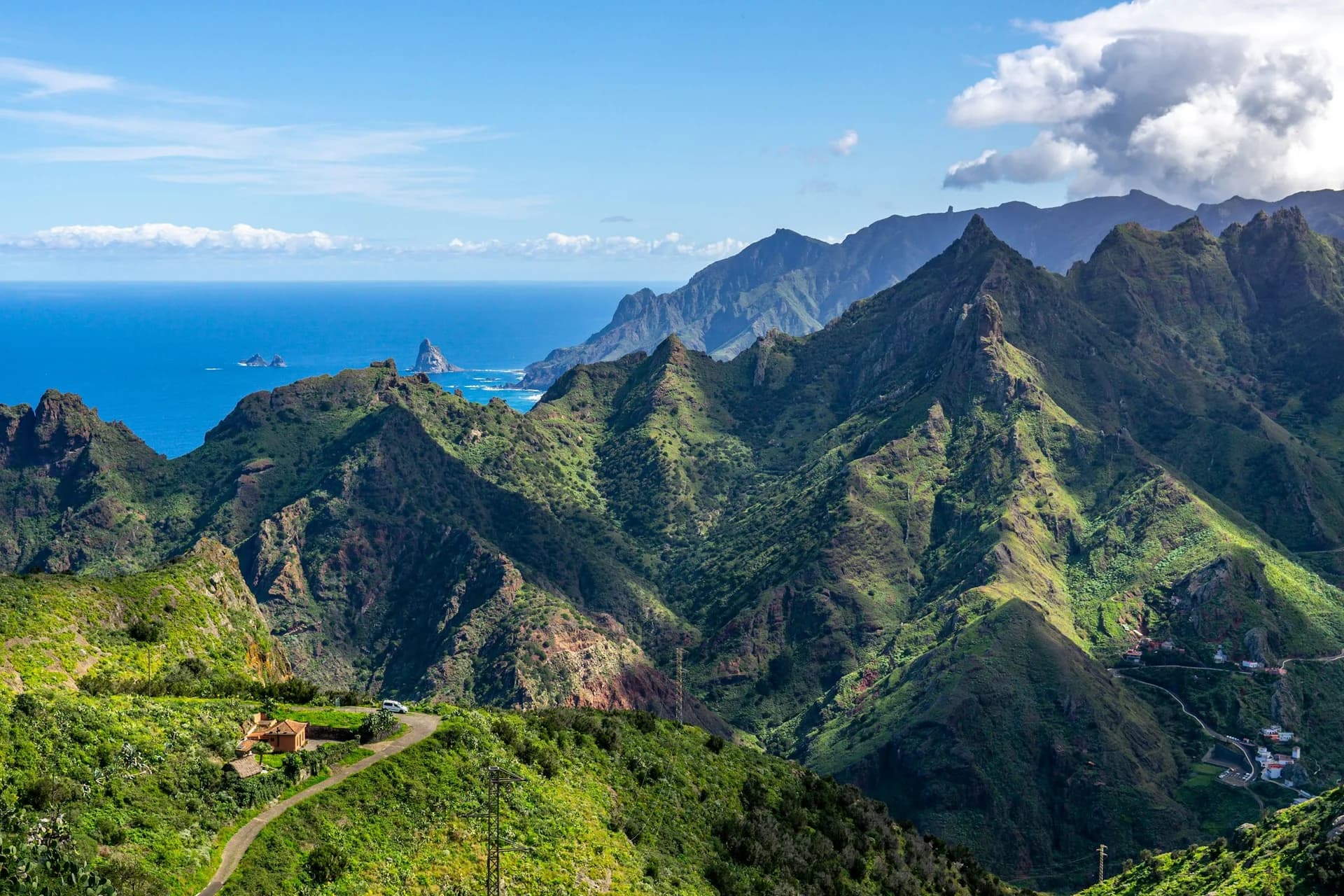
A Week Island-Hopping the Canaries: Volcanoes, Whales, and Black Sand
A Week Island-Hopping the Canaries: Volcanoes, Whales, and Black Sand
The Canary Islands arrive with a reputation for beach resorts and quietly rearrange your mental ranking of European destinations instead. These islands are bizarre, beautiful, and vastly more interesting than their package-holiday image suggests.
Day 1: Tenerife — Arrival and Altitude Adjustment
Fly into Tenerife South (TFS). Pick up a rental car (25 EUR/day) and drive directly to Puerto de la Cruz on the north coast — a deliberate move to sidestep the resort-heavy south.
Puerto de la Cruz is an actual town with actual Canarian life happening. Old colonial architecture, a fishing harbor, banana plantations climbing the hills behind. Playa Jardin — the black sand beach designed by Cesar Manrique — is your first encounter with volcanic sand, and it's not just visually dramatic. It feels different underfoot: denser, warmer, slightly metallic.
Check into a hotel (65 EUR/night, breakfast included, ocean view). The time zone catches everyone — the Canaries run 1 hour behind mainland Spain, which means sunset holds off until 9PM. Watch it from a rooftop bar with a local beer (Dorada, 2.50 EUR) and let the fact settle in that Africa is 100 km away. These islands belong to the same chain of Atlantic volcanic archipelagos that continues south to Cape Verde, off the West African coast.
Day 2: Teide — Above the Clouds
Drive from sea level to 2,100 meters in 45 minutes. The road climbs through pine forest, punches through the cloud layer — one of the most surreal drives possible, emerging above the clouds into blazing sunshine — and enters the Teide caldera.
The landscape is Martian. Red craters. Black lava flows. Rock formations called Roques de Garcia that look sculpted. Teide itself — 3,718 meters, Spain's highest peak — towers above everything with a wisp of volcanic steam.
Cable car to 3,555m: 40 EUR return (book at volcanoteide.com, sells out 1-2 weeks ahead). At the top station, the air turns thin and cold — maybe 5°C despite June sunshine at sea level. From here you can see four other Canary Islands and the shadow of Teide stretching across the cloud sea below.
Book a summit permit (free, limited to 200/day, apply about 3 weeks before), but be ready for wind to close the final climb — it happens regularly, and the ranger's "mañana, maybe" comes with the shrug of someone who's given the speech thousands of times.
Drive back through the clouds. For dinner, head to La Orotava — grilled vieja (parrotfish) with papas arrugadas and mojo verde, 14 EUR, in a restaurant full of locals and zero tourists.
Day 3: Tenerife — Whales and Masca
Morning: whale watching from Puerto Colon (22 EUR, 2 hours). Within 15 minutes you're alongside a pod of pilot whales — about 500 live permanently in the channel between Tenerife and La Gomera. They're dark, sleek, and completely indifferent to boats. A bottlenose dolphin may surf your bow wave. Guides put sighting rates above 90%. The only other corner of Atlantic Europe in the same league for reliable whale encounters is the volcanic archipelago of the Azores.
Afternoon: drive to Masca village. The road has hairpin bends you'll stop counting at twelve. The village clings to a ridge at 600 meters inside a vertical gorge — the same vertigo-inducing, cliff-edge drama that mainland Spain pulls off at the clifftop town of Ronda. Even without a hiking permit (they book out), the village itself and the drive are worth the trip.
Eat at a tiny restaurant overlooking the gorge. Goat cheese, bread, wine. 8 EUR. The owner may point at a cliff face across the ravine and tell you his grandfather farmed there — and looking at that near-vertical wall, 300 meters above the gorge, you'll believe it entirely.
Day 4: La Gomera — The Cloud Forest
Fred Olsen ferry from Los Cristianos to San Sebastian de la Gomera: 50 minutes, 18 EUR one-way. Rent a car on La Gomera (28 EUR/day) and drive directly to Garajonay National Park.
Garajonay is a UNESCO site, and it's as extraordinary as anything on Tenerife. A primeval laurel cloud forest — laurisilva — that covered southern Europe 15 million years ago and now survives on only a handful of Atlantic islands, Madeira among them. Walk through it, mist drifting through moss-draped trees, ferns reaching overhead, the silence broken only by birds, and the UNESCO protection makes immediate sense. This ecosystem is irreplaceable.
Do the 3-hour loop trail (marked, moderate difficulty, free). You might pass three other hikers the entire time. The forest floor runs thick with ferns and the canopy filters the light into something green and ancient.
Stay overnight in Vallehermoso (40 EUR, guest house with a terrace). At dinner, you may catch a demonstration of Silbo Gomero — the whistled language used to communicate across the island's deep ravines. A full sentence whistled to a friend on the next terrace, 50 meters away, and the friend whistles back. It sounds like birdsong. It's a conversation about football.
Day 5: La Gomera to Lanzarote
Ferry back to Tenerife. Binter Canarias flight to Lanzarote: 40 minutes, 38 EUR (book a week ahead). Small planes, friendly crew, spectacular views of the island chain from above.
Lanzarote from the air is immediately different — black and ochre volcanic terrain with almost no green. The 1730-1736 eruptions buried a third of the island under lava, and the landscape hasn't recovered. It probably won't for centuries.
Drive to Timanfaya National Park (15 EUR, bus tour through the eruption zone). The guide heats volcanic rock samples — 100°C just below the surface. At the El Diablo restaurant, watch cooking demonstrated over a volcanic vent. A geyser of steam erupts from a pipe when the guide pours water in. The children in the group scream. The guide smiles the smile of someone who does this 20 times a day.
Day 6: Lanzarote — Manrique's Island
Cesar Manrique is Lanzarote's defining artist. He returned from New York in 1968 and spent the rest of his life integrating art with the volcanic landscape, and convincing the island government to ban billboards, limit high-rise buildings, and preserve the aesthetic coherence that makes Lanzarote unique.
Jameos del Agua (12 EUR): an underground volcanic tunnel converted into a concert hall, bar, and pool. Blind albino crabs (jameitos) live in a subterranean lake. The bar sits inside a lava bubble. It shouldn't work. It absolutely works.
Cueva de los Verdes (12 EUR): a lava tube tour that ends with one of the best visual tricks in any tourist attraction anywhere. No spoilers. Pay the 12 EUR.
Mirador del Rio (5 EUR): a clifftop viewpoint at 475 meters, designed by Manrique, looking north to the island of La Graciosa. The viewing windows are curved into the rock. The cafe is built into the cliff. The view — red cliff, blue channel, golden island — is calendar-perfect.
5-site pass: 35 EUR. Worth it.
Day 7: Lanzarote Wine and Departure
Last morning: La Geria wine region. Lanzarote's wine grows in individual stone crescents (zocos) that protect each vine from the wind. The black volcanic lapilli (gravel) retains moisture from the dew. The landscape — thousands of stone crescents in black gravel — is agricultural art.
Wine tasting at Bodega La Geria: 8 EUR for 3 wines. Malvasia Volcanica — a dry white with mineral notes that tastes the way the island smells: dry, warm, volcanic — the same mineral edge that runs through the volcanic wines of Santorini. Two bottles for 12 EUR earn the title of best impulse purchase of the trip.
Drive to the airport. Return the car. Sit at the gate scrolling through photographs of places that don't look like anywhere else in Europe.
Would You Go Back?
January is the answer. The Canary Islands run year-round — 18-28°C every month. Winter is when Europeans escape to the islands for sun, and the hiking conditions on Tenerife and La Gomera are actually better without summer heat.
Then there's the rest: Fuerteventura's dunes. La Palma's Caldera de Taburiente. El Hierro — the smallest, most remote island — and its underwater volcanic formations.
Seven islands, three explored. The Canaries are the kind of destination that expands the more you explore it.
Verdict: Go. Start with Tenerife. Add La Gomera. Add Lanzarote. Then come back for the rest. Bring a jacket for Teide and an open mind for volcanic wine. For help choosing between islands, our Canary Islands comparison guide breaks down beaches, hiking, culture, and nightlife across all four main islands. And if Atlantic island-hopping sparks your curiosity, Ibiza offers a very different Balearic island experience just a short flight away.


