
Lhasa

Key Facts
Best Time to Visit
May to October (warmest, 10-25°C daytime, oxygen levels highest). April and November are shoulder months with fewer tourists. Winter is cold but sunny
Language
Tibetan, Mandarin Chinese
Currency
Chinese Yuan Renminbi (CNY)
Time Zone
CST (UTC+8), though local solar time is closer to UTC+6
Airport
Lhasa Gonggar Airport (LXA), 62km SW of city center
Population
900,000 (city proper)
Climate
High-altitude arid, 3,650m elevation, intense sun, large day-night temperature swings (5-25°C in summer)
Safety Rating
Safe for tourists — altitude sickness is the main health concern, not crime
Permit Required
Tibet Travel Permit required for all foreign visitors, arranged through licensed tour agency
Top Highlights
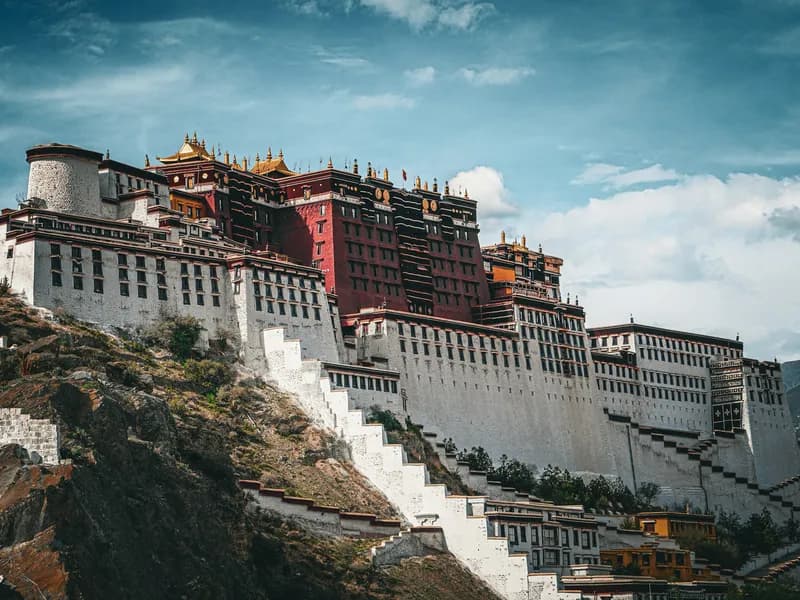
Potala Palace
The iconic 13-story red and white fortress perched on Marpo Ri hill — former winter residence of the Dalai Lamas and a UNESCO World Heritage Site. Entry: 200 CNY (~$28) May-Oct, 100 CNY Nov-Apr. Open 9AM-3PM. Strict daily visitor limit (5,000) — book online 1-3 days in advance through your tour agency. The climb up (130m elevation gain) is breathless at altitude. No photography inside the main halls. Allow 2-3 hours.
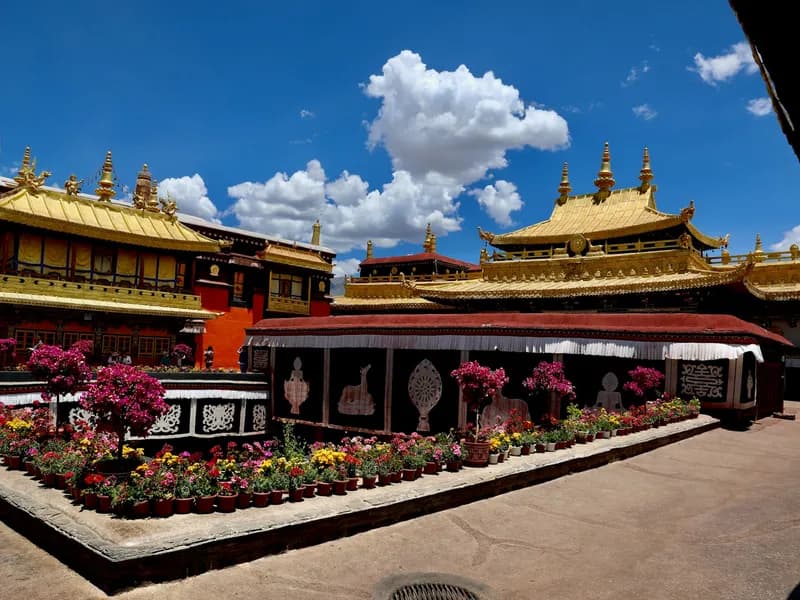
Jokhang Temple
Tibet's most sacred temple and the spiritual heart of Lhasa, built in 647 AD to house a Buddha statue brought from Nepal. Entry: 85 CNY (~$12). Open 9AM-6PM. Pilgrims prostrate outside the entrance all day. The rooftop terrace offers stunning views of the Potala Palace across the old city. Visit in the morning when the devotional atmosphere is most intense. Allow 1.5-2 hours.
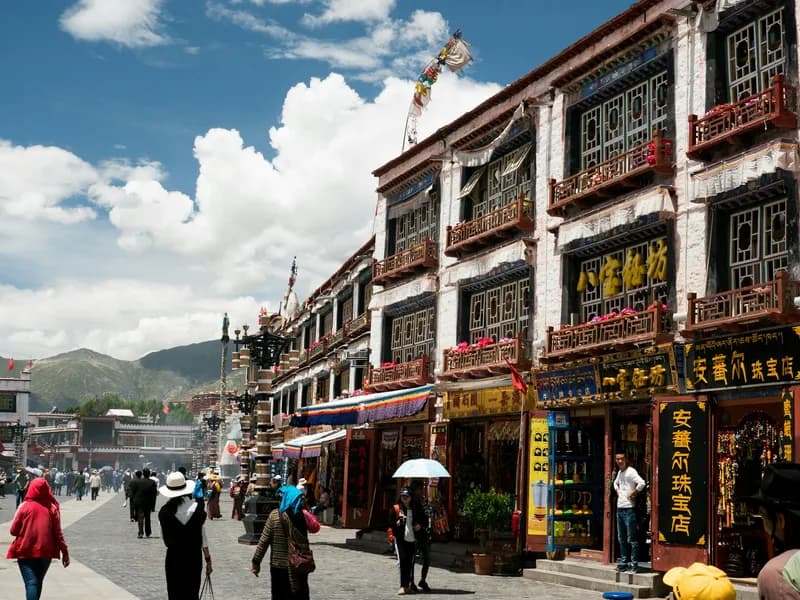
Barkhor Street (Kora Circuit)
A 1km clockwise pilgrimage circuit around the Jokhang Temple that is also Lhasa's most vibrant marketplace. Free to walk. Pilgrims spin prayer wheels while vendors sell turquoise jewelry, yak butter, prayer flags, and Tibetan thangka paintings. Walk clockwise (always) to join the flow. Bargain to 40-50% of initial asking price for souvenirs. Best in late afternoon when light hits the golden temple roof. Allow 1-2 hours.
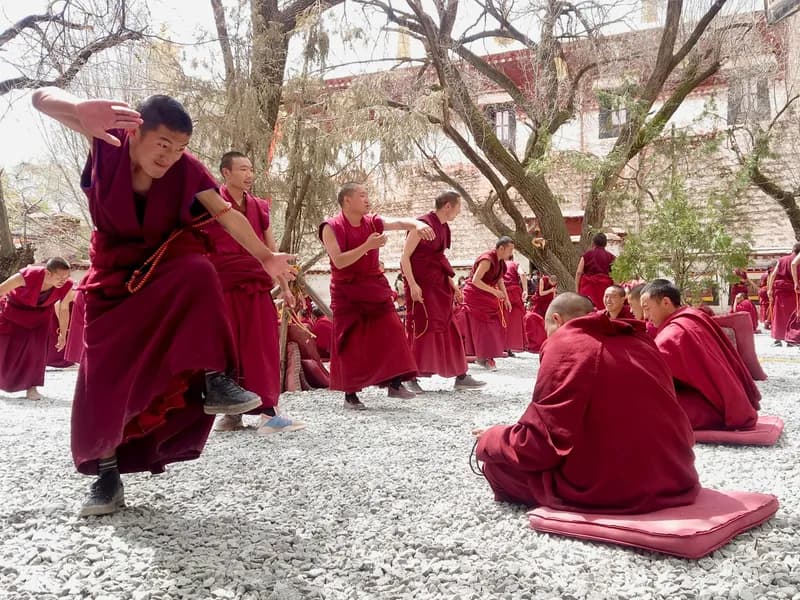
Sera Monastery Monk Debates
One of Tibet's three great Gelug monasteries, famous for the dramatic daily monk debates in the courtyard. Entry: 50 CNY (~$7). Debates happen 3-5PM (except Sundays) — monks clap, stomp, and gesture dramatically while debating Buddhist philosophy. No flash photography during debates. The monastery is 5km north of central Lhasa. Allow 2-3 hours to explore the grounds and watch the debates.
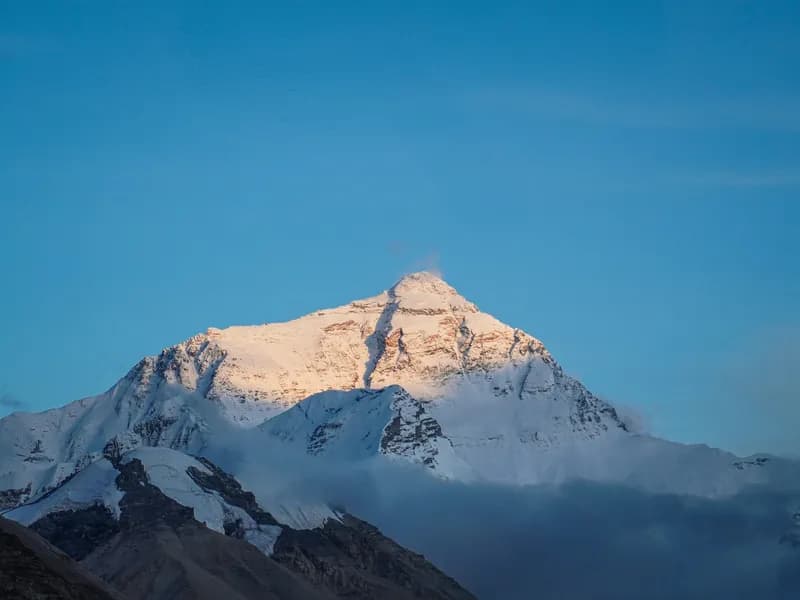
Everest Base Camp (North Side)
The Tibetan side of Everest Base Camp (5,200m) is reachable by road from Lhasa — a 2-3 day overland journey through stunning high plateau landscapes. Requires an additional Alien Travel Permit and Military Permit (arranged by your tour agency). Stay overnight at the tent guesthouse camp at Rongbuk (5,000m) for sunrise views of Everest's north face. The road trip itself through Gyantse and Shigatse is spectacular. Total trip: 4-5 days round trip from Lhasa.
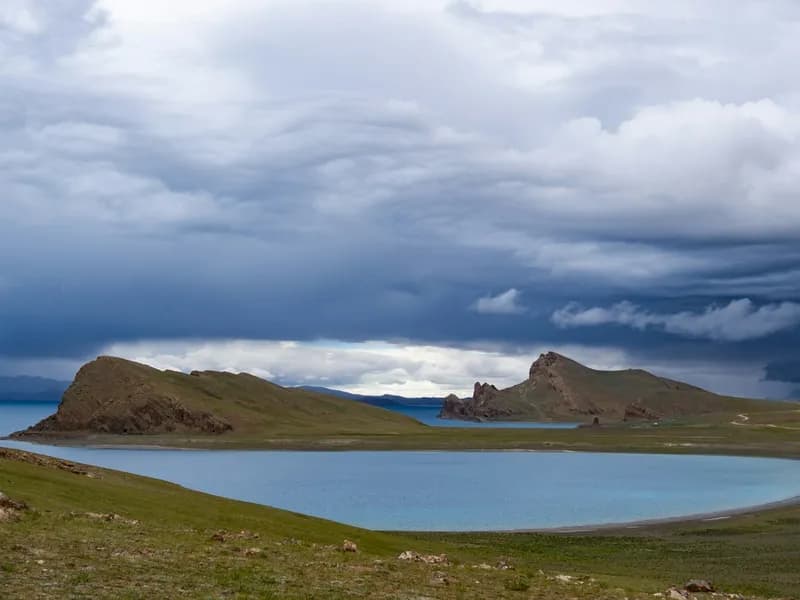
Namtso Lake
One of the world's highest saltwater lakes at 4,718m, with crystal-turquoise water backed by snow-capped Nyenchen Tanglha mountains. 250km from Lhasa (5-hour drive, crossing a 5,190m pass). Stay overnight in a basic guesthouse at Tashi Dor peninsula to see the sunrise. No entry fee for the lake itself (the peninsula area costs 120 CNY). The altitude is extreme — only visit after 2-3 days of acclimatization in Lhasa.
Planned Itinerary
7-Day Lhasa Itinerary
Arrival & Acclimatization
Arrive at Lhasa Gonggar Airport (LXA), 62km SW. Your mandatory tour guide and driver will meet you. Transfer to hotel in central Lhasa (3,650m). TODAY IS REST DAY — altitude sickness is serious.
Airport transfer with guide(1.5 hours)
Your licensed guide arranges everything. The drive follows the Yarlung Tsangpo river valley. Do not carry heavy bags — let the driver handle them
Check-in at hotel near Barkhor area(1 hour)
Hotels in the old Tibetan quarter (200-800 CNY/night). Drink 3-4 liters of water today. Avoid alcohol for 48 hours
Light walk around hotel neighborhood(1 hour)
DO NOT exert yourself. Walk slowly, breathe deeply. Headache and shortness of breath are normal. If symptoms worsen (confusion, persistent vomiting), tell your guide immediately
Early dinner and rest(1 hour)
Tibetan restaurants near Barkhor serve thukpa (noodle soup, 20 CNY) and momo (dumplings, 15 CNY). Eat lightly. Go to bed early — your body is adjusting to 36% less oxygen than sea level
Potala Palace & Barkhor Circuit
Tibet's two most iconic sites — the towering palace-fortress and the sacred pilgrimage circuit around the Jokhang Temple.
Potala Palace(2.5 hours)
Entry: 200 CNY (May-Oct), 100 CNY (Nov-Apr). Daily limit of 5,000 visitors — your guide books 1-3 days ahead. The 130m climb is breathless at altitude — take it very slowly. No photography inside main halls. The Red Palace (religious) and White Palace (political) tell Tibet's history. Allow 2-3 hours
Lunch at Makye Ame restaurant(1 hour)
On the Barkhor circuit. Tibetan, Nepali, and Western food. The yak steak (45 CNY) and butter tea (10 CNY) are the local choices. Legend says the 6th Dalai Lama met his lover here
Barkhor Street kora (pilgrimage circuit)(1.5 hours)
1km clockwise walk around Jokhang Temple with pilgrims spinning prayer wheels. Vendors sell turquoise jewelry, yak butter, prayer flags, thangka paintings. ALWAYS walk clockwise. Bargain to 40-50% for souvenirs
Jokhang Temple(1.5 hours)
Entry: 85 CNY. Tibet's most sacred temple (647 AD). Pilgrims prostrate outside all day. The rooftop terrace has stunning Potala Palace views. Visit in the morning for the most intense devotional atmosphere
Sera Monastery & Drepung Monastery
Two of Tibet's Three Great Gelug monasteries — monk debates at Sera and the former seat of Tibetan government at Drepung.
Drepung Monastery morning visit(2 hours)
Entry: 50 CNY. 8km west of Lhasa. Once the world's largest monastery (10,000 monks). The Ganden Palace was the Dalai Lamas' residence before the Potala. The golden rooftop halls and massive thangka display wall are highlights
Lunch at a Tibetan restaurant near Sera(1 hour)
Try tsampa (roasted barley flour, the Tibetan staple — mix with butter tea) and yak meat momos
Sera Monastery and monk debates(2.5 hours)
Entry: 50 CNY. 5km north. Famous for dramatic daily debates 3-5PM (except Sundays) — monks clap, stomp, and gesture debating Buddhist philosophy. No flash photography. The courtyard atmosphere is electrifying. Arrive by 2:30PM for a good viewing spot
Evening: Potala Palace night view from Chakpori Hill(1 hour)
The viewpoint from the hill across the road offers the classic postcard shot of the illuminated Potala. Free. Bring a tripod for night photography
Norbulingka & Tibetan Culture
The Dalai Lama's summer palace and a deeper dive into Tibetan art, medicine, and daily life.
Norbulingka (Jewel Park)(2 hours)
Entry: 60 CNY. The Dalai Lama's summer palace (est. 1755). Beautiful gardens and the New Summer Palace (1956) with murals depicting Tibetan history. Less crowded than the Potala and more intimate
Tibet Museum(1.5 hours)
Free. Near Norbulingka. Covers Tibetan history from prehistoric times through Buddhist art. Good English labeling. The thangka painting collection is excellent
Lunch at a Lhasa teahouse(1 hour)
Butter tea (po cha, 5-10 CNY) is an acquired taste — salty, buttery, and fortifying at altitude. Sweet tea (ja cha, 3-5 CNY) is more approachable. Pair with tsampa balls. Watch local life unfold
Walk through Lhasa old town alleyways(1.5 hours)
The lanes behind Barkhor Street have traditional Tibetan houses with prayer flags, incense smoke, and elderly people spinning prayer wheels on stoops. This is residential Lhasa — less performative, more real
Day Trip to Ganden Monastery
One of the Three Great monasteries, perched at 4,300m on a mountainside 47km east of Lhasa. The kora (circumambulation path) has extraordinary views.
Drive to Ganden Monastery(1.5 hours)
Your guide arranges transport. The road climbs steeply with switchbacks — stunning views of the Kyi Chu valley
Ganden Monastery tour(2 hours)
Entry: 40 CNY. Founded by Tsongkhapa (1409), founder of the Gelug school. The monastery was destroyed during the Cultural Revolution and is being rebuilt. The assembly hall and Tsongkhapa's golden tomb are the highlights
Ganden kora hike(2 hours)
A 1.5-hour circumambulation at 4,300m with views of the entire Kyi Chu valley and snow-capped peaks. Extremely beautiful but physically demanding at altitude. Walk slowly, drink water constantly. Prayer flags line the entire path
Rest evening(1 hour)
After a day at 4,300m, your body needs recovery. Light dinner and early bed
Namtso Lake Day Trip
One of the world's highest saltwater lakes at 4,718m, with crystal-turquoise water backed by snow-capped mountains.
Drive to Namtso Lake(5 hours)
250km from Lhasa. Cross the 5,190m Lagenla Pass — the highest point of the trip. Altitude symptoms may intensify. Keep acetazolamide handy
Namtso Lake exploration(3 hours)
Entry: 120 CNY (peninsula area). The turquoise water at 4,718m surrounded by snow peaks is otherworldly. Walk along the shore of Tashi Dor peninsula. The sky at this altitude is impossibly blue
Return to Lhasa(5 hours)
Long day — total 10 hours of driving plus 3 hours at the lake. An overnight stay at a basic guesthouse on the peninsula (300-500 CNY, basic facilities) is highly recommended if your schedule allows — the sunrise over Namtso is one of Tibet's most sacred sights
Departure Day
Final morning in Lhasa and transfer to the airport.
Morning Barkhor kora(1 hour)
One last clockwise walk with the pilgrims. Spin the prayer wheels, smell the juniper incense. This circuit has been walked daily for 1,400 years
Souvenir shopping on Barkhor(1 hour)
Prayer flags, singing bowls, turquoise jewelry, yak bone carvings. Bargain gently. Quality turquoise pieces: 100-500 CNY
Airport transfer(1.5 hours)
Your guide drives you to LXA. The journey down from 3,650m to the airport valley is actually a slight descent — you may feel better on departure than arrival
14-Day Lhasa Itinerary
Arrival & Acclimatization
Arrive LXA. Guide meets you. Transfer to hotel at 3,650m. REST DAY.
Very light walk(1 hour)
Walk slowly. Drink 3-4 liters water. No alcohol 48 hours
Light dinner and early bed(1 hour)
Thukpa (20 CNY), momos (15 CNY). Body adjusting to 36% less oxygen
Continued Acclimatization
Second rest day — do not rush acclimatization. Gentle walking only.
Gentle morning walk through old town(1.5 hours)
Slow pace. Stop frequently. The old town alleyways behind Barkhor are flat and atmospheric
Tibet Museum(1.5 hours)
Free. Tibetan history and thangka collection. Indoor, no physical exertion
Lunch at Makye Ame(1 hour)
Yak steak (45 CNY), butter tea (10 CNY)
Afternoon rest at hotel(2 hours)
Read, journal, let your body adjust
Evening walk to Potala viewpoint(30 minutes)
The illuminated Potala from the square is spectacular
Potala Palace & Jokhang Temple
Tibet's two most sacred sites.
Potala Palace(2.5 hours)
200 CNY. 130m climb — very slow at altitude. No photos inside
Jokhang Temple(1.5 hours)
85 CNY. Tibet's holiest. Rooftop Potala views
Barkhor kora(1.5 hours)
Clockwise circuit. Prayer wheels, vendors, pilgrims
Sera & Drepung Monasteries
Two of the Three Great monasteries. Monk debates at Sera.
Drepung Monastery(2 hours)
50 CNY. 8km west. Once world's largest monastery
Sera Monastery & debates(2.5 hours)
50 CNY. Debates 3-5PM except Sundays. Arrive 2:30PM
Norbulingka & Old Town
Summer palace and Tibetan daily life.
Norbulingka(2 hours)
60 CNY. Beautiful gardens, 1956 murals
Walk old town alleyways(1.5 hours)
Residential Lhasa. Prayer flags, incense, prayer wheels
Teahouse afternoon(1.5 hours)
Butter tea (5-10 CNY) or sweet tea (3-5 CNY). Watch local life
Ganden Monastery
Third Great monastery at 4,300m with spectacular kora path.
Monastery tour(2 hours)
40 CNY. Tsongkhapa's golden tomb
Ganden kora hike(2 hours)
1.5hr circumambulation at 4,300m. Prayer flags, valley views. Walk slowly
Rest Day
Essential rest at the one-week mark.
Free morning(3 hours)
Sleep in. Your body needs recovery days at altitude
Thangka painting workshop(2 hours)
Several studios near Barkhor offer drop-in painting classes (200-400 CNY). Learn the centuries-old technique of painting Buddhist deities on cloth. Your guide can recommend a studio
Dinner at Snowland Restaurant(1 hour)
Popular with both locals and travelers. Yak burger (35 CNY), Tibetan set meal (50 CNY)
Namtso Lake Overnight — Day 1
Drive to the world's highest salt lake for an overnight stay to see sunrise.
Drive to Namtso Lake(5 hours)
250km. Cross 5,190m Lagenla Pass. Altitude symptoms may intensify
Tashi Dor peninsula exploration(2 hours)
120 CNY. Walk the shore. Turquoise water at 4,718m. Impossibly blue sky
Sunset at Namtso(1 hour)
Watch the sun set behind snow peaks reflected in the still lake. One of Tibet's most sacred and beautiful moments
Overnight at peninsula guesthouse(Evening)
300-500 CNY. Very basic (no shower, pit toilet). Sleeping at 4,718m is difficult — headache is normal. Worth it for sunrise
Namtso Sunrise & Return
Sunrise over the sacred lake, then return to Lhasa.
Sunrise at Namtso(1.5 hours)
Wake at 5:30AM. The first light hitting the snow mountains reflected in the mirror-still lake is transcendent. Dress warmly — near-freezing even in summer
Morning lakeside walk(1 hour)
Circumambulate the peninsula with nomadic yak herders and pilgrims. Prayer flags stretch between rock pillars
Rest evening(2 hours)
Recovery after two nights at extreme altitude
Drive to Gyantse (via Yamdrok Lake)
Begin the overland journey southwest toward Shigatse, passing the stunning Yamdrok Lake. This is one of the world's great road trips.
Drive Lhasa to Gyantse via Yamdrok Lake(6 hours)
Cross the 4,990m Kamba La pass for the first view of Yamdrok Lake — turquoise water surrounded by brown mountains. Stop for photos (30 minutes). Continue over the 5,010m Karo La pass (glacier visible from the road). Arrive Gyantse by late afternoon
Yamdrok Lake photo stops(1 hour)
The lake changes color with the light — from turquoise to sapphire to emerald. Each pass offers a different perspective
Check into Gyantse hotel(30 minutes)
Small town at 3,977m. Simple hotels 150-300 CNY
Gyantse Kumbum stupa evening(1 hour)
Entry: 60 CNY. The multi-level stupa (1427) has 108 chapels with original murals spiraling to the top — each level depicts a different Buddhist deity. The most unique Buddhist architecture in Tibet
Gyantse to Shigatse
Explore Gyantse's fortress, then continue to Shigatse — Tibet's second city and seat of the Panchen Lama.
Gyantse Dzong fortress(1 hour)
30 CNY. Climb the ruined fortress above town for panoramic views. The fort saw the last major Tibetan resistance to the 1904 British expedition. The hilltop views of the valley and Kumbum below are worth the climb at altitude
Drive Gyantse to Shigatse(1.5 hours)
90km along the Nyang Chu river valley. The road passes through barley fields and small villages
Tashilhunpo Monastery(2.5 hours)
Entry: 55 CNY. The seat of the Panchen Lama and Tibet's largest functioning monastery. The 26m bronze Maitreya (Future Buddha) statue took 4 years and 279 kg of gold to complete. The monastery is active with hundreds of monks — more authentic daily practice than the Lhasa monasteries
Shigatse evening walk(1 hour)
Shigatse's old quarter near the monastery has traditional Tibetan shops and restaurants. Try yak tongue (niushe, 30 CNY) and chang (Tibetan barley beer, 5 CNY)
Shigatse to Lhasa Return
Return drive to Lhasa via the northern route (Friendship Highway section) or back through Yamdrok.
Drive Shigatse to Lhasa(5-6 hours)
280km via the northern Friendship Highway route. The road follows the Yarlung Tsangpo (upper Brahmaputra) through wide valleys with sand dunes and braided river channels. Different scenery from the Yamdrok route
Roadside village stops(1 hour)
Your guide will stop at villages where you can see traditional Tibetan farming life — barley threshing, yak herding, and women weaving on outdoor looms
Arrive Lhasa(30 minutes)
Check back into your Lhasa hotel
Evening rest(2 hours)
After three days on the road, rest well
Lhasa — Free Day
Your final full day in Lhasa. Revisit favorites or explore new corners.
Morning Barkhor kora(1 hour)
Walk with the pilgrims one more time. Each circuit reveals something new — a face, a gesture, a detail you missed before
Ani Tsankhung Nunnery(1 hour)
Small, active nunnery in the old town. Free entry. The nuns chant in a dim chapel filled with butter lamp light. Far less visited than the big monasteries and deeply atmospheric
Souvenir shopping(1.5 hours)
Prayer flags (10-30 CNY), singing bowls (100-500 CNY), turquoise and coral jewelry, yak bone carvings. Buy from Barkhor shops for quality
Farewell Tibetan dinner(1.5 hours)
Full Tibetan meal: tsampa, momos, yak curry, butter tea, and chang. The Tibetan Family Kitchen near Barkhor serves authentic home-style food (set meal 80-120 CNY)
Departure Day
Final morning and airport transfer.
Last Barkhor walk(1 hour)
One final clockwise circuit. Spin the prayer wheels, breathe the juniper incense
Airport transfer with guide(1.5 hours)
Your guide accompanies you to LXA. The descent to the airport valley is the reverse of your arrival — you are likely feeling much stronger now than you did 14 days ago
21-Day Lhasa Itinerary
Arrival & Acclimatization
Arrive LXA. Guide meets you. Hotel at 3,650m. REST.
Light walk(1 hour)
Walk slowly. 3-4 liters water. No alcohol
Rest Day 2
Continued acclimatization.
Tibet Museum(1.5 hours)
Free
Potala Palace & Jokhang
Tibet's two holiest sites.
Potala Palace(2.5 hours)
200 CNY. Slow climb
Jokhang Temple(1.5 hours)
85 CNY
Sera & Drepung
Two Great monasteries. Monk debates.
Drepung(2 hours)
50 CNY
Sera debates 3-5PM(2.5 hours)
50 CNY
Norbulingka & Old Town
Summer palace and residential Lhasa.
Norbulingka(2 hours)
60 CNY
Ganden Monastery
Third Great monastery at 4,300m.
Monastery(2 hours)
40 CNY
Rest Day
Essential one-week rest.
Thangka painting class(2 hours)
200-400 CNY
Namtso Lake Day 1
Drive to the highest salt lake for overnight.
Drive(5 hours)
Cross 5,190m pass
Tashi Dor peninsula(2 hours)
120 CNY
Guesthouse overnight(Evening)
300-500 CNY. Basic. 4,718m altitude
Namtso Sunrise & Return
Sunrise then drive back.
Rest & Lhasa Deep Dive
Recovery and exploring quieter corners.
Ani Tsankhung Nunnery(1 hour)
Free. Active nunnery with butter lamp chanting
Meru Nyingba Monastery(1 hour)
20 CNY. Tiny monastery opposite the Jokhang's east side. Ancient murals, almost no visitors
Drive to Yamdrok Lake & Gyantse
Begin overland southwest, passing the stunning Yamdrok Lake.
Drive via 4,990m Kamba La pass(3 hours)
First view of turquoise Yamdrok Lake from the pass is jaw-dropping
Continue to Gyantse via 5,010m Karo La(3 hours)
Glacier visible from road
Gyantse Kumbum stupa(1 hour)
60 CNY. 108 chapels spiraling upward
Gyantse to Shigatse
Fortress climb and Tibet's second city.
Gyantse Dzong fortress(1 hour)
30 CNY. Panoramic valley views
Tashilhunpo Monastery(2.5 hours)
55 CNY. 26m bronze Maitreya. Active monks
Shigatse evening(1 hour)
Yak tongue (30 CNY), chang (5 CNY)
Shigatse Rest Day
Rest in Tibet's second city.
Shigatse market morning(1.5 hours)
The Tibetan bazaar near Tashilhunpo sells yak cheese, dried meat, and Tibetan boots. More authentic than Lhasa tourist shops
Shigatse Dzong ruins walk(1 hour)
The hilltop fortress ruins (free) above town offer views of the monastery and Nyang Chu valley
Shigatse to Everest Base Camp — Day 1
Begin the drive toward the world's highest mountain. Cross the Gyatso La pass (5,220m) — the highest paved road point.
Drive Shigatse toward EBC(6-7 hours)
Cross Gyatso La (5,220m) and Pang La (5,150m) with the first view of the Himalayan skyline including Everest, Lhotse, and Makalu. The Pang La panorama of five 8,000m peaks is one of Earth's great views
Arrive at Rongbuk area(Evening)
The tent guesthouse camp at Rongbuk (5,000m) is the highest accommodation on the trip. Basic beds, no shower, freezing at night. Bring your warmest layers. The monastery (world's highest) is a 10-minute walk
Evening Everest views(1 hour)
If clouds clear at sunset, the north face of Everest glows gold. At 5,000m, every step is slow and deliberate. The silence is absolute
Everest Base Camp & Return to Shigatse
Morning at the base camp marker, then begin the long drive back.
Walk to Everest Base Camp marker(1.5 hours)
From the tent camp, walk or take the shuttle bus to the 5,200m base camp marker (25 CNY shuttle). The north face of Everest towers above. On clear mornings, the summit plume of snow is visible. Photography at the marker is obligatory
Rongbuk Monastery visit(30 minutes)
The world's highest monastery at 5,000m. A small chapel with Everest framed in the window. Monks live here year-round
Drive back toward Shigatse(6-7 hours)
Retrace the route. The Pang La view is equally impressive in the opposite direction. Arrive Shigatse by evening
Rest in Shigatse(Evening)
After two days at 5,000m+, the relative comfort of Shigatse (3,840m) feels luxurious
Return to Lhasa
Drive back to Lhasa via the northern Friendship Highway.
Drive Shigatse to Lhasa(5-6 hours)
280km via the northern route along the Yarlung Tsangpo river. Sand dunes, braided channels, farming villages
Roadside stops(1 hour)
Village barley threshing, yak herding, traditional weaving
Lhasa Rest & Recovery
Recover from the EBC expedition. A full rest day.
Sleep in(4 hours)
After 5,200m, Lhasa at 3,650m feels like sea level. Your body deserves this rest
Lunch at Dunya Restaurant(1 hour)
Western and Asian fusion popular with travelers. Good coffee (rare in Lhasa), pasta, and Tibetan dishes. 40-80 CNY
Massage or spa(1.5 hours)
Traditional Tibetan herbal massage at a local spa. 150-250 CNY. The herbal oils are said to help with altitude adjustment
Lhasa — Tibetan Medicine & Craft
Explore Tibetan traditional medicine and handicrafts.
Mentsikhang (Tibetan Medical Museum)(1.5 hours)
Entry: 30 CNY. Tibetan medicine uses herbal remedies, astrology, and meditation — a system developed over 2,500 years. The thangka of the Medicine Buddha (a medical teaching scroll) and herbal pharmacy are fascinating
Visit a thangka painter's studio(1.5 hours)
Your guide can arrange a visit to a working thangka artist's studio near Barkhor. Watch the meticulous process of painting Buddhist deities with mineral pigments. A small thangka: 500-3,000 CNY depending on detail
Pilgrim circumambulation — Lingkhor path(2 hours)
The Lingkhor is the longer outer kora circuit around all of Lhasa (8km). Once walked through fields, it now follows modern roads but is still walked by devout pilgrims. Walking it gives a sense of Lhasa's full extent and deep faith
Day Trip to Samye Monastery
Tibet's oldest monastery (775 AD), built in a mandala pattern. Across the Yarlung Tsangpo by ferry — an adventure in itself.
Drive to Samye ferry crossing(2.5 hours)
130km southeast of Lhasa. The drive follows the Yarlung Tsangpo gorge
Ferry across the Yarlung Tsangpo(30 minutes)
The river crossing (in a flat-bottomed boat) is atmospheric. The monastery appears gradually on the far bank. Small motorboat or traditional ferry depending on water level
Samye Monastery(2.5 hours)
Entry: 40 CNY. Tibet's first monastery (775 AD), designed as a 3D mandala — the central hall represents Mount Meru, surrounded by smaller temples in a cosmic pattern. The murals in the main hall are among Tibet's most important
Final Lhasa Day
Your last full day in Tibet. Revisit favorites and say goodbye.
Sunrise Barkhor kora(1 hour)
Walk with the earliest morning pilgrims — the light and devotion are at their most intense before 8AM
Revisit Jokhang rooftop(1 hour)
The Potala Palace view from the Jokhang roof in morning light. Your last photograph of the iconic scene
Final souvenir shopping(1.5 hours)
Prayer flags, singing bowls, turquoise. Last-chance purchases
Farewell Tibetan dinner(1.5 hours)
Tibetan Family Kitchen. Full set: tsampa, momos, yak curry, butter tea, chang. This is goodbye to the roof of the world
Evening: write or reflect(1 hour)
Three weeks in Tibet changes perspectives. Take time to process what you have seen and felt
Departure Day
Final morning and airport.
Last Barkhor walk(1 hour)
One final clockwise circuit. Juniper incense. Prayer wheels. 1,400 years of devotion
Airport transfer(1.5 hours)
Guide drives to LXA. Goodbye to the roof of the world
Travel Tips
Visa & Entry
Tibet Travel Permit Is Mandatory
Foreign visitors cannot visit Tibet independently. You must book through a licensed Tibetan tour agency, which arranges the Tibet Travel Permit (TTP), a mandatory guide, driver, and vehicle. The TTP takes 15-20 business days to process. Your agency applies on your behalf using your passport and Chinese visa details. Individual travel is not permitted — you must have a guide at all times.
Safety
Altitude Sickness Is Serious — Acclimatize
Lhasa sits at 3,650m — most visitors experience some altitude symptoms (headache, shortness of breath, fatigue). Spend 2-3 days in Lhasa doing nothing strenuous before heading to higher areas. Drink 3-4 liters of water daily. Avoid alcohol for the first 48 hours. Acetazolamide (Diamox, 125-250mg twice daily) can help — consult your doctor before the trip. If symptoms worsen (confusion, persistent vomiting), descend immediately.
Sun Protection Is Critical at Altitude
At 3,650m+ the UV radiation is extremely intense — you can burn badly in 20 minutes even on cloudy days. Bring SPF 50+ sunscreen, UV-blocking sunglasses, and a wide-brimmed hat. Lip balm with SPF is essential — cracked lips are universal among visitors. The air is extremely dry, so moisturizer and a refillable water bottle are as important as your camera.
transport
Train vs. Flight — Both Have Trade-offs
The Qinghai-Tibet Railway from Xining (24 hours) or Beijing (40 hours) offers gradual altitude acclimatization and spectacular scenery above 5,000m, with supplemental oxygen on board. Flights from Chengdu (2.5 hours), Chongqing, or Xi'an are faster but dump you at altitude suddenly. If flying in, take it extremely easy on arrival day — go straight to your hotel and rest.
Local Customs
Respect Religious Sites and Pilgrims
Always walk clockwise around temples, stupas, and prayer wheels (the Tibetan Buddhist direction of circumambulation). Never touch or step over religious objects. Ask before photographing monks or prostrating pilgrims — most will agree but it is polite to ask. Do not bring up politically sensitive topics with locals, especially in public. Remove hats inside temples.
Budget
Tibet Is Expensive for China
The mandatory guide, driver, and vehicle add significant cost — expect $100-200/day per person for a private tour (less in a group). Accommodation in Lhasa ranges from 150-800 CNY/night. Food is reasonable (Tibetan yak butter tea and tsampa from 10 CNY, restaurant meals 30-60 CNY). The Everest Base Camp extension adds $300-500 per person for 4-5 days. Budget travelers should join a group tour to split vehicle costs.
Related Articles
Travel Guides12 Unforgettable Things to Do in Lhasa (And Exactly How to Do Them Right)
Prayer wheels, monk debates, turquoise lakes, and the highest palace on Earth — here are the 12 Lhasa experiences worth building your Tibet trip around, with the timing, prices, and insider moves that make each one land.
Travel GuidesThe Complete Guide to Visiting Lhasa: Permits, Altitude, and the Roof of the World
Tibet isn't a place you can just show up to. Here's everything you need to know about permits, acclimatization, and making the most of the holy city.
Travel GuidesYour Lhasa Questions Answered: Permits, Altitude Sickness, and Sacred Sites
Can you visit Tibet independently? Will I get altitude sickness? What do I need to know about the Potala Palace? Every Lhasa question, answered.
StoriesWhat Living in Lhasa for 15 Years Taught Me About Tibet
A long-term Tibetan resident shares the Lhasa tourists never see — from hidden sky burial sites to the best momos in the old town.