
Salar de Uyuni
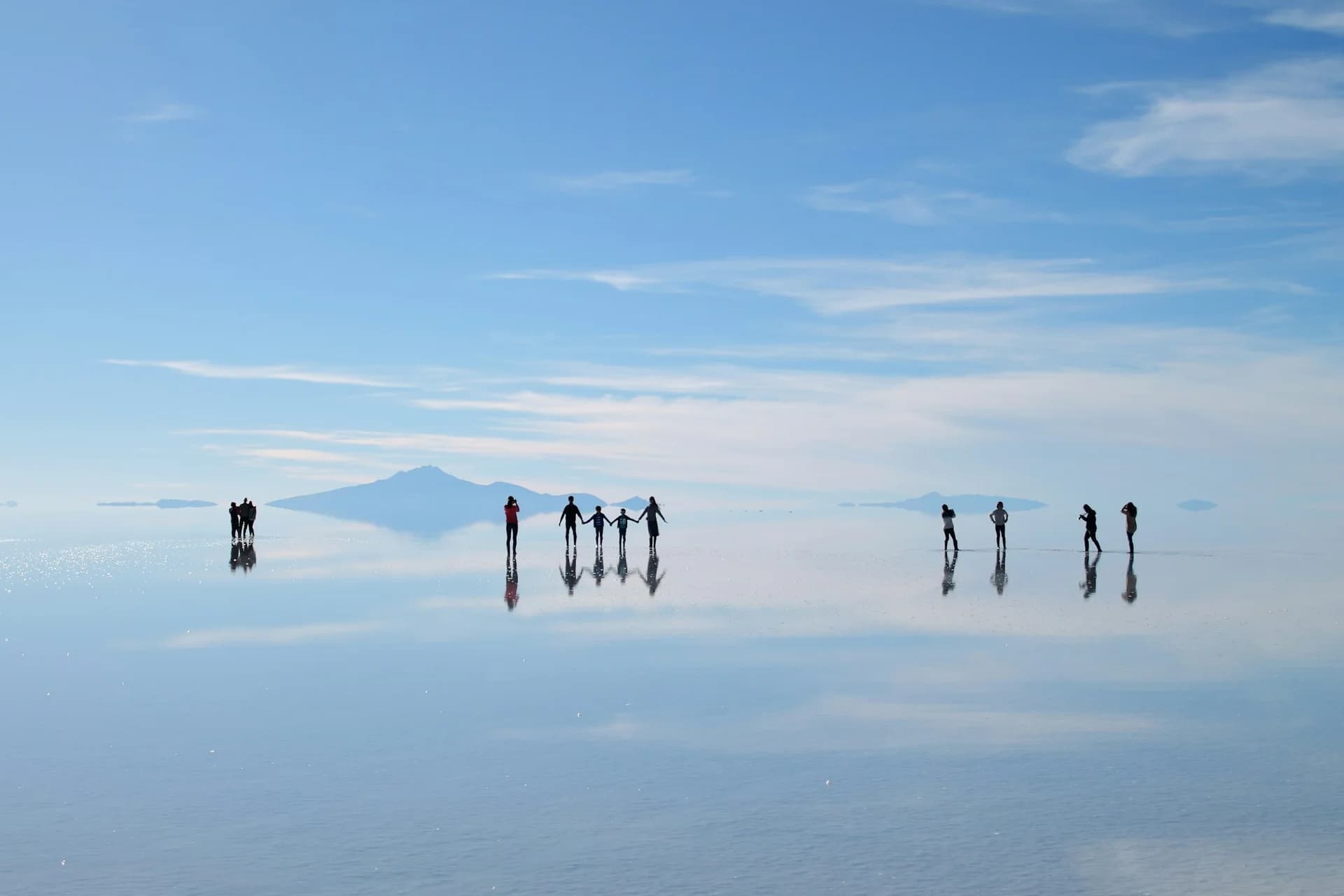
Photo: Karla Robinson / Unsplash
Key Facts
Best Time to Visit
December to April for mirror effect (rainy season); May to November for dry hexagonal salt patterns and easier driving
Language
Spanish, Quechua, Aymara
Currency
Boliviano (BOB)
Time Zone
BOT (UTC-4)
Airport
Joya Andina Airport, Uyuni (UYU) — small regional airport with limited service
Population
Uyuni town: ~30,000 (city proper)
Climate
Arid highland desert, avg -5 to 20°C, extreme temperature swings day to night
Safety Rating
Generally Safe (Level 1 — remote area, choose reputable tour operators)
Altitude
3,656m (11,995 ft) — acclimatize in La Paz or Sucre before visiting
Size
10,582 km² — visible from space, contains 50-70% of the world's lithium reserves
Top Highlights
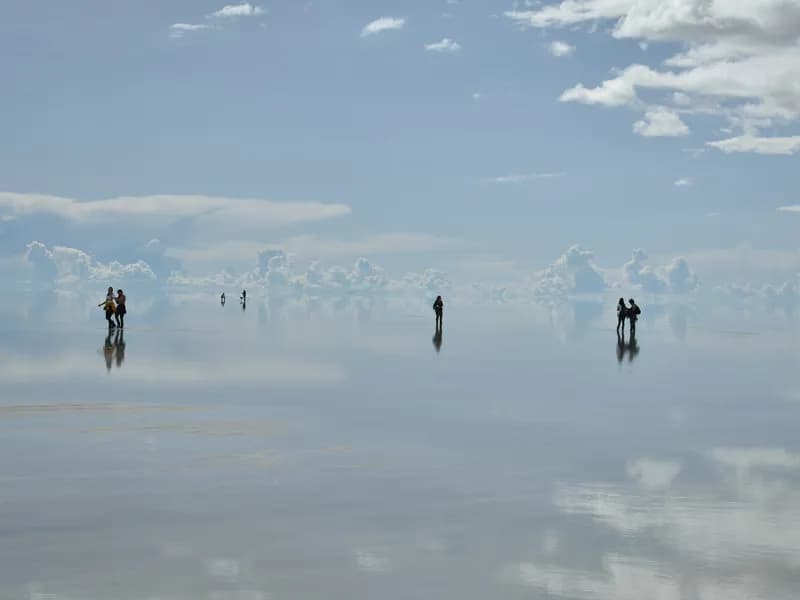
Mirror Effect (Rainy Season)
From December to April, a thin layer of water transforms the salt flat into the world's largest natural mirror, creating surreal photographs where sky and ground merge seamlessly. Best conditions after rain with thin, even water coverage. Included in standard 1-day and 3-day tours.
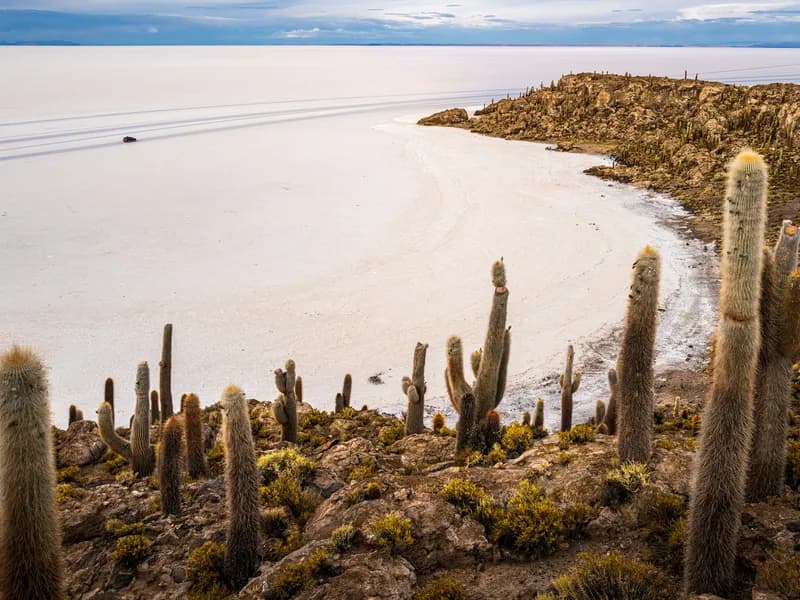
Incahuasi Island (Isla del Pescado)
A rocky island in the middle of the salt flat covered with giant cacti (some over 12m tall and 1,200 years old). Hike to the summit for 360° views of endless white. Entry ~$4 USD. Allow 1 hour. Included in most day tours. Bring sunscreen — the salt reflects UV intensely.
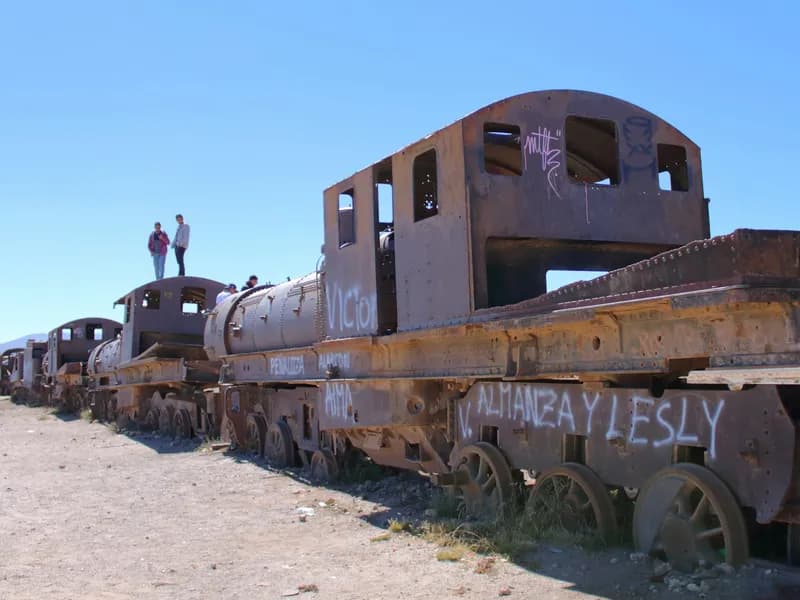
Train Cemetery (Cementerio de Trenes)
A haunting collection of abandoned steam locomotives and rail cars from the 1940s, rusting in the desert 3 km outside Uyuni town. Once part of a grand rail network connecting Bolivia to the Pacific coast. Free entry. Allow 30-45 minutes. First stop on most tours.
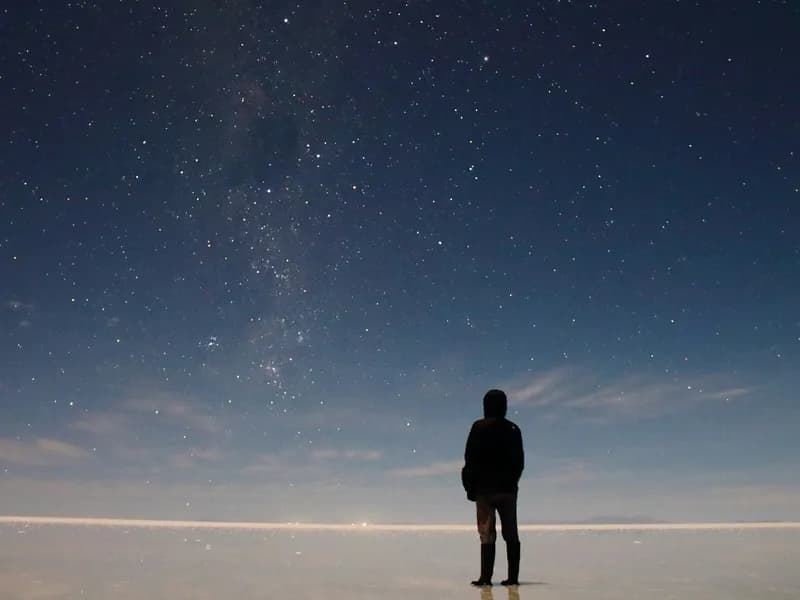
Stargazing on the Salt Flat
Zero light pollution and 3,656m altitude create some of Earth's most spectacular stargazing. The Milky Way reflects in the water during rainy season for a double-sky effect. Some tours offer overnight camping on the salt flat with mattresses in the 4x4. Best May-October for clear skies.
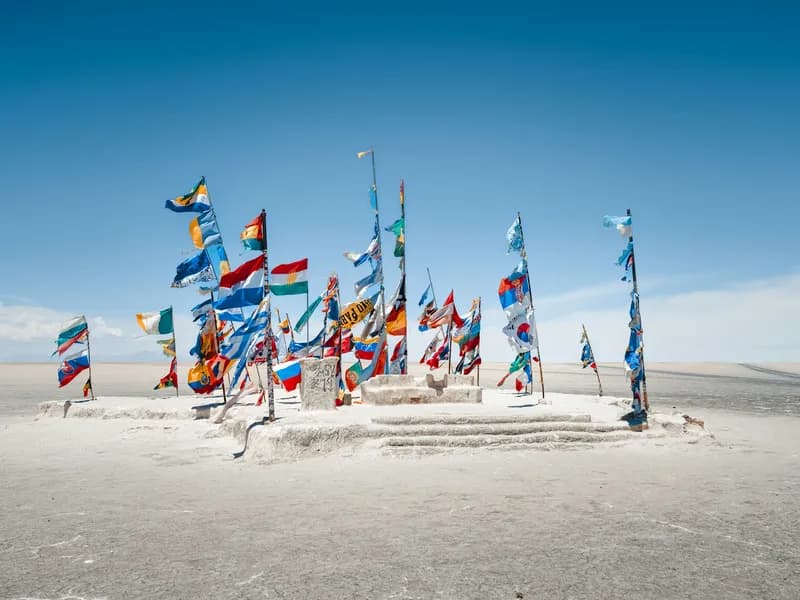
Salt Hotels
Stay in hotels built entirely from salt blocks — walls, furniture, beds, and floors all carved from the salar. Palacio de Sal and Luna Salada are the most established, starting at $80-150 USD/night. A unique accommodation experience found nowhere else on Earth.
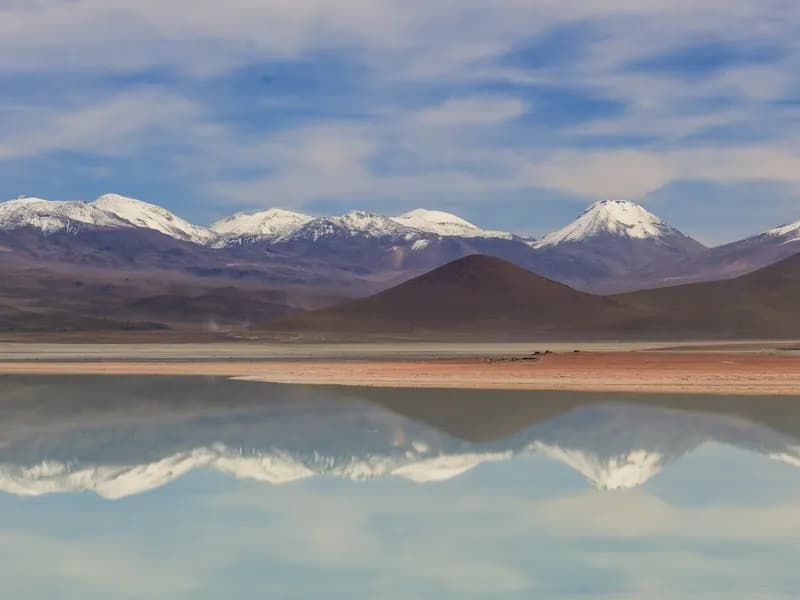
Eduardo Avaroa National Reserve
The 3-day tour from Uyuni continues south to this otherworldly landscape of colored lagoons (Laguna Colorada with flamingos, Laguna Verde), Sol de Mañana geysers, and hot springs at 4,800m altitude. 3-day tour from Uyuni ~$150-200 USD all-inclusive.
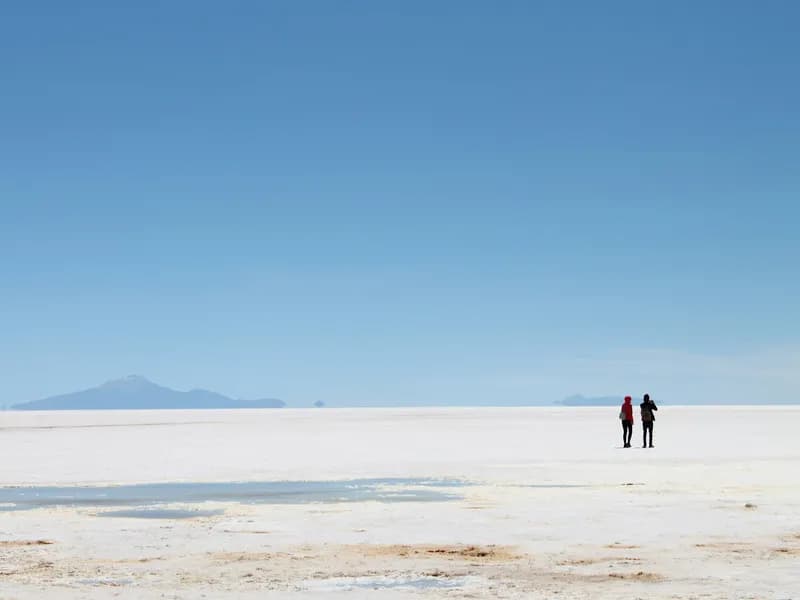
Perspective Photography on the Dry Flat
The perfectly flat, featureless white surface with no reference points creates the ideal conditions for forced-perspective trick photos — toy dinosaurs 'eating' people, standing on Pringles cans, etc. Guides carry props and know the best spots. Included in all day tours.
Planned Itinerary
7-Day Salar de Uyuni Itinerary
Arrival in Uyuni
Fly from La Paz to Uyuni with Boliviana de Aviación or Amaszonas (~$80-150 USD, 1 hour), or arrive on the overnight bus from La Paz (10-12 hours, $10-20 USD). Uyuni is a small, dusty frontier town — the gateway, not the destination.
Arrive in Uyuni(30 minutes)
The airport is tiny. Taxis to town ~$2 USD. If arriving by bus, the terminal is on the town's edge
Check into hotel and acclimatize(1 hour)
At 3,670m, altitude affects most visitors. Hotels $15-40 USD/night. Tonito Hotel or Hotel Jardines de Uyuni are solid mid-range options. Drink coca tea
Book your tour at a reputable agency(1 hour)
Walk Avenida Potosí (the main street) comparing agencies. Use Red Planet, Quechua Connection, or Salar Expeditions ($50-70/day). AVOID the cheapest operators ($30/day) — fatal accidents occur from poorly maintained vehicles. Verify spare tire, first aid kit, and satellite phone
Explore Uyuni town(1 hour)
A frontier town with a few blocks of restaurants and tour agencies. Not much to see but the atmosphere is electric with travelers preparing for salt flat adventures
Dinner at Minuteman Revolutionary Pizza(1 hour)
Traveler institution. Wood-fired pizza and burgers. ~$6-10 USD. Good book exchange and traveler intel
Salt Flat Day Tour — Train Cemetery, Incahuasi & Sunset
Full-day tour of the Salar de Uyuni — the world's largest salt flat at 10,582 km². The blinding white expanse stretches to every horizon. SPF 50+ is critical — the salt reflects 70% of UV.
Train Cemetery (Cementerio de Trenes)(45 minutes)
First stop: abandoned 1940s steam locomotives rusting in the desert, 3 km outside town. Once part of a rail network to the Pacific. Hauntingly photogenic. Free entry
Colchani salt processing village(30 minutes)
See how salt is extracted and processed. Small museum and souvenir shops selling salt carvings. Locals demonstrate traditional extraction methods
Drive onto the Salar and perspective photography(2 hours)
The perfectly flat, featureless white surface creates ideal forced-perspective trick photos — toy dinosaurs 'eating' people, standing on Pringles cans. Your guide carries props and knows the best spots. The silence and scale are overwhelming
Incahuasi Island (Isla del Pescado)(1.5 hours)
A rocky island in the middle of the salt flat covered with giant cacti — some over 12m tall and 1,200 years old. Hike to the summit for 360° views of endless white. Entry ~$4 USD. Bring sunscreen — UV reflection is intense
Sunset on the Salar(1.5 hours)
Your driver positions the 4x4 for the sunset. The sky turns orange, pink, and purple reflected in the salt crust (or water during rainy season). One of the most spectacular sunsets on Earth
3-Day Tour Begins — Salar to Eduardo Avaroa Reserve
Day 1 of the classic 3-day tour south from Uyuni through the salt flat to the otherworldly Eduardo Avaroa National Reserve. All-inclusive ~$150-200 USD for 3 days.
Morning on the Salar — mirror effect or hexagonal patterns(2 hours)
Dec-Apr: thin water creates the world's largest natural mirror. May-Nov: hexagonal salt patterns. Both are surreal. Your driver stops for photos
Drive south across the altiplano(3 hours)
Leave the salt flat and enter the high desert. Llamas, vicuñas, and vast empty landscapes at 4,000m+
Lunch prepared by driver/guide(45 minutes)
Simple but filling — usually llama or chicken with rice and vegetables. Eaten at a scenic overlook
Laguna Cañapa and flamingos(45 minutes)
An altiplano lake ringed with three species of flamingos. James's, Chilean, and Andean flamingos filter algae in the alkaline water. Stunning photo opportunities
Overnight at a basic refugio(Evening)
Simple accommodation near Laguna Colorada. Shared rooms, basic facilities, -10°C at night. Bring a warm sleeping bag liner if you have one. The stars are extraordinary — zero light pollution at 4,300m
3-Day Tour — Laguna Colorada, Geysers & Hot Springs
Day 2 of the tour. Red lagoons, bubbling geysers at dawn, and a hot springs soak at 4,400m — the most photogenic day of the entire trip.
Sol de Mañana geysers (dawn departure)(1 hour)
Depart at 5AM for the 4,850m geyser field. Boiling mud pools and steam vents against the sunrise. Stay on marked paths — the ground is thin crust over scalding water. Bring every warm layer you own — it is brutally cold
Hot springs soak at Termas de Polques(1 hour)
Natural thermal pools at 4,400m with views of Laguna Chalviri. ~$1 USD entry. The contrast of freezing air and warm water is sublime. Bring a towel and swimsuit
Laguna Colorada (Red Lagoon)(1.5 hours)
A blood-red lake (from algae and minerals) at 4,278m filled with thousands of flamingos. One of the most alien landscapes on Earth. Several viewpoints along the shore. Entry to Eduardo Avaroa Reserve ~$22 USD (may be included in tour)
Laguna Verde at the Chilean border(1 hour)
A jade-green lagoon at the foot of Volcán Licancabur (5,868m) — the green color comes from arsenic and copper minerals. Best color in the afternoon when wind ripples the surface
Overnight at refugio near Laguna Colorada(Evening)
Similar basic accommodation. Another spectacular night sky
3-Day Tour Ends — Return to Uyuni
Day 3. Drive back across the altiplano to Uyuni, stopping at rock formations and small villages.
Arbol de Piedra (Stone Tree)(30 minutes)
A wind-eroded rock formation in the Siloli Desert that looks like a tree. Classic photo stop in the surreal volcanic landscape
Drive across the altiplano(4 hours)
Vicuñas, vast expanses, distant volcanoes. Your driver navigates by landmarks — no roads, no GPS, no cell service
Lunch at San Cristóbal mining town(45 minutes)
A small town built around a massive open-pit mine. Simple restaurant with soup and rice, ~$3-4 USD
Hot shower and celebration dinner at Lithium Club(2 hours)
After 2 nights of basic refugios, a hot shower feels like luxury. Dinner at Lithium Club — upscale Uyuni restaurant with llama steaks and cocktails. Mains ~$8-12 USD
Rest Day & Salt Hotel Experience
Recover from the 3-day expedition. Optional upgrade to a salt hotel for the final night — an experience found nowhere else on Earth.
Sleep in at current hotel(2 hours)
After 2 nights in cold refugios, sleep is the best activity
Visit the salt museum in Colchani(1 hour)
Small museum about salt extraction history. ~$1 USD. Combined with browsing salt carvings and textiles from local artisans
Check into Palacio de Sal or Luna Salada (salt hotel)(1 hour)
Hotels built entirely from salt blocks — walls, furniture, beds, floors. $80-150 USD/night. A unique accommodation experience found nowhere else on Earth. Luna Salada has the best sunset views
Stargazing from the salt hotel terrace(1.5 hours)
Zero light pollution and 3,656m altitude create some of Earth's most spectacular stargazing. The Milky Way is visible with the naked eye in extraordinary detail. Some hotels offer guided stargazing sessions
Departure from Uyuni
Final morning. One last look at the salt flat before flying or busing to La Paz or onward.
Sunrise from the salt hotel(45 minutes)
Wake early for one last sunrise over the Salar. The light on the salt flat at dawn is ethereal
Breakfast on salt furniture(45 minutes)
Your last meal literally sitting on salt chairs at a salt table
Transfer to Uyuni Airport or bus terminal(30 minutes)
Flight to La Paz (~$80-150 USD, 1 hour) or overnight bus ($10-20 USD, 10-12 hours). The airport is tiny — arrive 1 hour before domestic flights
14-Day Salar de Uyuni Itinerary
Arrival in Uyuni
Fly from La Paz (~$80-150 USD, 1 hour) or arrive on overnight bus ($10-20 USD). Uyuni is a dusty frontier gateway at 3,670m.
Arrive in Uyuni(30 minutes)
Taxi to town ~$2 USD
Check into hotel and acclimatize(1 hour)
Tonito Hotel $25-40 USD/night. Coca tea for altitude
Book tour at reputable agency(1 hour)
Red Planet, Quechua Connection, or Salar Expeditions ($50-70/day). Verify safety equipment
Dinner at Minuteman Revolutionary Pizza(1 hour)
Wood-fired pizza, ~$6-10 USD
Salt Flat Day Tour — Train Cemetery, Incahuasi & Sunset
Full day on the world's largest salt flat. SPF 50+ essential — salt reflects 70% of UV.
Train Cemetery(45 minutes)
Abandoned 1940s locomotives. Free entry
Colchani salt village(30 minutes)
Salt processing demonstrations and souvenir shops
Perspective photography on the Salar(2 hours)
Trick photos on the featureless white surface. Guide carries props
Incahuasi Island(1.5 hours)
Giant cacti island. Summit for 360° views. Entry ~$4 USD
Sunset on the Salar(1.5 hours)
Sky turns orange reflected in the salt crust
3-Day Tour — Day 1: Salar to the Altiplano
Begin the classic 3-day tour south to Eduardo Avaroa National Reserve. ~$150-200 USD all-inclusive.
Morning on the Salar(2 hours)
Mirror effect (Dec-Apr) or hexagonal patterns (May-Nov)
Drive south across altiplano(3 hours)
Llamas, vicuñas, vast desert at 4,000m+
Laguna Cañapa and flamingos(45 minutes)
Three flamingo species in alkaline lake
Overnight at refugio(Evening)
Basic shared rooms, -10°C. Incredible stargazing
3-Day Tour — Day 2: Red Lagoons, Geysers & Hot Springs
The most photogenic day — geysers at dawn, hot springs, and the blood-red Laguna Colorada.
Sol de Mañana geysers (5AM departure)(1 hour)
4,850m geyser field. Boiling mud and steam at sunrise. Stay on marked paths
Hot springs at Termas de Polques(1 hour)
Natural thermal pools at 4,400m. ~$1 USD. Bring towel and swimsuit
Laguna Colorada(1.5 hours)
Blood-red lake with thousands of flamingos at 4,278m. Reserve entry ~$22 USD
Laguna Verde(1 hour)
Jade-green lagoon at the Chilean border beneath Volcán Licancabur
3-Day Tour — Day 3: Return to Uyuni
Drive back across the altiplano via rock formations and small villages.
Arbol de Piedra (Stone Tree)(30 minutes)
Wind-eroded rock formation in Siloli Desert
Drive across altiplano(4 hours)
No roads, no GPS, no cell service. Driver navigates by landmarks
Lunch at San Cristóbal(45 minutes)
Mining town. Soup and rice ~$3-4 USD
Dinner at Lithium Club(2 hours)
Llama steaks and cocktails, ~$8-12 USD
Salt Hotel & Stargazing
Recover from the expedition. Check into a hotel built entirely from salt blocks.
Salt museum in Colchani(1 hour)
Salt extraction history. ~$1 USD
Check into Palacio de Sal or Luna Salada(1 hour)
Salt walls, salt furniture, salt floors. $80-150 USD/night
Stargazing from the terrace(1.5 hours)
Zero light pollution. Milky Way visible in extraordinary detail
Sunrise Photography & Transfer to Potosí
Early morning on the salt flat for photography, then bus to the historic silver city of Potosí.
Sunrise on the Salar(1.5 hours)
Your driver takes you onto the flat for dawn light. The most magical hour on the salt flat
Bus from Uyuni to Potosí(4 hours)
~$5-8 USD. The road climbs to 4,090m. Potosí is one of the world's highest cities
Check into hotel in Potosí(30 minutes)
Hostal Colonial or Hotel Coloso, ~$15-25 USD/night
Evening walk around Plaza 10 de Noviembre(1 hour)
Potosí's main square with the cathedral and colonial buildings. The city's wealth (and tragedy) from silver mining is palpable
Potosí — Cerro Rico Mine Tour
Tour an active mine inside the mountain that once funded the Spanish Empire. Physically demanding and ethically complex, but unforgettable.
Miners' market shopping(45 minutes)
Buy gifts for miners — dynamite sticks ($1.50 USD), coca leaves, 96% alcohol (used for rituals). These are expected gifts when entering their workplace
Cerro Rico mine tour(3.5 hours)
Enter the 4,200m mountain through narrow tunnels. Meet working miners, see the conditions, learn the 500-year history of exploitation. ~$15-20 USD with Koala Tours or Big Deal Tours. Not for claustrophobes
Casa de la Moneda (Mint Museum)(1.5 hours)
Where coins funding the Spanish Empire were minted. Original machinery. Entry ~$5 USD. Guided tours only
Dinner at Cherry's Salón de Té(1.5 hours)
A colonial-era café. Hot chocolate and pastries, or traditional Potosí food. ~$5-8 USD
Potosí to Sucre
Travel to Bolivia's beautiful constitutional capital — white colonial buildings at a more comfortable 2,810m.
Bus from Potosí to Sucre(3 hours)
~$3-5 USD. Frequent departures. The descent from 4,090m to 2,810m is a relief
Check into hotel near Plaza 25 de Mayo(30 minutes)
Colonial hotels $20-40 USD/night
Walk Plaza 25 de Mayo(1 hour)
Main square. Casa de la Libertad (independence signed here), ~$3 USD
San Felipe Neri monastery rooftop(45 minutes)
Best panoramic view of the White City. ~$3 USD entry
Dinner at Condor Café(1.5 hours)
Rooftop terrace with plaza views. ~$6-10 USD
Sucre — Dinosaur Footprints & Colonial Walking
UNESCO World Heritage architecture and 68-million-year-old dinosaur trackways.
Sucre colonial walking tour(2.5 hours)
Free walking tour (tip-based). Textile Museum (~$3 USD) for indigenous weaving
Lunch at El Huerto(1 hour)
Garden restaurant. Bolivian touches. ~$6-10 USD
Cal Orck'o Dinosaur Footprints(2 hours)
5,000+ footprints on a vertical limestone wall. Parque Cretácico ~$5 USD. Taxi ~$3 USD
Chocolate shopping at Mercado Central(45 minutes)
Sucre is Bolivia's chocolate capital. Taboada bars ~$2-3 USD
Sucre — Maragua Crater Hike
Trek through Quechua communities to a geological crater formation — Bolivia's best off-the-beaten-path day hike.
Transfer to Chataquila trailhead(1 hour)
Taxi or tour ~$30-40 USD for the day
Hike to Maragua Crater(4 hours)
Inca trail descent through farming communities to a stunning syncline formation. Indigenous textiles for sale
Lunch with a local family(1 hour)
Community-based tourism. ~$3-5 USD
Rest Day in Sucre
A slow day in Bolivia's most beautiful city. Markets, cafés, and chocolate.
Mercado Central for breakfast(1 hour)
Fresh juices, empanadas, hot chocolate. ~$2-3 USD
ASUR Textile Museum(1.5 hours)
Indigenous weaving traditions. ~$4 USD. Fair-trade textiles in the shop
Afternoon at Café Mirador(2 hours)
Read and people-watch from a balcony overlooking the plaza. Coffee ~$2 USD
Dinner at Joy Ride Café(1.5 hours)
Social enterprise training at-risk youth. ~$5-8 USD
Return to Uyuni or La Paz
Depending on your onward travel, fly from Sucre to La Paz or bus back to Uyuni for departure.
Morning cooking class in Sucre(3 hours)
Salteñas and mondongo. ~$25-30 USD. Includes market shopping
Flight to La Paz or bus to Uyuni(1 hour flight / 7 hours bus)
Flight ~$60-80 USD. Bus to Uyuni ~$8-10 USD
Departure
Final morning. Transfer to your departure airport.
Last-minute shopping(45 minutes)
Salt carvings, alpaca textiles, or Sucre chocolate
Transfer to airport(30 minutes)
Uyuni or La Paz depending on routing. Arrive early for small regional airports
21-Day Salar de Uyuni Itinerary
Arrival in La Paz — Acclimatization
Fly into La Paz (LPB) at 4,061m to begin acclimatizing before heading to the salt flat. Do not go directly to Uyuni without adjusting to altitude first.
Airport transfer to La Paz(45 minutes)
Radio taxi ~$8-10 USD
Check into hotel in Sopocachi(30 minutes)
$25-50 USD/night. Coca tea immediately
Rest and hydrate(3 hours)
3-4 liters water. No alcohol. Sorojchi pills $1 USD
Light dinner at Alexander Coffee(1 hour)
Soup and coca tea, ~$5-8 USD
La Paz — Teleférico & Markets
Explore the world's highest administrative capital while continuing to acclimatize.
Mi Teleférico red and yellow lines(2 hours)
~$0.45 per ride. Canyon views from the sky
Witches' Market(1 hour)
Dried llama fetuses, Aymara healers. Free to browse
Lunch at Mercado Lanza(45 minutes)
Salteñas ~$0.60, lunch plates ~$1.50-2 USD
Valle de la Luna(1.5 hours)
Lunar landscape. Entry ~$3 USD. Taxi ~$5
Dinner at Popular Cocina Boliviana(1 hour)
Llama steak, ~$5-8 USD
Fly to Uyuni & Salt Flat Orientation
Morning flight from La Paz to Uyuni. Settle in and book tours for the days ahead.
Flight to Uyuni(1 hour)
Boliviana de Aviación or Amaszonas, ~$80-150 USD
Check into hotel(30 minutes)
Tonito Hotel, $25-40 USD/night
Book tours at reputable agencies(1 hour)
Red Planet or Quechua Connection. $50-70/day. Verify safety equipment
Train Cemetery(1 hour)
Walk to the abandoned locomotives 3 km outside town. Free. Best afternoon light
Dinner at Minuteman Pizza(1 hour)
Wood-fired pizza, ~$6-10 USD
Full Day on the Salar — Photography & Incahuasi
Full day on the 10,582 km² salt flat. SPF 50+ critical.
Colchani salt village(30 minutes)
Salt processing and souvenir shops
Perspective photography(2 hours)
Trick photos on the featureless white surface. Guide carries props
Incahuasi Island(1.5 hours)
Giant cacti up to 12m tall. Summit for 360° views. Entry ~$4 USD
Lunch on the salt flat(45 minutes)
Picnic lunch on a table set on the white crust. Surreal dining
Sunset on the Salar(1.5 hours)
Orange and pink sky reflected in the salt
3-Day Tour — Day 1: Salar to Altiplano
Begin the classic 3-day southbound tour. ~$150-200 USD all-inclusive.
Morning on the Salar(2 hours)
Mirror effect or hexagonal patterns depending on season
Drive south across altiplano(3 hours)
Llamas, vicuñas, vast desert above 4,000m
Laguna Cañapa flamingos(45 minutes)
Three species of flamingos in alkaline lakes
Overnight at refugio(Evening)
Basic rooms, -10°C. Extraordinary stargazing
3-Day Tour — Day 2: Geysers, Hot Springs & Red Lagoon
The most photogenic day — dawn geysers, thermal baths, and blood-red Laguna Colorada.
Sol de Mañana geysers (5AM)(1 hour)
4,850m. Boiling mud and steam at sunrise. Stay on marked paths
Hot springs at Termas de Polques(1 hour)
Natural pools at 4,400m. ~$1 USD
Laguna Colorada(1.5 hours)
Blood-red lake with thousands of flamingos at 4,278m
Laguna Verde(1 hour)
Jade-green lagoon beneath Volcán Licancabur (5,868m)
3-Day Tour — Day 3: Return to Uyuni
Drive back via rock formations and mining towns.
Arbol de Piedra(30 minutes)
Wind-eroded stone tree in Siloli Desert
Lunch at San Cristóbal(45 minutes)
~$3-4 USD
Dinner at Lithium Club(2 hours)
Llama steaks, ~$8-12 USD
Rest Day & Salt Hotel
Recovery day. Move to a hotel made entirely of salt.
Salt museum in Colchani(1 hour)
~$1 USD
Check into Luna Salada salt hotel(1 hour)
Salt walls, furniture, floors. $80-150 USD/night
Stargazing from terrace(1.5 hours)
Zero light pollution. Milky Way in naked-eye detail
Sunrise Photography & Overnight Salar Camping
For the ultimate experience: camp overnight on the salt flat itself. Some operators offer this with mattresses in the 4x4.
Sunrise on the Salar from salt hotel(1 hour)
Dawn light transforms the salt flat
Afternoon drive onto the Salar for overnight camp(2 hours)
Some operators set up camp in the middle of the flat with sleeping gear in the 4x4. ~$60-80 USD extra. Truly middle-of-nowhere
Sunset dinner on the salt flat(1.5 hours)
Simple meal prepared by your guide on the salt crust
Night sky photography(2 hours)
During rainy season, the Milky Way reflects in the water for a double-sky effect. The most spectacular stargazing experience on Earth
Dawn on the Salt Flat & Transfer to Potosí
Wake to sunrise on the Salar, then head to the historic silver city.
Sunrise on the Salar(1 hour)
Waking up in the middle of the salt flat at dawn is otherworldly
Bus to Potosí(4 hours)
~$5-8 USD. Climbs to 4,090m
Check into hotel in Potosí(30 minutes)
$15-25 USD/night
Evening walk around Plaza 10 de Noviembre(1 hour)
Cathedral and colonial buildings. Silver wealth everywhere
Potosí — Cerro Rico Mine Tour
Enter an active mine inside the mountain that funded the Spanish Empire.
Miners' market(45 minutes)
Buy gifts for miners — dynamite, coca, alcohol. Expected gifts
Cerro Rico mine tour(3.5 hours)
Narrow tunnels at 4,200m. Meet working miners. ~$15-20 USD with Koala Tours
Casa de la Moneda(1.5 hours)
Colonial mint museum. ~$5 USD
Dinner at Cherry's Salón de Té(1.5 hours)
Hot chocolate and traditional food, ~$5-8 USD
Potosí to Sucre
Descend to Bolivia's White City at a more comfortable 2,810m.
Bus to Sucre(3 hours)
~$3-5 USD. Relief descending from 4,090m
Check into colonial hotel(30 minutes)
$20-40 USD/night
Plaza 25 de Mayo and Casa de la Libertad(1.5 hours)
Independence signed here. ~$3 USD
San Felipe Neri rooftop(45 minutes)
Best panorama of the White City. ~$3 USD
Dinner at Condor Café(1.5 hours)
Rooftop terrace, ~$6-10 USD
Sucre — Dinosaurs & Colonial Walking
UNESCO architecture and 68-million-year-old dinosaur trackways.
Colonial walking tour(2.5 hours)
Free tour (tip-based). Textile Museum ~$3 USD
Lunch at El Huerto(1 hour)
Garden restaurant, ~$6-10 USD
Cal Orck'o Dinosaur Footprints(2 hours)
5,000+ footprints on vertical wall. ~$5 USD
Chocolate shopping(45 minutes)
Taboada and Para Ti bars, ~$2-3 USD each
Sucre — Maragua Crater Hike
Full-day trek through Quechua communities to a geological crater.
Transfer to Chataquila(1 hour)
~$30-40 USD for the day
Hike to Maragua Crater(4 hours)
Inca trail through farming communities
Lunch with local family(1 hour)
Community-based tourism, ~$3-5 USD
Rest Day in Sucre
Slow day in Bolivia's most beautiful city.
Mercado Central breakfast(1 hour)
Juices, empanadas, hot chocolate
ASUR Textile Museum(1.5 hours)
Indigenous weaving, ~$4 USD. Fair-trade shop
Afternoon at Café Mirador(2 hours)
Plaza-view balcony
Dinner at Joy Ride Café(1.5 hours)
Social enterprise, ~$5-8 USD
Sucre Cooking Class & Tarabuco Market
Sunday market day trip to the indigenous weaving village of Tarabuco, plus a cooking class.
Day trip to Tarabuco (Sunday only)(5 hours)
65 km from Sucre. Minibus ~$3 USD round trip. The weekly indigenous market features Yampara textiles, produce, and traditional food. If not Sunday, take the cooking class instead
Buy textiles directly from weavers(1 hour)
Hand-woven aguayos and belts at producer prices. $10-50 USD depending on size and complexity
Lunch at a market stall in Tarabuco(45 minutes)
Chicharrón (fried pork) with mote (corn), ~$2-3 USD
Evening cooking class(3 hours)
Salteñas and Bolivian desserts. ~$25-30 USD. Eat your creations
Flight to Cochabamba — Bolivia's Food Capital
Fly to Cochabamba (30 min), Bolivia's culinary capital at 2,558m with the most diverse food scene.
Flight from Sucre to Cochabamba(30 minutes)
~$40-60 USD. Short hop. Alternatively bus 10 hours
Check into hotel(30 minutes)
Hotels $20-40 USD/night near Plaza 14 de Septiembre
Cancha Market(2 hours)
South America's largest open-air market — sprawls over dozens of blocks. Everything from electronics to live chickens. Keep valuables close but it is generally safe. An overwhelming sensory experience
Lunch at the market food stalls(1 hour)
Silpancho (breaded meat on rice, potatoes, and salad), ~$2-3 USD. The Cochabamba version is the original and best
Cristo de la Concordia(1.5 hours)
Climb 1,399 steps (or take the teleférico ~$2 USD) to the Christ statue — taller than Rio's Cristo Redentor at 34m. Panoramic city views at sunset. Free
Cochabamba — Food Tour & Chapare
A day dedicated to Bolivia's best food and a trip to the tropical lowlands.
Morning food tour(3 hours)
Self-guided or with local guide. Start at Mercado 25 de Mayo for api morado and buñuelos. Try chicharrón cochabambino (the local specialty — deep-fried pork with hominy). Walk to La Cancha for more street food
Drive to Villa Tunari / Chapare(3 hours)
Descend from 2,558m to 300m through spectacular cloud forest. The road is dramatic. ~$5 USD by bus or $40-50 for a private driver
Swim in a river near Villa Tunari(1.5 hours)
Tropical rivers with natural pools. The warmth is a relief after weeks at altitude
Return to Cochabamba(3 hours)
Evening return
Return to La Paz
Fly back to La Paz for the final days of the trip.
Flight to La Paz(45 minutes)
~$50-70 USD
Free afternoon(3 hours)
Revisit favorite spots, last teleférico rides
Dinner at Gustu(2 hours)
Bolivia's finest. Tasting menu ~$45 USD
Final Free Day in La Paz
Last full day. Wrap up shopping and farewells.
Morning salteñas at Paceña La Salteña(45 minutes)
~$0.60 each. Before 10AM
Shopping on Calle Sagárnaga(1.5 hours)
Alpaca sweaters, aguayo textiles, silver jewelry, salt carvings from Uyuni
Lunch at Ali Pacha(1.5 hours)
Vegan Bolivian tasting menu ~$20 USD
Sunset teleférico ride(1 hour)
Silver line for golden-hour views
Farewell dinner at Reineke Fuchs(1.5 hours)
Craft beer pub. Pints ~$3 USD
Departure from La Paz
Final morning in Bolivia. Transfer to El Alto Airport.
Transfer to El Alto Airport(45 minutes)
Radio taxi ~$8-10 USD. 3 hours early for international
Travel Tips
Visa & Entry
Bolivia Visa Requirements
US citizens need a visa ($160 USD). EU and UK passport holders enter visa-free for 90 days. Apply for US visas online through Bolivia's e-visa portal or at the border (cash USD required). Bring two passport photos and proof of accommodation.
transport
Getting to Uyuni
Fly from La Paz to Uyuni with Boliviana de Aviación or Amaszonas (~$80-150 USD one way, 1 hour). Alternatively, take the overnight bus from La Paz (10-12 hours, $10-20 USD) or the scenic daytime bus from Sucre (7 hours). The train from Oruro is atmospheric but infrequent.
Mirror Effect Timing
For the famous mirror photos, visit December-April (rainy season). January-February has the most water but some areas become inaccessible. The sweet spot is late March-early April — enough water for mirrors, fewer access issues. Dry season (May-November) offers hexagonal salt patterns and easier travel.
Safety
Choose Your Tour Operator Carefully
The cheapest tours ($30-40/day) often have poorly maintained vehicles, drunk drivers, and no emergency equipment — fatal accidents occur. Spend $50-70/day with reputable operators like Red Planet, Quechua Connection, or Salar Expeditions. Verify the vehicle has a spare tire, first aid kit, and satellite phone.
No GPS or Cell Service
There is zero cell phone coverage on the salt flat. Your driver navigates by landmarks and experience. If you get separated from your group or vehicle breaks down, stay put — do not wander. Carry a charged power bank, whistle, and some emergency food and water.
Budget
Tour Pricing and What to Bring
1-day tours: $25-40 USD. 3-day tours (including Eduardo Avaroa Reserve): $150-200 USD all-inclusive. Bring your own snacks, extra water, toilet paper, sunscreen (SPF 50+), sunglasses (the glare is blinding), warm layers for -10°C nights, and a headlamp.
Local Customs
Altitude and Extreme Conditions
At 3,656m with zero shade, conditions are harsh. UV radiation is extreme — wear SPF 50+ and reapply constantly as the salt reflects 70% of UV. Temperatures swing from 25°C midday to -10°C at night. Acclimatize in La Paz or Sucre for at least 2 days first.
Ready to explore Salar de Uyuni?
Get AI-powered recommendations for your trip
Plan a Trip to Salar de UyuniRelated Articles
Travel GuidesYour 15 Biggest Questions About Salar de Uyuni, Answered by Someone Who's Been Three Times
Mirror photos, altitude sickness, sketchy tour operators, and whether the salt hotels are actually made of salt. Everything you need to know before visiting the world's largest salt flat.
Travel GuidesThe Complete Salar de Uyuni Guide: 1-Day, 3-Day, and DIY Tour Options for 2026
Everything you need to plan your Uyuni trip — tour comparisons, packing lists, the mirror vs. dry debate, and how to avoid the operators that cut corners.
StoriesUyuni After Dark: A Night on the World's Largest Mirror
We drove into the white until the town disappeared. Then the stars came out. Then the salt flat reflected them back. And I stood between two infinities.