7 Days on Vis: A Journal from Croatia's Most Remote Island
7 Days on Vis: A Journal from Croatia's Most Remote Island
Day 1: The Ferry That Filters Out the Impatient
The Jadrolinija ferry from Split takes two and a half hours. The catamaran does it in ninety minutes — but the slow boat is the one to take on purpose. Something about a two-and-a-half-hour crossing to Croatia's farthest inhabited island makes the place feel earned before you ever step off the deck.
That deck view is worth it alone — the Dalmatian islands peeling apart as the boat heads into open water, Hvar shrinking behind you, and eventually Vis rising as a low green ridge on the horizon. Tickets run about 12 euros per person. Book the car ferry slot at least three weeks ahead (essential for July — the vehicle spots sell out) and budget another 45 euros for it.
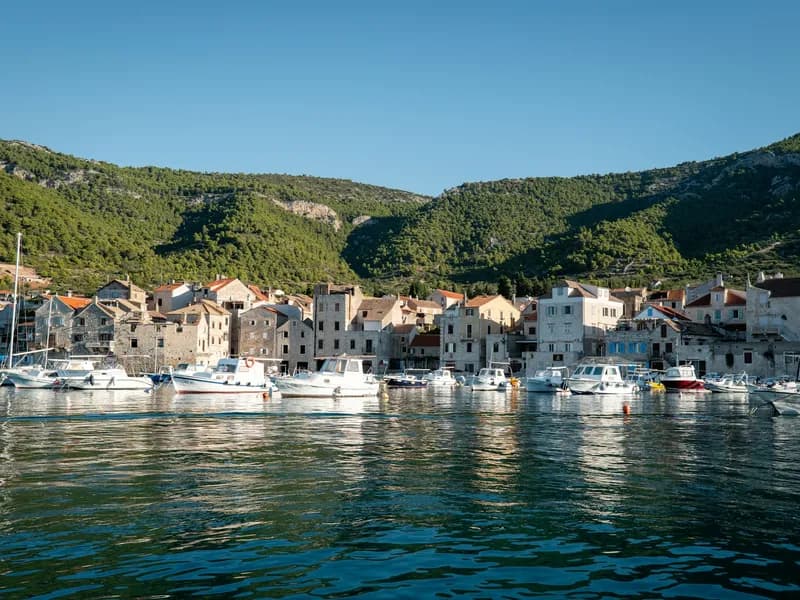
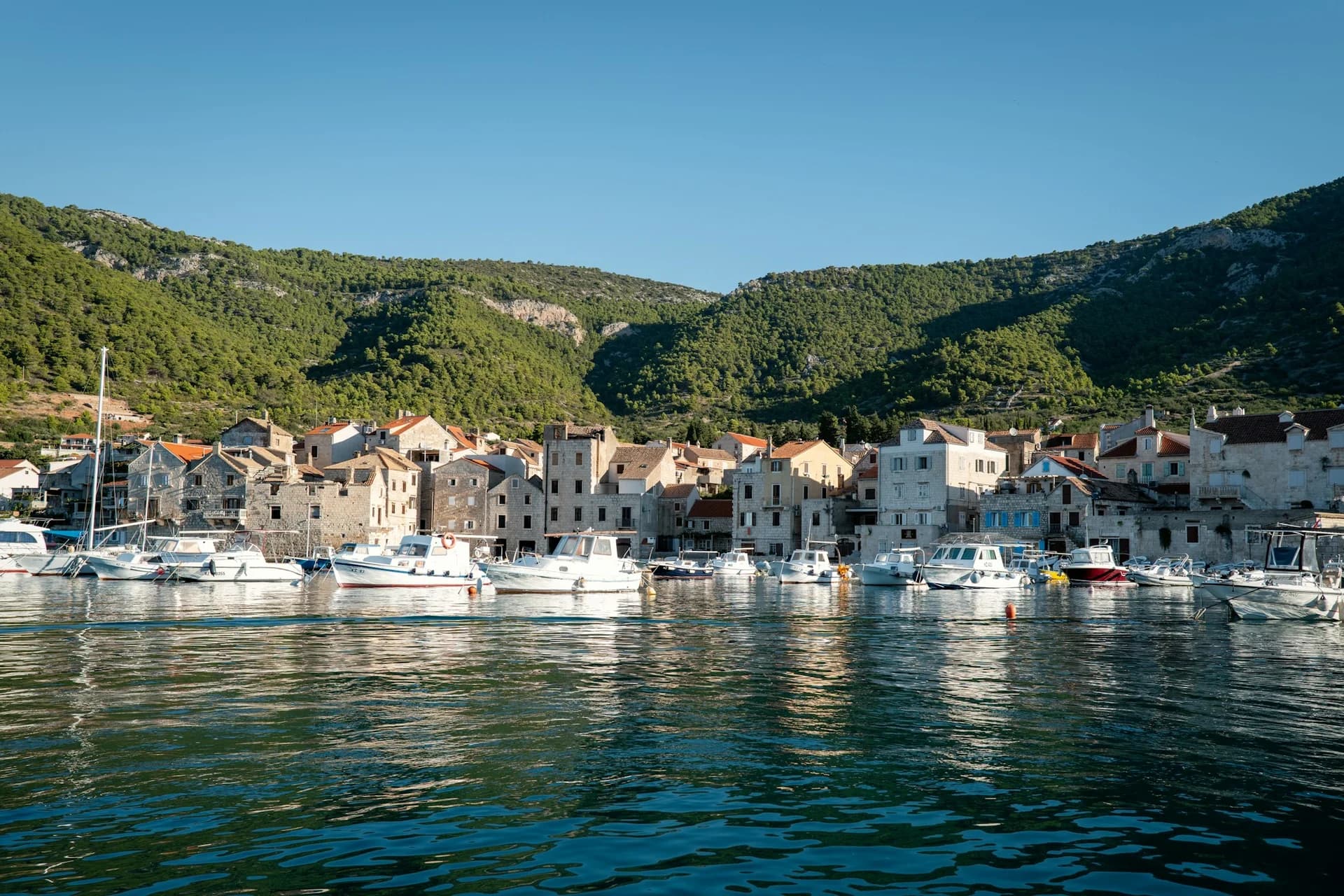
Vis town reveals itself slowly as you enter the harbor: a crescent of Venetian-era buildings in faded ochre and terracotta, fishing boats bobbing, a fortress on the hill. It looks like a postcard from 1975, and that's the compliment — Rovinj gets the glossy-brochure treatment for the same Venetian bones, but Vis never bothered restoring itself for anyone.
Aparthotel Paula makes an easy base — 95 euros per night, walking distance to the harbor, simple and clean, with a balcony over the water. Luxury by Vis standards.
Dinner at Pojoda is the revelation. You'd walk right past it — no sign on the street, just a door in a stone wall that opens into a walled garden with grape vines overhead and a kitchen that apparently only makes incredible food. Grilled fish caught that morning, 18 euros. Octopus salad with local olive oil. A half-liter of house Plavac Mali wine — a Croatian cousin of the Primitivo grown across the Adriatic in Puglia. Eat slowly, because there's nothing to rush toward.
Afterward, walk the riva — the waterfront promenade — and stop at Bejbi bar for a 6-euro aperitivo. The sun goes down behind the islands. Nobody checks their phone.
Day 2: The Blue Cave Lives Up to the Hype
Rent a scooter in Vis town (35 euros per day, non-negotiable during summer) and ride the 17 kilometers to Komiza on the western coast. The road climbs over the island's spine, and the views from the top are the kind that make you pull over twice.
Komiza is the fishing village to Vis town's port elegance. Stone houses, a 16th-century fortress, nets drying on the quay — the same unrenovated working-harbor register that makes Procida the quiet outlier among the Bay of Naples islands. Book a Blue Cave tour from the harbor office — 40 euros, including the cave, a swim stop at Budikovac island, and the Green Cave.
The Blue Cave on Bisevo island is a 20-minute boat ride from Komiza. The entrance is tiny — you duck into a small boat and squeeze through an opening in the cliff. Inside, sunlight refracts through an underwater gap and turns the water an impossible electric blue. It's not Photoshop. It's not enhanced. It's actually that color.
The cave visit lasts about ten minutes, and it's worth every euro — but here's the trick: take the morning tour from Komiza (calmer seas) rather than the afternoon, and definitely not from Split. The Split tours cost 80–120 euros, spend three hours on a speedboat each way, and still give you only ten minutes in the cave.
Lunch at Jastozera in Komiza is an experience you'll remember. The restaurant is built into a 16th-century lobster-trap storage fortress on the waterfront — a literal fortress designed to store lobster traps. The grilled squid is 15 euros. The lobster is priced by the kilo (50–70 euros), and the regulars clearly think it's worth it. The setting alone would be worth double.
Day 3: Stiniva — Europe's Best Beach Earns the Title
Take it the hard way. The footpath to Stiniva Cove from the road above is steep, rocky, unmarked, and runs a solid thirty minutes in proper shoes — the same bargain the Ionian makes at Lefkada's cliff-backed beaches, where the best water tends to sit below the worst path. Wear real footwear — hiking sandals will not thank you on this descent.
Then you push through the narrow rock opening between the towering cliffs, and it opens into a hidden cove with turquoise water so clear you can see the pebbles on the bottom twenty feet down. European Best Destinations voted it Europe's best beach, and for once the voters got it exactly right — no small verdict on a continent that also lays claim to the celebrated coves of Paros.
There are no facilities at Stiniva. None. No bathroom, no bar, no shade, no phone signal. Bring water, food, reef shoes for the pebbles, and sunscreen — or take the water taxi from Komiza for 15 euros per person and skip the scramble entirely.
Spend the afternoon at Roki's in Podspilje — a legendary family winery-restaurant in the hills between Vis town and Komiza. Book ahead, because there are maybe twenty seats. The multi-course meal with wine tasting costs 35 euros per person. Everything is homegrown. The Plavac Mali wine has never left the island. Ask the owner if he ships, and he'll laugh.
Day 4: Wine, History, and Doing Nothing
A slow day. Deliberately slow.
Spend the morning at Lipanovic Winery in the hills above Vis town. The Vugava grape — a white variety found literally nowhere else on Earth — produces a wine that's mineral, slightly honeyed, and utterly distinctive. A tasting with the winemaker himself runs 15 euros for four wines, and the bottles go for 12–15 euros each. You cannot find these on the mainland.
The Archaeological Museum in Vis town (3 euros) is small but fascinating — Greek and Roman artifacts from ancient Issa, a colony established in 397 BC. Bronze heads, amphorae, coins. The same layers of empire stack up all along this coast, from ancient Issa to the Roman forum at Zadar. The idea that Greeks were making wine on this island twenty-four centuries ago, and people are still doing it today, lands differently after a morning tasting.
In the afternoon, sit on the riva with a book and a glass of Vugava. Watch the fishing boats come and go. Leave the email closed. This is the Vis experience — the permission to stop.
Catch sunset at Fort George, a British Napoleonic-era fortress above Vis town that's now a cocktail bar with DJ nights in summer — the Mediterranean habit of fortifying every useful headland, visible here in miniature and at full scale in the bastion-stacked harbor of Valletta. Cocktails run 8–12 euros. The view takes in the entire harbor, the islands beyond, and the open Adriatic. The gin and tonic is fine. The view is extraordinary.
Day 5: Cold War Ghosts and Hidden Beaches
Vis was a Yugoslav military base from 1945 to 1989, closed entirely to foreign tourists. The military left behind a network of tunnels, submarine pens, and gun emplacements carved into the rock — and today you can tour them.
The guided tour (20 euros, booked through the tourist office) leads into the submarine tunnel near Vis town — a massive cavern drilled into the cliff face, big enough for actual submarines to hide inside, and one of several the Yugoslav navy cut along this coastline and down through Montenegro. The Cold War concrete, the rusted rails, the echoing water: it feels like a Bond-villain lair someone forgot to demolish.
Tito's Cave above Komiza is where Marshal Tito ran his partisan headquarters in 1944 while coordinating with the British. It's a steep walk up, free to enter, with a small museum inside that fills in the WWII context. Standing in the cave where a guerrilla leader directed a war effort is one of those moments where history stops being abstract.
In the afternoon, swim at Zaglav Beach near Komiza — unusually sandy for Vis, which is mostly pebble beaches. Shallow water, a small beach bar, and actual sand underfoot. It feels like a luxury here.
Day 6: Kayaking to Places Roads Can't Reach
Take the half-day sea kayaking tour from Vis town. Forty-five euros per person, gear provided, suitable for beginners in calm conditions. You paddle along the coast to sea caves, snorkel in water so clear the guides put visibility at 30 meters — the kind of clarity otherwise found only during an underwater week in Coron — and land on a tiny pebble beach with no name and no path from above.
Lunch at Konoba Stoncica on the east coast. Call ahead two hours to order peka — octopus slow-cooked under an iron bell — and it may well be the single best thing you eat on the island. Around 18 euros per person. The konoba has been run by the same family for generations, and the grandmother who brings the bread will be entirely unimpressed by your enthusiasm.
Stoncica Beach is right there afterward — long, pebbly, pine-shaded, with a Roman-era lighthouse nearby that most visitors to Croatia don't know exists.
Save the final evening for the riva. Travarica (herb-infused grappa, 3–4 euros per glass) at a harbor bar. The sun goes down. Leaving starts to feel like a bad idea.
Day 7: Departure and the Promise to Return
Start with a morning swim at Prirovo Beach — five minutes from the harbor, clear water, and completely empty at 7 AM.
Breakfast at Lambik Wine Bar: coffee and pastries. Pick up a final bottle of Vugava (12 euros) for a friend who will never understand why you're handing them wine from an island they've never heard of.
The ferry back to Split feels too fast. Two and a half hours, and you're back in the noise, the traffic, the cruise-ship crowds. You sit on the Split riva surrounded by a thousand people and find yourself missing the island where three thousand people live and nobody hurries.
Would you go back? The Jadrolinija schedule is already open in another tab.