Budapest in Winter: Steaming Baths, Christmas Markets, and Off-Season Magic
Budapest in Winter: Steaming Baths, Christmas Markets, and Off-Season Magic
I've worked in Budapest's tourism industry for seven years, and I'll let you in on something: summer Budapest is wonderful. Winter Budapest is transcendent.
The thermal baths steam. The Danube reflects the lit-up Parliament. The Christmas markets smell of mulled wine and chimney cake. And hotel prices drop 40-60% from summer peaks. Here's why December through February is the real Budapest season.
The Thermal Bath Experience
Budapest has over 120 natural hot springs — the only capital city in the world with this claim. The thermal baths operate year-round, but in winter, they become something else entirely.
Picture this: it's -5°C outside. Snow is falling. You're sitting in a 38°C outdoor pool at Szechenyi Thermal Bath, steam rising around you like clouds, watching snowflakes dissolve on the water's surface. Old men play chess on floating boards beside you. Your muscles turn to liquid. Your brain empties.
That's winter bathing. It's the single best travel experience in Central Europe.
Szechenyi (7,900 HUF / ~$20 with locker): The largest and most famous. Neo-Baroque palace, 3 outdoor pools, 15 indoor pools. Open 6AM-10PM. The outdoor pools steam dramatically in winter — arrive at opening for the most atmospheric experience.
Gellert (9,200 HUF / ~$23): The most beautiful bath, Art Nouveau interior. The wave pool and the main hall with marble columns and mosaic tiles are stunning. Less outdoor winter experience than Szechenyi.
Rudas (6,400 HUF weekdays, 9,000 HUF weekends): A 16th-century Ottoman bath with a rooftop pool overlooking the Danube. Friday and Saturday night sessions (10PM-4AM) with colored lighting turn it into a unique nightlife experience.
Bring your own towel (rental: 3,000 HUF). Flip-flops are recommended. Swimsuit required in mixed-gender areas. Winter is the best season because the thermal water is already 34-40°C — the cold air creates the steam and the contrast makes the warmth more intense.
Christmas Markets
Budapest's Christmas markets run from mid-November through December 31. They're less famous than Vienna's or Prague's, which means fewer crowds and more authenticity.
Vorosmarty Square (largest): Wooden stalls selling handcrafted gifts, Hungarian food, and mulled wine (forralt bor, 800-1,200 HUF per mug). Try the langos (fried dough with sour cream and cheese, 1,200 HUF) and kurtoskalacs (chimney cake, 800 HUF).
St. Stephen's Basilica (most photogenic): Smaller market with a skating rink and 3D light shows projected on the Basilica facade every 30 minutes after dark. The mulled wine here is marginally better than Vorosmarty (try the chocolate version).
Free: Entry to all markets is free. Budget 3,000-5,000 HUF ($7-12) for food and drinks per visit.
The Danube at Night
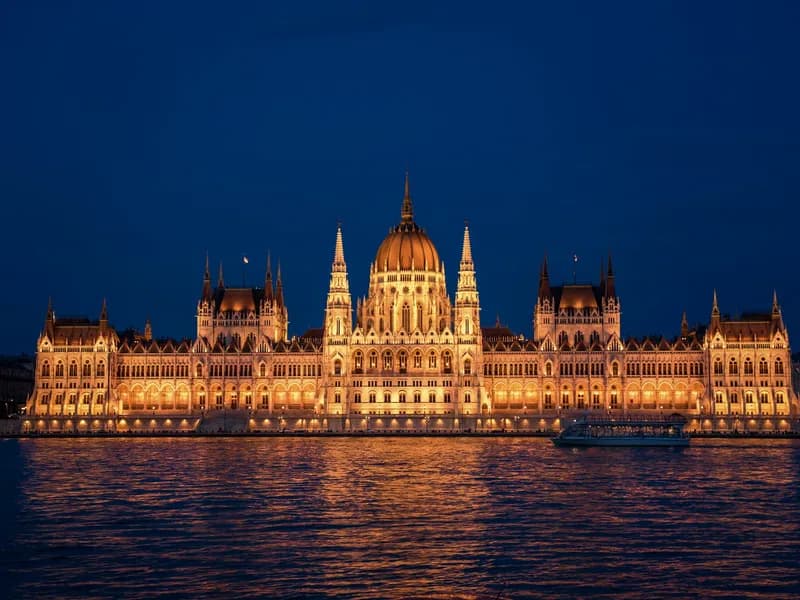
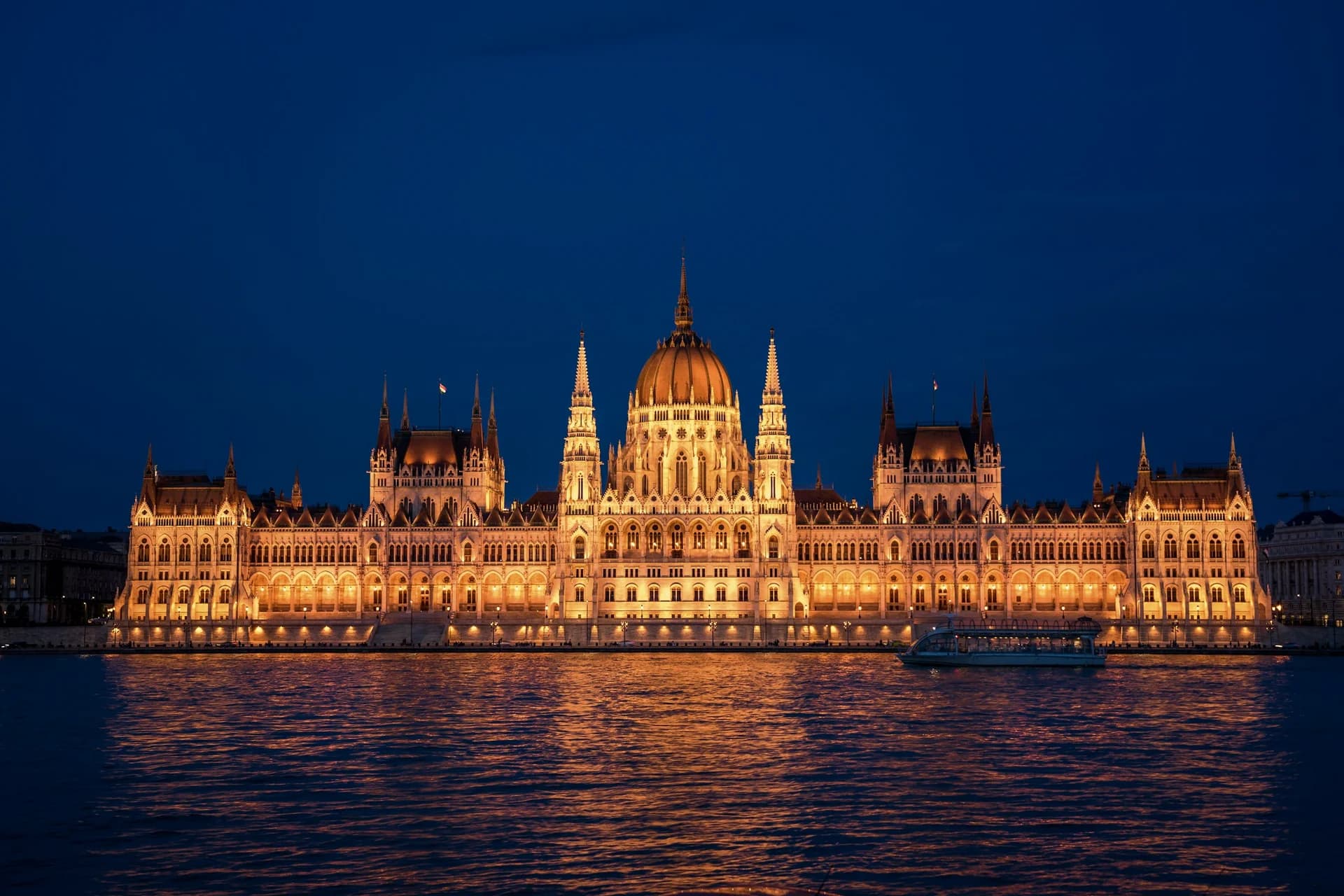
Budapest's UNESCO-listed Danube banks are illuminated year-round, but winter's early darkness (sunset at 4PM in December) means you get the lights for longer. The Parliament Building, Buda Castle, the Chain Bridge, and Gellert Hill are all spotlit.
Three ways to see it:
- Tram 2 along the Pest embankment (530 HUF, one of Europe's most scenic tram rides)
- Danube cruise (from 4,900 HUF / ~$12 for 1 hour with drink)
- Walk across the Chain Bridge at night (free, 15 minutes)
The Parliament Building at night, reflected in the Danube with winter mist softening the edges, is one of the most beautiful urban views I know.
Ruin Bars in Winter
Budapest's ruin bars (romkocsmak) — nightlife in abandoned, art-filled buildings — are a year-round institution. In winter, the indoor rooms come alive: Szimpla Kert's maze of rooms, each heated and decorated differently, feels like exploring a warm, eccentric wonderland.
Szimpla Kert also hosts a Sunday farmers market (9AM-2PM) with Hungarian artisan food — perfect for a winter morning browse.
Winter-specific: many ruin bars serve forralt bor (mulled wine) and mezes (warm honey-spiced beer). Instant-Fogas, the massive two-building ruin bar, has events almost every night.
Winter Food
Hungarian cuisine is built for winter — heavy, warming, and deeply satisfying.
- Goulash (gulyas): Not a stew — in Hungary, it's a soup. Rich, paprika-red, with beef, potatoes, and noodles. 1,500-2,500 HUF at a local etterem.
- Halaszle: Fisherman's soup — paprika-spiced broth with river fish. Traditional for Christmas Eve.
- Toltott kaposzta: Stuffed cabbage rolls with sour cream. The quintessential winter comfort food. 2,500-3,500 HUF.
- Chimney cake (kurtoskalacs): Warm, cinnamon-coated, available at every Christmas market stand. 800-1,000 HUF.
- Forralt bor: Hungarian mulled wine, often with orange, clove, and cinnamon. 600-1,200 HUF per cup.
Winter Packing
- Warm coat (temperatures: -5 to 5°C in December-February)
- Thermal layers (useful for the bath-to-street transition)
- Waterproof boots (slushy streets, cobblestones)
- Swimsuit and flip-flops (thermal baths)
- Gloves and a warm hat (essential for market browsing and bridge walks)
- Cash in Forints (many market stalls and smaller places are cash-only)
Hotel Pricing
Winter Budapest is absurdly affordable. A well-reviewed 4-star hotel in District V or VII: 25,000-45,000 HUF ($60-110) per night. The same hotel in July: 60,000-100,000 HUF ($150-250). December weekdays are the cheapest.
Exceptions: New Year's Eve week (prices spike) and if a major conference is in town.
Sample Winter Itinerary (3 Days)
Day 1: Morning at Szechenyi Baths (arrive 8AM for steam and space). Lunch at Great Market Hall — langos upstairs, browse paprika and foie gras downstairs. Afternoon: walk to St. Stephen's Basilica and the Christmas market. Evening: Danube cruise (4,900 HUF).
Day 2: Morning: Buda Castle and Fisherman's Bastion (the view of Parliament across the river in winter light is ethereal). Lunch in the Castle District. Afternoon: House of Terror Museum (3,000 HUF, a sobering look at fascist and communist-era Budapest). Evening: Ruin bar crawl — Szimpla Kert, then Instant-Fogas.
Day 3: Morning: Parliament Building tour (6,000 HUF, book ahead). Coffee at New York Cafe (the most opulent cafe in the world — a coffee is 2,500 HUF but the ceiling is worth it). Afternoon: Gellert or Rudas Baths. Evening: Goulash dinner at Hungarikum Bisztro (2,800 HUF), then Vorosmarty Square market for mulled wine.
Total 3-day cost (excluding hotel): approximately 45,000-55,000 HUF ($110-135).
Why Winter Wins
Summer Budapest is crowded, hot (30°C+), and full of bachelor parties. Winter Budapest is atmospheric, affordable, and intimate. The baths hit differently in the cold. The lights reflect differently off the Danube. The food is designed for this season.
And there's something about walking across the Chain Bridge at 9PM in December, the Parliament glowing across the water, snow just starting to fall, your breath visible in the cold air, knowing that a steaming thermal bath is 20 minutes away — that makes Budapest feel like the most romantic city in Europe.
Vienna has the coffeehouses. Prague has the spires. Budapest has the baths. For the full year-round guide, read our complete Budapest guide. And for the nightlife side, don't miss our ruin bars story.
In winter, there's no contest.