The Night I Discovered Budapest's Ruin Bars (And Never Wanted to Leave)
Inside Budapest's Ruin Bars (And Why You Won't Want to Leave)
Three people in three different countries will tell you the same thing, in the same breathless tone: "You have to go to Szimpla Kert. You have to." It's the kind of recommendation that's easy to file under probably overhyped.
It isn't. The ruin bars of Budapest are unlike anything else in European nightlife, and Szimpla Kert is only the beginning.
The Setup
Budapest's Jewish Quarter (District VII) was heavily damaged in WWII and neglected during the communist era. By the early 2000s, entire blocks of apartment buildings stood empty — crumbling facades, collapsed ceilings, courtyard gardens grown wild. Rather than demolishing them, a group of young Budapestians started setting up bars inside.
They dragged in mismatched furniture — dentist chairs, bathtubs, car seats. They hung art on peeling walls. They set up sound systems in rooms with no ceilings. And they called them romkocsmak — ruin pubs.
Szimpla Kert opened in 2002 in a former stove factory on Kazinczy utca. It became the model, and within a decade, District VII had dozens of ruin bars, each in a different abandoned building, each with its own character.
The Night
Arrive at Szimpla Kert at 8PM on a Thursday and you've come early. The ground floor is half-full: couples at candlelit tables, a DJ setting up in one corner, a hookah bar in another. The decor is controlled chaos — a gutted Trabant car sits in the courtyard (now a seating area), walls are covered in graffiti and projections, and a bicycle hangs from the ceiling.
Order a craft beer from the bar (1,500 HUF / ~$3.70) and explore. Szimpla spreads across multiple rooms on two floors, each differently themed. One room has velvet couches and movie projections. Another has a bathtub bench and string lights. A third is essentially a garden with vines growing over broken walls, open to the sky.
By 10PM, the place is full. By midnight, it's vibrating.
The music shifts from ambient to electronic. The crowd runs maybe 60% international, 40% Hungarian. A woman dances on a table (nobody cares). A couple plays chess in a corner (they care deeply). Someone paints on a canvas mounted to the wall — an open art project where anyone can add a stroke.
Ask a Hungarian architecture student about the philosophy and you'll hear the heart of it: "The buildings are dying. Rather than fight it, we made the decay part of the experience. The cracks in the walls are the decoration."
Beyond Szimpla
Szimpla is the most famous, but the ruin bar scene extends across District VII:
Instant-Fogas: The massive one. Two former buildings connected into a labyrinth of 26 rooms, each with different decor, music, and vibes. One room is all mirrors. One has tree branches growing through the ceiling. The garden has a fountain. No cover charge. Open until 4AM. This is where Budapestians go when Szimpla feels too touristy.
Anker't: Outdoor-focused, with a huge courtyard garden and food trucks. The most relaxed of the major ruin bars. Good for a warm evening (cocktails 2,000-2,500 HUF). Quieter than Szimpla or Instant.
Mazel Tov: Technically a restaurant-bar, set in a courtyard with string lights and Mediterranean plants. Middle Eastern food (hummus plates 2,800 HUF, shakshuka 3,200 HUF) and cocktails. Reservation recommended for dinner.
Ellato Kert: A garden bar that's popular with local university students. Cheap drinks (beer from 700 HUF), food trucks, and a vibe that's more neighborhood hangout than tourist destination.
Durer Kert: The music venue. Live bands, DJ sets, and a sound system that rivals proper clubs. If you want to dance rather than lounge, this is the ruin bar for you.
The Price Factor
Ruin bars are affordable even by Budapest standards:
- Beer (0.5L draft): 800-1,200 HUF ($2-3)
- Cocktail: 1,500-2,500 HUF ($3.70-6)
- Wine glass: 1,000-1,500 HUF ($2.50-3.70)
- No cover charge at any of the major ruin bars
A full evening of bar-hopping across three ruin bars, including food at one of them, rarely exceeds 8,000-10,000 HUF ($20-25). Try doing that in London.
The Szimpla Sunday Market
Szimpla Kert also hosts a Sunday farmers market (9AM-2PM). The same space that was a dance floor at 2AM becomes a food market at 9AM. Hungarian artisan cheese, langos, organic vegetables, honey, and craft beer tastings. It's a completely different Szimpla — daylight reveals the architecture (or what's left of it), and the atmosphere turns family-friendly.
Come on a Sunday morning after a Thursday night visit and the building tells its other story. In daylight you see the collapsed upper floors, the reinforced beams holding up the remaining walls, the vines growing through window frames — and you understand exactly why they call them ruin bars. The building is actively falling apart. The bar exists in the space between standing and collapse.
The Cultural Significance
Ruin bars aren't just bars. They're a Budapest answer to a specific problem: what do you do with hundreds of abandoned buildings in a city that can't afford to restore them? The answer — fill them with art, music, cheap drinks, and let people gather in the decay — has become a global model. "Ruin bar" concepts have appeared in London, Berlin, Lisbon, and Brooklyn, but none capture the authenticity of the originals because none have the genuine ruins.
The gentrification question looms. For a different type of European nightlife, Berlin offers legendary techno clubs in repurposed factories. District VII's property values have surged. Some original ruin bars have closed as developers buy the buildings. The tension between preservation and profit is real. Ask whether the ruin bars will survive, and you might get a shrug: "Everything in Budapest is temporary. The Ottomans left. The Habsburgs left. The communists left. The ruin bars will leave too, eventually. But right now, they're here."
The Thermal Bath Chaser
Save one night for the chaser you'll remember longest: Rudas Baths for the Friday night session (10PM-4AM, 9,000 HUF). The 16th-century Ottoman bath — an octagonal pool under a domed ceiling pierced with star-shaped light holes — glows with colored lights. Steam rises from the 42°C thermal water. Through the openings in the ceiling, you can see actual stars.
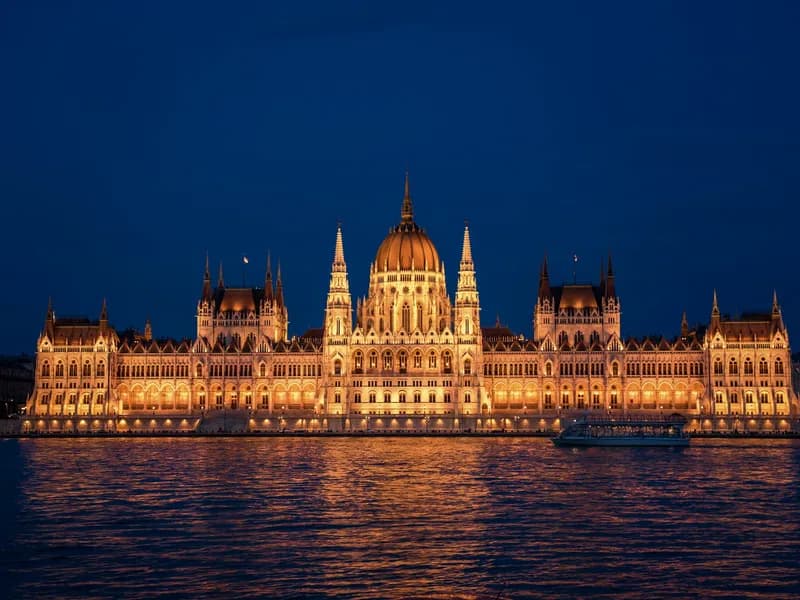
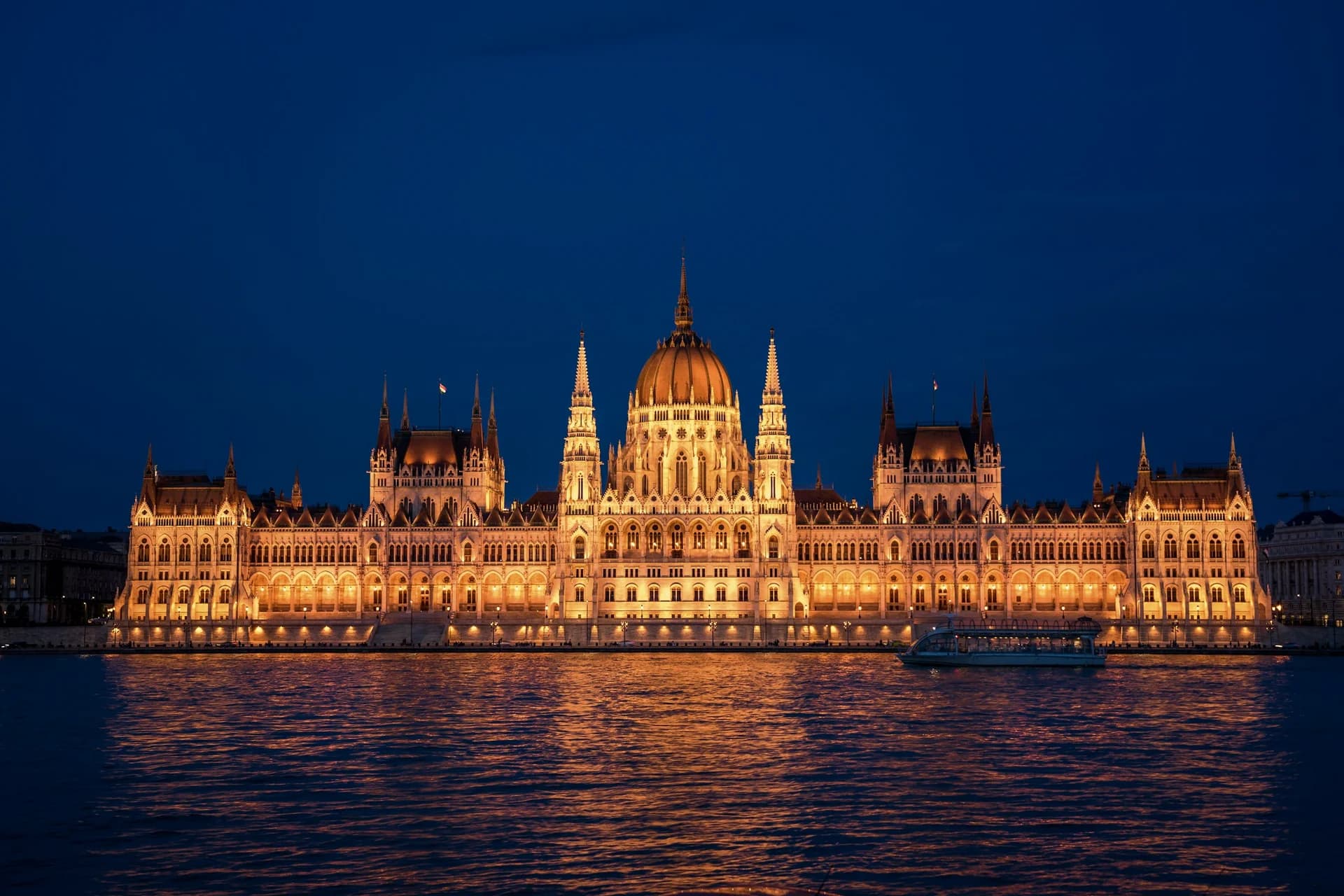
Then climb to the rooftop pool. At midnight. In November. The pool sits at 36°C; the air at 5°C. The Danube stretches below, the Parliament lit up on the opposite bank. Float in the hot water, watch the lights, let the steam curl around you.
Budapest has thermal baths and ruin bars. That combination — the ancient and the improvised, the healing and the hedonistic — exists nowhere else on the planet.
What Changed
Come to Budapest for three days and you may well extend to five — then find reasons to come back twice more.
The ruin bars change how you think about nightlife. Not as consumption — as curation. Every room in Szimpla, every installation at Instant-Fogas, every crumbling wall in District VII is a statement about impermanence, creativity, and the refusal to wait for perfection before building something interesting.
For practical planning, read our complete Budapest guide. And for the best time to visit, our winter guide makes a compelling case for cold weather.
Also, the drinks are $3. That helps too.