The Complete Budapest Guide: Baths, Bridges, and Everything Between
The Complete Budapest Guide: Baths, Bridges, and Everything Between
Budapest is two cities divided by a river. On the west bank, hilly Buda has the castle, the bastions, and the thermal baths. On the east bank, flat Pest has the Parliament, the ruin bars, and the food markets. Between them, the Danube flows under illuminated bridges. Together, they form one of Europe's most extraordinary and affordable capitals. Pair it with Vienna (2.5 hours by train) and Prague for the ultimate Central European trip.
Overview
Budapest is Hungary's capital — 1.75 million people in the city, 3.3 million in the metro area. The currency is the Hungarian Forint (HUF, ~395 per EUR). Hungary is in the EU but not the Eurozone. The city was formed in 1873 by unifying three cities: Buda, Obuda, and Pest.
Best Time to Visit
April-June: Mild (15-25°C), outdoor baths perfect, long days. Best overall. September-October: Warm, wine harvest, fewer tourists. Excellent. December-February: Cold (-2 to 5°C) but thermal baths steam beautifully, Christmas markets run, and hotel prices drop 40-60%. July-August: Hot (28°C+), crowded, best for outdoor festivals.
Getting There
Budapest Airport (BUD), 16 km southeast. Options:
- Bus 100E: Direct to Deak ter (2,200 HUF, 35 minutes). The standard choice.
- Bolt/Uber: 7,000-10,000 HUF (~$17-25), 25-35 minutes. Uber doesn't operate; Bolt is the app.
- miniBUD shuttle: 6,900 HUF, shared van.
- Taxi: Only use Fotaxi or official airport taxis (fixed 9,900 HUF zone tariff).
Where to Stay
District V (Belvaros): Central, near Parliament and Chain Bridge. Walking distance to everything Pest-side. 60-150 EUR/night. District VII (Jewish Quarter): Ruin bar central. Livelier, younger. 40-100 EUR/night. District I (Castle District, Buda): Quieter, elevated, stunning views. 70-160 EUR/night.
What to Do
Thermal Baths
Budapest's signature experience. Rankings:
- Szechenyi (7,900 HUF): Largest, most iconic. Neo-Baroque outdoor pools. Best in winter.
- Gellert (9,200 HUF): Most beautiful. Art Nouveau interior. Wave pool.
- Rudas (6,400-9,000 HUF): Ottoman-era, rooftop Danube views. Friday/Saturday night sessions.
- Kiraly (3,800 HUF): Intimate Ottoman bath. The most affordable quality option.
Bring your own towel and flip-flops. Swimsuits required in mixed pools.
Major Sights
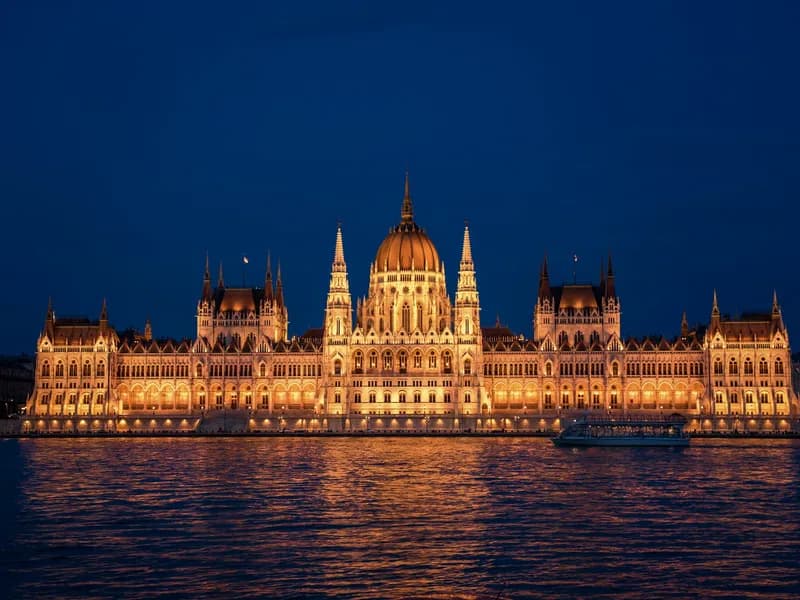
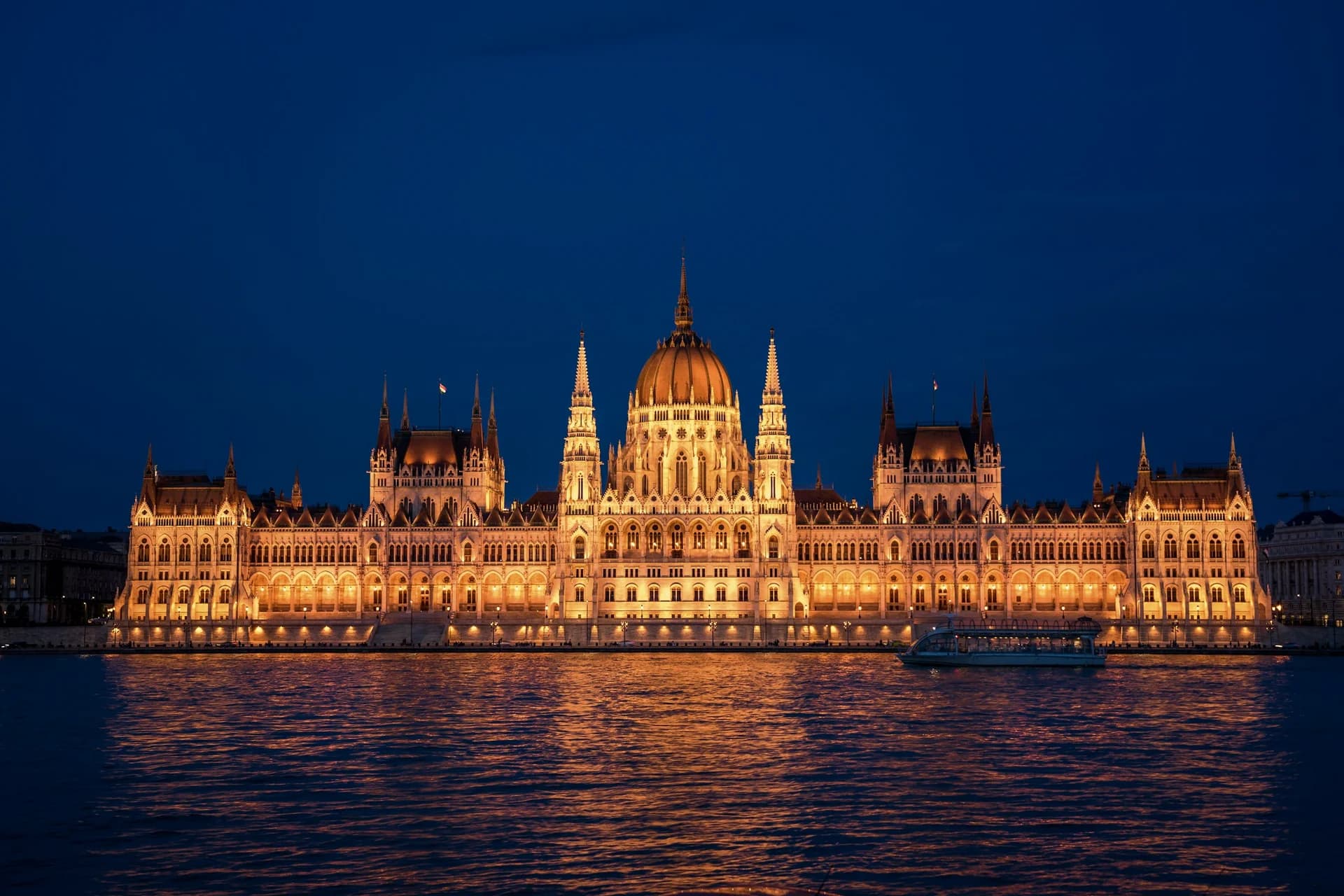
Parliament Building: Gothic Revival, third-largest parliament in the world. Guided tour: 6,000 HUF (non-EU), 3,400 HUF (EU). Book at jfrfrgylatogatokozpont.hu. Best photographed from the Buda side at night.
Buda Castle & Fisherman's Bastion: Castle Hill complex. National Gallery (free permanent collection), Budapest History Museum (2,400 HUF). Fisherman's Bastion upper towers (1,200 HUF) have the iconic Parliament view. Funicular from Clark Adam Square: 1,800 HUF. Walk up for free.
Great Market Hall: Budapest's largest indoor market. Ground floor: paprika, foie gras, salami. Upper floor: langos (1,200 HUF), souvenirs. Open Mon-Sat, closed Sundays.
Ruin Bars: Szimpla Kert (the original, no cover), Instant-Fogas (largest), Anker't (garden), Mazel Tov (food + drinks). All in District VII. Open from ~4PM to 4AM.
Danube Views
- Tram 2 along Pest embankment (530 HUF — the most scenic tram in Europe)
- Gellert Hill (235m climb, free, best sunset panorama)
- Evening cruise (from 4,900 HUF with drink)
- Chain Bridge walk at night (free)
Food & Drink
Hungarian Essentials
| Dish | Description | Price |
|---|---|---|
| Gulyas (Goulash) | Beef paprika soup (not a stew!) | 1,500-2,500 HUF |
| Langos | Fried dough with sour cream + cheese | 1,000-1,500 HUF |
| Paprikas csirke | Chicken paprikash with sour cream | 2,500-3,500 HUF |
| Dobos torta | Layered chocolate cake with caramel | 1,200-1,800 HUF |
| Kurtoskalacs | Chimney cake (actually Hungarian!) | 800-1,200 HUF |
| Toltott kaposzta | Stuffed cabbage with sour cream | 2,500-3,500 HUF |
Budget eating: a full meal at a local etterem runs 3,000-5,000 HUF ($7-12). Even Michelin-recommended restaurants serve lunch for 4,000-6,000 HUF.
Wine
Hungary has 22 wine regions. Key varieties: Tokaji (sweet white, world-famous), Egri Bikaver (Bull's Blood, red blend), Furmint (dry white). Wine bars in District V and VII: glass from 1,000-1,500 HUF.
Budget Tips
- Pay in Forints, never Euros (10-20% markup)
- Use Bolt app, not taxis
- OTP Bank ATMs (avoid street exchange booths)
- Lunch specials at restaurants: 2,000-3,500 HUF for soup + main
- Thermal baths before 2PM on weekdays are less crowded
- Free: Gellert Hill, Margaret Island, Danube promenade, National Gallery permanent collection
Safety
Budapest is generally safe. Watch for: "pretty girl" bar scam (women invite you to a bar, you get an inflated bill), pickpockets on tram 2 and at Keleti station, taxi overcharging (use Bolt). District VIII (around Keleti) is rougher at night. Emergency: 112.
Getting Around
BKK system: Metro (4 lines), trams, buses, trolleybuses. Single ticket: 530 HUF. 24-hour pass: 2,500 HUF. 72-hour: 5,500 HUF.
Metro M1 (Yellow line) is Continental Europe's oldest subway — the stations are heritage-listed.
The Bottom Line
Budapest is the best-value major city in Europe. The thermal baths are unique on the planet. The ruin bars invented a new form of nightlife. The Danube at night is one of Europe's great urban spectacles. And you can do all of it for a fraction of what London, Paris, or even Prague would cost.
Give it 3-4 days. For seasonal advice, read our winter guide. For nightlife, our ruin bars narrative captures the magic. Come in winter for the steaming baths. Come in summer for the outdoor everything. Come anytime for the goulash, the wine, and the distinct pleasure of a city that's both grand and affordable. For how Budapest compares to its rival, read Prague vs Budapest.