The Complete Cape Verde Travel Guide: Volcanoes, Music, and the Atlantic's Best-Kept Secret
The Complete Cape Verde Travel Guide: Volcanoes, Music, and the Atlantic's Best-Kept Secret
Cape Verde sits 570 km off the West African coast in the mid-Atlantic, a volcanic archipelago of ten islands that most travelers can't place on a map. That anonymity is its greatest asset. While the Canaries are packed, the Azores are trending, and Madeira has its moment, Cape Verde remains genuinely uncrowded, culturally rich, and affordable.
Here's everything you need to plan a trip that covers more than just the beach resorts.
Overview
Ten islands (nine inhabited), split into two groups: Barlavento (windward: Sal, Boa Vista, Sao Vicente, Santo Antao, Sao Nicolau, Santa Luzia) and Sotavento (leeward: Santiago, Fogo, Maio, Brava). Each island has a distinct character — from flat, beach-dominated Sal to mountainous, rain-forest-green Santo Antao.
The country gained independence from Portugal in 1975 and is one of Africa's most stable democracies. The population of roughly 600,000 people speaks Cape Verdean Creole (Kriolu) and Portuguese. The culture is a unique blend of West African, Portuguese, and Brazilian influences, unified by music — especially morna, the melancholic genre made world-famous by Cesaria Evora.
Best Time to Visit
November to June (dry season). Temperatures stay at 22-28°C year-round — this is a genuinely year-round destination. November-May has the best wind conditions for kitesurfing. August-October is hotter and occasionally sees brief rains.
There's no "bad" time to visit, but the trade winds are strongest December-April, which is ideal for water sports and keeps temperatures comfortable.
Getting There
Amilcar Cabral International Airport (SID) on Sal and Nelson Mandela International Airport (RAI) on Santiago handle international flights. TAP Portugal, TUI, and various charter airlines connect to European cities. From the US, you'll connect through Lisbon.
Visa: US and EU citizens pre-register online at ease.gov.cv (airport security tax of 3,400 CVE / ~31 EUR). UK citizens need a visa — apply at the embassy or online.
Island by Island
Sal — The beach island. Santa Maria Beach is the postcard shot: white sand, turquoise water, colorful fishing boats. Kitesurfing and windsurfing are world-class (November-May). The island is flat and dry — not much beyond the beach, but that beach is exceptional. Most international flights arrive here.
Boa Vista — Beaches without the crowds. Praia de Santa Monica stretches 22 km of deserted sand. Loggerhead turtles nest June-October (guided night walks available). Sal Rei is the tiny capital — relaxed, with a few good restaurants. Less developed than Sal.
Sao Vicente (Mindelo) — The cultural capital. Birthplace of Cesaria Evora and the center of Cape Verdean music. Colonial port architecture, live morna and coladeira bars, and the annual Baia das Gatas music festival (August). The fish market, Rua Lisboa for shopping, and the harbor views make it the most characterful town in Cape Verde. Carnival (February) is spectacular.
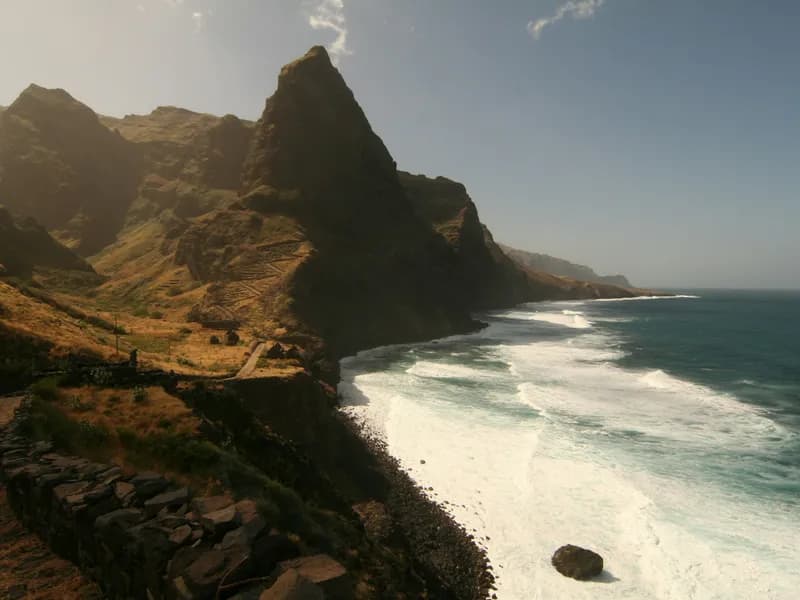
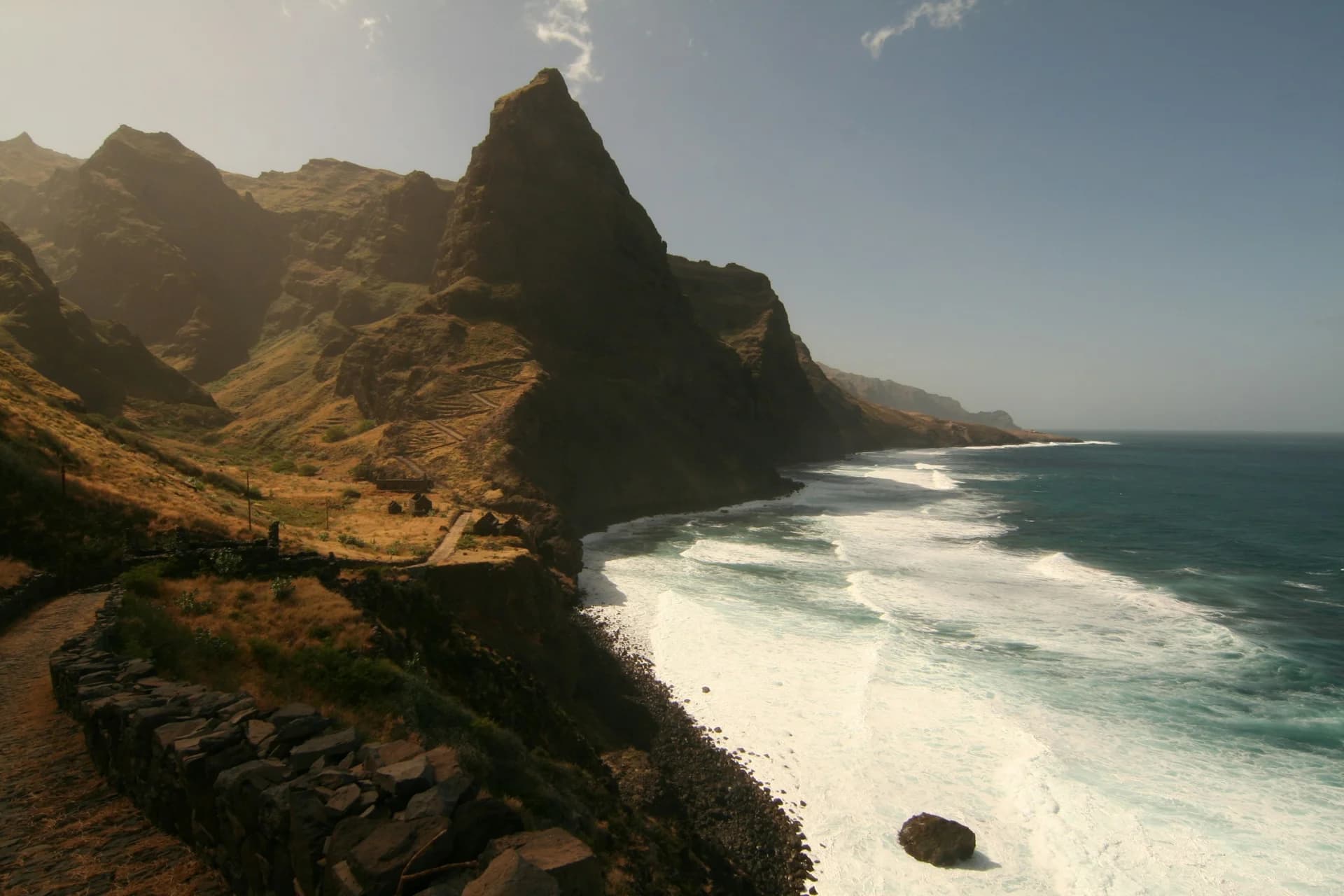
Santo Antao — The hiking island. Dramatic valleys, terraced agriculture, sugarcane distilleries, and trails that rival Madeira. Reached by a 1-hour ferry from Mindelo. The Paul Valley hike and Cova crater trail are highlights. Local guesthouses (pensoes): 2,000-4,000 CVE/night. Hire a local guide (~3,000 CVE/day).
Fogo — The volcano island. Pico do Fogo (2,829 m) rises from a massive caldera. The guided summit hike takes 5-6 hours round trip (3,000-5,000 CVE with mandatory local guide). The destroyed village of Portela (2014-15 eruption) is haunting. Vineyards on the lava slopes produce Fogo wine — unique and surprisingly good.
Santiago — The capital island. Praia is the administrative capital but not a major tourist draw. Cidade Velha (Old City), a UNESCO World Heritage Site and the first European colonial settlement in West Africa, is worth a half-day. The Tarrafal concentration camp memorial is sobering.
Food
Cape Verdean cuisine is comfort food with Portuguese and African roots.
- Cachupa — The national dish. A slow-cooked stew of corn, beans, and protein (tuna, chicken, chorizo). Cachupa rica (rich version) has multiple meats; cachupa pobre (vegetarian). Leftover cachupa fried for breakfast (cachupa refogada) is an institution. 400-1,000 CVE.
- Fresh grilled fish — Tuna, wahoo, octopus, lobster. Dirt cheap at local restaurants.
- Grogue — Local sugarcane rum. Raw and potent. Distilleries on Santo Antao offer tastings.
- Pastel com diabo dentro — "Pastry with the devil inside." Fried pastry filled with spicy tuna.
Budget
| Category | Budget | Mid-Range | Comfort |
|---|---|---|---|
| Accommodation | $25-40/night | $50-100/night | $100-200/night |
| Food | $10-20/day | $20-40/day | $40-80/day |
| Inter-island flights | $60-120 one way | $60-120 one way | $60-120 one way |
| Activities | $10-30/day | $30-60/day | $60-150/day |
| Daily total | $50-70 | $100-180 | $200-400 |
Bring Euros — they're widely accepted and easily exchanged. The CVE is pegged to the Euro.
Getting Between Islands
Bestfly (formerly TICV) operates inter-island flights on small planes. Book early — flights are not daily on all routes and planes are small. Ferries (CV Interilhas) connect some islands but are slow and weather-dependent. The Sao Vicente-Santo Antao ferry is reliable and scenic (1 hour).
Allow flexibility. Weather delays happen. Don't plan a tight multi-island itinerary — build in buffer days.
Music
Cape Verde's greatest export. Morna is the soul music — melancholic, acoustic, deeply emotional. Coladeira is the upbeat dance counterpart. Funana is the accordion-driven party music from Santiago. Batuku is the women's drum-and-chant tradition.
Visit the Cesaria Evora statue in Mindelo and her childhood home (now a small museum, ~200 CVE). Catch live music in Mindelo's bars — most nights, something is happening. The Baia das Gatas festival (August) draws musicians from across the Portuguese-speaking world.
Safety
Cape Verde is one of Africa's safest countries. Standard precautions apply in Praia (Santiago's capital) after dark. Tourist areas on Sal, Boa Vista, and Sao Vicente are very safe.
The Atlantic Ocean is the biggest danger. Strong currents and powerful waves kill tourists every year. Swim only on sheltered beaches (Santa Maria on Sal, Praia de Chaves on Boa Vista). If a beach has no other swimmers, there's probably a reason. Lifeguards are rare.
Useful Phrases
| Kriolu | Portuguese | English |
|---|---|---|
| Oi / Tudo bon? | Ola / Tudo bem? | Hi / Everything good? |
| Obrigadu/a | Obrigado/a | Thank you (m/f) |
| Kantu e? | Quanto custa? | How much? |
| Morabeza | Hospitalidade | Warmth/hospitality |
Final Thought
Cape Verde doesn't shout. It doesn't market itself aggressively. It doesn't appear on "top 10 destinations" lists. But the combination of year-round warmth, world-class music, genuine culture, dramatic landscapes, and affordable prices makes it one of the Atlantic's best trips — and one of the few places where you can hike an active volcano on Tuesday and lie on a perfect beach on Thursday.
The morabeza — that deep-rooted culture of warmth and hospitality — is real. You'll feel it from the moment you land. And you'll miss it the moment you leave.
For more reasons to visit, read our 8 reasons Cape Verde belongs on your 2026 list. And for an overview of the music scene, our music lover's guide traces Cesaria Evora's footsteps.